
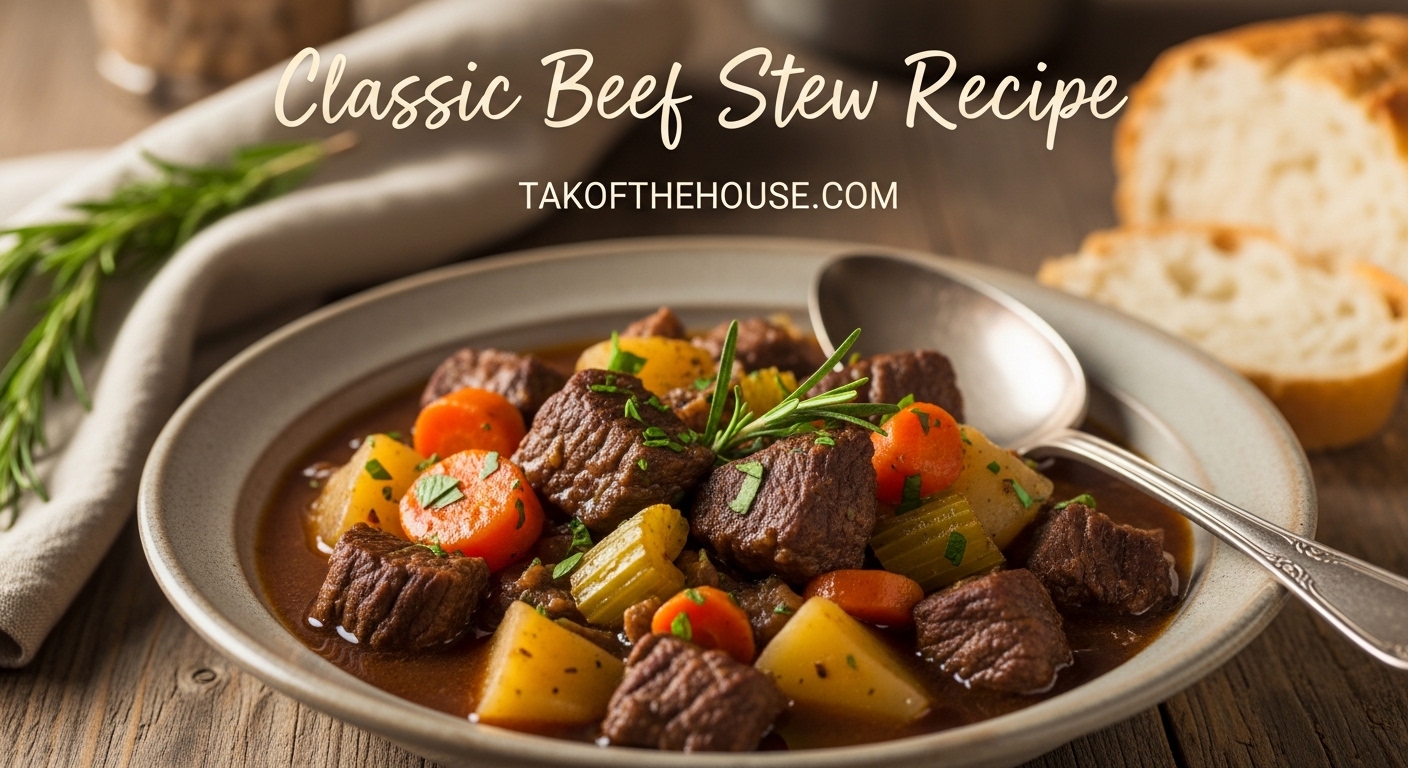
There’s something magical about a pot of beef stew simmering on the stove. The aroma fills the kitchen with promises of comfort and warmth. After testing dozens of variations over the years, I have perfected a beef stew recipe that delivers tender, fall-apart beef and vegetables in a rich, velvety gravy every single time.
This classic beef stew recipe has become my go-to for Sunday dinners and cold weeknights. It is a true one-pot meal that transforms humble ingredients into something extraordinary. Whether you are cooking for your family or meal prepping for the week, this hearty stew delivers maximum flavor with surprisingly little effort.
Table of Contents
Why You’ll Love This Beef Stew Recipe
This beef stew recipe stands out because it balances deep, complex flavor with straightforward technique. I developed this method after years of trial and error, and it consistently produces restaurant-quality results at home.
The secret lies in understanding a few key principles: proper searing for flavor development, the right cut of beef for tenderness, and timing the vegetable additions so everything finishes perfectly. You do not need fancy equipment or hard-to-find ingredients. Just a heavy pot and patience as the beef slowly braises into fork-tender perfection.
What I love most is how forgiving this recipe is. The flavors actually improve over time, making it ideal for make-ahead meals and leftovers that taste even better the next day.
What You Need for the Best Beef Stew
Quality ingredients make all the difference in beef stew. Here is everything you need to serve 6 to 8 people generously.
Ingredients List
For the Beef:
- 3 pounds beef chuck roast, cut into 1.5-inch cubes
- 2 tablespoons all-purpose flour (for coating)
- Salt and freshly ground black pepper
- 3 tablespoons olive oil (or bacon fat for extra flavor)
For the Aromatics and Vegetables:
- 2 medium yellow onions, diced (about 2 cups)
- 4 cloves garlic, minced
- 4 large carrots, peeled and cut into 1-inch chunks
- 3 ribs celery, cut into 1-inch pieces
- 1.5 pounds Yukon Gold potatoes, cut into 1.5-inch cubes
- 1 cup frozen peas (added at the end)
For the Cooking Liquid:
- 4 cups beef broth (low sodium preferred)
- 1 cup dry red wine (Cabernet, Merlot, or Pinot Noir)
- 2 tablespoons tomato paste
- 2 tablespoons Worcestershire sauce
- 1 teaspoon balsamic vinegar
For the Herbs and Seasoning:
- 2 bay leaves
- 4 sprigs fresh thyme (or 1 teaspoon dried)
- 2 sprigs fresh rosemary (or 1/2 teaspoon dried)
- Fresh parsley, chopped (for garnish)
Choosing the Right Cut of Beef
The best beef stew starts with the right cut of meat. I always reach for beef chuck roast, cut into cubes myself, rather than pre-packaged stew meat.
Beef chuck comes from the shoulder area and has the perfect balance of meat and fat. Look for well-marbled pieces with visible white streaks running through the meat. This marbling melts during cooking, creating that succulent, fork-tender texture we all crave.
Pre-cut stew meat is often a mix of different cuts, and you never know what you are getting. Some pieces might cook properly while others turn tough or stringy. Investing 5 minutes to cube your own chuck roast ensures every bite is perfect.
Chuck contains plenty of connective tissue and collagen that breaks down during slow cooking. This natural thickener creates that luxurious, velvety sauce that coats every piece of meat and vegetable.
How to Make Beef Stew
This beef stew recipe follows a simple sequence: sear the beef, build flavor with aromatics, add liquid and simmer slowly, then finish with vegetables. Here is exactly how to do it.
Step 1: Prepare the Beef
Pat the beef cubes completely dry with paper towels. Moisture is the enemy of good browning. Season generously with salt and pepper, then toss with flour in a large bowl until lightly coated. Shake off any excess flour.
The flour serves two purposes. It helps create a beautiful crust when searing, and it acts as a thickener for the final stew.
Step 2: Sear the Beef in Batches
Heat 2 tablespoons of oil in a large Dutch oven or heavy-bottomed pot over medium-high heat. Working in batches, add the beef in a single layer without crowding the pan. Sear for 3 to 4 minutes per side until deeply browned.
Do not rush this step and do not crowd the pan. Crowding causes the meat to steam rather than sear, and you will miss out on that crucial flavor development. Each batch takes about 8 minutes total.
Transfer browned beef to a plate and continue with remaining batches, adding more oil as needed.
Step 3: Build the Flavor Base
Reduce heat to medium. Add the diced onions to the pot with the fond (those brown bits stuck to the bottom). Cook for 5 minutes, scraping up the browned bits with a wooden spoon. The onions will soften and start to pick up all that concentrated flavor.
Add the minced garlic and tomato paste. Cook for 2 minutes, stirring constantly. Toasting the tomato paste deepens its flavor and removes any raw, acidic taste. This small step makes a noticeable difference in the final stew.
Step 4: Deglaze with Wine
Pour in the red wine and scrape vigorously to release any remaining stuck bits from the bottom of the pot. This process, called deglazing, captures every bit of flavor. Let the wine bubble and reduce for 2 to 3 minutes.
The alcohol cooks off, leaving behind complex flavor and acidity that brightens the entire dish.
Step 5: Add Liquid and Simmer
Return the seared beef and any accumulated juices to the pot. Add the beef broth, Worcestershire sauce, balsamic vinegar, bay leaves, thyme, and rosemary. The liquid should just barely cover the meat.
Bring to a gentle boil, then immediately reduce heat to low. Cover partially and simmer for 1.5 hours. The beef needs this time to break down and become tender. Stir occasionally and check that the liquid maintains a gentle bubble.
Step 6: Add the Vegetables
After 1.5 hours, the beef should be partially tender but not falling apart. Add the carrots, celery, and potatoes. These vegetables need about 45 minutes to cook through without turning mushy.
Submerge the vegetables in the liquid, cover again, and continue simmering for 40 to 45 minutes. The stew is ready when the vegetables are tender and a fork slides easily into the beef.
Step 7: Finish and Thicken
If your stew needs thickening, remove 1/2 cup of the cooking liquid and whisk in 2 tablespoons of cornstarch to create a slurry. Stir this back into the pot and simmer for 5 minutes until the gravy coats the back of a spoon.
Alternatively, if you coated the beef in flour at the beginning and simmered uncovered for the last 30 minutes, your stew may already have the perfect consistency.
Step 8: Add Peas and Serve
Stir in the frozen peas during the final 5 minutes of cooking. They thaw and warm through quickly, adding a pop of color and sweetness. Remove the bay leaves and herb stems. Taste and adjust seasoning with salt and pepper.
Garnish with fresh chopped parsley and serve hot.
Cooking Methods Compared: Stovetop, Oven, Slow Cooker, and Instant Pot
While I prefer the stovetop method for control and convenience, this beef stew recipe works beautifully with any cooking method. Here is how to adapt it.
Stovetop Method (My Preferred Method)
Follow the instructions exactly as written above. Total cooking time is approximately 2.5 hours. This method gives you the most control over browning and simmering. A heavy Dutch oven distributes heat evenly and prevents scorching.
Oven Braising Method
After deglazing and adding all ingredients, cover the pot and transfer to a 325°F oven. Bake for 2 hours, then add vegetables and continue baking for another 45 minutes. The oven provides incredibly gentle, even heat that produces exceptionally tender results.
Slow Cooker Method
Complete steps 1 through 4 on the stovetop (sear beef and build flavor base), then transfer everything to a slow cooker. Cook on LOW for 7 to 8 hours or HIGH for 4 to 5 hours. Add vegetables during the final 2 hours on LOW or 1 hour on HIGH to prevent mushiness.
Instant Pot Pressure Cooker Method
Use the Sauté function to complete steps 1 through 4. Seal the lid and cook on HIGH pressure for 35 minutes, then quick release. Add vegetables and pressure cook for an additional 10 minutes. This method produces surprisingly tender beef in a fraction of the time.
Secrets to the Best Beef Stew
After years of making this beef stew recipe, I have learned a few professional tricks that elevate good stew to great stew.
Never Skip the Searing
Searing is not about cooking the meat through. It is about creating flavor through the Maillard reaction, that magical chemical process that happens when proteins brown. Those dark caramelized bits on the beef and in the pan become the foundation of your stew’s flavor profile.
Toast Your Tomato Paste
Raw tomato paste tastes acidic and one-dimensional. Cooking it for 2 minutes with the onions transforms it into a sweet, umami-rich flavor booster. This is a trick I learned from professional chefs, and it makes a noticeable difference.
Use Drinkable Wine
The old saying about cooking with wine you would drink is absolutely true. Poor quality wine will give your stew harsh, unpleasant flavors. You do not need expensive wine, but choose something you would happily sip while cooking. Cabernet, Merlot, and Pinot Noir all work beautifully.
Make It a Day Ahead
This beef stew recipe tastes significantly better after resting overnight. The flavors meld and deepen, and you can easily skim off any excess fat that solidifies on top. Simply reheat gently on the stovetop when ready to serve.
Try Bacon Fat for Searing
For an extra layer of smoky depth, use bacon fat instead of olive oil for searing the beef. Save the rendered fat when you cook breakfast, and store it in the refrigerator. This small change adds incredible richness to the final stew.
How to Thicken Beef Stew
A proper beef stew should coat the back of a spoon without being gluey or pasty. You have three options for achieving the perfect consistency.
- The Flour Coating Method: Coating the raw beef in flour before searing adds starch that gradually thickens the stew as it simmers. This is my preferred method because it thickens naturally without any last-minute fuss.
- The Cornstarch Slurry Method: Mix equal parts cornstarch and cold water or broth, then whisk into the simmering stew. Cook for 5 minutes to eliminate any starchy taste. This method gives you precise control and works even at the last minute.
- The Reduction Method: Remove the lid and simmer vigorously for the final 20 to 30 minutes. As liquid evaporates, the stew naturally concentrates and thickens. This method intensifies flavors but yields slightly less total volume.
Fixing Common Beef Stew Problems
Even experienced cooks encounter issues occasionally. Here is how to troubleshoot the most common beef stew problems.
My Stew Is Too Thin
Make a cornstarch slurry using 1 tablespoon cornstarch mixed with 2 tablespoons cold water per cup of stew. Whisk it in and simmer for 5 minutes. Alternatively, mash a few of the cooked potato chunks against the side of the pot to release their natural starch.
My Beef Is Tough
Tough beef simply needs more time. Continue simmering until a fork slides in easily. If you are short on time, slice the meat thinner against the grain before serving. Next time, ensure you are using beef chuck and not a leaner cut.
My Stew Tastes Bitter
Bitterness usually comes from overcooked tomato paste or herbs, or burnt fond from too-high heat. Fix it by adding a pinch of sugar or a splash of cream. A teaspoon of butter stirred in at the end can also round out harsh flavors.
My Stew Tastes Bland
Bland stew needs salt, acid, or umami. First, add salt gradually until the flavors pop. Then try a splash of Worcestershire sauce, soy sauce, or balsamic vinegar. A pat of butter or splash of cream also enriches flat-tasting stew.
My Vegetables Are Mushy
Overcooked vegetables cannot be saved, but you can prevent this next time. Cut potatoes and carrots into larger chunks, at least 1.5 inches. Add them later in the cooking process, about 45 minutes before serving.
What to Serve With Beef Stew
This hearty beef stew recipe is a complete meal on its own, but the right accompaniments make it even more special.
- Bread Options: A crusty baguette or slices of no-knead artisan bread are perfect for sopping up every drop of gravy. Buttermilk biscuits or warm dinner rolls also pair beautifully.
- Starch Sides: Serve over buttered egg noodles, creamy mashed potatoes, or cheesy polenta for an extra-hearty plate. These bases soak up the rich gravy magnificently.
- Light Counterpoints: Balance the richness with a simple green salad with vinaigrette, roasted Brussels sprouts, or steamed green beans. The acidity and freshness cut through the hearty stew.
- Wine Pairings: Serve the same type of wine you cooked with, or try a Côtes du Rhône, Pinot Noir, or Belgian ale. For non-alcoholic options, sparkling apple cider complements the savory flavors nicely.
Make-Ahead, Storage, and Freezing Instructions
One of the best things about beef stew is how well it keeps. The flavors actually improve after a day or two in the refrigerator.
Make-Ahead Instructions
Prepare the stew completely, cool to room temperature, then refrigerate overnight. When ready to serve, skim off the solidified fat from the top, then reheat gently over medium-low heat. Add a splash of broth if needed to loosen the gravy.
Refrigerator Storage
Store cooled beef stew in airtight containers for up to 4 days. The airtight seal prevents the stew from absorbing refrigerator odors and keeps the gravy from drying out.
Freezing Instructions
Beef stew freezes beautifully for up to 3 months. Cool completely, then transfer to freezer-safe containers or heavy-duty freezer bags. Leave 1 inch of headspace for expansion. Remove as much air as possible to prevent freezer burn.
Thaw overnight in the refrigerator, then reheat gently. Frozen potatoes may change texture slightly, becoming softer, but the flavor remains excellent.
Reheating Tips
Reheat on the stovetop over medium-low heat, stirring occasionally. Add a splash of beef broth to restore the original consistency. Microwave reheating works too: cover and heat in 2-minute intervals, stirring between each, until heated through.
Frequently Asked Questions
What is the secret to making a good beef stew?
The secret to great beef stew is proper searing to develop flavor, using well-marbled beef chuck for tenderness, and slow braising until the collagen breaks down. Do not rush the process. Brown the meat in batches, deglaze the pot with wine, and simmer gently until fork-tender.
What is the trick for tender beef stew?
Use beef chuck roast with good marbling, and cook low and slow for at least 2 hours. The connective tissue and collagen in chuck break down during extended cooking, creating that melt-in-your-mouth texture. Avoid lean cuts which become tough and stringy.
What are common stew beef mistakes?
Common mistakes include overcrowding the pan when searing (which steams instead of browns the meat), using pre-cut stew meat of unknown origin, adding vegetables too early (they become mushy), and not seasoning adequately throughout the cooking process.
Can I make beef stew without wine?
Yes, replace the wine with additional beef broth plus 1 tablespoon of red wine vinegar or balsamic vinegar for acidity. You can also use non-alcoholic beer or simply add a splash of apple cider vinegar to brighten the flavors.
How do I know when my beef stew is done?
Beef stew is done when the meat is fork-tender and shreds easily, and the vegetables are cooked through but still hold their shape. Total cooking time is typically 2 to 2.5 hours on the stovetop, depending on your specific cut of beef and how large you cubed it.
Enjoy Your Homemade Beef Stew
This beef stew recipe is more than just a meal. It is comfort in a bowl, the kind of food that brings people together around the table. With tender beef, hearty vegetables, and a rich, velvety gravy, it satisfies on every level.
I have shared this recipe with countless friends and family members over the years, and it never fails to impress. The techniques are simple, the ingredients are accessible, and the results are consistently outstanding.
Whether you stick to the classic stovetop method or experiment with the slow cooker or Instant Pot variations, you now have everything you need to make the best beef stew of your life. Make it for a Sunday dinner, prepare it ahead for busy weeknights, or freeze batches for future cozy nights in.
I hope this beef stew recipe becomes a regular part of your cooking rotation, just as it has in my kitchen. There is truly nothing better than ladling out steaming bowls of this hearty classic and watching everyone dig in with satisfaction.