
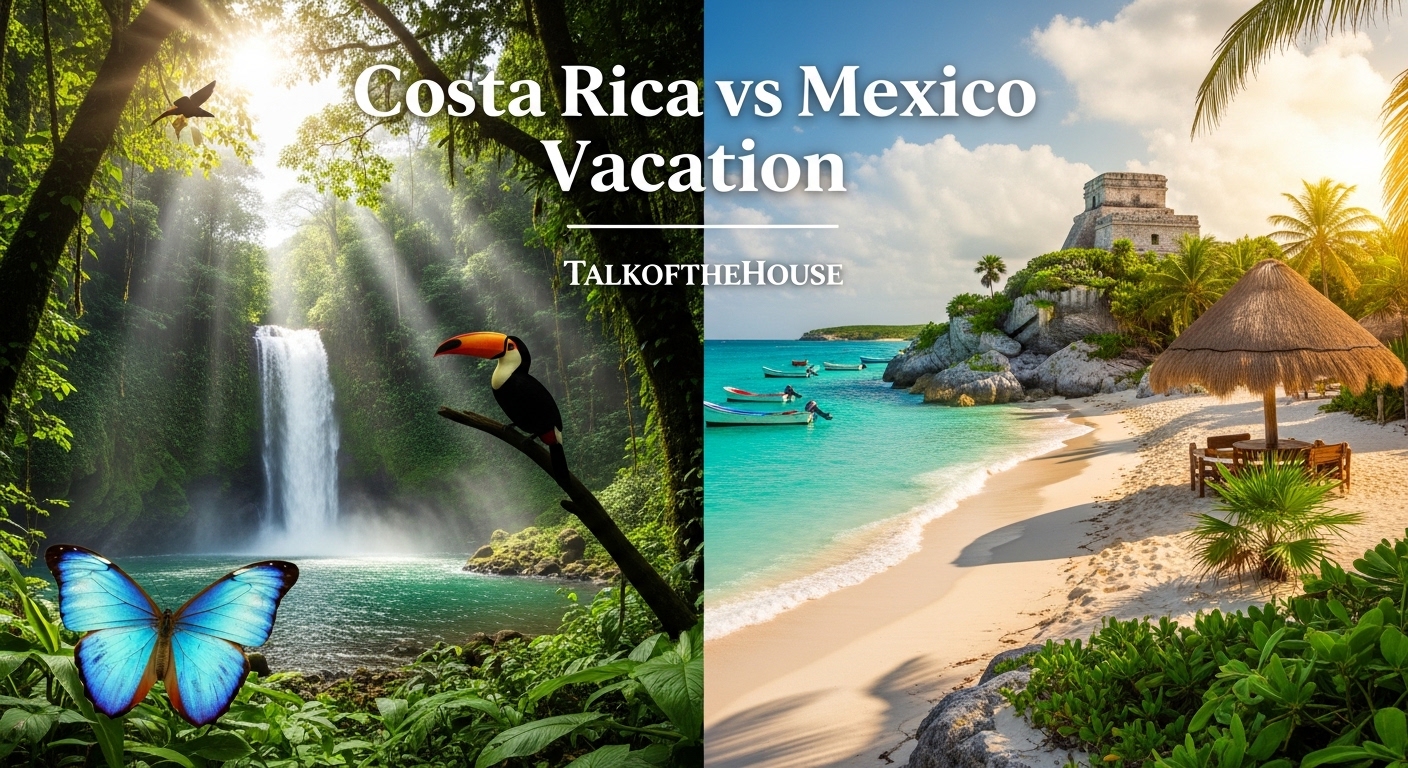
Choosing between Costa Rica and Mexico for your next vacation feels like picking between two amazing flavors of paradise. Both destinations promise sun, sand, and unforgettable experiences, but they deliver completely different types of getaways. Our team has spent months researching travel forums, analyzing costs, and speaking with recent travelers to give you the honest breakdown you need.
Costa Rica vs Mexico vacation is a decision that comes down to what kind of traveler you are and what experiences matter most to you. Mexico dominates with affordable all-inclusive resorts, world-class beaches, and rich cultural heritage spanning thousands of years. Costa Rica counters with unparalleled biodiversity, eco-tourism leadership, and that famous “pura vida” lifestyle that encourages you to slow down and connect with nature.
After reading this guide, you’ll know exactly which destination fits your travel style, budget, and vacation goals for 2026. Let’s dive into the comparison that will help you book the right trip.
Table of Contents
At a Glance: Who Should Choose What
Before we get into the details, here’s the quick answer. Costa Rica is best for nature lovers, adventure seekers, and travelers who want eco-friendly experiences with abundant wildlife. Mexico is best for beach resort fans, food enthusiasts, culture seekers, and budget-conscious travelers looking for all-inclusive value.
Choose Costa Rica if you want to spot sloths in rainforests, zip-line through cloud forests, and wake up to howler monkeys. Choose Mexico if you want pristine Caribbean beaches, ancient Mayan ruins, street tacos that will change your life, and luxury resorts at reasonable prices.
Costa Rica vs Mexico: Cost Comparison 2026
Let’s address the elephant in the room first. Costa Rica is significantly more expensive than Mexico for most aspects of travel. Based on current data for 2026, expect Costa Rica to cost 30-50% more than Mexico for a comparable vacation experience.
A mid-range hotel in Costa Rica runs $120-200 per night, while similar accommodations in Mexico’s Riviera Maya cost $80-140. All-inclusive resorts tell an even starker story. Mexico’s all-inclusive packages start around $150 per person daily, while Costa Rica’s limited options begin at $250+ and often lack the quality and variety found across the border.
Food costs follow the same pattern. A nice dinner for two in Costa Rica easily reaches $60-80 with drinks, while Mexico offers incredible meals for $30-50. Street food in Mexico is legendary and cheap. Costa Rica’s cuisine is simpler and less renowned, with typical meals like gallo pinto (rice and beans) costing less but offering less variety than Mexico’s taco culture.
Activities and tours also cost more in Costa Rica. A guided rainforest hike might run $75-100 per person, while similar eco-adventures in Mexico’s Chiapas region cost $40-60. Transportation adds to Costa Rica’s expense. The country’s rugged terrain and limited public transit often require rental cars, which add $50-80 daily plus insurance costs.
Is $500 enough for a week in Costa Rica? Not realistically for most travelers. That budget might cover accommodation alone at budget hostels, leaving nothing for food, activities, or transportation. For a comfortable week in Costa Rica, plan $1,500-2,500 per person. In Mexico, that same week costs $1,000-1,600 for comparable experiences.
Beaches: White Sand vs Wild Coastlines
Mexico wins the beach competition decisively if you’re seeking postcard-perfect Caribbean shores. The Yucatan Peninsula offers powdery white sand, crystalline turquoise water, and calm swimming conditions that define beach paradise. Cancun, Playa del Carmen, and Tulum deliver exactly what most beach vacationers dream about.
The Riviera Maya’s beaches feature gentle entries, minimal waves, and that brilliant blue water you see in travel magazines. Mexico’s Pacific coast, including Puerto Vallarta and Los Cabos, offers different but equally beautiful beaches with dramatic scenery and excellent surfing. You have options for every beach preference.
Costa Rica’s beaches are beautiful but different. Guanacaste Province in the northwest offers the best beaches, with golden sand and good swimming at spots like Playa Conchal and Playa Flamingo. However, many Costa Rican beaches have stronger currents, rougher sand, and darker water than Mexico’s Caribbean offerings.
Manuel Antonio combines beaches with wildlife viewing, offering a unique experience where monkeys might join you on the sand. Santa Teresa and the Nicoya Peninsula attract surfers and bohemian travelers with wilder, less developed shorelines. Costa Rica’s beaches feel more natural and less resort-dominated, which appeals to some travelers but disappoints others seeking classic tropical perfection.
Which is better, Cancun or Costa Rica? For pure beach quality and resort infrastructure, Cancun and the Riviera Maya win easily. The water is calmer, clearer, and more swimmable. The beaches are wider and cleaner. The all-inclusive resorts offer beachfront luxury at prices Costa Rica cannot match.
Wildlife and Nature Experiences
Costa Rica absolutely dominates in this category and it’s not even close. Despite covering just 0.03% of Earth’s surface, Costa Rica hosts approximately 5% of the world’s biodiversity. This small country is a wildlife enthusiast’s dream destination.
Sloths hang from trees in nearly every national park. Howler monkeys wake you up at dawn with their haunting calls. Toucans, scarlet macaws, and hundreds of other bird species fill the forests with color and sound. Sea turtles nest on beaches nationwide. The wildlife encounters in Costa Rica feel authentic and abundant.
Monteverde Cloud Forest Reserve offers otherworldly misty forests where you can spot the resplendent quetzal, one of the world’s most beautiful birds. Arenal Volcano National Park combines volcanic landscapes with hot springs and wildlife. Manuel Antonio packs multiple ecosystems into a compact area perfect for short trips.
Zip-lining originated in Costa Rica and the country still offers the world’s best canopy tours. You can fly through cloud forests, over valleys, and past waterfalls on professionally operated courses. White-water rafting ranges from gentle floats to adrenaline-pumping Class V rapids.
Mexico offers nature experiences but on a different scale. The Yucatan’s cenotes, natural sinkholes filled with crystal water, provide unique swimming and diving experiences found nowhere else. Whale watching in Baja California brings you close to gray whales, humpbacks, and blue whales. Copper Canyon rivals the Grand Canyon for dramatic scenery.
Mexico’s Chiapas region offers rainforest experiences and Mayan ruins in jungle settings, but the wildlife density doesn’t match Costa Rica. Mexico is larger and more developed, meaning natural habitats are more fragmented and wildlife encounters require more effort and luck.
Food, Culture, and Vibe
Mexico claims one of the world’s great cuisines, recognized by UNESCO as an Intangible Cultural Heritage. Costa Rica offers simpler, heartier food that fuels adventure but rarely inspires culinary pilgrimage. This comparison heavily favors Mexico for food-focused travelers.
Tacos al pastor, mole from Oaxaca, fresh ceviche, tamales in endless regional varieties, and street food culture that rewards exploration. Mexico’s food scene spans sophisticated restaurants in Mexico City to beachside fish shacks serving the freshest seafood. The flavors are complex, varied, and deeply satisfying.
Tequila and mezcal tastings offer cultural experiences beyond drinking. Cooking classes teach you to make authentic mole or fresh tortillas. Markets burst with chiles, tropical fruits, and ingredients you’ve never seen before. Food in Mexico is central to the travel experience.
Costa Rica’s cuisine reflects its agricultural history and practical focus. Gallo pinto, the national dish of rice and beans, appears at every meal. Casado plates offer balanced, simple meals with protein, plantains, and salad. The food is fresh, healthy, and satisfying but lacks the complexity and variety of Mexican cuisine.
Many travelers on forums describe Costa Rican food as “bland” or “starchy” compared to Mexico. This is somewhat unfair, as Costa Rica produces excellent coffee, fresh tropical fruits, and quality seafood. But the culinary scene simply doesn’t compare to Mexico’s depth and diversity.
Culturally, Mexico offers millennia of history visible in ancient Mayan ruins at Chichen Itza and Teotihuacan, colonial architecture in Oaxaca and San Miguel de Allende, and vibrant indigenous traditions still practiced today. Day of the Dead celebrations, if you visit in late October through November, create unforgettable cultural experiences.
Costa Rica’s culture centers on “pura vida” – literally “pure life” but functioning more like “it’s all good.” This philosophy creates a relaxed, welcoming atmosphere where stress seems to dissolve. Costa Ricans, or Ticos, are genuinely friendly and helpful. The vibe is chill, unpretentious, and nature-focused.
Costa Rica lacks Mexico’s historical depth. It has no ancient ruins, minimal colonial architecture, and a younger national identity. What it offers instead is a living culture of sustainability, environmental consciousness, and outdoor adventure that feels distinctly modern and appealing.
Safety Comparison
Costa Rica consistently ranks as one of Latin America’s safest countries. It abolished its military in 1948 and has focused resources on education and healthcare rather than defense. The Global Peace Index typically places Costa Rica significantly higher than Mexico in safety rankings.
Tourist areas in Costa Rica like Manuel Antonio, Arenal, and Guanacaste feel genuinely safe. Petty theft exists, especially at beaches where unattended items may disappear, but violent crime against tourists is rare. Solo female travelers generally report feeling comfortable in Costa Rica, though normal precautions apply.
Mexico’s safety picture is more complex. The country has real issues with cartel violence in specific regions, primarily border areas and certain states not typically visited by tourists. However, tourist destinations like the Riviera Maya, Puerto Vallarta, Los Cabos, and Oaxaca remain relatively safe and heavily protected because tourism drives the economy.
The statistics tell a nuanced story. Mexico’s homicide rate is higher than Costa Rica’s, but tourist areas are not where most violence occurs. Millions of Americans visit Mexico annually without incident. Smart travelers stick to established tourist zones, avoid isolated areas at night, and follow local advice.
Is Costa Rica safer than Mexico? Generally yes, particularly for the country overall. Costa Rica feels safer throughout, not just in designated zones. However, Mexico’s major tourist destinations are safe enough that millions visit without problems. The safety difference matters less if you stay in tourist areas, but Costa Rica offers more flexibility to explore off the beaten path without concern.
Solo female travelers often choose Costa Rica for the overall sense of safety and welcoming culture. Families appreciate that Costa Rica feels secure for children to explore. Adventure travelers in Costa Rica can venture into remote areas with less concern than equivalent adventures might warrant in parts of Mexico.
Where to Stay: All-Inclusive vs Eco-Lodges
Mexico’s all-inclusive resort industry is mature, competitive, and offers exceptional value. You can find everything from budget-friendly party resorts to ultra-luxury adults-only retreats. The quality and variety far exceed Costa Rica’s limited all-inclusive options.
Riviera Maya resorts range from $150-500+ per night all-inclusive, with most falling in the $200-300 range for excellent properties. These include unlimited food and drinks, entertainment, kids clubs, water sports, and beachfront locations. The value proposition is compelling for families and couples wanting hassle-free vacations.
Costa Rica’s all-inclusive options are fewer and generally less impressive. The country’s focus on eco-tourism means most travelers stay in smaller boutique hotels, eco-lodges, or vacation rentals. Properties emphasize sustainability, connection with nature, and authentic experiences rather than luxury resort amenities.
Is Costa Rica all-inclusive cheaper than Mexico? No, quite the opposite. Costa Rica’s limited all-inclusive options cost more while offering less variety and lower quality than Mexico’s established resort scene. If all-inclusive resort vacations are your preference, Mexico is the clear winner.
However, Costa Rica’s eco-lodges offer experiences Mexico cannot match. Imagine waking up in a jungle lodge surrounded by howler monkeys, with sloths visible from your balcony. Properties like those around Arenal Volcano or in the Osa Peninsula put you directly in nature with minimal environmental impact.
Boutique hotels in Costa Rica often cost $150-400 nightly but deliver unique experiences. Open-air showers, wildlife viewing from your room, farm-to-table dining, and personalized service justify the higher prices for travelers seeking these specific experiences. Mexico offers boutique options too, but Costa Rica’s align better with the country’s natural strengths.
For families, Mexico’s all-inclusive resorts provide easier vacation planning with kids clubs, multiple dining options, and entertainment that keeps everyone happy. Costa Rica works beautifully for families too, but requires more planning and often involves more active, adventure-focused itineraries rather than resort relaxation.
Costa Rica vs Mexico for Different Traveler Types
Let’s get specific about who should choose which destination. Your travel style matters enormously in this decision.
Families with kids: Mexico wins for families wanting easy beach vacations with all-inclusive convenience. Kids clubs, multiple pools, buffet dining, and flight accessibility make Mexico ideal for relaxed family time. Costa Rica works wonderfully for adventurous families wanting wildlife encounters, zip-lining, and educational nature experiences. If your family loves animals and active adventures, Costa Rica delivers unforgettable experiences. For family vacation destinations with young children, Mexico’s convenience often prevails.
Honeymoon couples: Both destinations work beautifully but appeal to different couples. Mexico offers luxury resorts, spa treatments, romantic beach dinners, and that classic honeymoon vibe at accessible prices. Costa Rica provides adventure bonding through shared experiences like zip-lining, wildlife spotting, and hot springs soaks with volcano views. Active couples who want stories to tell choose Costa Rica. Couples wanting pure relaxation and luxury choose Mexico.
Adventure seekers: Costa Rica dominates for adventure travelers. The country’s entire infrastructure supports eco-adventure with professional operators, diverse activities, and incredible natural settings. Surfing, white-water rafting, zip-lining, waterfall rappelling, scuba diving, and wildlife photography all excel here. Mexico offers adventure too, particularly diving in Cozumel and cenotes, but Costa Rica’s concentration and quality of nature-based adventure activities is unmatched.
Solo travelers: Costa Rica feels safer and more welcoming for solo travelers, especially women. The country’s smaller size, established backpacker trail, and friendly culture make solo travel easier. Hostels and group tours are readily available. Mexico works for solo travelers too, particularly in Oaxaca and certain beach towns, but requires more caution and planning. Costa Rica’s tourism infrastructure is simply more solo-traveler friendly.
Beach bums: Mexico wins decisively for travelers whose primary goal is beach time. Better beaches, better resorts, better value, and more swimmable water create superior beach vacations. Costa Rica’s beaches are lovely but Mexico’s are legendary for good reason.
Culture and food enthusiasts: Mexico claims this category with its rich history, diverse regional cuisines, vibrant markets, and living indigenous traditions. Costa Rica cannot compete on cultural depth or food complexity.
Weather and Best Time to Visit
Costa Rica’s dry season runs December through April, bringing reliable sunshine and making this the peak tourist season. Prices jump 30-50% during these months, particularly around Christmas and Easter week. The rainy season from May through November sees afternoon showers but offers lower prices and lush green landscapes. September and October bring the heaviest rains to the Pacific coast but remain relatively dry on the Caribbean side.
Mexico’s climate varies enormously by region. The Yucatan Peninsula stays warm year-round with a rainy season from June through October. Hurricane season officially runs June through November, though major storms affecting Cancun are relatively rare. December through April offers ideal beach weather with minimal rain and comfortable temperatures.
Pacific coast destinations like Puerto Vallarta and Los Cabos have similar patterns with more dramatic wet seasons. Mexico’s central highlands including Mexico City and Oaxaca enjoy spring-like weather year-round, making them pleasant escapes during summer months.
For both destinations, shoulder seasons offer the best combination of good weather and reasonable prices. Late November through early December and May through early June hit sweet spots with fewer crowds and decent weather. Avoid Christmas week and Easter week in both countries unless you enjoy peak prices and packed tourist areas.
Costa Rica’s weather is more unpredictable than Mexico’s. Microclimates mean it can be pouring rain in Monteverde while the beach enjoys sunshine an hour away. Mexico’s larger landmass and more stable climate patterns make weather forecasting more reliable.
Frequently Asked Questions
Is Costa Rica better than Mexico to visit?
Neither is objectively better. Costa Rica excels for nature lovers, wildlife enthusiasts, and adventure seekers wanting eco-tourism experiences. Mexico wins for beach vacations, cultural exploration, food lovers, and budget-conscious travelers seeking all-inclusive value. Your travel style determines the better choice.
Is $500 enough for a week in Costa Rica?
No, $500 is not enough for a comfortable week in Costa Rica. That amount might cover budget hostel accommodation only, leaving nothing for food, activities, or transportation. Plan $1,500-2,500 per person for a comfortable week including mid-range lodging, meals, tours, and transport.
Is Costa Rica all-inclusive cheaper than Mexico?
No, Costa Rica all-inclusive options cost more than Mexico while offering less variety and generally lower quality. Mexico’s mature all-inclusive industry provides better value, more options, and higher service standards. Costa Rica focuses more on eco-lodges and boutique hotels rather than resort experiences.
Which is better Cancun or Costa Rica?
For pure beach quality and resort amenities, Cancun and the Riviera Maya win easily over Costa Rica. The beaches feature whiter sand, clearer turquoise water, and calmer swimming conditions. However, Costa Rica offers superior wildlife, adventure activities, and eco-tourism experiences that Cancun cannot match.
Is Costa Rica safer than Mexico?
Yes, Costa Rica generally ranks safer than Mexico on global safety indices. The country abolished its military in 1948 and maintains lower violent crime rates. However, Mexico’s major tourist destinations remain safe for visitors. Costa Rica’s safety advantage is most noticeable when venturing beyond tourist zones.
Which has better food, Costa Rica or Mexico?
Mexico has significantly better and more diverse cuisine, recognized by UNESCO as an Intangible Cultural Heritage. Mexican food offers incredible regional variety, complex flavors, and world-famous street food culture. Costa Rica’s simpler cuisine focuses on fresh, hearty ingredients like rice, beans, and plantains but lacks Mexico’s culinary depth.
Final Verdict: Making Your Decision
After comparing Costa Rica vs Mexico vacation options across cost, beaches, wildlife, food, culture, and safety, the choice becomes clearer. These destinations serve different travelers with different priorities.
Choose Mexico if you want affordable luxury, world-class beaches, incredible food, rich culture, and easy all-inclusive vacations. Mexico delivers exactly what most people picture when they dream of a tropical getaway. The value is exceptional, the infrastructure is developed, and the experiences are polished.
Choose Costa Rica if you prioritize wildlife encounters, eco-tourism, adventure activities, and that pura vida lifestyle. Costa Rica offers transformative nature experiences you cannot find in Mexico. The higher cost brings you closer to biodiversity that will leave you changed as a traveler.
Our honest recommendation: If budget matters and you want classic beach relaxation, Mexico is your answer. If nature and adventure top your list and you can afford the premium, Costa Rica will exceed your expectations. Both countries welcome visitors warmly and promise memories to last a lifetime.
Whichever you choose for 2026, book early for peak season and consider travel insurance for tropical destinations. Happy travels.