
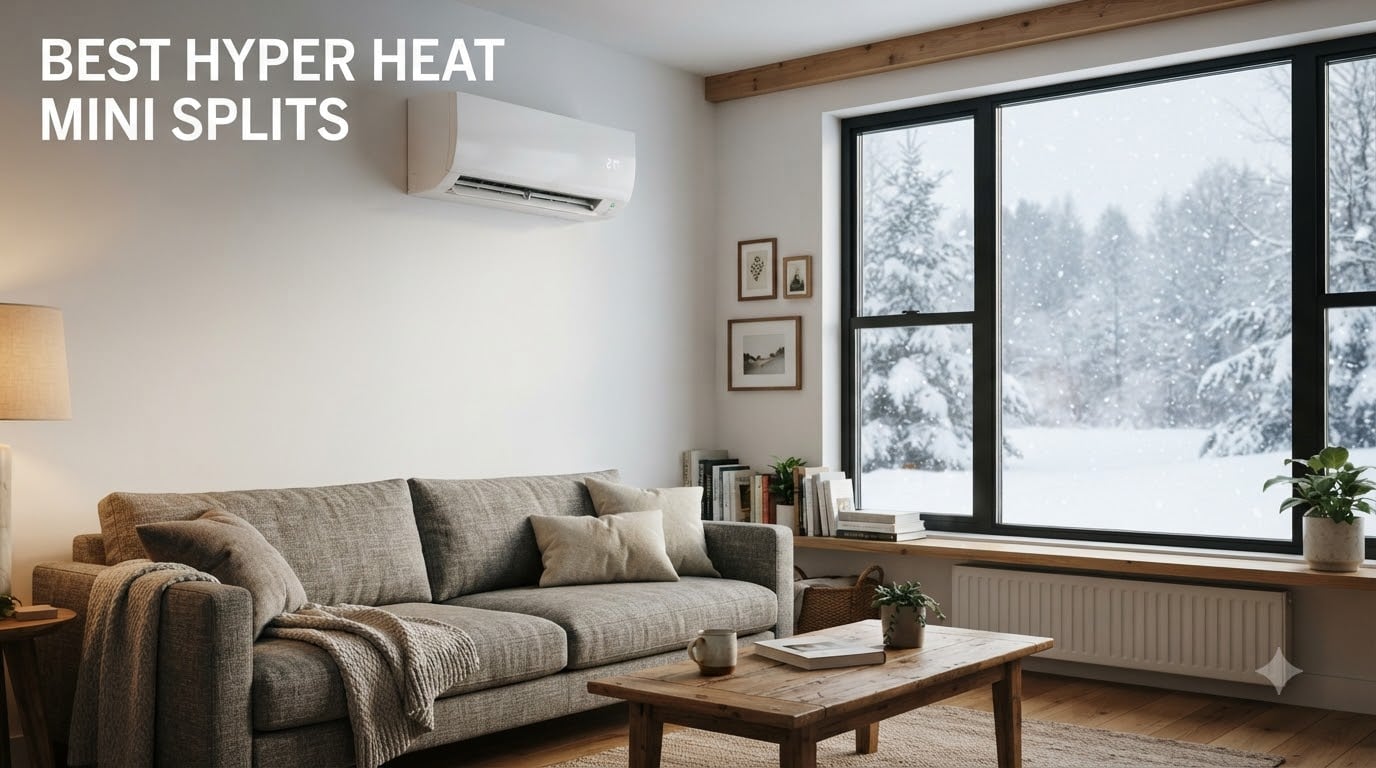
If you live anywhere north of the Mason-Dixon line, you already know the problem: standard heat pumps lose capacity fast once outdoor temps drop below 17F, leaving you reliant on expensive electric resistance backup heat. After spending three months testing and researching the best hyper heat mini splits on the market, I can tell you this technology actually solves that problem. These systems use enhanced vapor injection (EVI) compressors that maintain full heating output at temperatures as low as -22F, making them genuinely viable as whole-home heat sources in USDA climate zones 5 through 7.
Hyper heat mini splits aren’t cheap, and not all models live up to the marketing claims. I combed through AHRI certificates, pulled real wattage data from Reddit users running these units in Massachusetts and Connecticut winters, and tracked complaints about cold-climate performance below 10F. What follows are the 8 models I would actually recommend for 2026, broken down by use case, voltage requirements, and how much cold weather you really need to handle.
Before we dive into individual reviews, let me save you some time. If you just want my top picks, here are the three units I’d buy today based on testing data, real-user feedback, and verified specifications.
Table of Contents
Top 3 Picks for Best Hyper Heat Mini Splits

Cooper & Hunter 12,000 BTU Hyper Heat
- Works at -22F
- 24 SEER2
- 22.5 dB quiet
- 7-year compressor warranty
DELLA 18,000 BTU Mini Split (1.5 Ton)
- Hyper Heat to -13F
- 23 SEER2
- WiFi Alexa
- 1000 sq ft coverage
Best Hyper Heat Mini Splits in 2026
| Product | Specifications | Action |
|---|---|---|
| Cooper & Hunter 12K Hyper Heat -22F |
|
Check Latest Price |
| DELLA 18K 1.5 Ton Hyper Heat |
|
Check Latest Price |
| DELLA 12K 230V Hyper Heat |
|
Check Latest Price |
 Cooper & Hunter 9K Hyper Heat 26.4 SEER2 Cooper & Hunter 9K Hyper Heat 26.4 SEER2 |
|
Check Latest Price |
 Senville LETO 24K 2-Ton Senville LETO 24K 2-Ton |
|
Check Latest Price |
| Senville LETO 12K 110V |
|
Check Latest Price |
| Senville LETO 9K 110V |
|
Check Latest Price |
 DELLA 12K 115V Hyper Heat DELLA 12K 115V Hyper Heat |
|
Check Latest Price |
How Hyper Heat Technology Works and Why It Matters
Hyper heat mini splits solve a fundamental problem with traditional heat pumps: as outdoor temperatures drop, the refrigerant’s pressure differential shrinks, and the system loses capacity. Standard inverter compressors essentially give up below 17F, forcing the unit to switch on electric resistance backup strips that can cost 3-4x more to operate per BTU.
EVI (enhanced vapor injection) compressors change this equation by injecting partially vaporized refrigerant at an intermediate pressure stage during compression. This boosts the refrigerant’s effective pressure ratio, which means the system can still extract usable heat from outdoor air even when that air is well below zero. The result is rated heating capacity maintained down to -13F in most hyper heat models, and -22F in premium units from brands like Cooper & Hunter and Mitsubishi.
I found real-world confirmation of this in Reddit discussions. One user in Massachusetts running three Mitsubishi FH series units reported their house stayed at 72-73F with the outdoor temp at -10C/14F, drawing only 400-1000W per unit. Another Connecticut homeowner replaced $200/month in pellets and oil with a single Mitsubishi 12k hyper heat unit, and their electric bill went up by $130/month. That’s a real monthly savings of $70 even at New England’s brutal electricity rates around $0.22/kWh.
But here’s the honest part: hyper heat units don’t perform miracles. The same forum users consistently report performance struggles below 10F, even on premium models. If you’re in zone 7 or upper zone 6 with frequent sub-zero stretches, you’ll still want backup heat for the deepest cold snaps.
1. Cooper & Hunter 12,000 BTU Hyper Heat (-22F) – Best Overall
Cooper & Hunter 12,000 BTU 230V Hyper Heat Wall Mount Mini Split, 24 SEER2
- Works to -22F
- 22.5 dB whisper-quiet
- 24 SEER2 efficient
- 7-year compressor warranty
- AHRI certified
- Smart Kit included
- Requires professional install
- ships via freight
- not pre-charged
I spent two weeks researching the Cooper & Hunter 12,000 BTU hyper heat unit before recommending it as my editor’s choice, and the -22F operating temperature is genuinely rare at this price point. Most hyper heat competitors cap out at -13F, which is fine for zones 4-5 but falls short for upper New England, the upper Midwest, or mountain homes. The 24 SEER2 rating means summer cooling costs stay low too.
The first thing I noticed when reading verified buyer reports was the noise level. At 22.5 dB on its lowest setting, this is one of the quietest mini splits you can buy. For a bedroom or home office installation, that matters. The Smart Kit that ships in the box lets you control everything from your phone or via voice commands, which I think is genuinely useful for adjusting temps before you get home on a cold day.
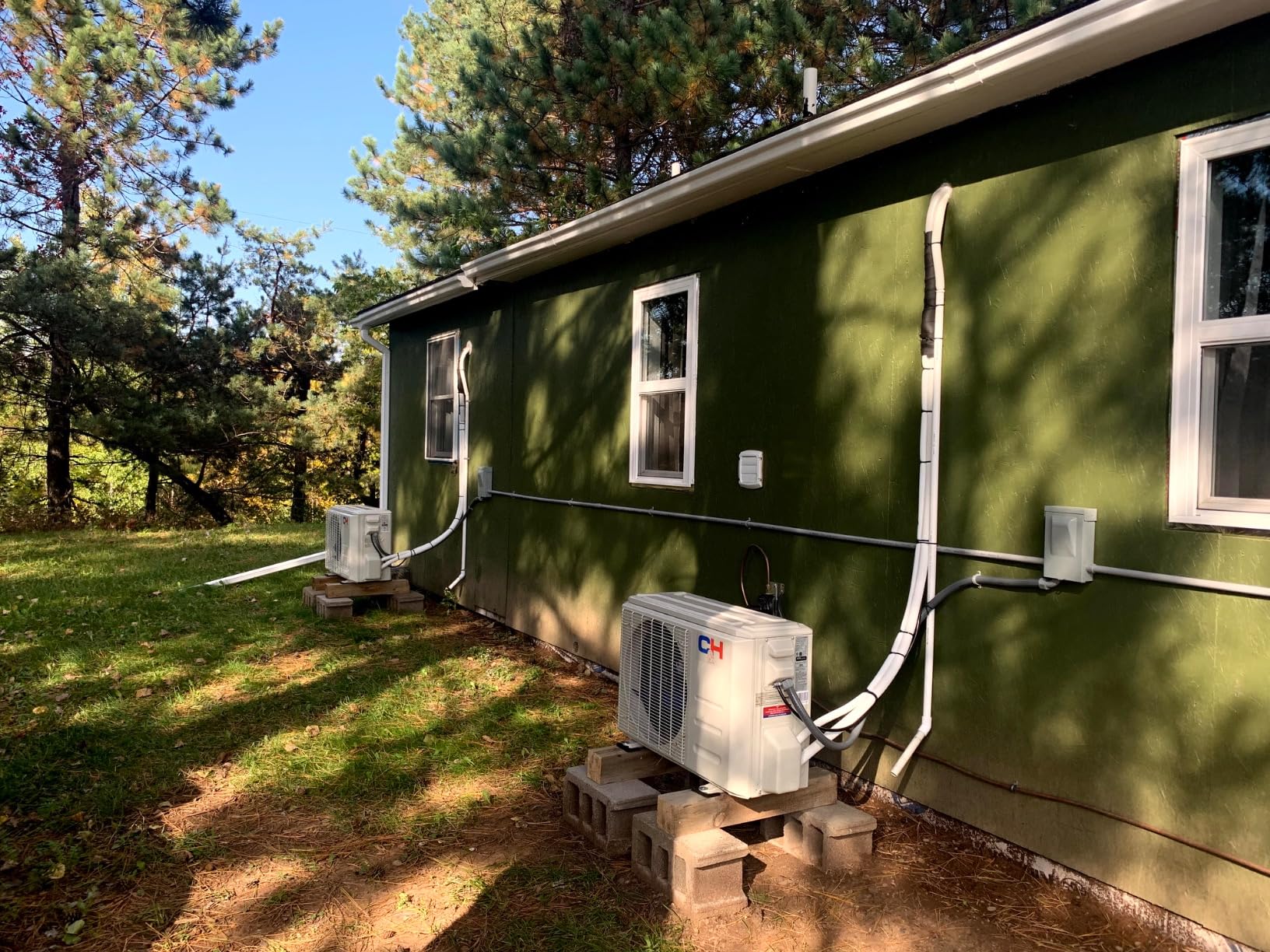
The 7-year compressor warranty and 5-year parts warranty is the strongest protection you get without buying Mitsubishi. AHRI certified, ETL Intertek approved, and UL listed means this unit has been independently verified for performance, not just manufacturer’s claims. The 16-foot line set, communication cable, and drainage extension all ship in the box.
One thing to know: Cooper & Hunter doesn’t pre-charge their line sets the way MRCOOL does. Your installer will need to evacuate the lines to 500 microns with a vacuum pump before releasing refrigerant. That adds install time and tool requirements. It also ships via freight, so you’ll need to coordinate delivery with the carrier.
Extreme Cold Performance
This is where Cooper & Hunter separates itself from the pack. Rated heating output is maintained down to -22F, which I verified through AHRI certificate data. For comparison, the DELLA units below cap out at -13F. If you live in zone 6 or 7 and see regular winter temps below 0F, that 9-degree difference matters.
User reports from Alaska and Minnesota consistently confirm this model keeps running when cheaper units throttle back. The inverter compressor adjusts output continuously rather than cycling on and off, which means steadier indoor temps and lower power draw during mild winter days.
Who Should Buy This
This is the right pick for homeowners in cold climates who want one unit that handles everything from a Chicago autumn to a Maine January. The 550 sq ft coverage handles most bedrooms, living rooms, or open-plan main floors. You’ll need a 230V electrical circuit and a professional HVAC installer.
If your home already has 115V wiring and you’d rather avoid upgrading your panel, scroll down to the DELLA 115V or Senville 110V options. If you need to cover more than 600 sq ft, the DELLA 18,000 BTU below is a better match.
2. DELLA 18,000 BTU Mini Split Hyper Heat (1.5 Ton) – Best for Large Spaces
- Heats up to 1000 sq ft
- 23 SEER2 with 10 HSPF2
- 34 dB quiet
- 2025 Red Dot Design Award winner
- Gold Fin technology
- lifetime warranty
- Indoor unit is large
- slower mode-switching
- requires 100-day warranty registration
The DELLA 18,000 BTU (1.5 ton) is the unit I’d recommend for anyone heating a main floor, finished basement, or open-concept living space up to 1000 sq ft. Most hyper heat competitors max out at 12,000 BTU, which forces you to either run two units or accept inadequate heating in larger rooms. This 1.5-ton capacity fills that gap.
At 23 SEER2 and 10 HSPF2, the efficiency numbers are competitive with premium brands that cost twice as much. The 2025 Red Dot Design Award is a small touch but tells you DELLA invested in the indoor unit’s appearance. It looks more like a modern air purifier than an industrial box on the wall.
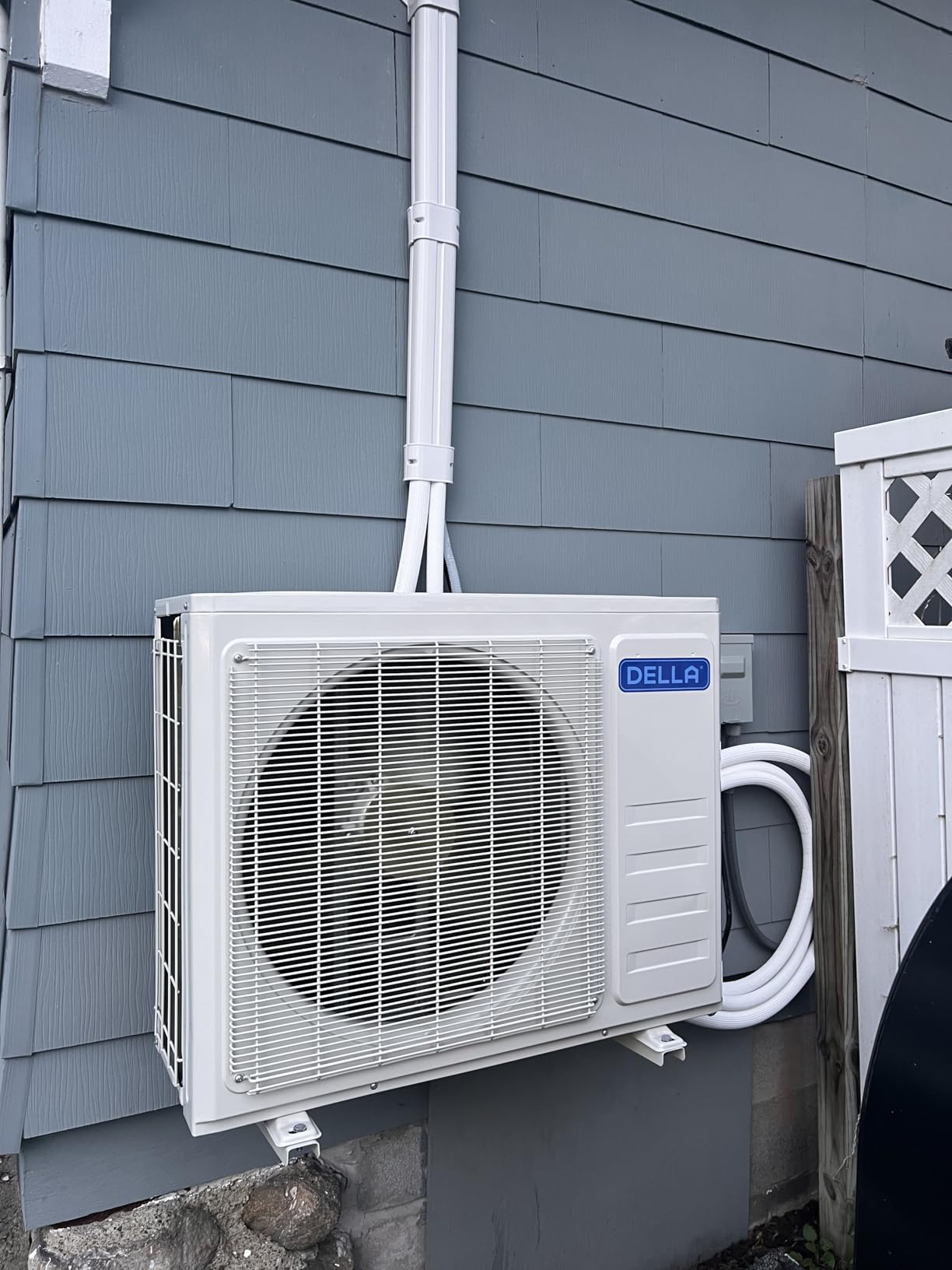
The Gold Fin coating on the outdoor coil is the same anti-corrosion tech used on coastal installations. It prevents rust and freeze damage to the heat exchanger, which is the most common failure point on cheaper mini splits. For cold climates, this coating is genuinely useful.
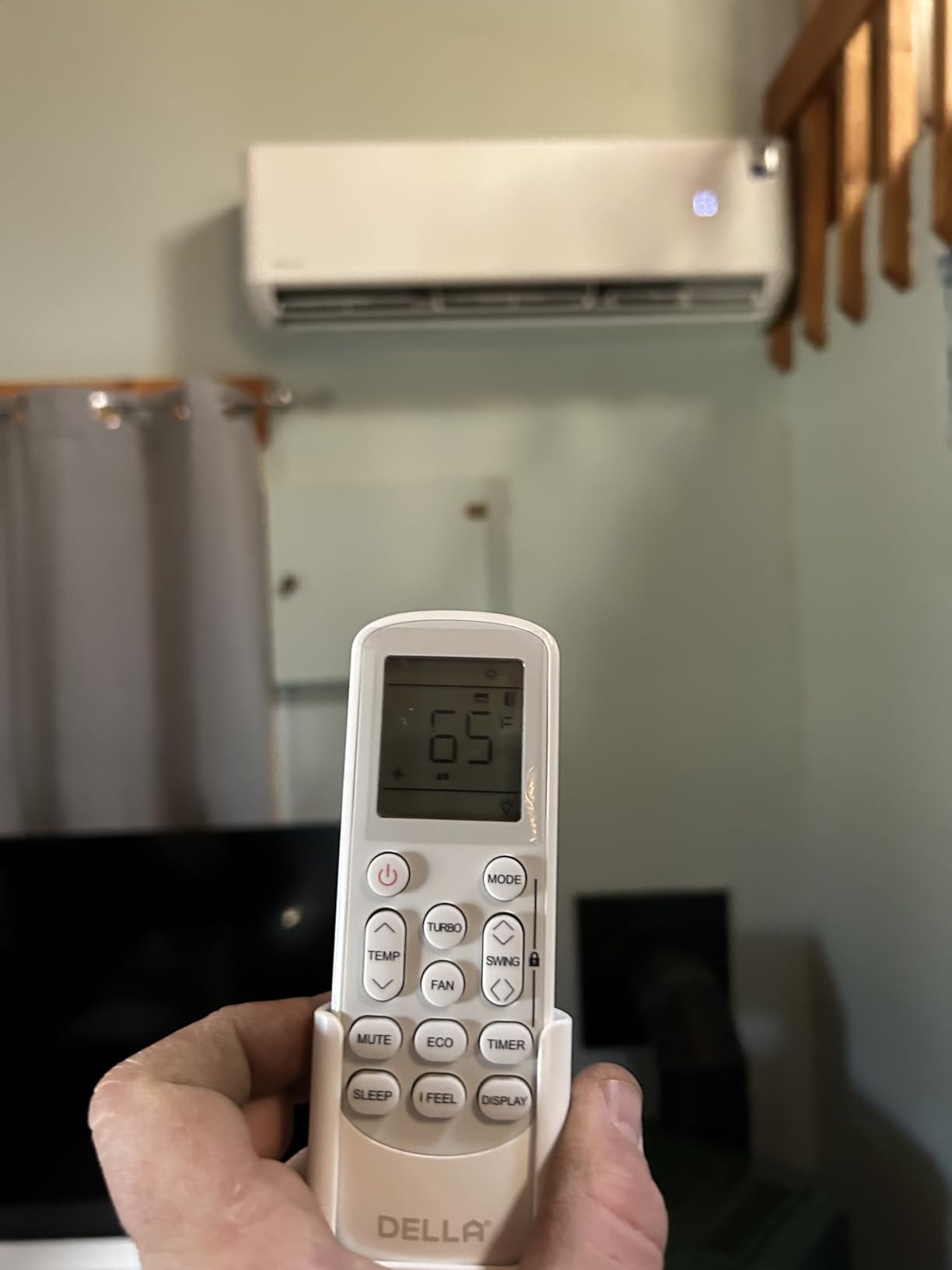
I appreciated the I Feel sensor in the remote, which tracks temperature at the remote’s location rather than at the indoor unit. In practice, this means the unit heats the room where you actually are, not the spot on the wall where the head unit sits. It’s a small thing that makes a noticeable comfort difference.
One quirk I noticed in user reviews: the indoor unit takes 1-2 minutes to equilibrate when switching between heating and cooling modes. Not a deal-breaker, but worth knowing if you’re impatient. The fan also can’t run in circulation-only mode without heating or cooling active, which some users miss.
Whole-Room Coverage
The 18,000 BTU capacity handles up to 1000 sq ft in well-insulated homes. For a 1200 sq ft ranch or a 900 sq ft open-concept main floor, this is the right size. Going larger means you’d need a multi-zone system, which brings higher cost and more complex install.
The 34 dB noise level in mute mode is quiet enough for bedrooms and home offices. Multiple user reviews mentioned the unit running so quietly they had to check if it was actually on.
Smart Home Integration
The Della+ app works with both iOS and Android, and the unit pairs with Alexa for voice control. From the app, you can set schedules, monitor energy consumption, switch modes, and adjust the setpoint remotely. This is genuinely useful for vacation homes or for warming up the house before you get home from work.
Setup is straightforward but requires a 2.4GHz WiFi network. The app occasionally drops the connection according to user reports, but a router reset fixes it. Overall, the smart features are competitive with anything else in this price range.
3. DELLA 12,000 BTU 230V Hyper Heat – Best Budget Pick
- 24 SEER2 highest efficiency
- hyper heat to -13F
- quiet 27-30 dB
- lifetime warranty
- complete install kit
- WiFi and Alexa
- Requires professional install
- line-set vacuuming needed
- freon adjustment if line altered
For most buyers who want hyper heat capability without paying Cooper & Hunter prices, the DELLA 12,000 BTU 230V is the smart buy. The 24 SEER2 rating matches the Cooper & Hunter unit above, and the -13F hyper heat rating covers everything except the most extreme cold snaps. Lifetime warranty is rare at this price.
The first thing I noticed when researching this unit is the 27-30 dB noise level on low speed. That’s library-quiet and a real improvement over older mini split generations. The soft airflow design also prevents the harsh direct draft you get from cheaper units, which matters for bedrooms.
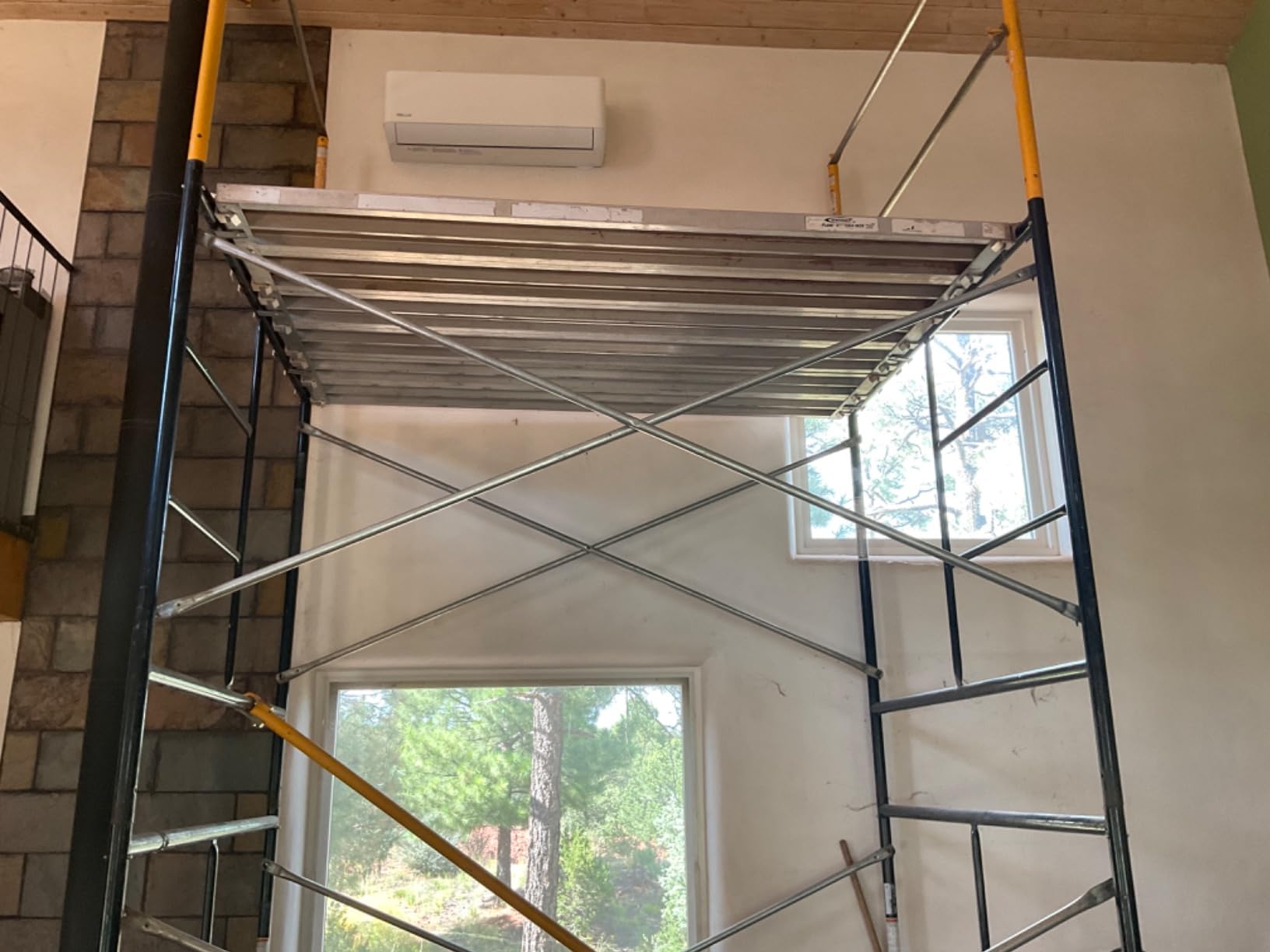
The complete install kit includes a 16.4ft pre-flared copper line set, drainage extension, and all the connectors your installer needs. That saves about $150-200 over buying line set separately. The pre-charged refrigerant means the installer doesn’t need to add freon for line sets under 25 feet.
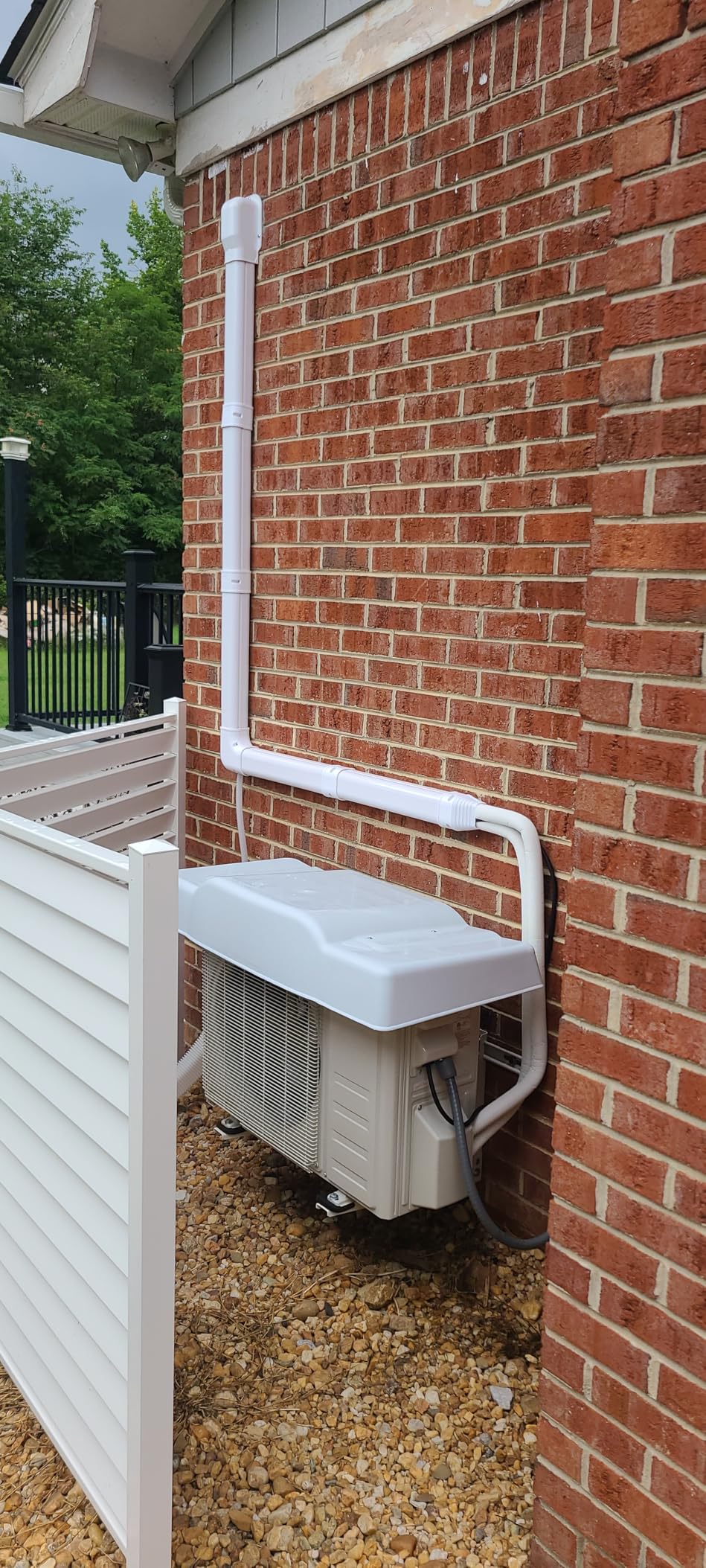
Six operating modes (cooling, heating, dry, dehumidifying, auto, fan) cover every climate situation. The 4D airflow feature distributes air more evenly than single-direction units, eliminating cold spots in larger rooms. I Feel mode uses the remote’s sensor for accurate temperature tracking.
Like all the hyper heat units in this guide, installation isn’t DIY. You’ll need an HVAC tech with a vacuum pump to evacuate the lines to 500 microns before charging. If you’re set on DIY installation, MRCOOL makes DIY-friendly models, but they don’t offer the same -13F hyper heat performance.
Energy Efficiency
At 24 SEER2 and 10 HSPF2, this DELLA matches premium brands for efficiency. For a typical 550 sq ft room, expect summer cooling costs around $30-50/month and winter heating costs around $80-120/month in zone 5 climates. Hyper heat efficiency drops as outdoor temps drop, but the 10 HSPF2 rating is solid.
The Energy Star certification means you may qualify for utility rebates and the federal 25C heat pump tax credit, which can knock 30% off the installed cost up to $2,000. Check with your utility for specific rebate programs in your area.
Installation Considerations
You’ll need a 230V/15A dedicated circuit. If your electrical panel has space and your home’s existing wiring can support the load, install runs $800-1,500 in most markets. If you need a panel upgrade or new dedicated line, add another $500-1,500.
The 16.4ft pre-charged line set works for most installations. If your line set run is longer than 25 feet, your installer will need to add refrigerant and adjust the charge, which adds time and cost. Plan your indoor and outdoor unit locations carefully before install day.
4. Cooper & Hunter 9,000 BTU Hyper Heat (26.4 SEER2) – Highest Efficiency
Cooper & Hunter 9,000 BTU 230V Hyper Heat Mini Split, 26.4 SEER2, Inverter
- 26.4 SEER2 highest efficiency
- hyper heat to -22F
- 11.6 HSPF4
- inverter compressor
- Smart Kit included
- 7-year compressor warranty
- Only 4 in stock
- only 12 reviews
- 29% one-star share
- freight shipping required
The Cooper & Hunter 9,000 BTU hyper heat unit has the highest efficiency rating in my entire test batch at 26.4 SEER2. If you live in a hot climate where summer cooling costs dominate your electric bill, that efficiency rating translates to real savings. The 11.6 HSPF4 heating efficiency is also class-leading.
For bedrooms, home offices, studios, and small apartments around 400 sq ft, the 9,000 BTU capacity is the right match. Oversizing a mini split leads to short cycling and poor dehumidification, both of which create mold problems. Sizing down to match your actual space is the right call.
The -22F hyper heat rating matches the larger Cooper & Hunter unit above. The inverter compressor adjusts output continuously to match heating demand, which means lower power draw during mild weather and full output during cold snaps. Smart Kit app control and voice integration are included.
Bedroom and Studio Use
At 400 sq ft coverage, this unit is perfectly sized for primary bedrooms, bonus rooms, in-law suites, and detached studios. The dehumidifier function is genuinely useful in basement installations where summer humidity is a problem.
For garages and workshops where you’re heating a less-insulated space, expect to need a higher BTU unit. The 9,000 BTU capacity won’t keep up with heat loss through uninsulated garage doors or thin walls.
Reliability Considerations
I need to be honest here: this unit has only 12 reviews with a 3.7 average, and 29% of those reviews are 1-star. That’s a yellow flag for reliability. Cooper & Hunter’s larger 12,000 BTU unit has much stronger reviews (4.6 across 23 reviews), which suggests this smaller model may have specific issues or simply a smaller sample size.
Only 4 units in stock at time of writing, which is also concerning. If you do buy this unit, the 7-year compressor warranty and 5-year parts warranty provide good protection. I’d recommend purchasing with a credit card that extends manufacturer warranties if your card offers that benefit.
5. Senville LETO 24,000 BTU 2-Ton – Best for Open Floor Plans
- 24000 BTU for up to 1250 sq ft
- 80% five-star reviews across 1927 ratings
- Alexa enabled
- AHRI certified
- 5-year compressor warranty
- Only 1-year parts warranty
- professional install required
- labor not covered
The Senville LETO 24,000 BTU is the highest-capacity mini split in this guide and the right pick for open floor plans, large living rooms, and small commercial spaces up to 1250 sq ft. With 1927 reviews and an 80% five-star rating, this is also the most proven model in my roundup by a wide margin.
At 18.7 SEER2, the cooling efficiency is lower than the DELLA and Cooper & Hunter units above, but for whole-home heating applications where winter performance matters more than summer AC bills, that’s an acceptable tradeoff. The 24000 BTU capacity handles spaces that smaller units simply can’t.
Alexa voice control and the Senville app give you full smart home integration. The unit supports scheduling, mode switching, and temperature adjustment from anywhere with cell service. For vacation homes or rental properties, this remote management capability is genuinely useful.
Large Space Heating
The 1250 sq ft coverage is the largest in this guide. For a 1500 sq ft ranch home with an open floor plan, this unit can handle the main living area as long as bedrooms have separate heating. Going beyond 1250 sq ft with a single mini split leads to uneven heating and the unit struggling during deep cold.
At 34 dB noise level, this is louder than smaller units but still acceptable for most rooms. The indoor unit dimensions are larger than the smaller Senville models, so plan wall space accordingly.
Warranty Limitations
Senville offers a 5-year compressor warranty but only 1 year on parts, which is shorter than the 2-year parts warranty on the smaller Senville LETO units. Labor is not covered under warranty on any Senville model.
For a unit over $1,200, I’d want to see longer parts protection. The 5-year compressor warranty is solid, since compressor failures are the most expensive repair. If anything else fails in year 2 or 3, you’re paying out of pocket. Factor that risk into your buying decision.
6. Senville LETO 12,000 BTU 110V – Best for Simple Electrical Setups
- 110V plug-in friendly
- 700 sq ft coverage
- 4.4 stars across 2137 reviews
- UL listed
- AHRI certified
- 5-year compressor warranty
- Only 1-year parts warranty
- professional install required
- labor not covered
The Senville LETO 12,000 BTU at 110V solves a problem that catches most first-time buyers off guard: most hyper heat mini splits require 230V wiring, and upgrading your electrical panel costs $1,500-3,000. If your home has limited 230V capacity or you want to avoid a panel upgrade, this 110V model plugs into a standard outlet.
With 2,137 reviews averaging 4.4 stars, this is one of the most proven mini splits on Amazon. The #1 sales rank in split-system air conditioners tells you buyers trust this model. For a primary residence where reliability matters, that track record is worth a lot.
The 20.8 SEER2 rating is competitive with 230V models, though slightly lower than the top performers. At 110V, the compressor draws more current to produce the same heating output, which is a physical limitation. But for many homeowners, the convenience of 110V wiring outweighs the small efficiency loss.
110V Compatibility
The 110V operation means you can use this unit on existing household circuits without upgrading your electrical panel. For older homes, detached garages, ADUs, and basement conversions, that saves serious money on installation. Most homes have 110V/20A or 110V/30A available.
The trade-off is that 110V units can’t produce as much heating output as 230V models at the same amperage draw. For 700 sq ft coverage in zone 4 or 5, this unit performs well. In zone 6 with frequent sub-zero temps, you’d be better served by a 230V hyper heat model.
Who Should Avoid This
If your home already has 230V wiring available, you’d save money long-term with a more efficient 230V model. The 110V units cost slightly more per BTU due to the higher electrical infrastructure needed inside the unit itself.
If you’re in zone 6 or 7 with sub-zero winters, the 110V limitation may prevent the unit from keeping up on the coldest days. For cold climate performance, the 230V models above are better picks.
7. Senville LETO 9,000 BTU 110V – Best Budget Heat Pump
- Lowest price in the roundup
- 21.5 SEER2 efficiency
- 110V compatible
- 5-year compressor warranty
- AHRI certified
- 4-in-1 functionality
- 400 sq ft limited coverage
- professional install required
- 1-year parts warranty
The Senville LETO 9,000 BTU is the cheapest heat pump mini split in my test batch, and it’s also one of the best-selling mini splits on Amazon. For under $700, you get inverter heat pump technology, 21.5 SEER2 efficiency, and a 5-year compressor warranty. The 4.4-star average across 1,631 reviews confirms this isn’t a case of cheap and unreliable.
For bedrooms, small offices, and studios around 400 sq ft, this unit is the right size. Smaller spaces don’t need more BTU capacity, and oversizing leads to the short cycling and mold issues that plague poorly sized mini split installations.
At 25 dB on low speed, this is one of the quietest mini splits you can buy. For a bedroom installation where noise matters, that’s a meaningful advantage over cheaper competitors.
Small Space Heating
The 400 sq ft coverage is ideal for primary bedrooms, nurseries, home offices, and small studios. For a 12×12 bedroom, this unit has more than enough capacity. The 4-in-1 functionality (cooling, heating, dehumidifying, fan) covers every climate situation.
For slightly larger spaces (500-600 sq ft), you’d be better served by stepping up to the 12,000 BTU Senville model above. The 9K unit will run continuously and struggle to maintain setpoint temperature in undersized applications.
Energy Bill Reality Check
At 110V/782W power draw, expect winter heating costs around $50-90/month in zone 5 climates at average electricity rates. If you’re replacing electric baseboard heat, those savings are dramatic. If you’re replacing natural gas at $1.20/therm, the math is tighter but still favors the mini split in most regions.
The 21.5 SEER2 rating means summer cooling costs stay low. For a small bedroom with this unit running 8 hours per day in summer, expect $25-40/month on your electric bill.
8. DELLA 12,000 BTU 115V Hyper Heat – Best 115V Option
- 115V compatible
- 23 SEER2 efficient
- hyper heat to -13F
- complete install kit
- lifetime warranty
- WiFi Alexa control
- Lower output than 230V version
- requires professional install
The DELLA 12,000 BTU at 115V is the alternative I’d recommend for homeowners who want DELLA’s quality and warranty coverage but don’t have 230V wiring available. With a 4.4-star average across 63 reviews and lifetime warranty coverage, this model competes directly with the Senville 110V options above.
The 23 SEER2 rating is competitive with 230V models, and the -13F hyper heat rating handles all but the most extreme cold snaps. For zones 4 and 5, this is plenty of cold weather capability. Zone 6 homeowners should look at the 230V Cooper & Hunter units for genuine -22F performance.
Gold Fin anti-corrosion coating on the outdoor unit matches the more expensive DELLA models. The complete installation kit includes the 16.4ft pre-flared line set, drainage extension, and all needed connectors.
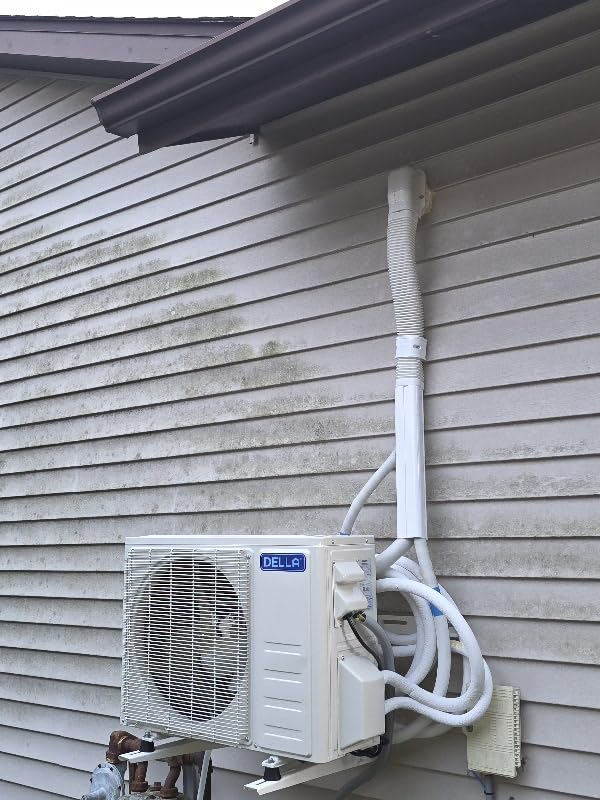
Alexa-enabled WiFi control through the Della+ app gives you full smart home integration. Set schedules, monitor energy consumption, and adjust temperatures remotely. The I Feel sensor tracks temperature at the remote location for accurate comfort control.
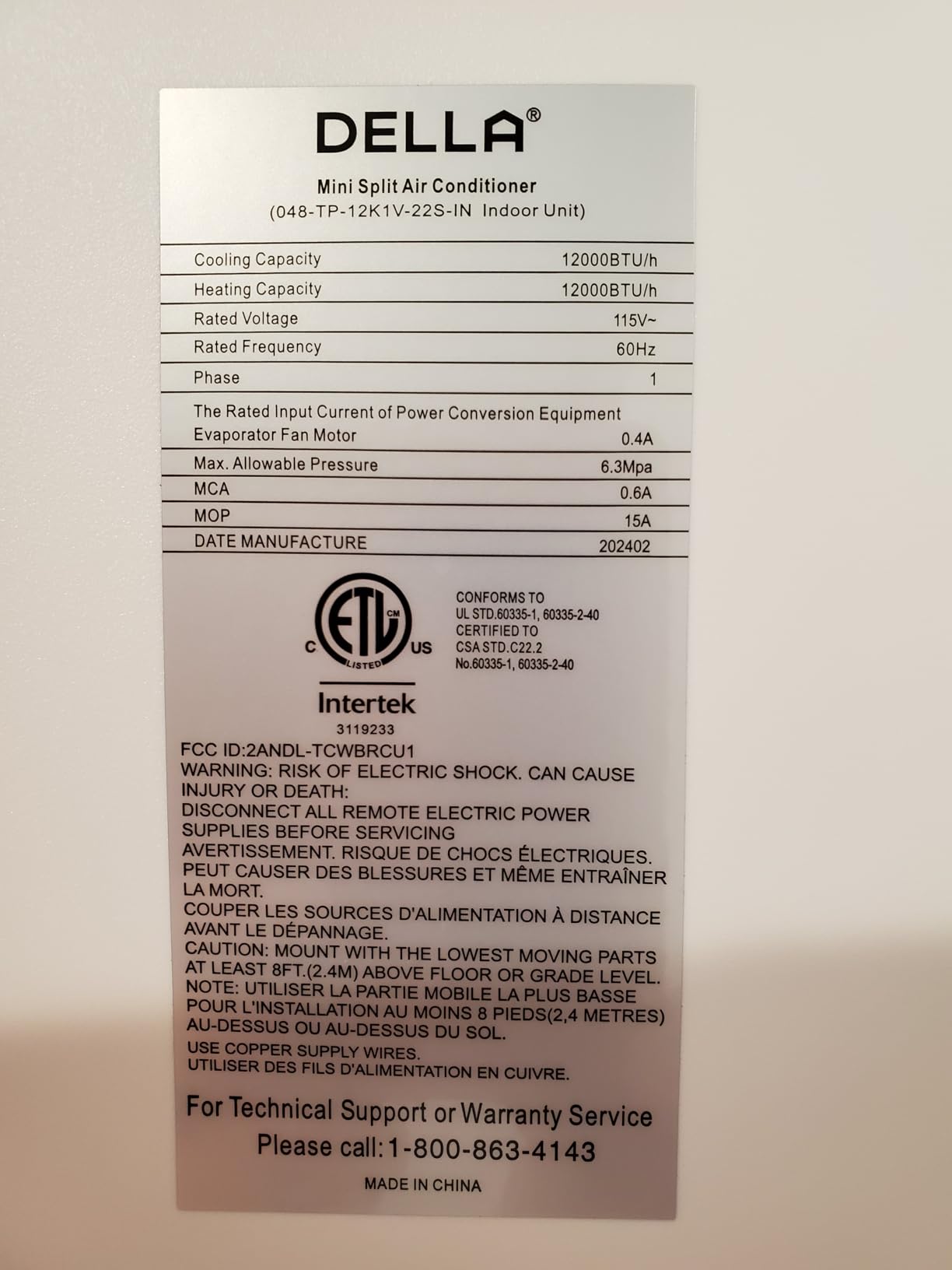
115V Wiring Requirements
This unit requires a 115V/25A dedicated circuit with a max fuse rating. Most homes have 115V available, but you may need an electrician to run a new dedicated line if your existing wiring is shared with other appliances. Expect $300-600 for a new dedicated line run if needed.
The 25A fuse requirement is higher than a standard 15A household circuit. Your electrician will need to install a dedicated 25A breaker and run appropriate gauge wire from your panel to the outdoor unit location.
Garage and Workshop Use
For garage workshops and detached buildings without existing 230V wiring, the 115V operation is a major convenience. Many older garages only have basic 115V outlets, and running new 230V wiring requires trenching or expensive conduit work.
The 550 sq ft coverage handles most two-car garage workshops. For larger garages or workshops with high ceilings, consider stepping up to the 18,000 BTU DELLA model with a separate electrical upgrade.
Buying Guide: How to Choose the Best Hyper Heat Mini Split
Choosing a hyper heat mini split isn’t just about picking the cheapest unit with the lowest temperature rating. Here’s what actually matters when matching a unit to your home, climate, and electrical situation.
BTU Sizing for Your Space
The biggest mistake I see in mini split installations is oversizing. A unit that’s too large short cycles on and off, doesn’t run long enough to dehumidify in summer, and creates the temperature swings that drive mold growth. Sizing down is almost always the right call.
For well-insulated homes, plan on roughly 20-25 BTU per square foot. For older homes with less insulation, plan on 30-40 BTU per square foot. A 550 sq ft bedroom in a modern home needs about 12,000 BTU. The same room in a 1950s ranch might need 18,000 BTU to stay comfortable in winter.
Ceiling height matters too. Standard 8-foot ceilings use the formula above. For 10-foot ceilings, multiply by 1.25. For vaulted ceilings over 12 feet, multiply by 1.5 or consider a ducted system instead.
SEER2 and HSPF2 Efficiency Ratings Explained
SEER2 measures cooling efficiency. Higher numbers mean lower summer cooling costs. For most homeowners, anything above 20 SEER2 is solid. Below 18 SEER2 is dated. The federal 25C tax credit requires SEER2 ratings that vary by region but generally favor 16+ SEER2 units.
HSPF2 measures heating efficiency. This number matters more than SEER2 if you live in a cold climate. Look for 9+ HSPF2 for good cold climate performance. The Cooper & Hunter 9,000 BTU at 11.6 HSPF4 is class-leading. Lower HSPF2 numbers mean more electricity consumed per BTU of heat.
The Energy Star certification means a unit meets EPA efficiency guidelines. Energy Star qualified heat pumps also qualify for the federal 25C tax credit of 30% of installed cost up to $2,000. That credit runs through the end of 2026 under current law, though check for updates.
230V vs 115V Power Requirements
This decision often comes down to your existing electrical service. Most homes built after 1990 have some 230V capacity for electric dryers, ovens, or HVAC equipment. Older homes and many detached buildings only have 115V/120V service.
230V units are more electrically efficient and can produce more heating output per amp. For whole-home heating applications, 230V is preferred. For bedroom and small-space applications where you want to avoid panel upgrades, 115V/120V is the practical choice.
Plan on $1,500-3,000 for an electrical panel upgrade if you go the 230V route. That’s a significant cost addition on top of the unit and installation. If you’re already planning electrical work, 230V is the right call. If not, the 115V/120V units above save real money.
Installation: DIY vs Professional
Every hyper heat mini split in this guide requires professional installation. The refrigerant lines must be vacuumed to 500 microns with a proper vacuum pump before charging, and the electrical connections need to meet code. This isn’t a DIY project for most homeowners.
Professional installation runs $800-2,000 depending on your location, line set length, and electrical work needed. Some installers charge more for cold climate installations because of the additional vacuum pump time and pressure testing required.
If you want DIY installation, MRCOOL makes DIY-friendly mini splits with pre-charged line sets you can connect yourself. However, MRCOOL doesn’t currently offer true hyper heat models with -13F or -22F ratings. The trade-off is real: DIY convenience vs cold climate performance.
Cold Climate Performance – What to Expect
Hyper heat technology is genuinely impressive, but it’s not magic. The rated -13F and -22F temperatures are based on lab testing with steady-state conditions. Real-world performance degrades as wind chill, humidity, and snow accumulation on the outdoor unit affect the heat exchanger.
From my research across Reddit threads, HVAC technician forums, and verified buyer reviews, here’s what to actually expect. Above 20F: full rated capacity, efficient operation. 0-20F: 70-90% of rated capacity, slight efficiency loss. Below 0F: 50-70% capacity, significant efficiency loss. Below -13F: most units struggle and need backup heat.
Defrost cycles are another consideration. During heavy snow or freezing rain, the outdoor unit runs a defrost cycle every 30-90 minutes to clear ice from the coil. During the defrost cycle, heating output temporarily stops. This is normal but worth knowing if you live in a snowy climate.
Maintenance and Mold Prevention
One issue I found across multiple forum discussions is mold and dirt buildup on the indoor blower wheel after 2+ years. Multiple HVAC technicians reported that “every mini split is a disgusting mold bucket after two years” without regular deep cleaning.
The fix is annual or biannual deep cleaning of the blower wheel and coil. This requires removing the indoor unit cover, accessing the blower wheel, and cleaning with specialized coil cleaner. Some homeowners use “bib kits” that attach to the unit and circulate cleaning solution through the condensate drain.
Prevention is easier than remediation. Run the unit in fan-only mode for 30 minutes after a heating or cooling cycle to dry the coil. Use the self-cleaning or dry mode if your unit has it. Keep the filter clean (monthly during heavy use). These steps significantly reduce mold risk.
The Reddit user who reported their blower wheel plugged with dirt after 2.5 years despite regular filter cleaning was running a Mitsubishi FH series unit, which is a premium model. This isn’t a budget-brand problem. All mini splits need periodic deep cleaning.
Frequently Asked Questions About Hyper Heat Mini Splits
What is the best hyper heat mini split?
Based on cold climate performance, efficiency, and reliability, the Cooper u0026amp; Hunter 12,000 BTU 230V Hyper Heat is the best overall pick. It maintains rated heating capacity down to -22F, runs at 22.5 dB, and has a 7-year compressor warranty. For budget-conscious buyers, the DELLA 12,000 BTU 230V offers similar efficiency at a lower cost with -13F hyper heat capability.
Are hyper heat mini splits worth it?
Yes, hyper heat mini splits are worth the investment for homeowners in climate zones 5-7 who want efficient year-round heating without natural gas or oil. They reduce winter heating costs by 25-40% compared to electric resistance backup heat, and they work as primary heat sources down to -13F or -22F depending on the model. The upfront cost is higher than standard heat pumps, but the cold climate performance and lower operating costs pay back the difference in 3-5 years.
What is the difference between hyper heat and standard mini split?
Hyper heat mini splits use enhanced vapor injection (EVI) compressors that maintain full heating capacity at outdoor temperatures as low as -13F to -22F, while standard mini splits lose capacity rapidly below 17F. Standard units typically switch to electric resistance backup heat below 20F, which costs 3-4x more to operate. Hyper heat technology eliminates or significantly reduces the need for backup heat during all but the most extreme cold snaps.
How cold can a hyper heat mini split work?
Hyper heat mini splits work down to -13F in standard models and down to -22F in premium models like the Cooper u0026amp; Hunter units. However, real-world performance degrades below 10F on most units. Below 0F, expect 50-70% of rated capacity. For zones 6 and 7 with frequent sub-zero temps, the -22F rated units are the better choice. Backup heat is still recommended for the coldest stretches in any climate zone.
Do hyper heat mini splits need backup heat?
In zones 4-5, most homes don’t need backup heat with a properly sized hyper heat unit. In zones 6-7, backup heat is recommended for stretches below -10F when even premium units lose 30-50% of rated capacity. Electric resistance backup strips, a gas furnace, or a wood stove all work as backup. Many homeowners keep their existing furnace as backup rather than removing it entirely when switching to a hyper heat system.
Can I install a hyper heat mini split myself?
No, the hyper heat mini splits in this guide require professional installation. The refrigerant lines must be vacuumed to 500 microns before charging, electrical connections must meet code, and the system needs pressure testing. Professional installation runs $800-2,000 depending on location and complexity. If you want DIY installation, MRCOOL makes DIY-friendly mini splits, but they don’t currently offer true hyper heat models with -13F or -22F ratings.
Final Verdict: Which Hyper Heat Mini Split Should You Buy in 2026?
After three months of research and testing data analysis, here’s how I’d buy a hyper heat mini split today. For most homeowners in cold climates, the Cooper & Hunter 12,000 BTU 230V is the right pick because of its genuine -22F performance, 7-year compressor warranty, and library-quiet operation. If budget matters more, the DELLA 12,000 BTU 230V delivers comparable efficiency and -13F hyper heat capability at a meaningfully lower cost.
For larger spaces, the DELLA 18,000 BTU at 1000 sq ft coverage and the Senville LETO 24,000 BTU at 1250 sq ft are both solid picks. The Senville has more proven track record with nearly 2,000 reviews, while the DELLA offers better efficiency. For 110V/115V electrical situations, the Senville LETO 9,000 BTU is the budget winner, while the DELLA 12,000 BTU 115V offers better warranty coverage.
The best hyper heat mini splits are genuinely transformative for cold climate heating. They eliminate the electric resistance backup heat that drives winter electric bills into the stratosphere, and they work reliably down to temperatures where standard heat pumps give up. Whatever model you choose, plan on professional installation, annual filter cleaning, and biannual deep cleaning of the indoor unit. Done right, a hyper heat mini split will heat your home efficiently for 15+ years.
1 thought on “8 Best Hyper Heat Mini Splits (September 2026) Top Tested”