
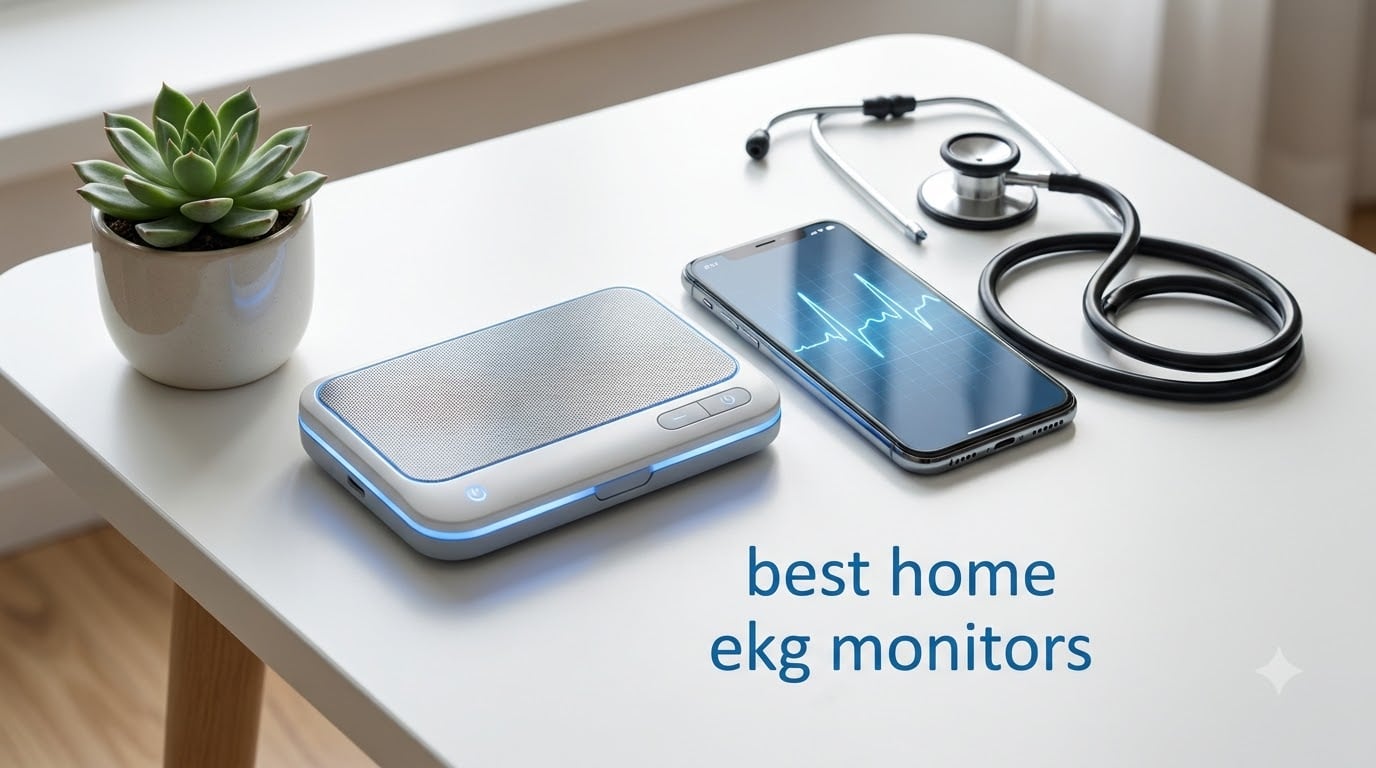
Heart rhythm problems like atrial fibrillation affect millions of people, and catching them early can make a real difference. That is exactly why so many people are now turning to home EKG monitors to keep tabs on their heart health between doctor visits.
When I first started looking into personal EKG devices, I was surprised by how many options exist. From pocket-sized gadgets that pair with your phone to full smartwatches with built-in ECG sensors, the range is wide. The best home EKG monitors combine FDA-cleared accuracy, easy smartphone connectivity, and fast results you can actually understand.
Our team spent weeks comparing 12 of the most popular personal heart monitoring devices on the market. We looked at lead count, detection capabilities, app quality, battery life, and what real users had to say. Whether you are monitoring a known condition like AFib, keeping an eye on occasional palpitations, or looking out for an elderly parent, this guide will help you find the right fit. These devices are for spot-checking and tracking, not replacing your cardiologist.
Table of Contents
Top 3 Picks for Best Home EKG Monitors
If you want a quick recommendation without reading every review, here are our three favorites. Each one earned its spot through a combination of accuracy, ease of use, and value.
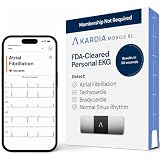
KardiaMobile 6-Lead Personal EKG
- 6-lead FDA-cleared EKG
- 30-second results
- Bluetooth sync
- No subscription needed

KardiaMobile 1-Lead EKG Monitor
- Single-lead FDA-cleared EKG
- Ultra compact
- 83k+ reviews
- No subscription needed

EMAY 6L Portable ECG Monitor
- 6-channel ECG recording
- No subscription
- Works with iOS and Android
- Rechargeable battery
Best Home EKG Monitors in 2026
Here is a side-by-side comparison of all 12 devices we reviewed. Use this table to scan key features quickly, then dive into the individual reviews below for the full picture.
| Product | Specifications | Action |
|---|---|---|
| KardiaMobile 6-Lead EKG |
|
Check Latest Price |
| KardiaMobile 1-Lead EKG |
|
Check Latest Price |
| EMAY 6L Portable ECG |
|
Check Latest Price |
 EMAY Portable ECG EMAY Portable ECG |
|
Check Latest Price |
 OMRON Complete 2-in-1 OMRON Complete 2-in-1 |
|
Check Latest Price |
 Beurer Cardio Companion Beurer Cardio Companion |
|
Check Latest Price |
 HaSoCare EKG Monitor HaSoCare EKG Monitor |
|
Check Latest Price |
 Withings BeamO Withings BeamO |
|
Check Latest Price |
 Withings ScanWatch 2 Withings ScanWatch 2 |
|
Check Latest Price |
 Withings ScanWatch Nova Withings ScanWatch Nova |
|
Check Latest Price |
 Bioheart 24/7 Monitor Bioheart 24/7 Monitor |
|
Check Latest Price |
 KardiaMobile Card KardiaMobile Card |
|
Check Latest Price |
1. KardiaMobile 6-Lead Personal EKG Monitor – Six Views of Your Heart
KardiaMobile 6L EKG, No Membership Required, Unlimited Recordings, HSA/FSA
- Six-lead EKG provides more detailed view than single-lead
- FDA-cleared and clinically accepted
- Detects AFib Bradycardia Tachycardia and Normal Sinus Rhythm
- No subscription required for basic readings
- Bluetooth enabled for easy connectivity
- Only 6 leads not a full 12-lead ECG
- Some arrhythmia detections require subscription
- Not recommended for pacemakers or ICDs
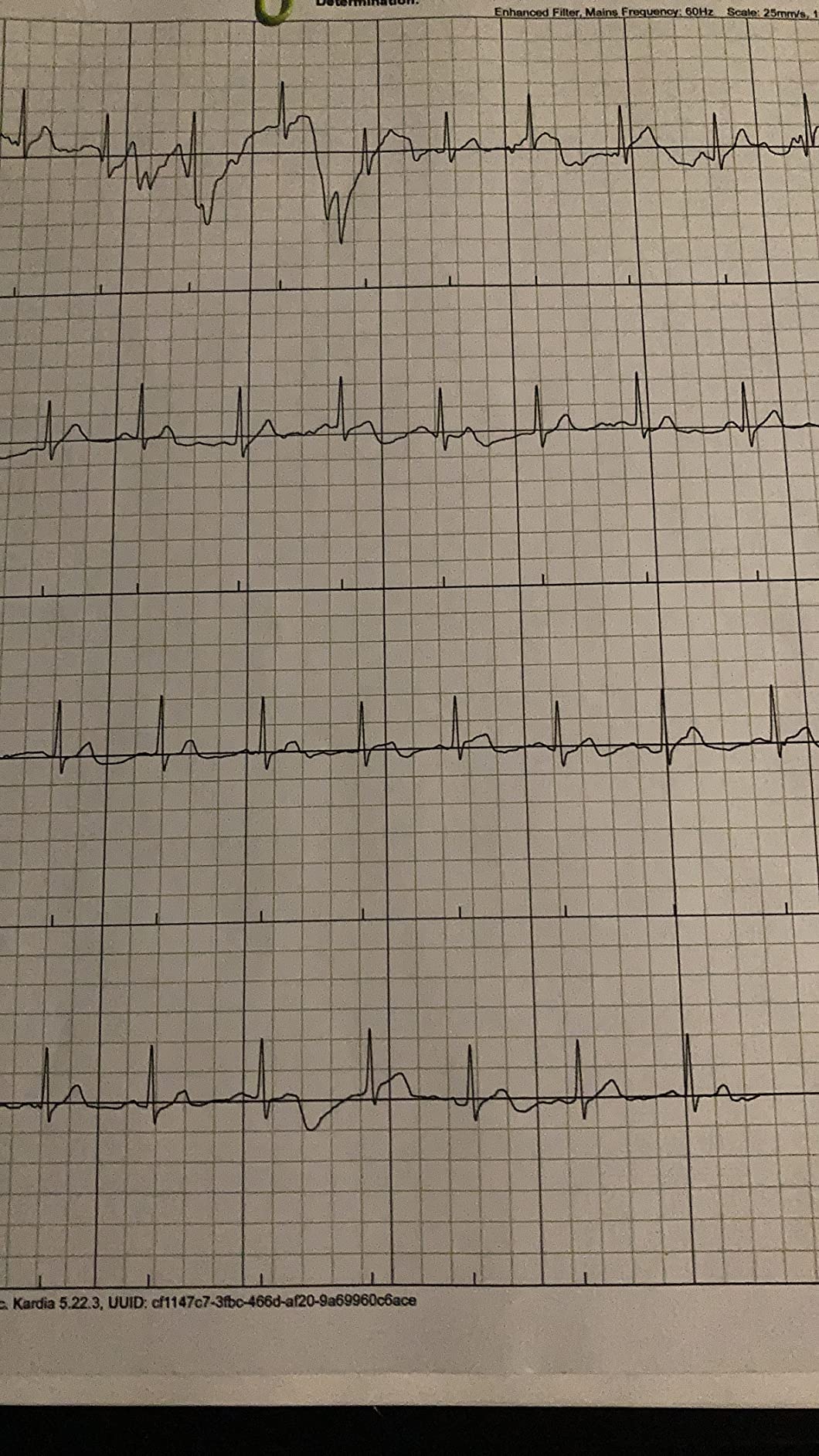
The KardiaMobile 6-Lead is the device I recommend to most people serious about heart rhythm monitoring at home. It gives you six different views of your heart’s electrical activity in a single 30-second reading, which is a significant step up from the standard single-lead model. That extra data can make a real difference when sharing results with your doctor.
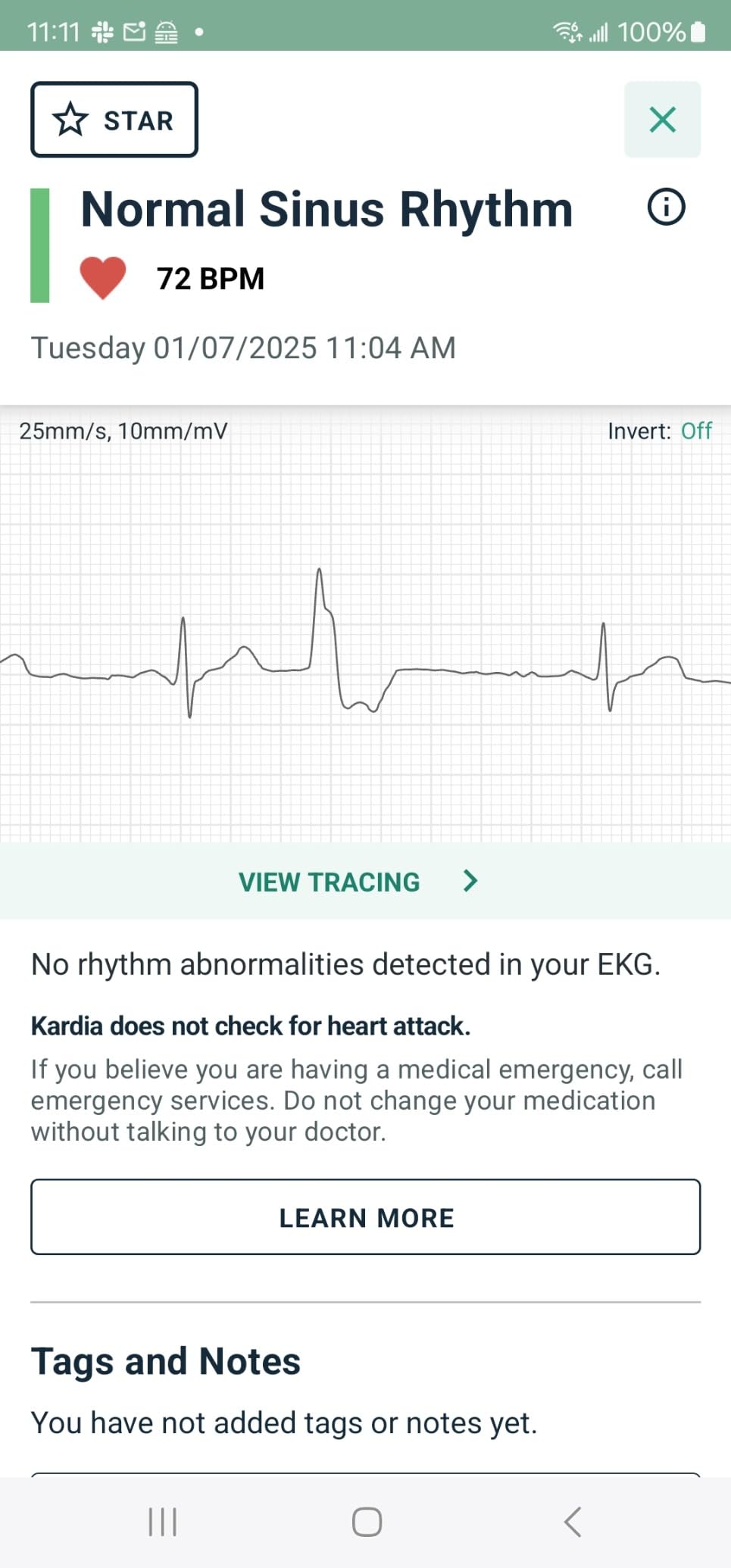
I like that the basic detection for AFib, bradycardia, tachycardia, and normal sinus rhythm works without any subscription. You place your fingers on the sensors, hold still for 30 seconds, and the app shows your waveform with an instant interpretation. The Bluetooth connection pairs smoothly with most smartphones, and the app lets you email PDF reports directly to your cardiologist.
The device weighs just 24 grams and slips into a pocket or bag easily. The CR2016 battery is replaceable, so you are not stuck when it dies. With nearly 30,000 reviews and a 4.4-star average, the user satisfaction is consistent. About 75 percent of reviewers give it five stars, which tells you this is not a gimmick.
The main limitation is that it is still not a full 12-lead clinical ECG. Some advanced arrhythmia detections require a paid subscription, which is worth knowing upfront. It is also not recommended for people with pacemakers or implantable cardioverter defibrillators.
Who should buy the KardiaMobile 6-Lead
This device is ideal for anyone with a known heart rhythm condition, especially AFib, who wants more detailed data than a single-lead device provides. It is also a strong pick if your doctor has asked you to track your heart rhythm between appointments. The six-lead output gives physicians more to work with when evaluating your cardiac health.
What to watch out for
The subscription requirement for some advanced detections can be a frustration if you expected everything for free. Dry fingers or too much hand lotion can affect sensor contact and produce noisy readings. A small number of users report connectivity hiccups between the device and their phone app.
2. KardiaMobile 1-Lead EKG Monitor – The Original Pocket Heart Monitor
- Medical-grade single-lead EKG in 30 seconds
- Pocket-sized and highly portable
- No subscription required for basic use
- FDA-cleared and HSA FSA eligible
- Number one cardiologist recommended personal EKG brand
- Only detects AFib Bradycardia Tachycardia and Normal Sinus Rhythm
- Not recommended for pacemakers or ICDs
- Does not check for heart attacks
The original KardiaMobile 1-Lead is the device that basically created the personal EKG category. With over 83,000 reviews and a 4.4-star rating, it remains the most reviewed and most trusted option on the market. If you want a straightforward, reliable device without spending extra on six leads, this is the one.
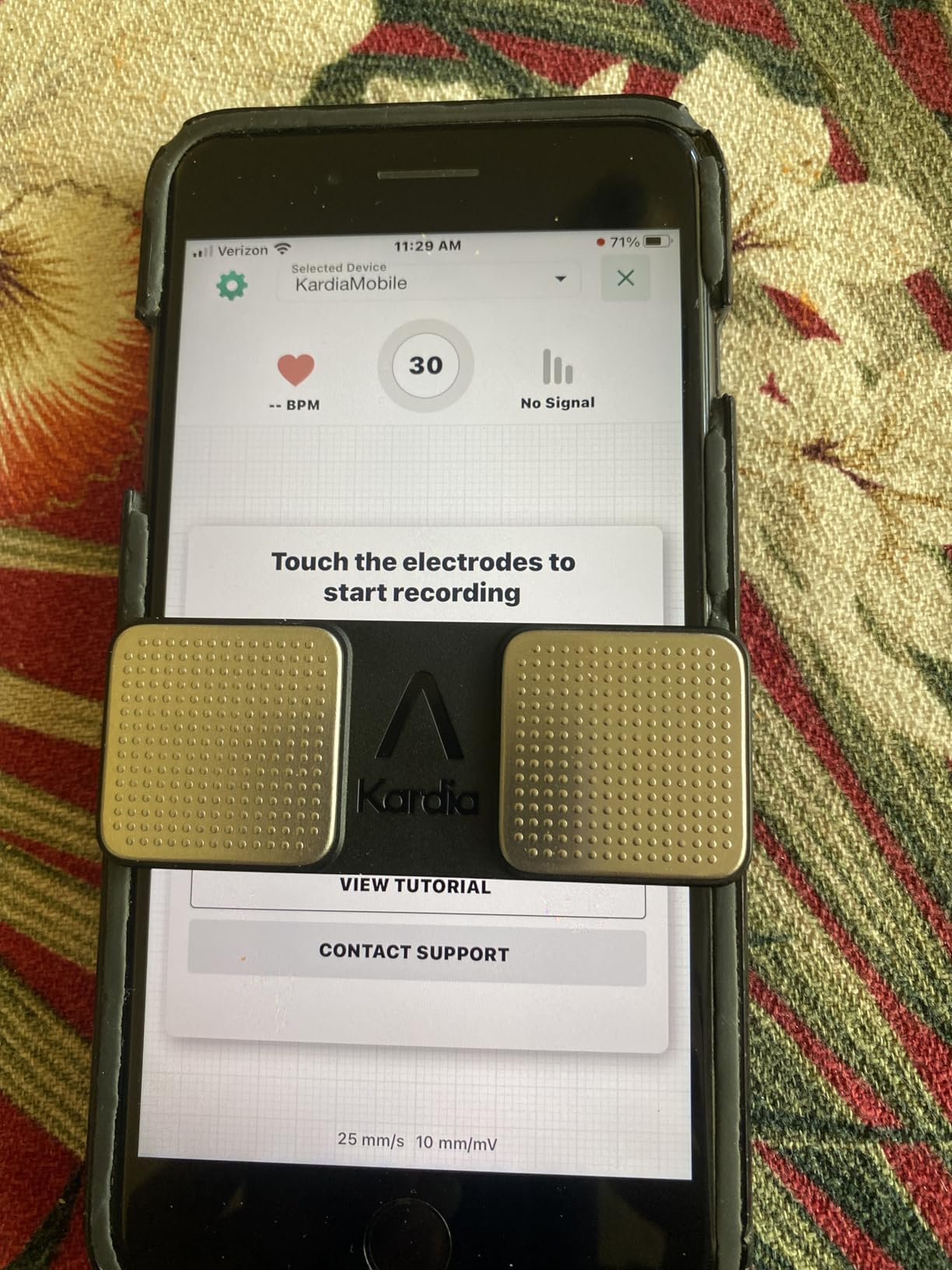
I appreciate how simple it is to use. There is no Bluetooth setup required for the basic model. You place your phone on a flat surface, rest the KardiaMobile on top, and put your fingers on the two electrodes. In 30 seconds you get a clean single-lead EKG with an instant interpretation on the Kardia app.
The device weighs less than an ounce and the battery lasts about 12 months. It detects AFib, bradycardia, tachycardia, and normal sinus rhythm without a subscription. That covers the most common rhythm concerns that bring people to these devices in the first place.
What you give up compared to the 6-lead model is the additional diagnostic detail. A single lead gives you one view of the heart, which is enough for detecting AFib but not as useful for more complex rhythm analysis. For many users, though, that single-lead reading is all they need.
Who should buy the KardiaMobile 1-Lead
This is the best choice for first-time buyers who want a reliable, FDA-cleared device at an accessible price. It is also great for anyone who just wants to check whether their palpitations are AFib or normal sinus rhythm. With 83,000-plus reviews behind it, you are buying into a proven product.
What to watch out for
The single-lead design means less diagnostic data for your doctor compared to multi-lead options. Some users find the finger placement takes a little practice to get clean readings without interference. The device does not detect every type of arrhythmia, so keep your expectations realistic.
3. EMAY 6L Portable ECG Monitor – Six-Channel Recording Without Subscription
- 6-channel ECG recording for more detailed analysis
- No subscription or hidden costs required
- Compatible with iOS Android Windows and Mac
- Bluetooth and USB connectivity
- Highest rating at 4.6 stars among analyzed products
- Very limited stock availability
- Not a hospital diagnostic ECG substitute
- Pacemaker users should not use
- More expensive than single-lead alternatives
The EMAY 6L stands out as the highest-rated device in our entire lineup with a 4.6-star average from over 1,300 reviews. It records six channels of ECG data and does not require any subscription, which makes it a genuinely compelling alternative to the KardiaMobile 6-Lead if you want to avoid ongoing costs entirely.
I found the versatility impressive. It connects via Bluetooth to iOS and Android phones, or you can plug it into a Windows or Mac computer via USB. The free app and desktop software let you review recordings, track your history, and export data to share with your doctor. No paywall stands between you and your readings.
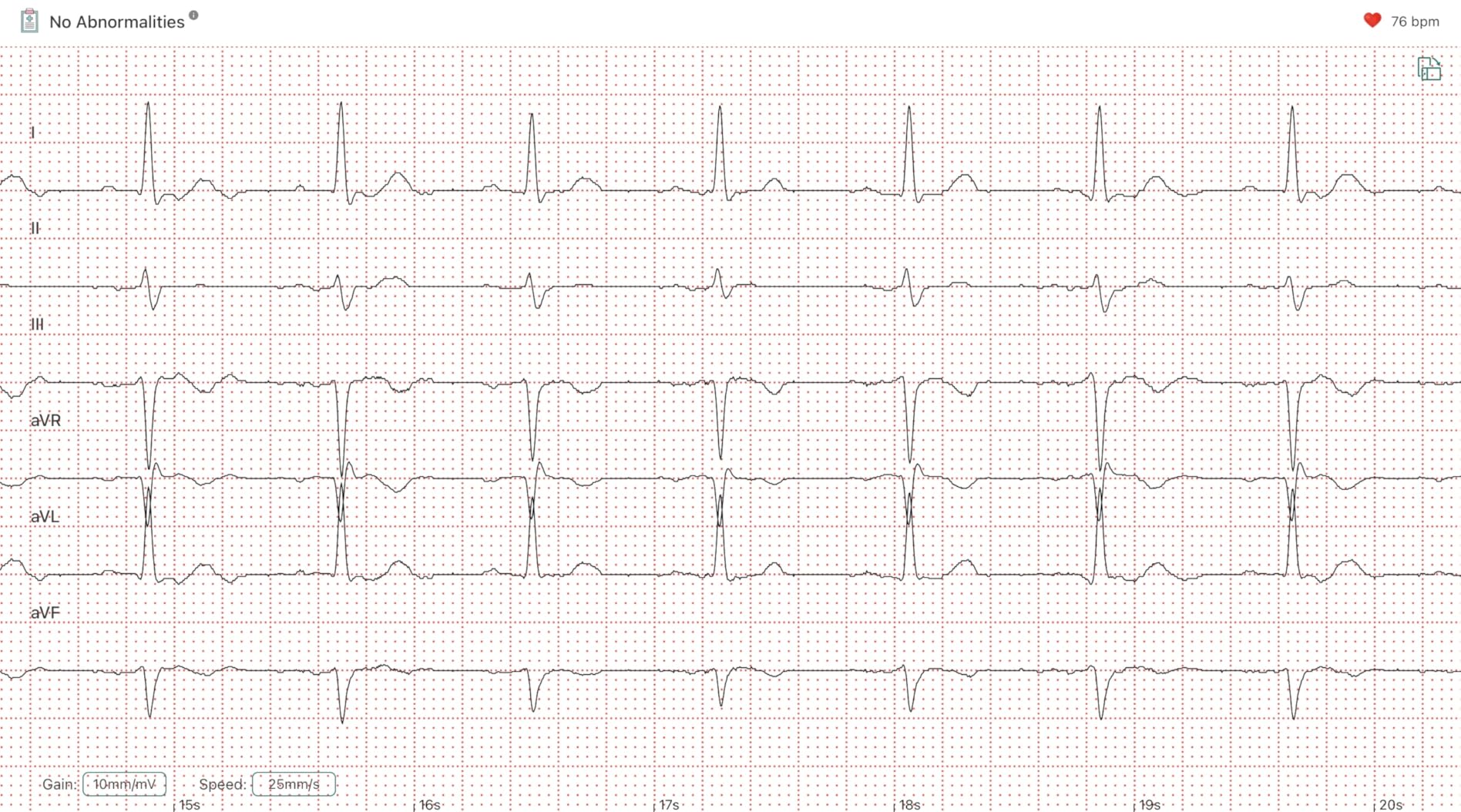
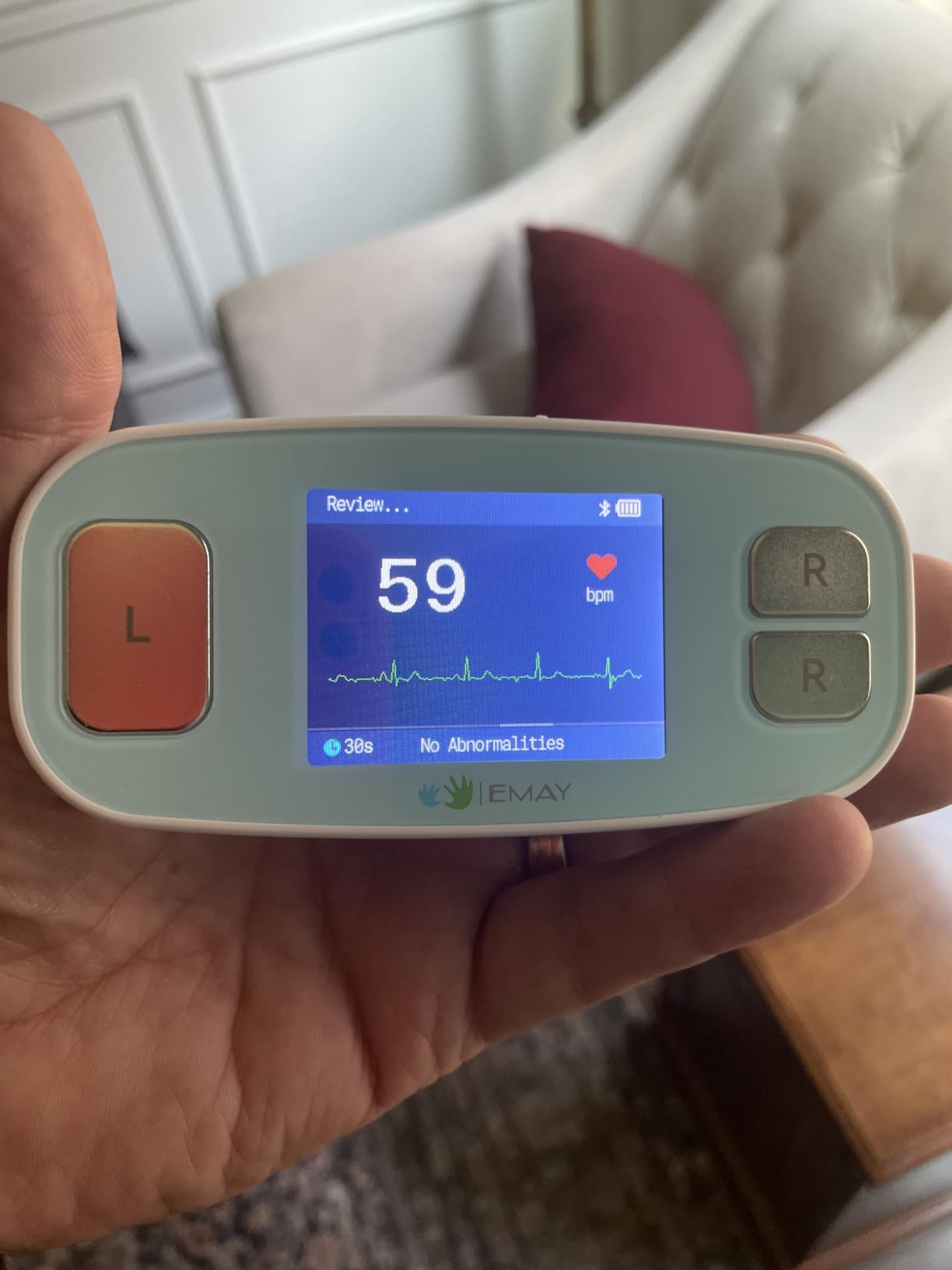
The built-in rechargeable lithium battery means no hunting for coin-cell replacements. The 2.4-inch color display shows your heart rate and ECG waveform directly on the device, so you can take a quick reading even without your phone nearby. At 85 grams it is compact enough for travel.
One thing to note is that EMAY positions this as a home health care tool, not a clinical diagnostic device. It is excellent for tracking and trend monitoring, but it will not replace a hospital ECG. Also, stock has been running very low, so availability can be hit or miss.
Who should buy the EMAY 6L
This is perfect for users who want six-channel ECG recording without any recurring subscription fees. It is also ideal for people who split their time between phone and computer for health tracking. The broad compatibility with iOS, Android, Windows, and Mac makes it one of the most flexible options here.
What to watch out for
Stock levels are frequently low, so you may need to act quickly when it is available. The brand does not have the same cardiologist recommendation profile as AliveCor’s Kardia line. Some users report the app interface is less polished than Kardia’s offering.
4. EMAY Portable ECG Monitor – Simple Single-Lead Home Monitoring
EMAY Portable ECG Monitor | Record ECG and Heart Rate | Compatible with Smartphone and PC
- ECG and heart rate monitoring in one device
- Compatible with both smartphone and PC
- Bluetooth and USB connectivity options
- Rechargeable lithium battery
- Good value for home health monitoring
- Only single lead Lead I recording
- Not a substitute for hospital diagnostic ECG
- Pacemaker users should not use
- Lower review count than Kardia models
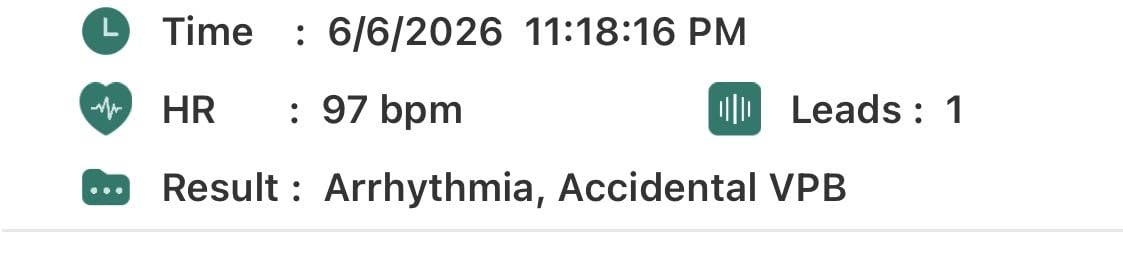
The EMAY Portable ECG is the single-lead sibling of the EMAY 6L. It records Lead I ECG signals and displays your heart rate on a 1.8-inch screen. With a 4.5-star rating from over 400 reviews, it is a solid budget-friendly alternative to the KardiaMobile 1-Lead.
I like that EMAY includes both Bluetooth for phone connectivity and USB for PC connection. The rechargeable battery eliminates the need for coin-cell replacements, which is a nice touch at this price point. The included software lets you review cases, set sampling modes, and track measurements over time.
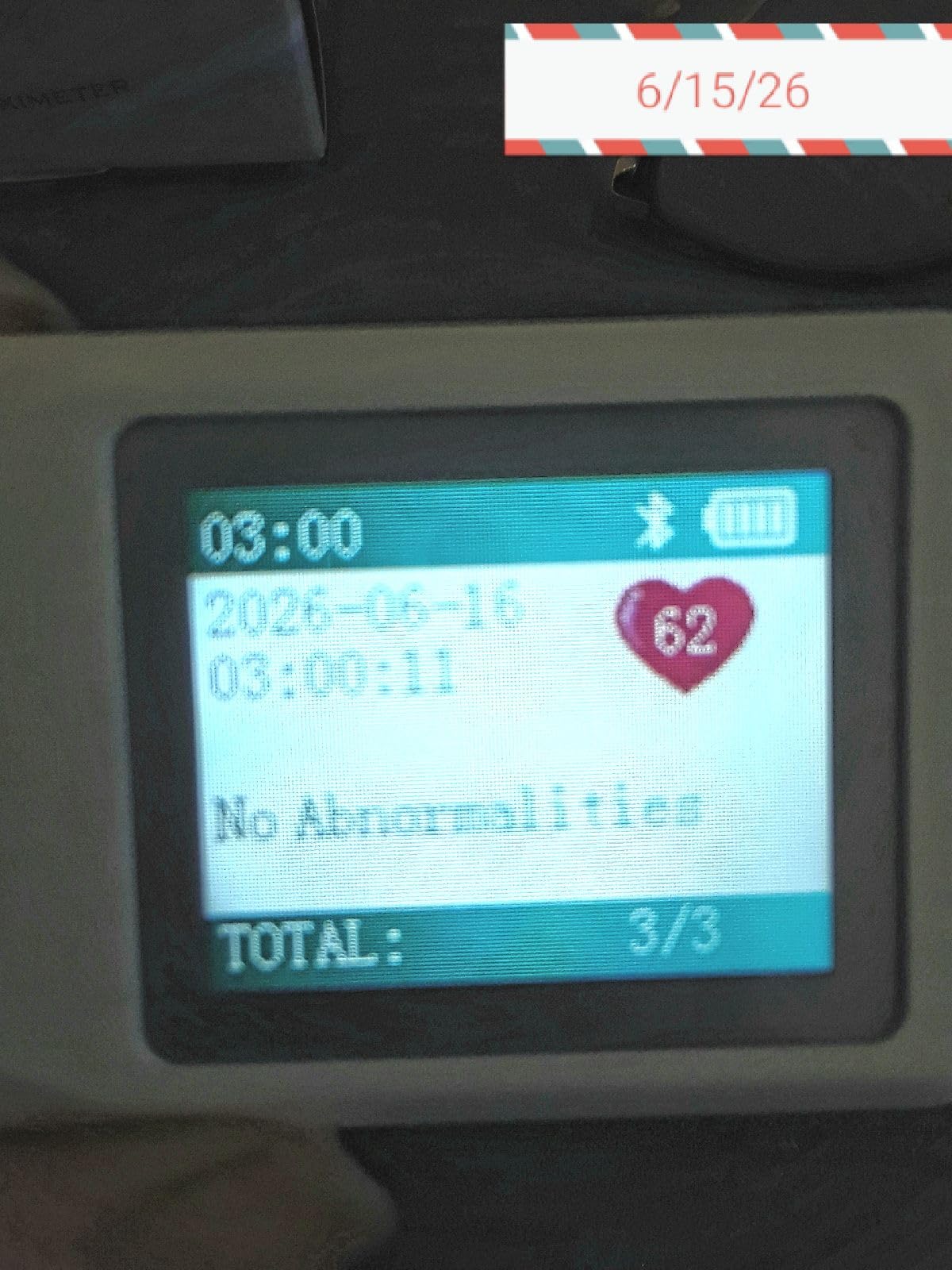
The device weighs just 80 grams and fits comfortably in hand. It comes with a USB cord and user manual, and setup is straightforward. For basic home heart rate and rhythm tracking, it does the job without any subscription costs.
The limitation is the same as any single-lead device. You get one view of the heart, which is fine for detecting AFib but limited for deeper analysis. The review count is much lower than Kardia’s, reflecting EMAY’s smaller market presence.
Who should buy the EMAY Portable ECG
This is a smart pick for budget-conscious buyers who want a no-subscription single-lead ECG with both phone and PC support. It suits people who want to track heart rate trends at home without committing to the Kardia ecosystem.
What to watch out for
The app and software experience is more basic than what Kardia offers. Customer support from smaller brands like EMAY can be slower than the bigger names. The single-lead design limits the diagnostic detail you can share with your doctor.
5. OMRON Complete 2-in-1 Blood Pressure Monitor + EKG
- Combines blood pressure and EKG in one device
- Number one doctor and pharmacist recommended brand
- Stores up to 90 readings internally unlimited in app
- Bluetooth to free OMRON Connect app
- Compatible with Apple Health and Google Fit
- Requires app for full feature access
- Cuff size range may be limiting for some users
The OMRON Complete is the only device on this list that measures both blood pressure and EKG in a single session. If you are tracking cardiovascular health broadly, this 2-in-1 approach saves desk space and gives you a more complete picture with each reading. Omron is the number one doctor and pharmacist recommended blood pressure brand.
Using it is straightforward. You wrap the D-ring cuff around your upper arm, press start, and the device takes your blood pressure while simultaneously capturing an EKG. The built-in Advanced Accuracy Technology and Excessive Body Movement Detection help ensure reliable readings. Results sync to the free OMRON Connect app via Bluetooth.
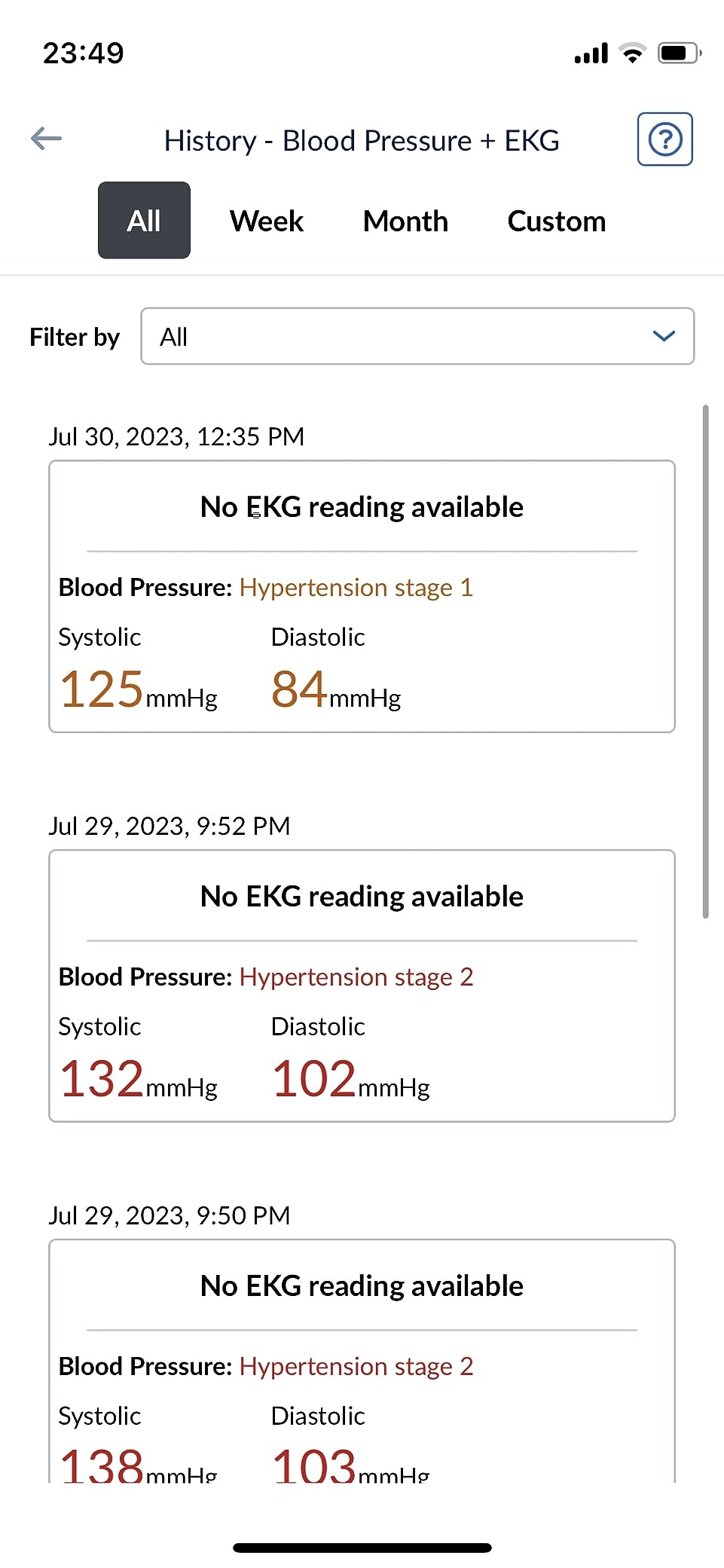
The app stores unlimited readings and lets you share reports with your doctor. It also integrates with Apple Health and Google Fit, which is handy if you already track health data on your phone. The device stores 90 readings internally, so you can use it offline and sync later.
The included wide-range cuff fits arms from 9 to 17 inches, and the box comes with batteries and a storage case. With over 2,100 reviews and a 4.2-star average, about 68 percent of users give it five stars.
Who should buy the OMRON Complete
This is the best choice for people who need to monitor both blood pressure and heart rhythm regularly. It is especially well-suited for older adults managing multiple cardiovascular risk factors. The doctor-recommended brand recognition adds confidence for users who want something their physician will recognize and trust.
What to watch out for
The device requires the app for full functionality, which may be a hurdle for less tech-savvy users. The cuff size range may not accommodate very small or very large arms. It is bulkier than pocket-sized EKG devices, making it less portable for travel.
6. Beurer Cardio Companion EKG Monitor – German-Engineered 3-Lead Precision
- German-engineered for precision
- FDA-cleared 3-lead for better accuracy than 1-lead devices
- Four measurement modes including hand to chest and leg
- Rechargeable battery via USB-B
- Stores up to 100 readings on device
- Bluetooth connection can be inconsistent
- Reports all arrhythmias the same without identifying AFib specifically
- Cannot delete individual readings
- Not suitable for pacemaker users
The Beurer Cardio Companion ME75 is a German-engineered 3-lead EKG monitor that fills a nice middle ground between single-lead and six-lead devices. It is FDA-cleared and delivers results in under 30 seconds, making it a strong contender for anyone wanting more detail than a basic single-lead without paying for six leads.
I like the flexibility of the four measurement modes. You can measure hand-to-hand for standard readings, or switch to hand-to-chest, hand-to-leg, or hand-to-wrist for different lead configurations. The color screen displays your real-time heart rate and shows an alert if it detects an irregular rhythm or arrhythmia.
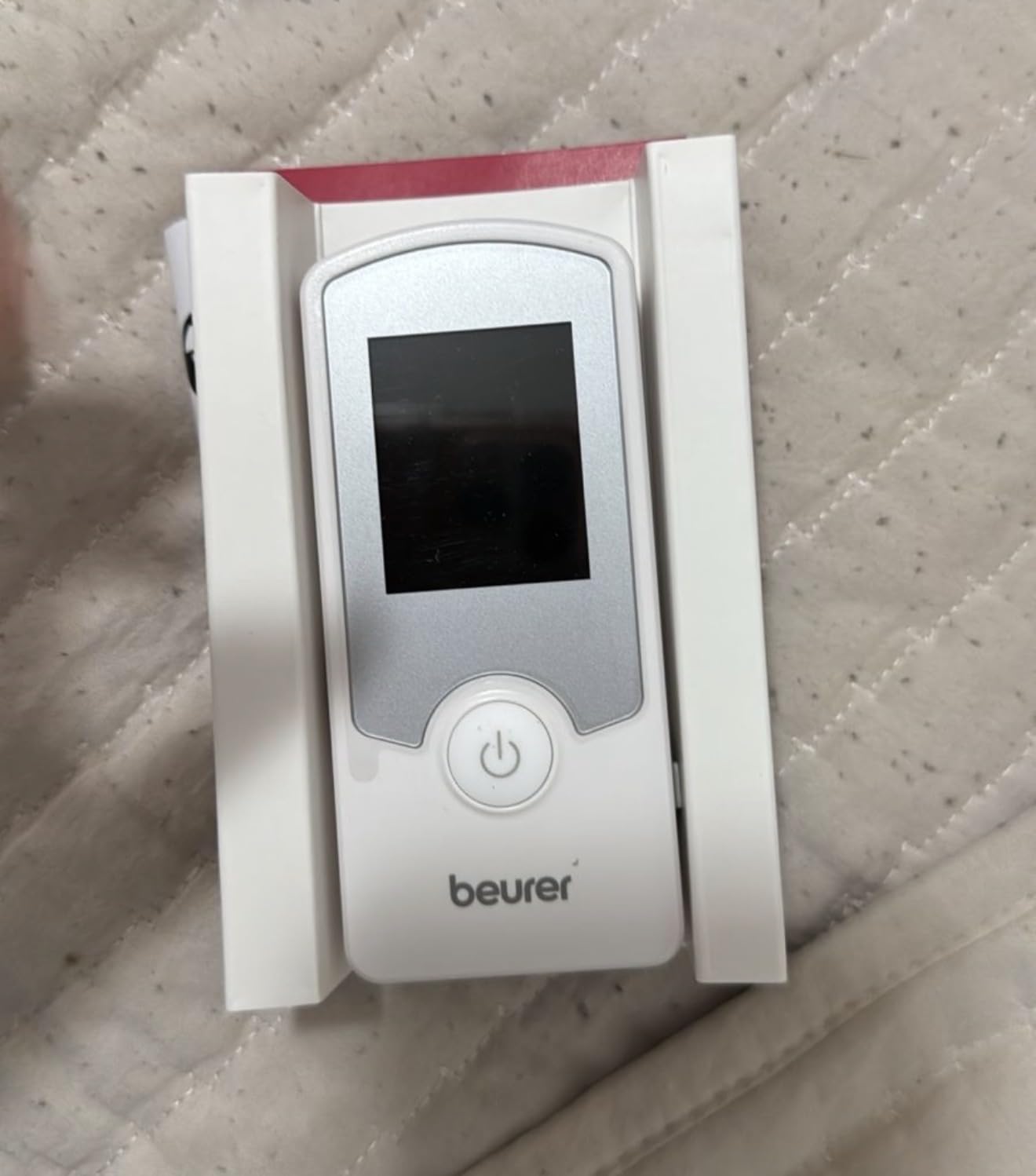
The rechargeable battery charges via USB-B, so you do not need to buy replacement coin cells. The device stores up to 100 readings locally, and you can sync unlimited readings through the free mini ECG app via Bluetooth. It is also FSA and HSA eligible, which helps with the cost.
One thing worth noting is that the Beurer reports arrhythmias generically rather than specifically identifying AFib. If you need a specific AFib detection label, KardiaMobile may serve you better. The Bluetooth connection can also be finicky based on user reports.
Who should buy the Beurer Cardio Companion
This device suits users who want more than a single lead but do not need the full six-lead detail. It is a good fit for people who appreciate German engineering and want a rechargeable device. The FSA and HSA eligibility makes it attractive if you use those accounts for health purchases.
What to watch out for
The arrhythmia detection does not distinguish between types, so you will not get a specific AFib label. Some users report Bluetooth pairing issues with the companion app. The inability to delete individual readings from the device can be annoying over time.
7. HaSoCare EKG Monitor – Affordable Multi-Mode Heart Monitoring
- Professional ECG data recording
- Multiple monitoring modes for different accuracy needs
- 30-second instant results
- Bluetooth and PC connectivity
- No subscription required
- Lower review count suggests newer product
- Niche market position
- Limited long-term track record
- Only 52 reviews so far
The HaSoCare EKG Monitor is one of the most affordable options in this roundup. At 4.1 stars from 52 reviews, it is a newer product but shows promise for budget-conscious buyers who want multi-mode ECG recording without any subscription fees.
What caught my attention is the three measurement modes. You can do hand-to-hand for quick checks, hand-to-chest for a different lead view, or hand-to-leg for yet another angle. This flexibility is unusual at this price point and gives you more data to work with than a basic single-mode device.
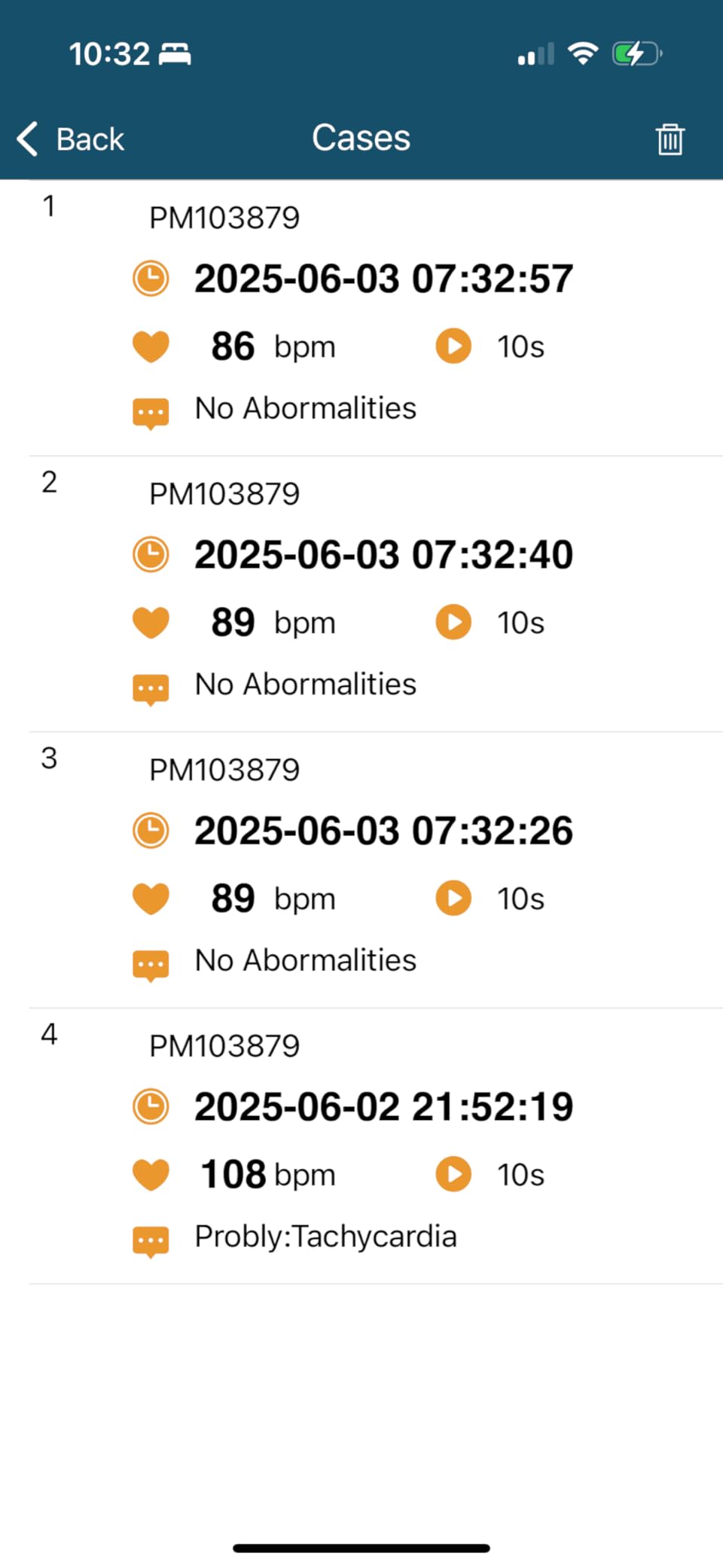
The device delivers results in 30 seconds and connects to your phone via Bluetooth or to your PC via cable. You can adjust sampling time and mode from either your phone or computer. At just 60 grams, it is light enough to carry anywhere.
Data sharing is built in, so you can send recordings to family members or your doctor through the app. The no-subscription model means every feature is available from day one.
Who should buy the HaSoCare EKG Monitor
This is a good entry point for first-time buyers on a tight budget who still want multiple measurement modes. It suits people who want to try home ECG monitoring without a big financial commitment. The multi-mode flexibility adds value that you usually only find on pricier devices.
What to watch out for
With only 52 reviews, there is less community feedback to rely on compared to established brands like Kardia or Omron. The long-term durability is unproven. Customer support from smaller brands can be inconsistent, so consider that if you anticipate needing help.
8. Withings BeamO – 4-in-1 Family Health Tool with ECG
WITHINGS BeamO – Contactless Smart Thermometer, ECG Monitor, Stethoscope
- Contactless temperature detection and ECG and digital stethoscope in one device
- Multi-user family care design
- Strong 4.4-star rating with over 3200 reviews
- Multiple certifications FDA CE ISO
- Optional cardiologist review upgrade available
- Premium price point for an ECG focused buyer
- ECG is single lead only
- Higher sales rank in baby category than health monitors
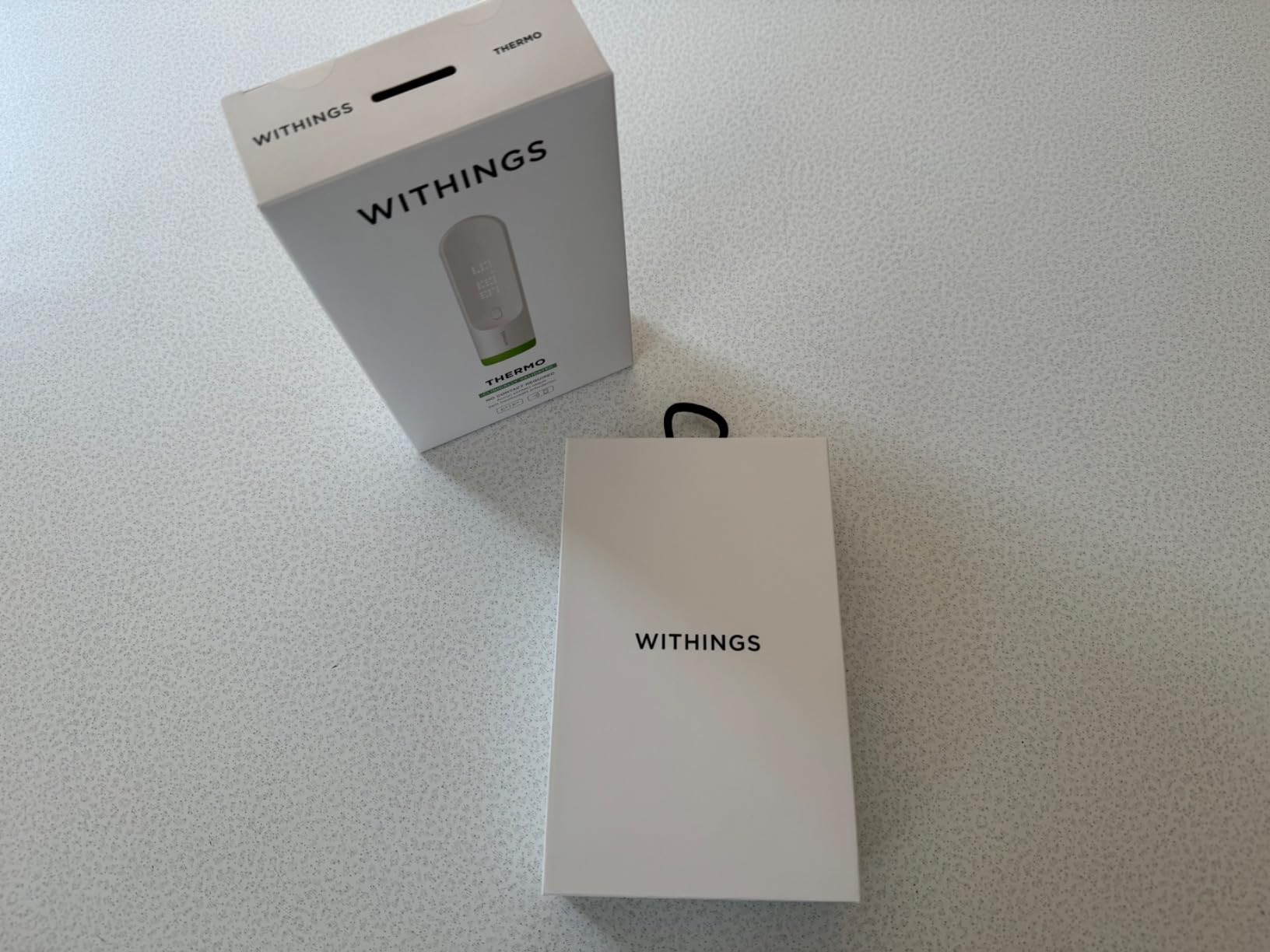
The Withings BeamO is not just an EKG monitor. It is a 4-in-1 health checkup tool that combines a contactless thermometer, a 1-lead ECG, a digital stethoscope, and a pulse oximeter. If you want a single device for the whole family’s basic health monitoring, this is the most comprehensive option on our list.
I found the ECG function straightforward. You hold the device with both hands for 30 seconds and get a 1-lead ECG through the Withings app. You can also upgrade to get a cardiologist review of your reading within 24 hours, which adds professional oversight that most consumer devices lack.
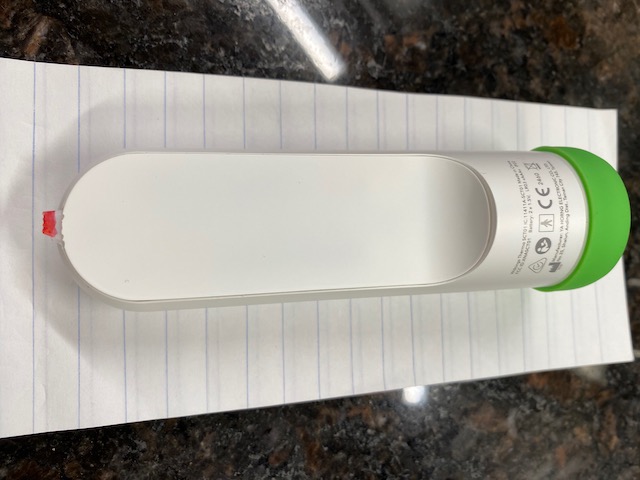
The digital stethoscope lets you record heart and lung sounds, which you can share with healthcare professionals through Health Link. For families with children, the contactless thermometer alone is worth having. Multi-user support means everyone in the household can track their readings separately.
With over 3,200 reviews and a 4.4-star rating, the BeamO is well-received. It holds FDA, CE, and ISO certifications. The rechargeable battery and Wi-Fi connectivity round out a premium package.
Who should buy the Withings BeamO
This is ideal for families who want one device that covers temperature, heart rhythm, and lung sounds. It is also great for people who already use the Withings ecosystem and want to add ECG capability. The optional cardiologist review appeals to users who want professional confirmation of their readings.
What to watch out for
If you only care about ECG, this device is overkill and the single-lead capability may feel limiting compared to the KardiaMobile 6-Lead. The premium price reflects the multi-function design. Some users find the small form factor takes practice to hold correctly for clean ECG readings.
9. Withings ScanWatch 2 – Hybrid Smartwatch with Medical-Grade ECG
- Beautiful hybrid design with analog hands and digital health tracking
- Excellent battery life up to 35 days
- Medical-grade ECG with AFib detection
- Sleep tracking and 40-plus sports monitoring
- HSA FSA compatible and sapphire glass for durability
- Small digital screen can be difficult to read
- Single stem button can fail with wear
- No repair support from Withings
- App can be buggy and GPS connectivity issues reported
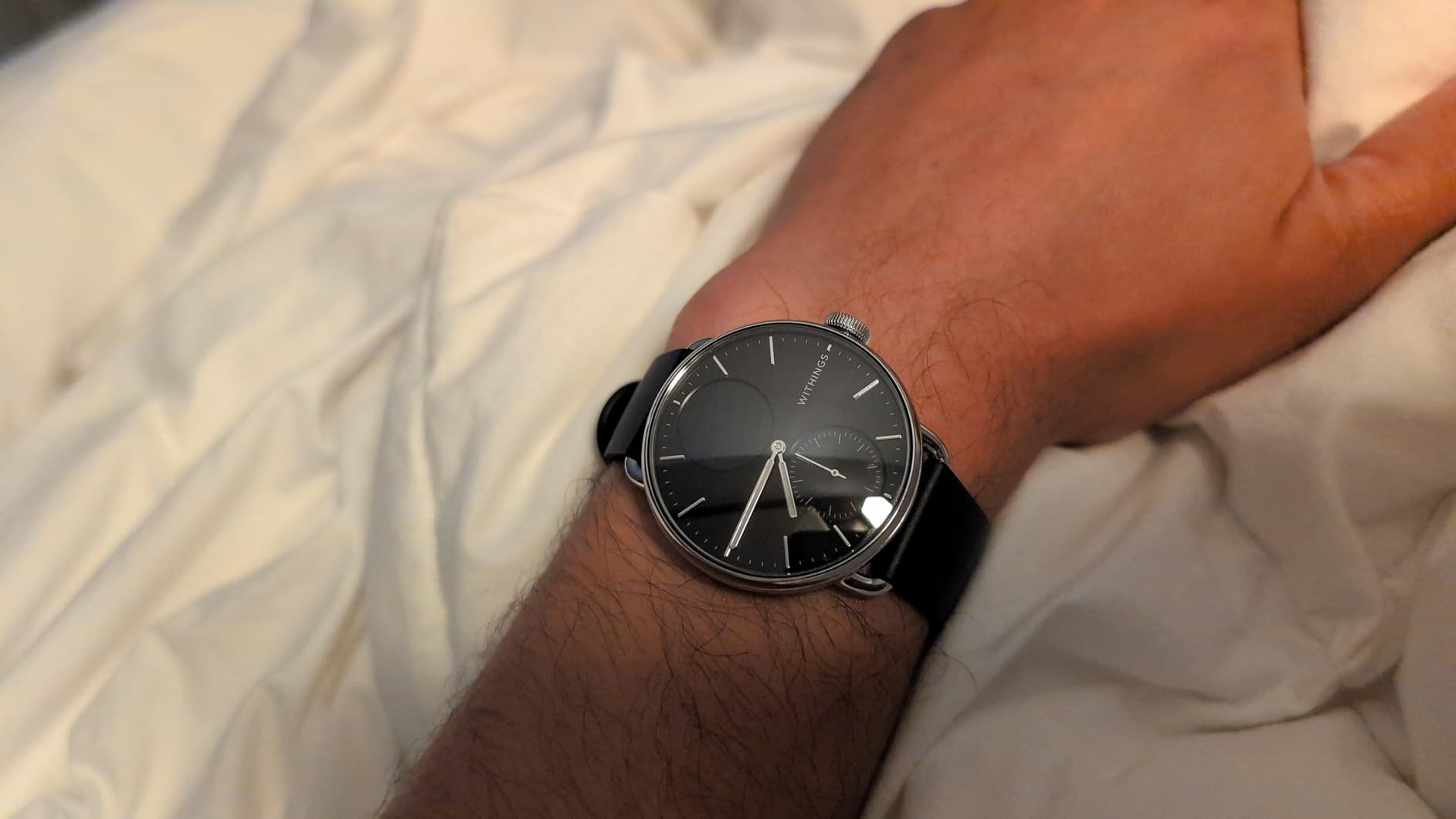
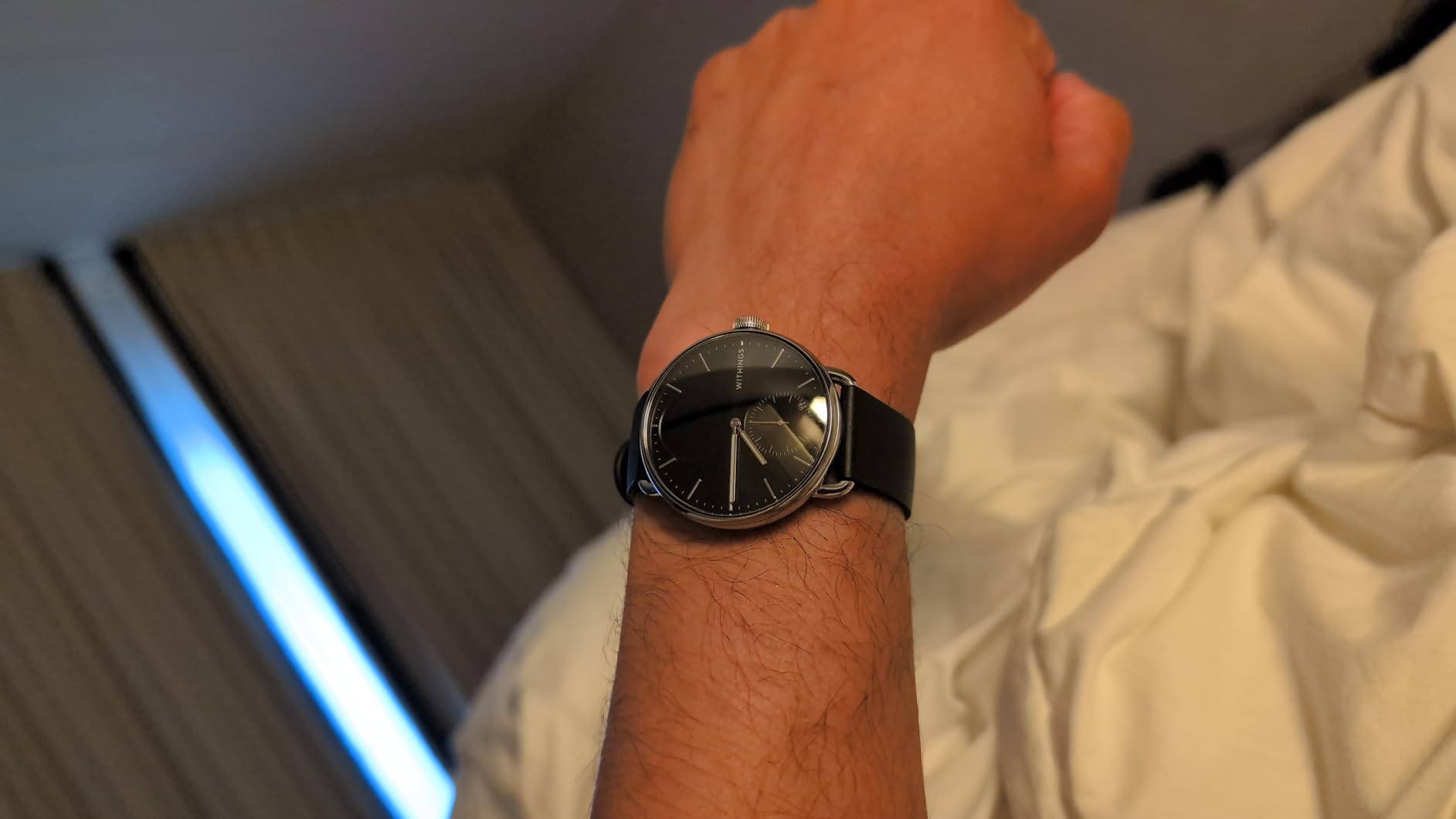
The Withings ScanWatch 2 is the best wearable EKG option for people who want continuous health tracking without sacrificing watch aesthetics. It looks like a traditional analog watch but packs a medical-grade ECG sensor that delivers a 30-second reading with AFib detection through the Withings app.
I love the hybrid design. You get real watch hands on a sapphire glass face with a small digital inset for health data. It does not look like a computer on your wrist, which matters to many users. The stainless steel case feels premium and durable.
The battery life is outstanding at up to 35 days on a single charge. That blows away most smartwatches, including the Apple Watch. Beyond ECG, it tracks sleep stages, breathing disturbances, over 40 sports, heart rate zones, and VO2 max.
The ECG function works by placing your finger on the bezel for 30 seconds. The app then tells you whether your rhythm is normal or shows signs of AFib. High and low heart rate notifications keep you informed throughout the day.
Who should buy the Withings ScanWatch 2
This is the top pick for anyone who wants wearable ECG monitoring combined with fitness and sleep tracking. It suits people who prefer a classic watch appearance over a screen-heavy smartwatch. The 35-day battery is perfect for users who hate daily charging.
What to watch out for
The small digital display can be hard to read for some users. The single button has been reported to fail over time, and Withings offers limited repair support. The app experience has some bugs, and GPS connectivity issues have been noted by a portion of users.
10. Withings ScanWatch Nova – Luxury Health Smartwatch with ECG
- Beautiful traditional watch appearance resembling luxury timepieces
- Comprehensive health tracking ECG SpO2 temperature and sleep
- Excellent battery life up to 30 days
- Medical-grade sensors with 40-plus activities auto-recognized
- HSA FSA compatible and comfortable durable design
- Cannot set alarm directly on watch
- App described as clunky
- Battery not replaceable
- More expensive than alternative models
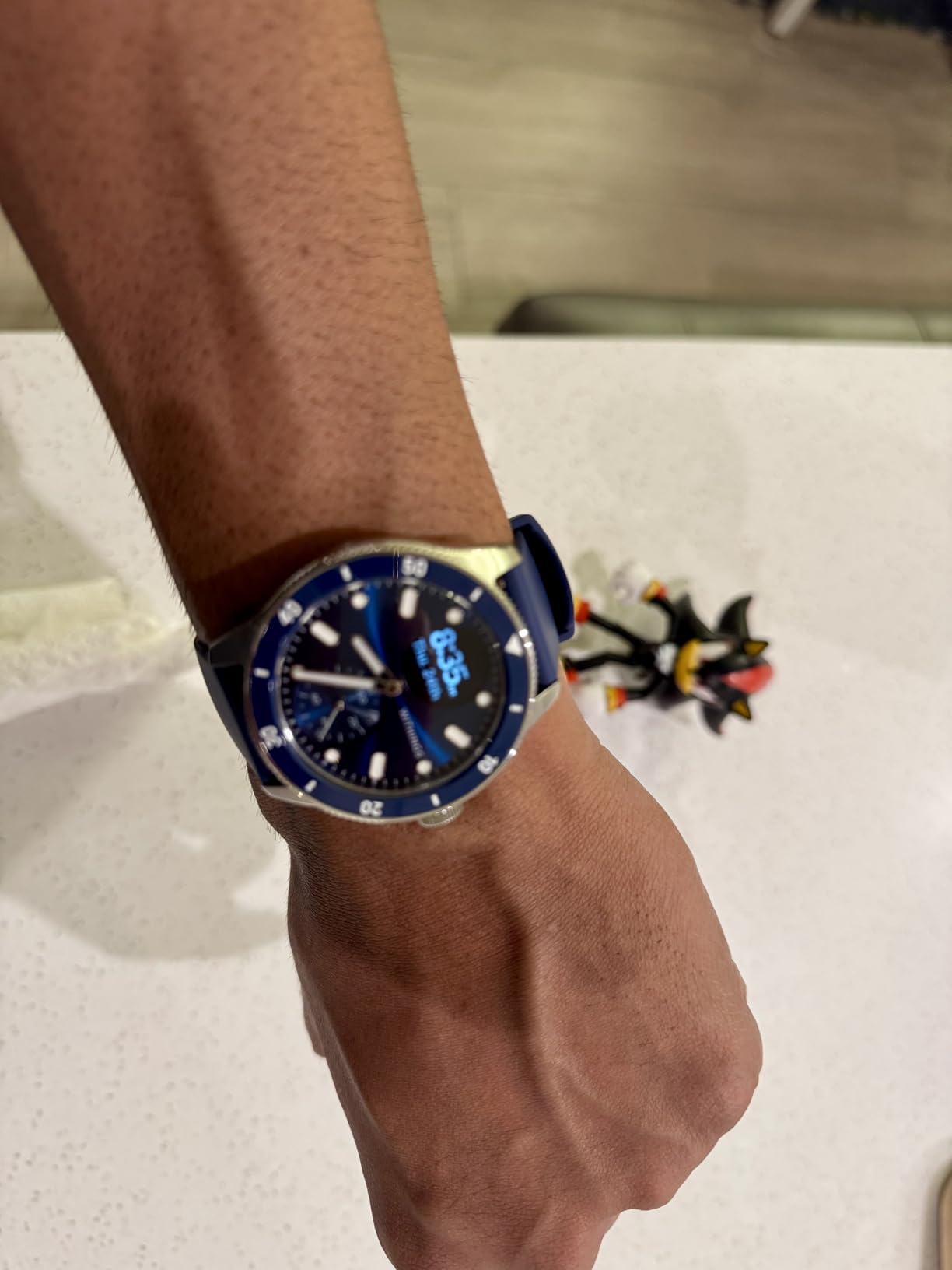
The Withings ScanWatch Nova is the premium tier of the Withings watch lineup. It adds SpO2 blood oxygen monitoring, 24/7 temperature tracking, and a more luxurious build to the already capable ScanWatch platform. If budget is not a constraint and you want a health watch that looks like a Rolex or Omega, this is it.
The ECG function matches the ScanWatch 2 with 30-second readings and AFib detection. What sets the Nova apart is the TempTech24/7 module that tracks baseline body temperature and flags fluctuations that might signal illness. The SpO2 sensor measures blood oxygen on demand and tracks overnight breathing disturbances.
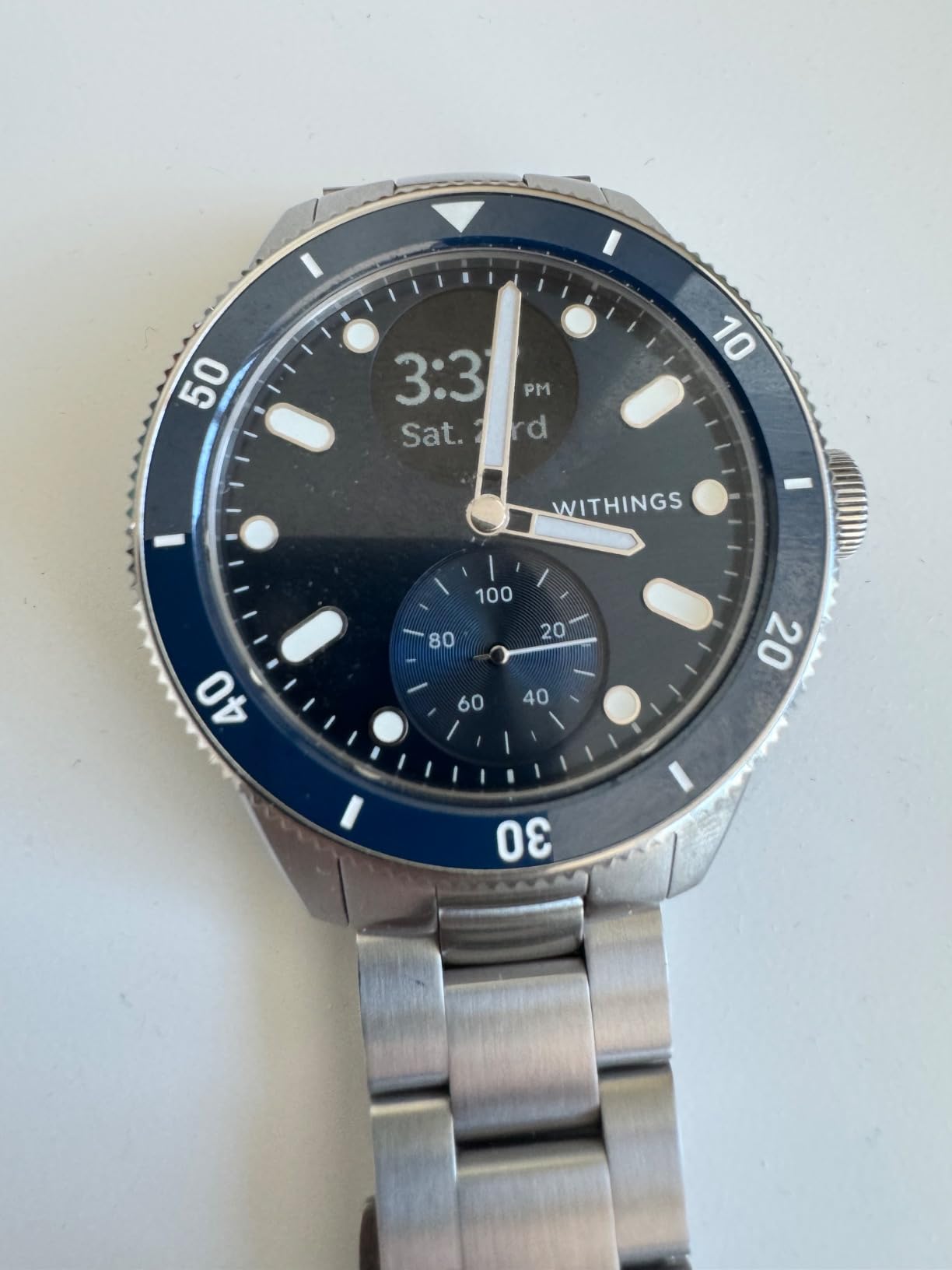
I appreciate the 100-meter water resistance, which is significantly deeper than most health watches offer. The stainless steel case and band give it real durability. It auto-recognizes over 40 activities and provides VO2 max estimation for fitness assessment.
With 375 reviews and a 4.2-star average, the Nova is well-regarded. Users consistently praise the watch’s appearance and battery life. The main complaints focus on the app experience and the non-replaceable battery.
Who should buy the Withings ScanWatch Nova
This watch is for users who want the most comprehensive Withings health tracking in a luxury package. It suits professionals who want health monitoring that does not look like a fitness gadget. The added SpO2 and temperature sensors make it ideal for users who want deeper health insights beyond just ECG.
What to watch out for
The price is the highest among our wearable picks, which may be hard to justify if ECG is your only need. The app is described by some users as clunky. You cannot set alarms directly on the watch, and the battery cannot be replaced, which means the watch is essentially disposable when the cell degrades.
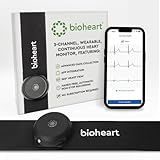
11. Bioheart 24/7 Continuous Heart Monitor by Biotricity
- Continuous 24/7 heart monitoring unlike spot-check devices
- Trusted by over 2500 cardiologists
- No prescription required
- Comfortable chest strap without gels or wires
- Real-time Bluetooth data sync with AI insights and PDF reports
- Lower average rating at 3.8 stars
- Limited stock availability
- Subscription-based model may not suit all budgets
- Lower review count suggests newer product
The Bioheart by Biotricity is fundamentally different from every other device on this list. Instead of spot-check readings, it provides continuous 24/7 heart monitoring through a wearable chest strap. If you need round-the-clock rhythm data rather than occasional snapshots, this is the only consumer device here that delivers it.
Trusted by over 2,500 cardiologists, Biotricity has serious medical credentials behind it. The breathable, washable fabric strap sits comfortably on your chest without messy gels or wires. It syncs via Bluetooth to an app that shows real-time heart activity, tracks trends, and generates PDF reports you can share with your physician.
The 48-hour battery life means you charge it while you shower and wear it the rest of the time. The AI-driven insights flag patterns and abnormalities that spot-check devices simply cannot catch. It was recognized by TIME Magazine as one of the Best Inventions of 2022.
The trade-off is the subscription model and the lower 3.8-star rating. The device comes with one month of subscription included, but ongoing use requires a continued subscription. Stock is also frequently limited.
Who should buy the Bioheart
This is the right choice for people who need continuous monitoring, not just occasional spot checks. It suits users whose doctors want extended rhythm data over days rather than single 30-second recordings. The cardiologist-trusted technology gives it medical credibility that most consumer devices lack.
What to watch out for
The subscription cost adds up over time, so factor that into your budget. The 3.8-star rating suggests some users have had issues, though the review count is still low at 35. The chest strap design is not for everyone, especially those who find chest-worn devices uncomfortable during sleep.
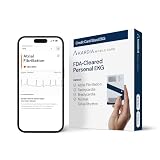
12. KardiaMobile Card – Credit-Card-Sized EKG for Your Wallet
- Credit card sized fits in wallet for always-available monitoring
- Bluetooth enabled for wireless connectivity
- No subscription required for basic readings
- Medical-grade and FDA-cleared
- Built-in battery lasts minimum 2000 EKGs
- Lower rating at 4.2 compared to other Kardia models
- 12 percent 1-star reviews suggest reliability concerns
- Not recommended for pacemakers or ICDs
- Single lead only
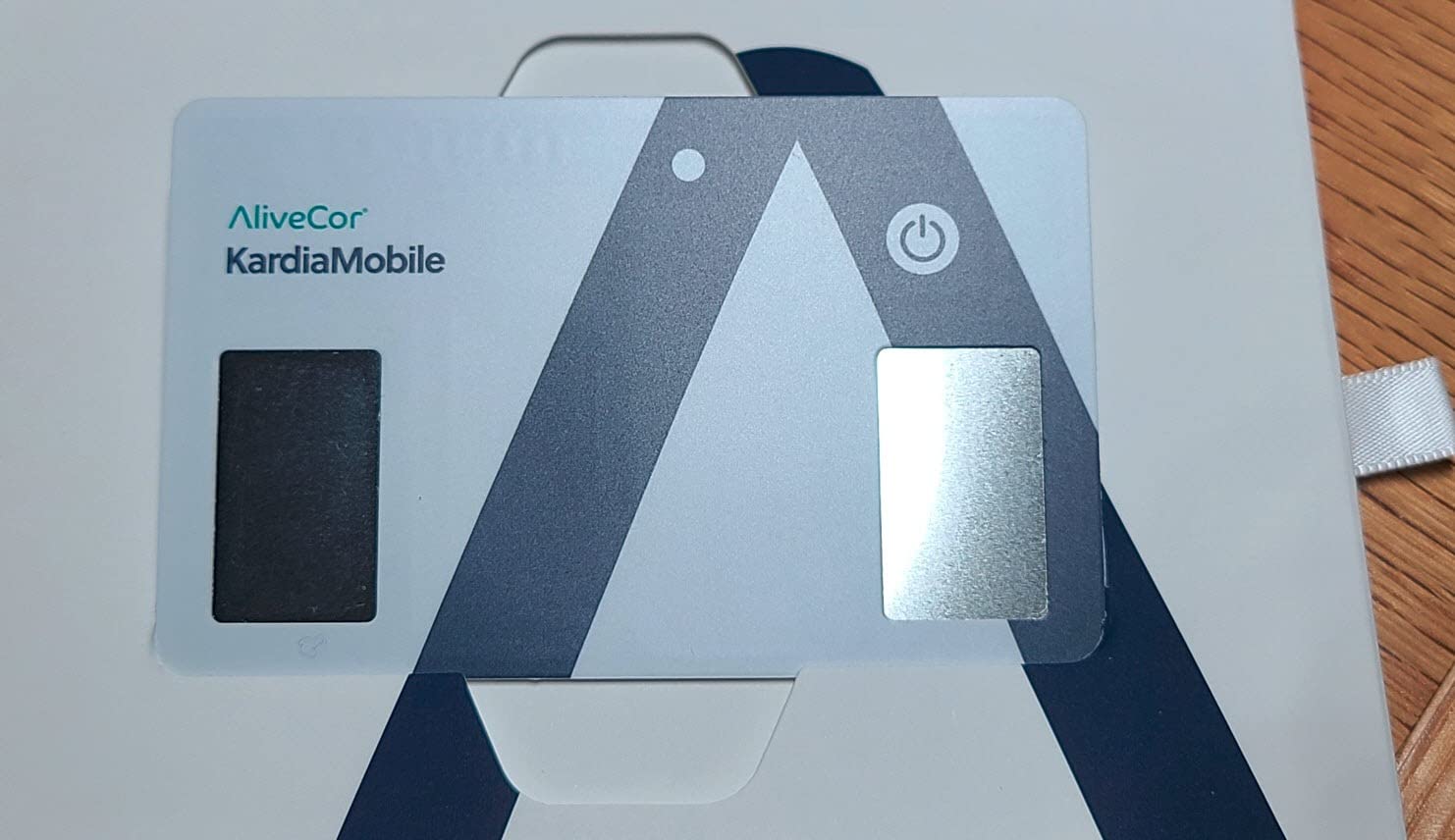
The KardiaMobile Card takes the proven KardiaMobile technology and shrinks it into something the size of a standard credit card. The idea is simple: if your EKG monitor lives in your wallet, you will always have it when you need it. No remembering to pack a device, no forgetting it at home.
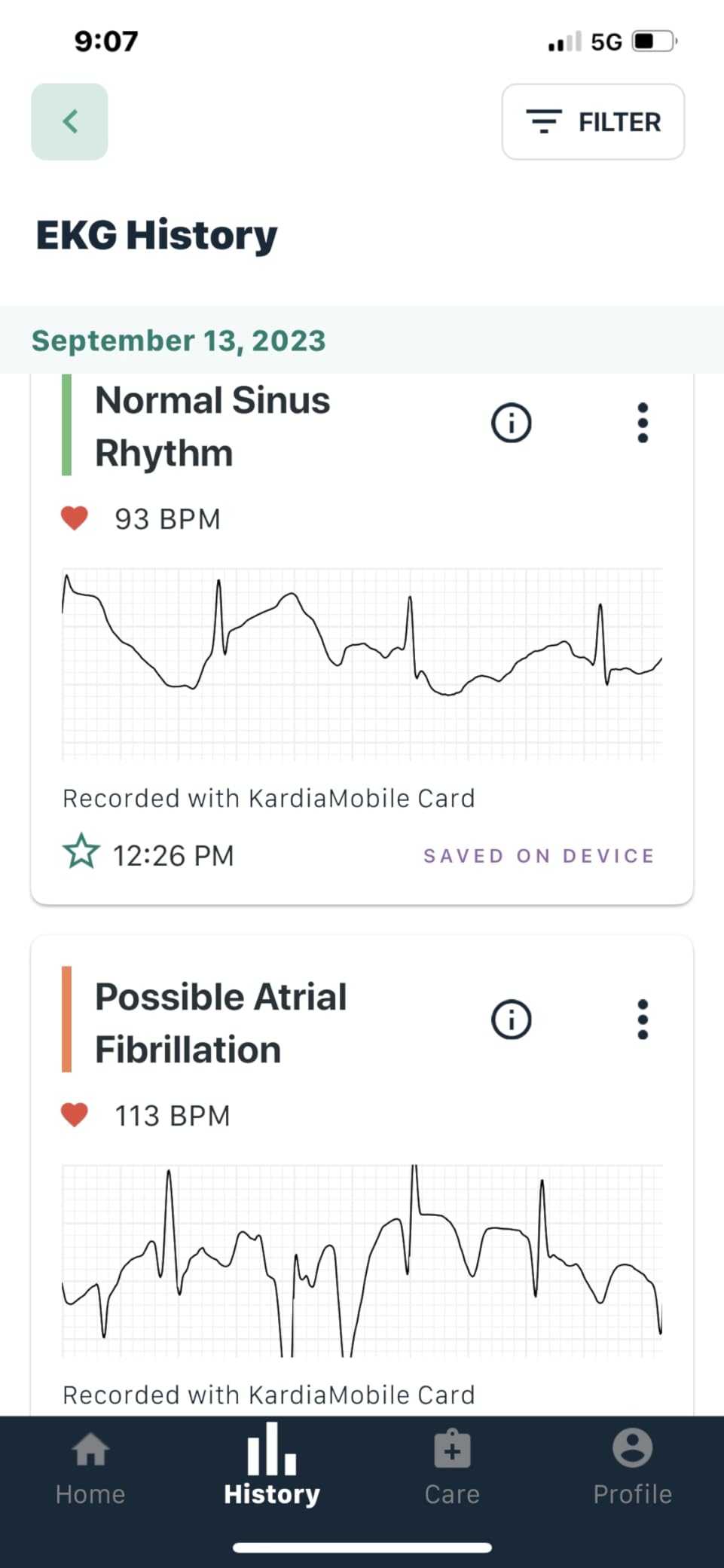
Using it feels familiar if you have used any KardiaMobile product. You pair it via Bluetooth, place your thumbs and fingers on the sensors, and hold for 30 seconds. The app displays your single-lead EKG and tells you if it detects AFib, bradycardia, tachycardia, or normal sinus rhythm.
The built-in battery is rated for a minimum of 2,000 EKG recordings, which for most users means years of use before it needs attention. It is FSA and HSA eligible. At just 7.4 grams, you genuinely forget it is in your wallet until you need it.
The catch is the lower 4.2-star rating, with about 12 percent of reviews at one star. Some users report reliability issues compared to the standard KardiaMobile models. The single-lead design also means less diagnostic data than the 6-lead version.
Who should buy the KardiaMobile Card
This is ideal for people who want an EKG monitor that is always with them but do not want to carry a separate device. It suits travelers, commuters, and anyone who values ultimate portability. If you already use Kardia’s app and want a more portable form factor, the Card is a natural upgrade.
What to watch out for
The higher percentage of 1-star reviews suggests some quality control issues that the standard KardiaMobile does not seem to have. The battery is built-in and not user-replaceable, so when it eventually degrades, the device is done. Single-lead readings provide less data than multi-lead alternatives.
How to Choose the Best Home EKG Monitor
Choosing the right home EKG monitor comes down to understanding your specific needs. Are you tracking a known condition, monitoring an elderly parent, or just being proactive about heart health? The answer shapes which features matter most to you.
Lead count: single, three, or six leads
Lead count determines how much of your heart’s electrical activity the device captures. Single-lead devices like the KardiaMobile 1-Lead give you one view, which is enough for basic AFib detection. Three-lead devices like the Beurer Cardio Companion offer a bit more detail. Six-lead devices like the KardiaMobile 6-Lead and EMAY 6L provide the most comprehensive consumer-grade data, giving your doctor more to work with. None of these replace a clinical 12-lead ECG, but more leads generally means more useful diagnostic information.
FDA clearance matters
Look for FDA-cleared devices. This designation means the device has been reviewed for safety and effectiveness. Every KardiaMobile model, the Beurer Cardio Companion, and the Withings devices carry FDA clearance. This is a meaningful differentiator in a market filled with unverified gadgets, and it is one of the reasons cardiologists tend to recommend FDA-cleared options over generic alternatives.
App connectivity and data sharing
The app is where you will interact with your readings most often. Kardia’s app is widely considered the best in the category, with clean waveform displays and easy PDF export for your doctor. EMAY offers both phone and PC software. Withings integrates ECG into a broader health app alongside sleep, activity, and temperature data. Consider how easily you can share data with your physician, since that is often the whole point of home monitoring.
Subscription or no subscription
Some devices require or encourage a subscription for advanced features. KardiaMobile locks certain arrhythmia detections behind a paywall, though basic AFib detection is free. EMAY devices have no subscription at all. The Bioheart requires ongoing subscription for its continuous monitoring service. Factor in the total cost of ownership, not just the upfront price, when making your decision.
Battery life and form factor
Battery life ranges widely. The KardiaMobile Card lasts for up to 2,000 readings. The Withings ScanWatch models run up to 30 to 35 days per charge. The Bioheart offers 48 hours of continuous use. Think about whether you want a device that lives in your pocket, on your wrist, or on your nightstand. The right form factor is the one you will actually use consistently.
Wearable versus handheld
Wearable ECG devices like the Withings watches and the Bioheart chest strap offer passive or continuous monitoring. Handheld devices like the KardiaMobile and EMAY models require you to actively take a reading. If you experience intermittent symptoms that come and go, a wearable that is always on your body may catch events you would miss with a spot-check device. If you only want to check in occasionally, a handheld is simpler and often more affordable.
FAQs
Do cardiologists recommend KardiaMobile?
Yes, KardiaMobile is the number one cardiologist-recommended personal EKG brand. Many cardiologists suggest it for patients who need to track heart rhythm between office visits, especially for AFib detection. The FDA-cleared technology and ability to share PDF reports directly with doctors make it a clinical favorite among consumer devices.
Are home EKG monitors accurate?
FDA-cleared home EKG monitors are accurate for detecting common rhythm abnormalities like atrial fibrillation, bradycardia, and tachycardia. They cannot match a clinical 12-lead ECG for comprehensive diagnostic detail, but studies show they are reliable for the specific rhythms they are designed to detect. They work best as spot-checking tools to share data with your doctor, not as replacements for clinical evaluation.
What watch do cardiologists recommend for heart monitoring?
Cardiologists commonly recommend FDA-cleared smartwatches with ECG capability. The Withings ScanWatch 2 and Apple Watch are frequently mentioned for their medical-grade ECG sensors and AFib detection. These watches provide on-demand 30-second ECG readings and continuous heart rate monitoring, making them useful for catching intermittent rhythm issues that spot-check devices might miss.
What is the best heart monitor for home use?
The best heart monitor for home use depends on your needs. For detailed rhythm analysis, the KardiaMobile 6-Lead offers six views of the heart and is FDA-cleared. For budget buyers who want no subscription, the EMAY 6L is an excellent choice. For wearable monitoring, the Withings ScanWatch 2 combines ECG with fitness and sleep tracking. For continuous 24/7 monitoring, the Bioheart chest strap is the standout option.
Final Thoughts on Home EKG Monitors for 2026
Finding the best home EKG monitors comes down to matching the device to your situation. For most people, the KardiaMobile 6-Lead hits the sweet spot of detail, FDA clearance, and proven reliability. If you want maximum portability, the KardiaMobile Card or the original 1-Lead model are excellent choices. For no-subscription six-channel recording, the EMAY 6L delivers outstanding value with the highest rating in our roundup.
If you prefer wearable monitoring, the Withings ScanWatch 2 combines medical-grade ECG with fitness tracking and a 35-day battery. And for those who need true continuous monitoring, the Bioheart chest strap offers something no spot-check device can match. Whatever you choose, remember that these devices complement, not replace, regular visits to your cardiologist.
Take charge of your heart health in 2026 with a device that fits your life, and share your readings with your doctor to make every appointment more productive.