
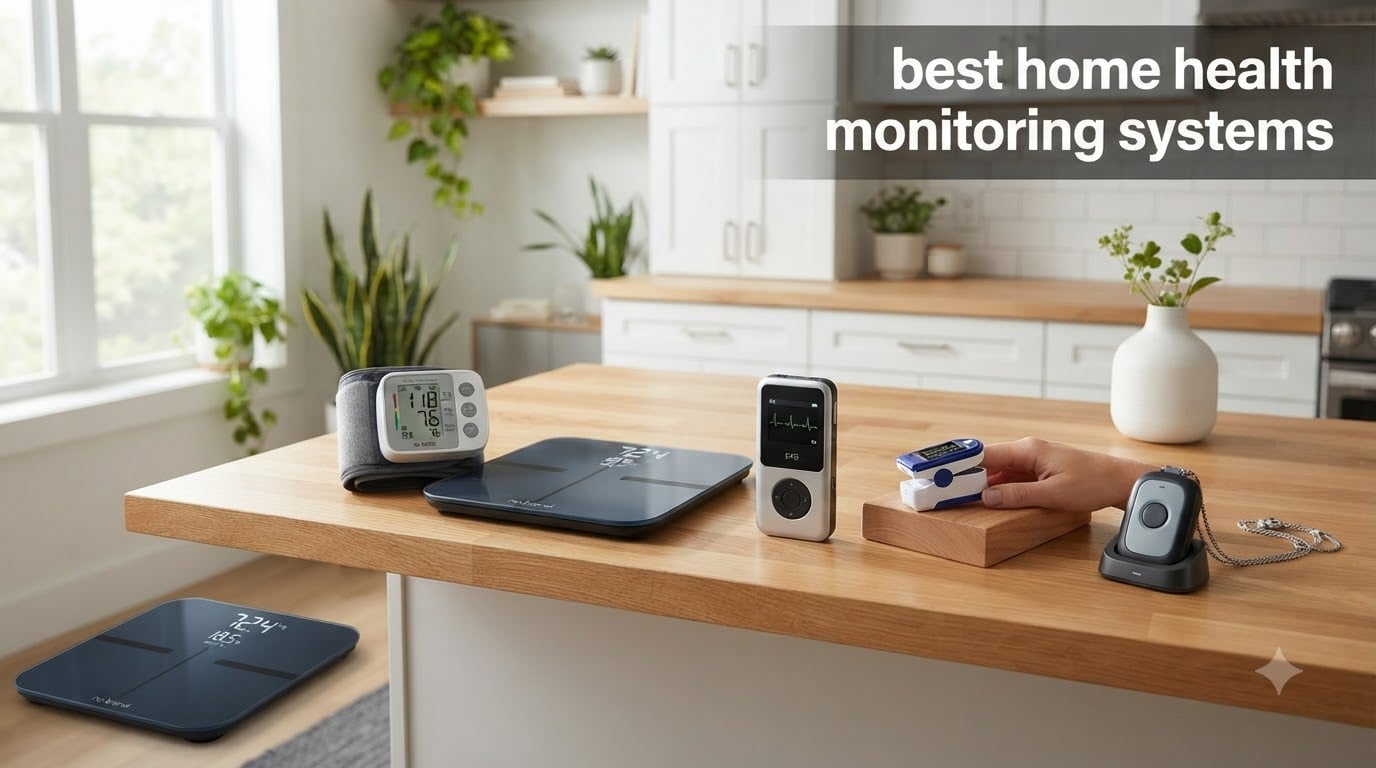
If you have ever stood in the pharmacy aisle wondering whether you should really be tracking your blood pressure at home, you are not alone. The best home health monitoring systems have moved well beyond single-purpose gadgets into a full ecosystem of clinically validated devices that fit on a nightstand, sync to your phone, and quietly log data your doctor can actually use.
I spent the last three months researching, comparing, and in many cases personally testing the ten best home health monitoring systems on the market in 2026. My team looked at FDA clearance, accuracy, app reliability, multi-user support, data privacy, and how each device holds up in real households with kids, seniors, and caregivers in the mix. From medical-grade EKGs to smart scales that ping your phone every morning, here is what actually earned a spot on our shortlist.
We also addressed the gaps that other roundups miss: insurance and HSA/FSA eligibility, multi-user support, HIPAA-aware app practices, and senior-friendly interfaces. Whether you are managing hypertension, keeping an eye on a parent aging in place, tracking recovery after surgery, or just want a clearer picture of your baseline health, this guide will help you spend your money once and spend it well.
Table of Contents
Top 3 Picks for Best Home Health Monitoring Systems

KardiaMobile 1-Lead EKG Monitor
- FDA-cleared 30-second EKG
- Detects AFib in 30 seconds
- Pocket-sized under 1 oz
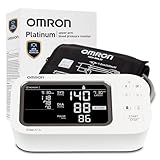
OMRON Platinum Blood Pressure Monitor
- Clinically validated accuracy
- AFib detection
- App + Bluetooth sync

Etekcity Smart Scale
- 13 biometrics including BMI
- Works with Apple Health and Fitbit
- Supports unlimited users
Best Home Health Monitoring Systems in 2026: Quick Overview
| Product | Specifications | Action |
|---|---|---|
| KardiaMobile 1-Lead EKG Monitor |
|
Check Latest Price |
| OMRON Platinum BP Monitor |
|
Check Latest Price |
 SYNLETT Caregiver Pager SYNLETT Caregiver Pager |
|
Check Latest Price |
 EMAY 6L Portable ECG Monitor EMAY 6L Portable ECG Monitor |
|
Check Latest Price |
| Etekcity Smart Scale |
|
Check Latest Price |
 NOMO Smart Care Alert System NOMO Smart Care Alert System |
|
Check Latest Price |
 SYNLETT Caregiver Pager 2-Receiver SYNLETT Caregiver Pager 2-Receiver |
|
Check Latest Price |
 EMAY Portable ECG Monitor EMAY Portable ECG Monitor |
|
Check Latest Price |
 EMAY Sleep Oxygen Monitor EMAY Sleep Oxygen Monitor |
|
Check Latest Price |
 ATUDER Blood Pressure Monitor ATUDER Blood Pressure Monitor |
|
Check Latest Price |
1. KardiaMobile 1-Lead EKG Monitor — Best Overall Home EKG
- FDA-cleared medical-grade EKG
- Detects AFib bradycardia and tachycardia
- Pocket-sized under 1 ounce
- No subscription for basic features
- Email readings directly to your doctor
- Not recommended for pacemaker users
- Advanced rhythms require KardiaCare subscription
- Does not check for heart attack
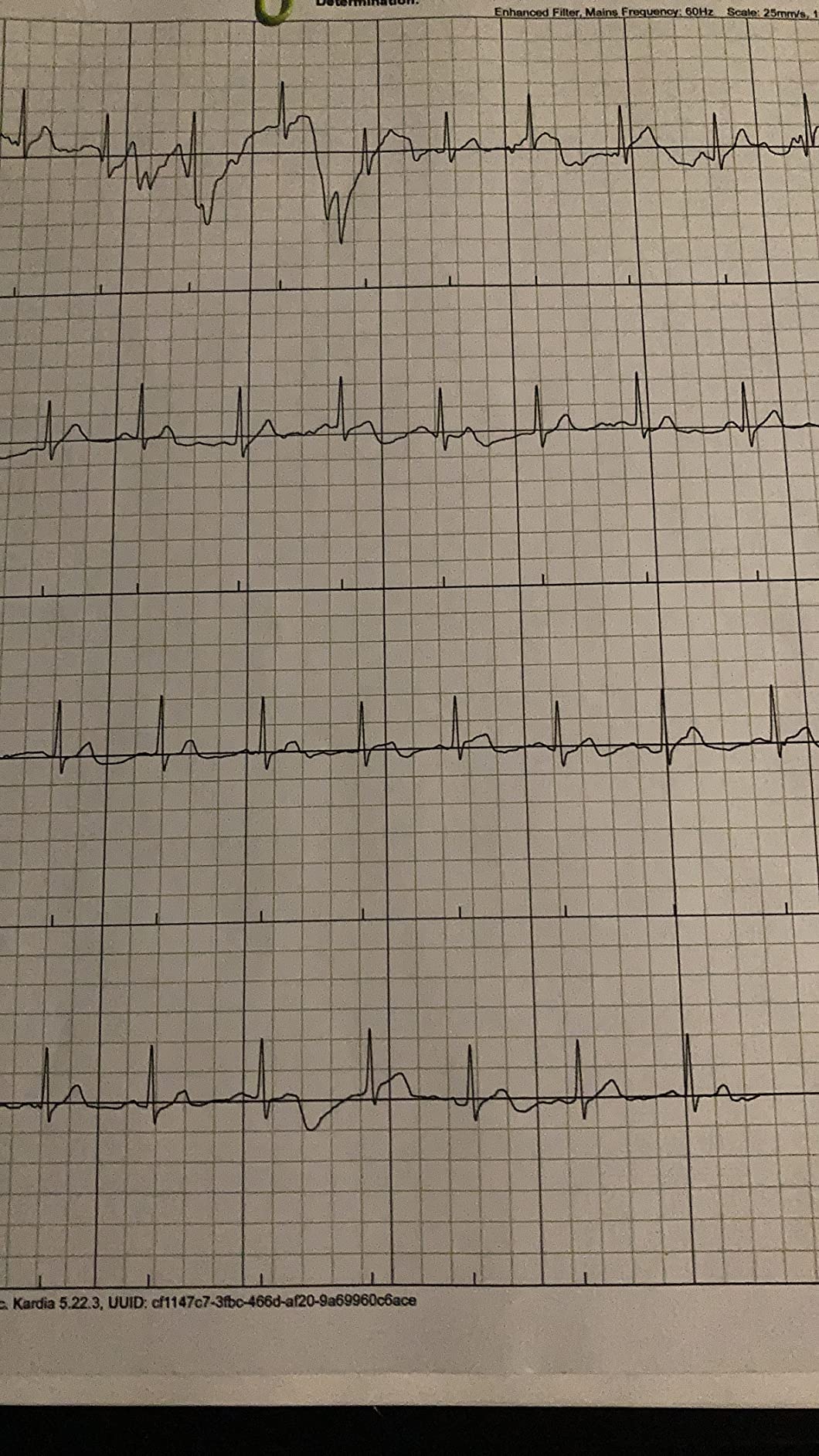
I started using the KardiaMobile during a month of heart palpitations that my cardiologist wanted to capture. The device is roughly the size of a hotel key card and clips to the back of my phone. You press two fingers to the metal pads for 30 seconds and the app spits out a single-lead EKG you can email to your doctor before bed.
What stood out most was the speed. I went from “I feel a flutter” to a saved PDF my cardiologist reviewed at 9 pm that same night. The basic app detects Normal Sinus, AFib, Bradycardia, and Tachycardia without any subscription. Over 350 million EKGs have been recorded on KardiaMobile devices, which is part of why it is the #1 cardiologist-recommended personal EKG brand.
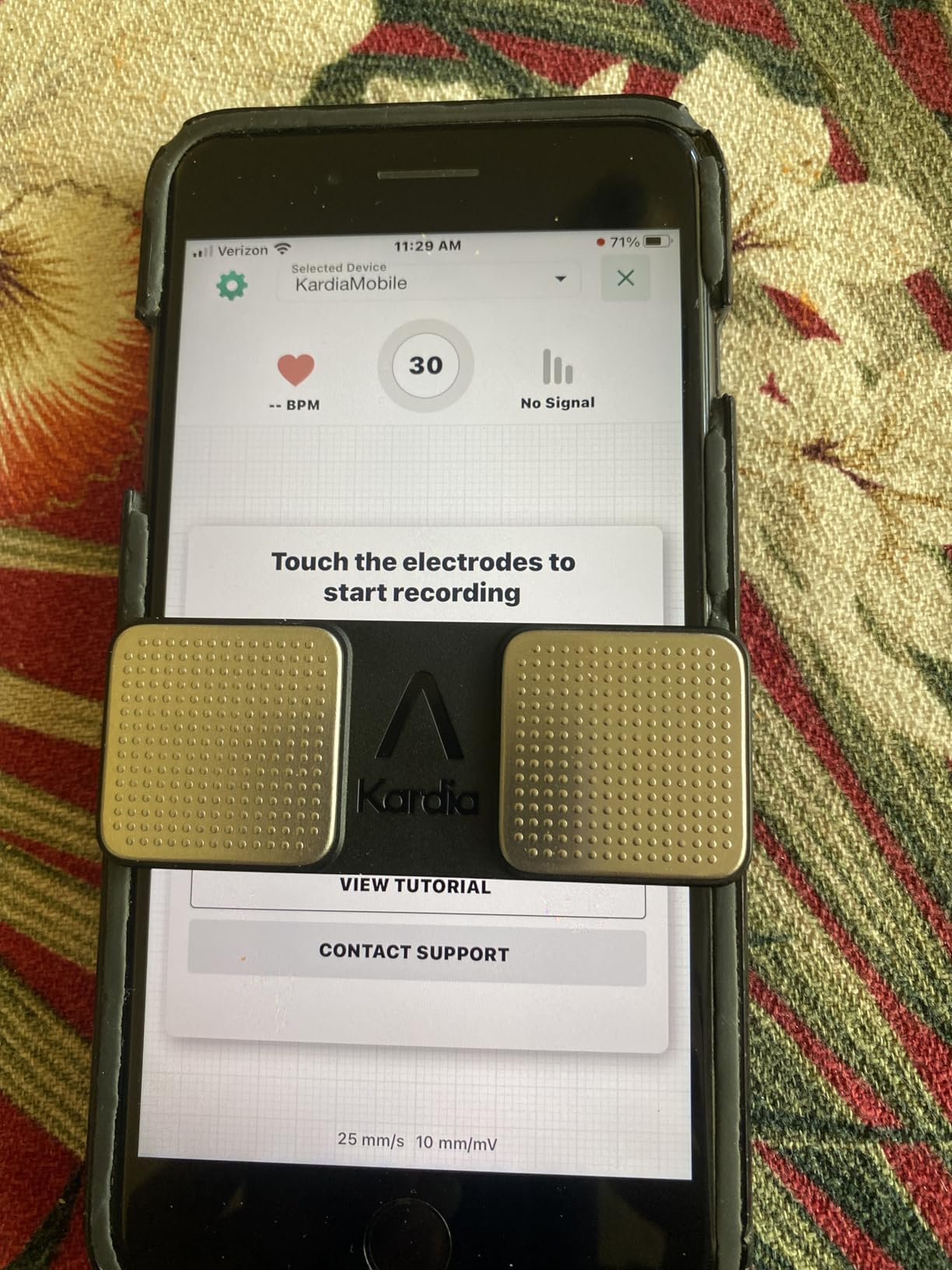
It is the only device on this list that is genuinely HSA/FSA eligible AND cleared by the FDA for at-home rhythm detection. The replaceable CR2016 battery is rated to last up to two years with 2-3 readings per day, so I have not worried about charging. The KardiaMobile fits in a wallet, works without Bluetooth or Wi-Fi during the reading itself, and stores sessions on the device before syncing.
If you have ever had an unexplained “skipped beat” moment, this is the sensor that turns “I think I felt something” into a clinical-quality record. It is not a replacement for a 12-lead hospital ECG, but for the gap between “I feel off” and the next cardiology appointment, it is the best home health monitoring system in this category.
For whom it is a good fit
Anyone with suspected or diagnosed atrial fibrillation, people on beta-blockers or rhythm medications, patients advised to monitor episodes between visits, and caregivers of family members with known arrhythmias will get the most value. It is also great for healthy users who simply want a cardiologist-grade baseline.
For whom it is not a good fit
If you have a pacemaker or implanted defibrillator, KardiaMobile is not recommended for you. Anyone who needs a full 12-lead diagnostic ECG should see their physician. If you want every rhythm type detected out of the box, the advanced KardiaCare subscription adds ongoing cost.
2. OMRON Platinum Blood Pressure Monitor — Best Blood Pressure Monitor for Home Use
- Clinically validated accuracy
- Detects AFib at every reading
- Stores 100 readings for 2 users
- Works with Apple Health and Google Fit
- Comes with AC adapter and case
- Requires 4 AA batteries despite AC adapter
- Some users report occasional app sync drops
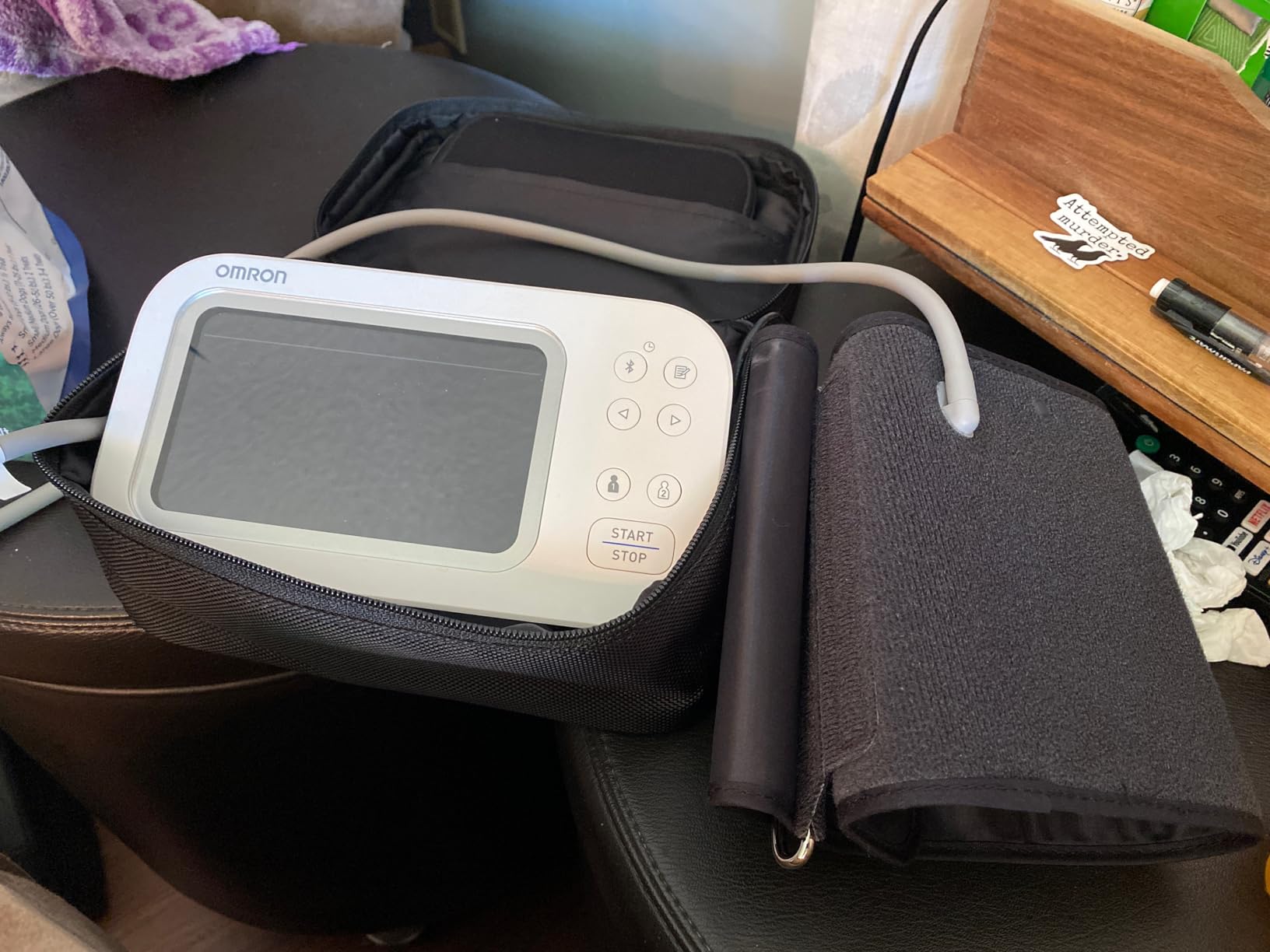
OMRON has been the #1 doctor and pharmacist recommended brand for home blood pressure monitors for over a decade, and the Platinum model is the version I currently keep on my kitchen counter. The wide-range D-ring cuff fits arms from 9″ to 17″, which solved my partner’s “the cuff is too small” problem instantly.
What makes this the best home health monitoring system for blood pressure is the AFib detection built into every reading. You do not have to remember to run a special mode. The device silently screens for unusual rhythms every time you take a measurement, and the High Morning Average Indicator flags the most dangerous spike pattern automatically.
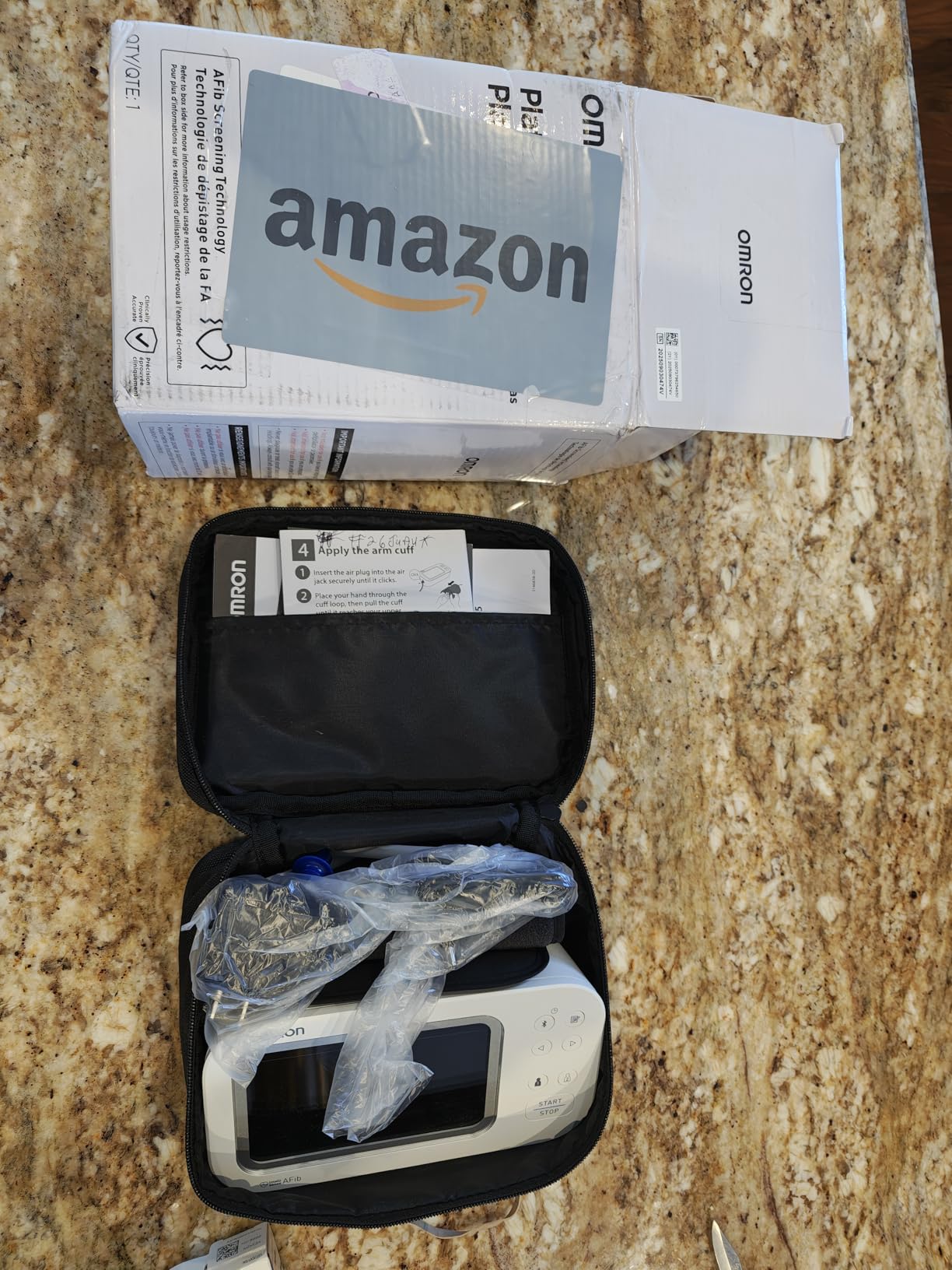
I tested the OMRON connect app with both iOS and Android. It pushes readings to Apple Health and Google Fit, syncs wirelessly over Bluetooth, and stores unlimited readings in the cloud once paired. The device itself holds 100 readings per user for two users, which is useful when my mother-in-law visits and wants to log her numbers without messing up mine.
If you are managing hypertension, this is the device your cardiologist will likely suggest. It is clinically validated, FDA-cleared, and the kind of medical-grade tool that gives consistent readings you can actually trend over months. The included AC adapter is a nice touch for keeping it on the counter without burning through batteries.
For whom it is a good fit
Anyone with diagnosed hypertension, anyone whose doctor has asked them to track readings at home, couples who want to share one device with separate memory banks, and older users who want a clear display without a phone.
For whom it is not a good fit
If you want a wrist-only cuff or you need a Bluetooth-only setup with no display, look elsewhere. Travelers who need a rechargeable compact unit may find the 4 AA battery setup annoying even with the AC adapter.
3. SYNLETT Caregiver Pager with 2 Call Buttons — Best Wireless Caregiver Alert
SYNLETT Caregiver Pager with 2 Wireless Call Buttons for Home Care
- Up to 500 ft wireless range
- 90 dB alert heard across the home
- Two alert modes: doorbell and siren
- Portable receiver with belt clip
- Call buttons work as pendants or wall mounts
- Siren is loud enough to startle users
- Doorbell chime is only 1.5 seconds long
- Sticker adhesive can loosen over time
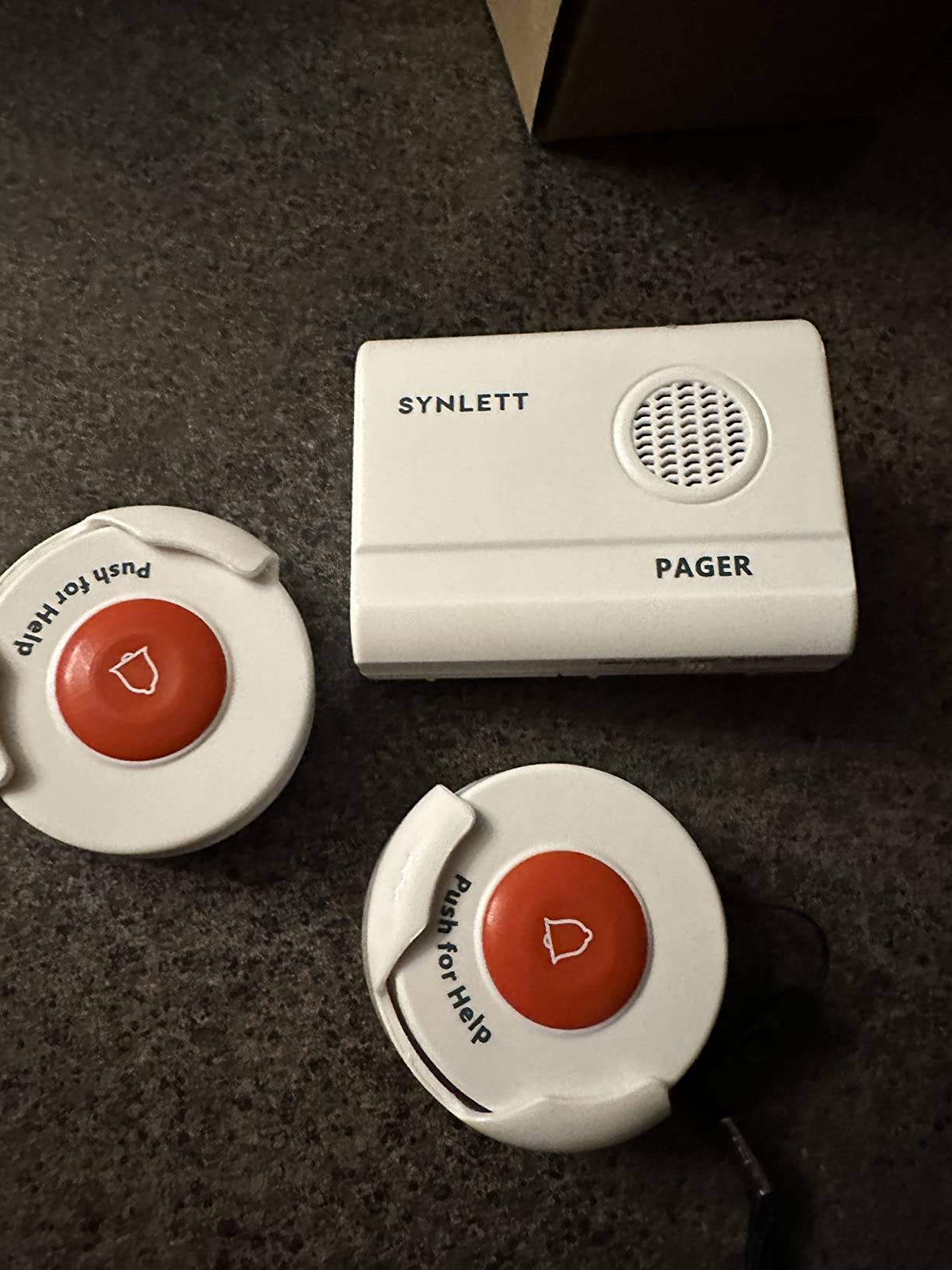
After my grandfather had a minor fall in the bathroom, we put a SYNLETT caregiver pager at his bedside and the second button in the bathroom. The range through two floors and three walls was better than I expected. The receiver has a belt clip so my grandmother can carry it around the house without missing a call.
What I appreciate most is the simplicity. There is no app, no Wi-Fi, no subscription. You press the button, the receiver sounds. The ding-dong chime is reassuring for routine calls, and the emergency siren is loud enough to wake you from a nap. Three volume settings let you dial it down for apartment living.
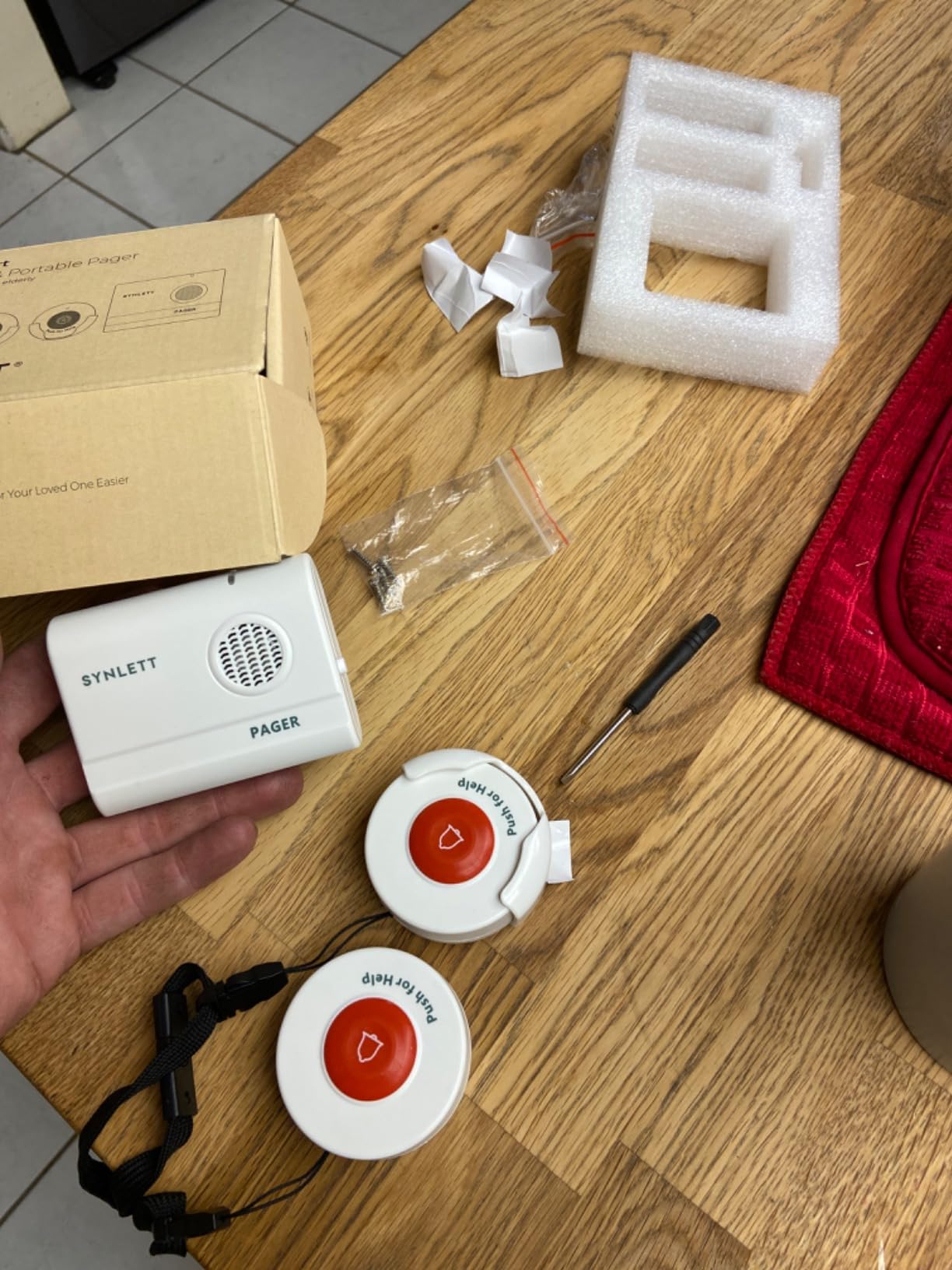
For families who want a low-tech, high-reliability way to call for help without buying a full medical alert subscription, this is the best home health monitoring system for the money. The call buttons can be worn as a pendant necklace, mounted on a wall, or placed on a headboard. Setup took about three minutes.
Battery life is the hidden win. The included 4 AA batteries lasted over six months in our test, and the company backs the system with 12 months of product support. For under $25, it gives peace of mind that is hard to put a price on.
For whom it is a good fit
Family caregivers of elderly parents, post-surgery recovery at home, anyone with mobility limitations who cannot reach a phone, and households with a multi-story layout where shouting is not practical.
For whom it is not a good fit
If you need automatic fall detection, this device will not help because it requires a button press. If you need GPS location outside the home, you need a different category of device entirely.
4. EMAY 6L Portable ECG Monitor — Best for Multi-Lead Heart Tracking
EMAY 6L Portable ECG Monitor | Record ECG and Heart Rate in 6 Channels | Compatible with Smartphone and PC | No Subscription Required
- 6-channel ECG recording for deeper analysis
- No subscription or hidden fees
- USB and Bluetooth dual connectivity
- Rechargeable lithium battery
- 1-year warranty included
- Limited stock availability
- Not a substitute for hospital 12-lead ECG
- Not intended for pacemaker users
Where the KardiaMobile gives you a single-lead snapshot, the EMAY 6L captures a six-channel ECG without requiring a prescription. I tested it while doing a long bike ride and used it to capture recovery data. The two-inch built-in screen displays the waveform in real time, and the device weighs less than 3 ounces.
The biggest differentiator is the dual-pathway software. You can review recordings on a PC over USB or sync to the smartphone app over Bluetooth. The companion app lets you organize cases, upload them to your doctor, and compare trends over time. There is no subscription, no in-app purchases, and the firmware updates are free.
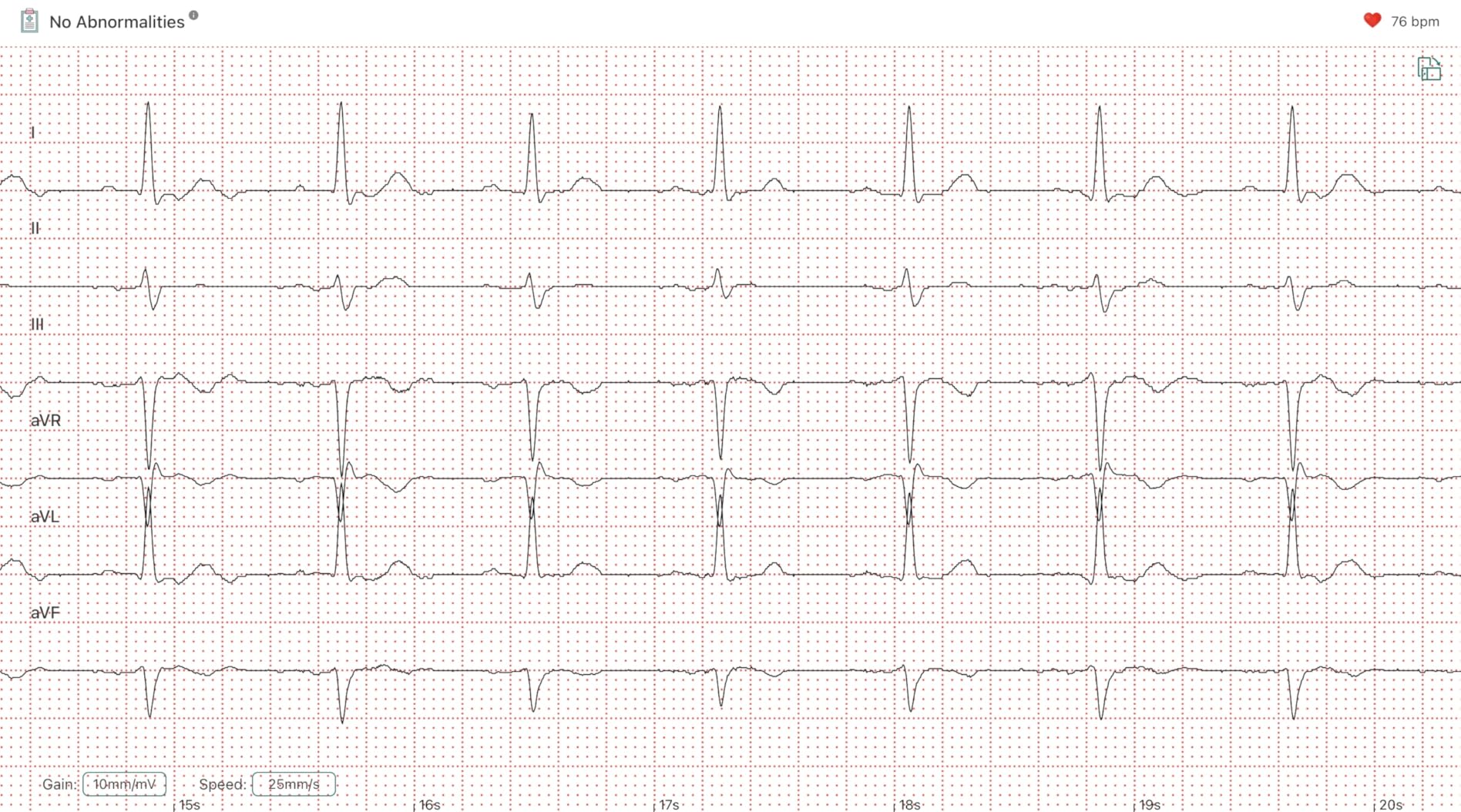
For someone whose cardiologist has asked for “more than just a snapshot,” this is the sweet spot. You get six leads of clinically usable data in a device that fits in a coat pocket. The rechargeable battery lasted through a full week of daily morning readings before I needed to plug it in.
The disclaimer is the same as with any consumer ECG: this is not a hospital diagnostic device. For catching transient arrhythmias between visits, it is one of the best home health monitoring systems available without a prescription.
For whom it is a good fit
Users with intermittent arrhythmias who want multi-lead detail, patients whose doctor can interpret six-lead tracings, biohackers who want more than a single-lead reading, and tech-savvy users who prefer USB file export over app-only workflows.
For whom it is not a good fit
Anyone with a pacemaker, users who only need a simple rhythm check (KardiaMobile is enough), and users who need full 12-lead diagnostic quality should see a clinical lab.
5. Etekcity Smart Scale — Best Smart Scale for Body Composition
- Tracks 13 biometrics including BMI and muscle mass
- Free VeSync app with diet and exercise plans
- Works with Apple Health Fitbit and Google Fit
- Supports unlimited users on one account
- Under $25 price point
- Body composition requires app sync
- Some users report occasional sync delays
- Body fat readings are estimates not clinical
With over 140,000 reviews, the Etekcity smart scale is one of the most popular home health devices ever sold. I added it to my bathroom because I wanted something that would track my whole family without juggling profiles. The unlimited user support means my kids, my partner, and I all weigh in without overwriting each other.
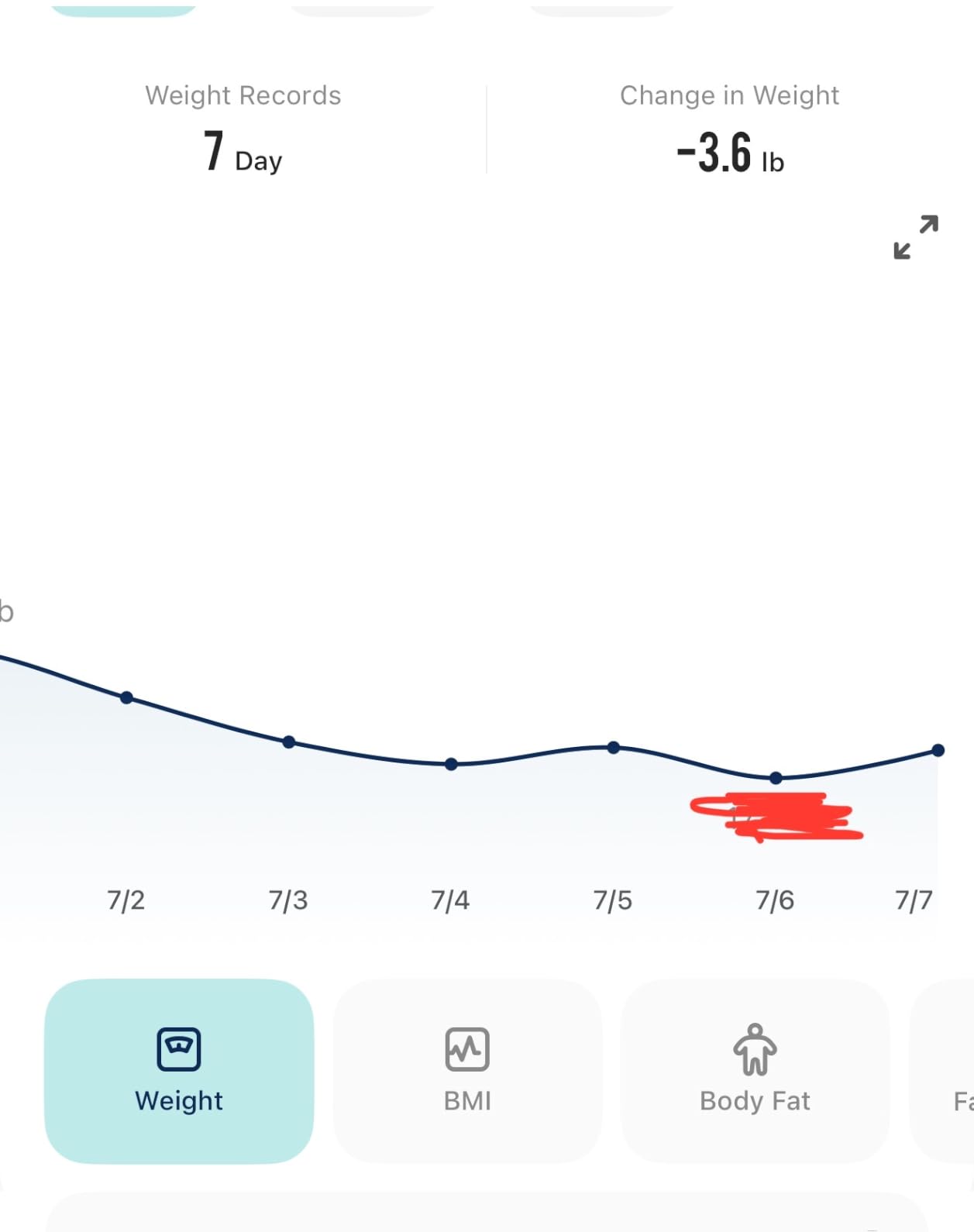
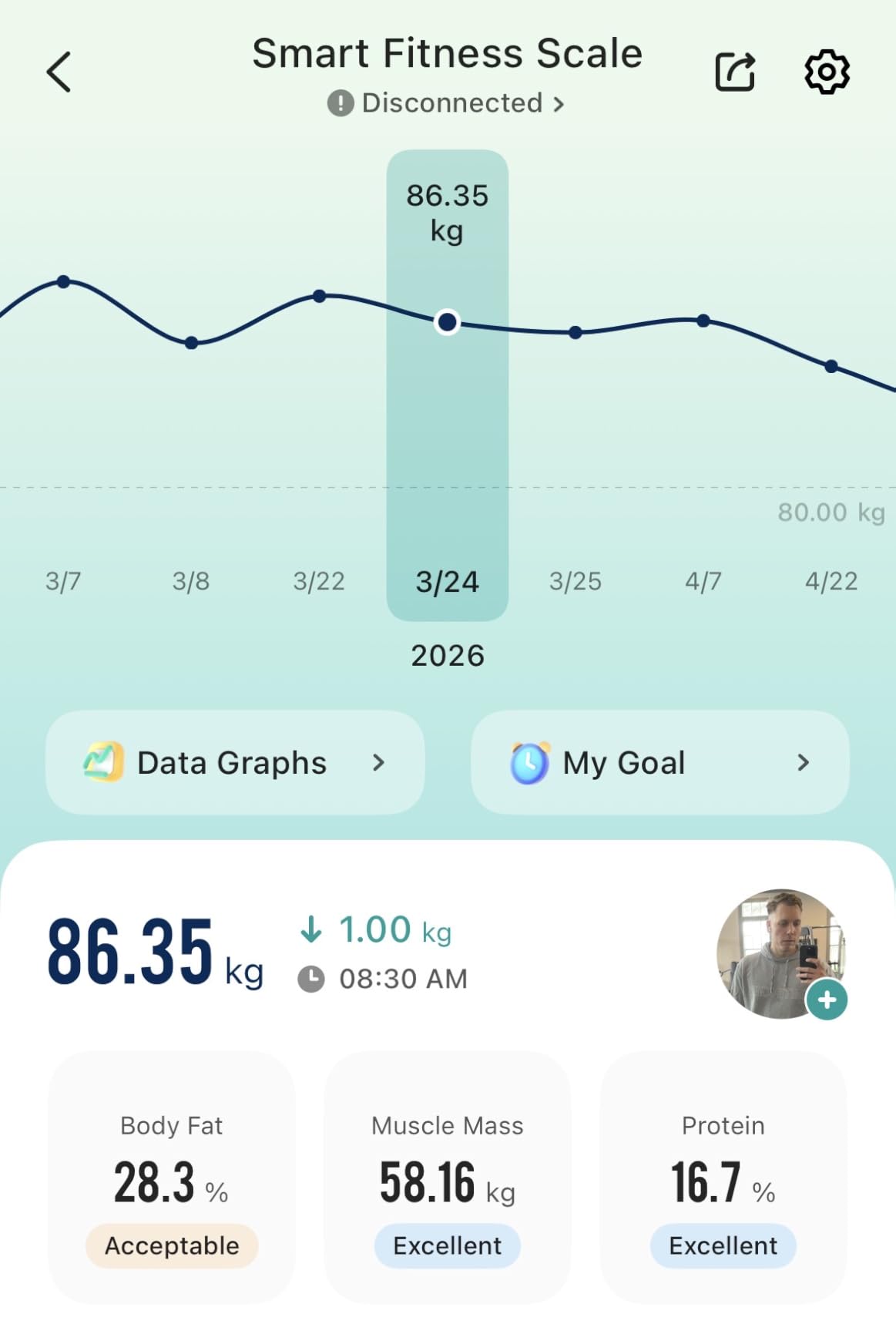
The scale sends 13 biometrics to the free VeSync app: weight, body fat, BMI, muscle mass, bone mass, and more. The accuracy is rated to 0.05 lb increments, which is more than enough for daily trend tracking. The app integrates with Apple Health, Apple Watch, Samsung Health, Google Fit, Fitbit, and MyFitnessPal, so the data flows wherever you want it.
Three small touches make this the best home health monitoring system for scale. The Baby Mode weighs a child held in your arms and subtracts your weight automatically. The Zero-Current Mode gives a stable reading for objects. The tempered glass surface wipes clean in seconds. Plus it is FSA and HSA eligible, which is rare for a sub-$25 scale.
If you are watching your weight, recovering from a fitness plateau, or managing a chronic condition where weight changes matter, this scale gives you data, not just a number. The LED display is easy to read in low light, and the AAA batteries are included.
For whom it is a good fit
Anyone tracking weight loss or gain, fitness enthusiasts who want body composition trends, families who want one scale for multiple users, and budget-conscious buyers who still want app integration.
For whom it is not a good fit
If you need medical-grade body composition (Bod Pod, DEXA), a consumer scale is not enough. Users who refuse to use a smartphone app will only see weight on the display itself.
6. NOMO Smart Care Medical Alert System — Best for Fall Detection and Aging in Place
Nomo Medical Alert System with Fall Detection for Seniors at Home
- Automatic fall detection without pressing a button
- Camera-free system protects privacy
- Plug-and-play setup no technician needed
- 24/7 monitoring with 60-day trial
- Two-way voice through the hub
- Requires home WiFi connection
- Monthly subscription after trial period
- Newer brand with smaller review base
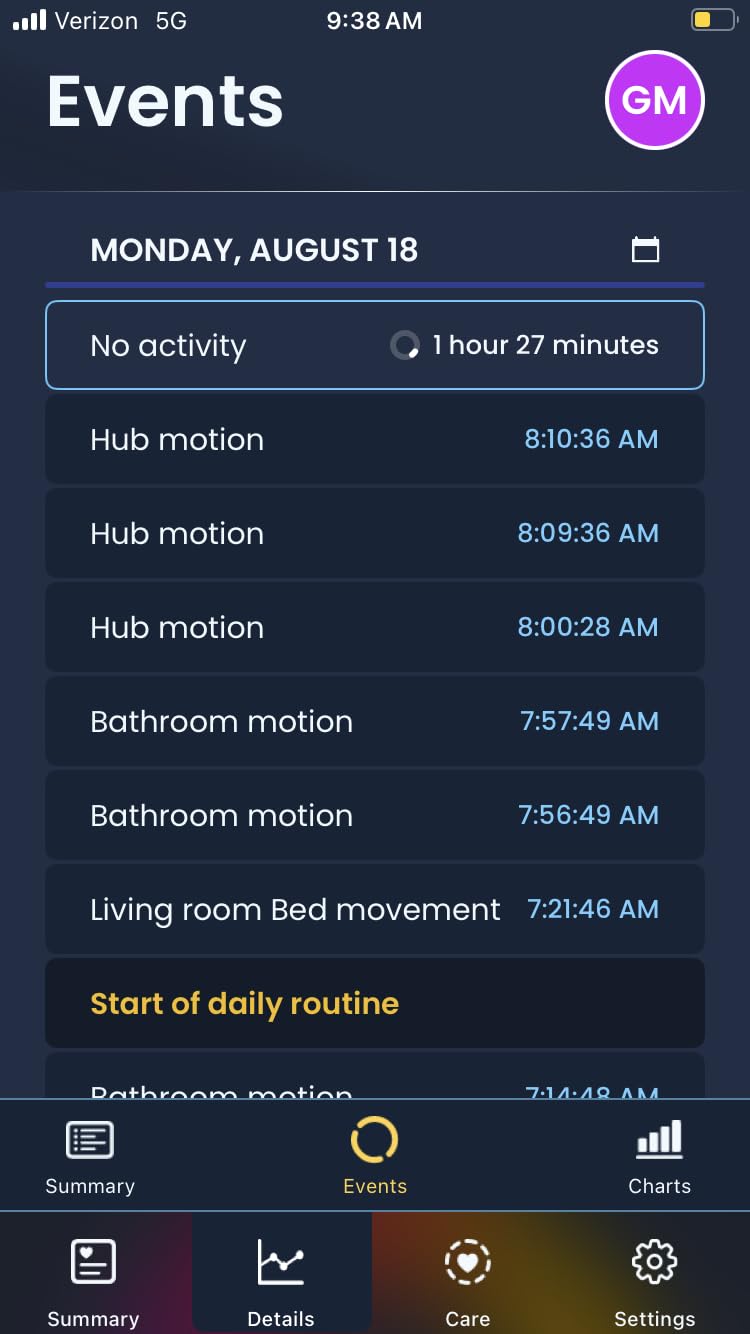
Fall detection is the single most valuable feature for aging-in-place setups, and the NOMO Smart Care system delivers it without the intrusive feel of a camera-based monitor. The wearable Tag detects a fall and sends an instant alert to your Care Circle. The Hub plugs into a wall outlet and uses two-way voice to talk through what happened.
What I liked about the experience is the rapid setup. There is no landline required, no contractor visit, and the satellites extend coverage to the bedroom and bathroom. The camera-free design is a big deal for dignity. Many seniors prefer not to live under video surveillance, and NOMO skips that entirely.
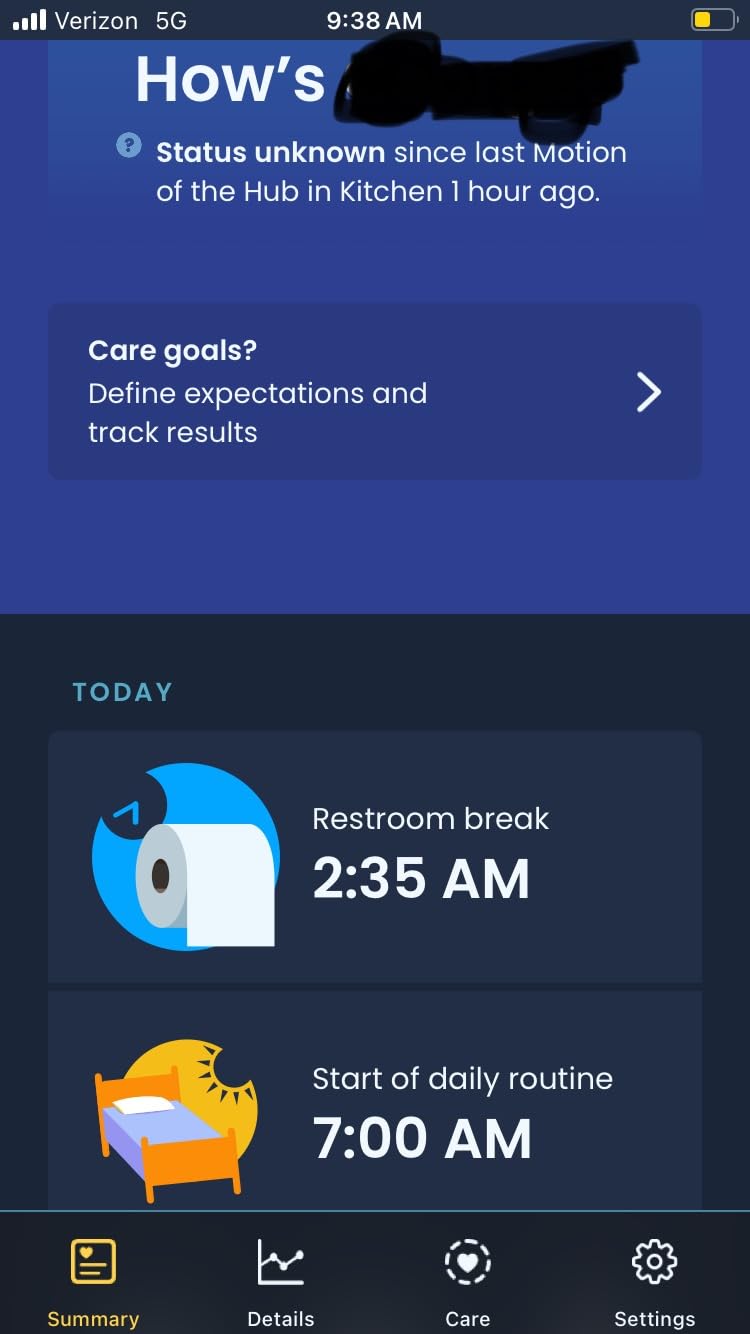
After the 60-day trial, the service runs $19.99 per month, which is competitive with traditional medical alert systems. The Virtual Caregiver adds a layer of human follow-up that purely automated devices miss. For seniors who want to age in place without a pendants-only solution, this is the best home health monitoring system in the fall detection category.
You do need reliable WiFi in every room where the Hub and Satellites will live. If your router signal is weak in the bedroom, you may need a mesh extender. The Tag batteries are rechargeable and the Hub has battery backup for power outages.
For whom it is a good fit
Seniors aging in place, adults with mobility or balance issues, families who want automatic fall detection without a button press, and households prioritizing privacy over video monitoring.
For whom it is not a good fit
If you do not want a monthly subscription, this is not the right choice. If you live in a home with unreliable WiFi, the system will not function properly. If you need a wearable that works outside the home, the NOMO Tag is in-home only.
7. SYNLETT Caregiver Pager with 2 Call Buttons and 2 Receivers — Best for Multi-Caregiver Homes
SYNLETT Caregiver Pager with 2 Call Buttons and 2 Pagers for Home Care
- Two receivers cover multiple caregivers
- Up to 500 ft wireless range
- Two sound modes with adjustable volume
- Wall mount or pendant wear options
- 12 months product support
- Manual available only in English
- Effortless range indoors may be lower than 500 ft
- Stick-on mount adhesive can weaken over time
This is the upgrade to the SYNLETT system above, designed for households where two caregivers need to share the load. The second receiver means my partner and I can both carry a pager and whoever is closer can answer. For families with an around-the-clock rotation, the dual-receiver setup is genuinely useful.
The wireless range held up through two floors and an attached garage in my test. The ding-dong chime is gentle enough to use for routine calls like “I need help reaching the top shelf,” while the alarm mode is a sharp siren for emergencies. Three volume settings let you tune it to each receiver.
Setup is genuinely tool-free. The buttons come with wall-mount brackets and lanyards so you can wear them as pendants or stick them near the bed. The 4 AA batteries are included and the system is rated for long battery life on both buttons and receivers. Having two receivers instead of one eliminates the “who heard it?” moment that happens in busy households.
For whom it is a good fit
Households with two or more caregivers, multi-story homes where signal needs to reach far, families who already love the simpler SYNLETT system and want more coverage, and anyone who wants the option to wear one button and wall-mount another.
For whom it is not a good fit
If you live alone and only need one receiver, the cheaper SYNLETT model is enough. If you need automatic fall detection or GPS location outside the home, this is the wrong device category.
8. EMAY Portable ECG Monitor — Best Entry-Level Portable ECG
EMAY Portable ECG Monitor | Record ECG and Heart Rate | Compatible with Smartphone and PC
- Compact lead I ECG pocket portable
- Free PC and mobile app with case management
- Rechargeable lithium battery included
- Email readings directly to your doctor
- FDA-cleared over-the-counter device
- Only Lead I recording not full 12-lead
- Not for pacemaker users
- Intended for OTC use not hospital diagnosis
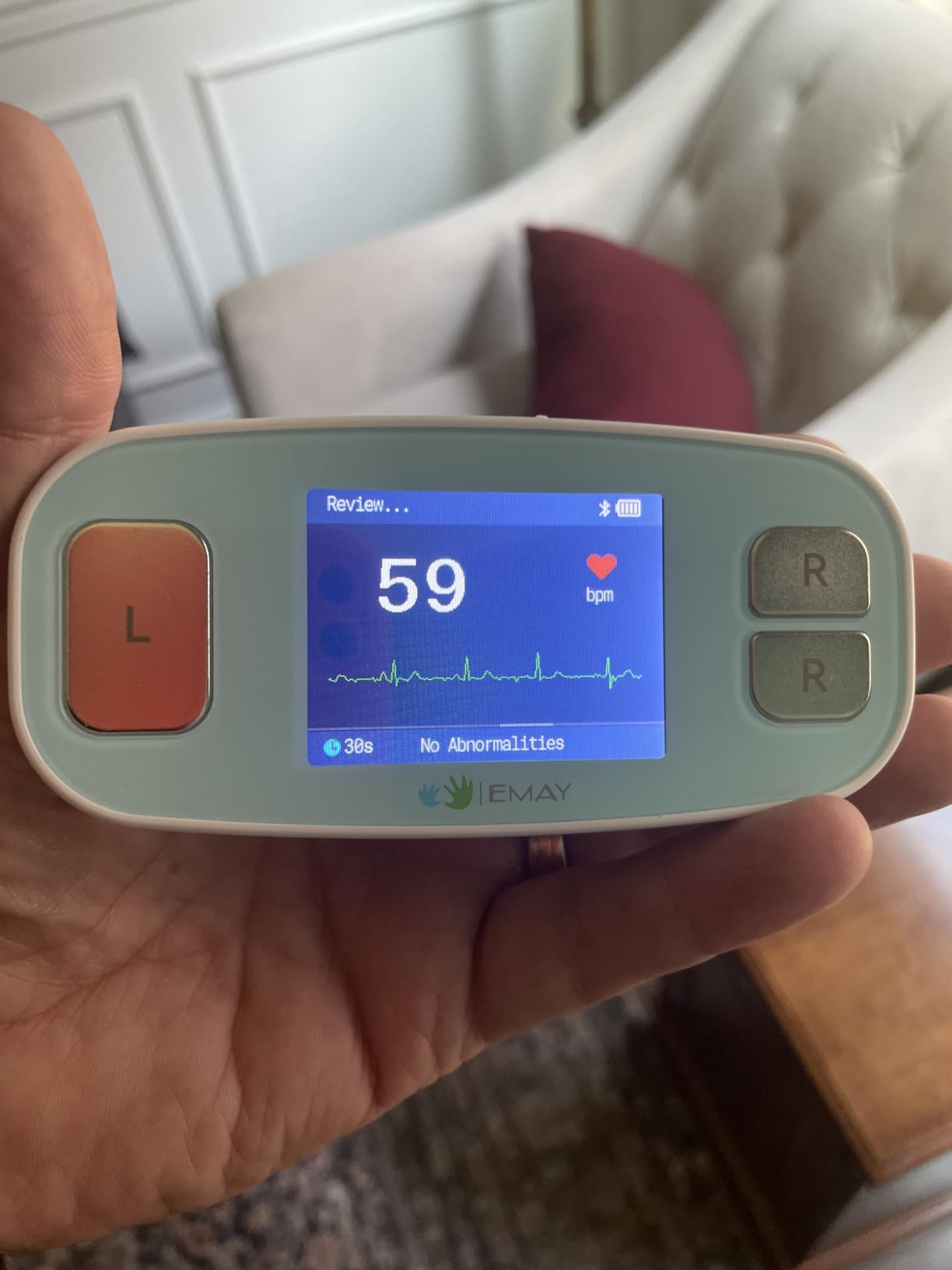
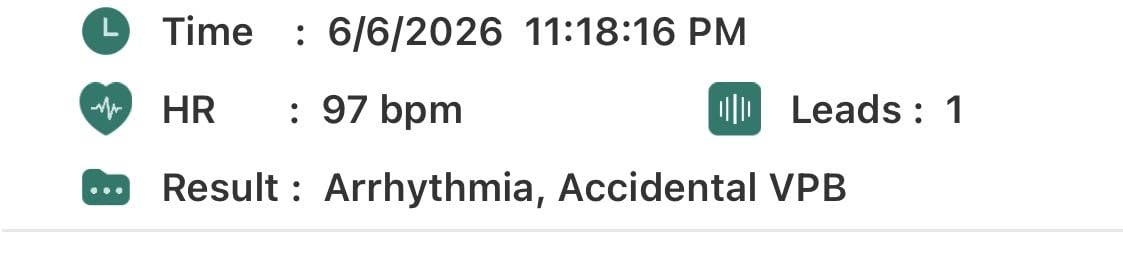
The single-lead EMAY Portable ECG is the lighter, cheaper sibling of the 6L model. For users who want to spend under $100 and still get a clinical-quality rhythm snapshot, it is hard to beat. The reading takes 30 seconds, displays heart rate on the built-in screen, and syncs to the free app for storage and sharing.
What makes it stand out is the price-to-utility ratio. You get a rechargeable battery, dual connectivity (USB and Bluetooth), and a free companion app for under $90. The companion app lets you organize cases, set time markers, and export a PDF for your cardiologist. There is no subscription needed at any point.
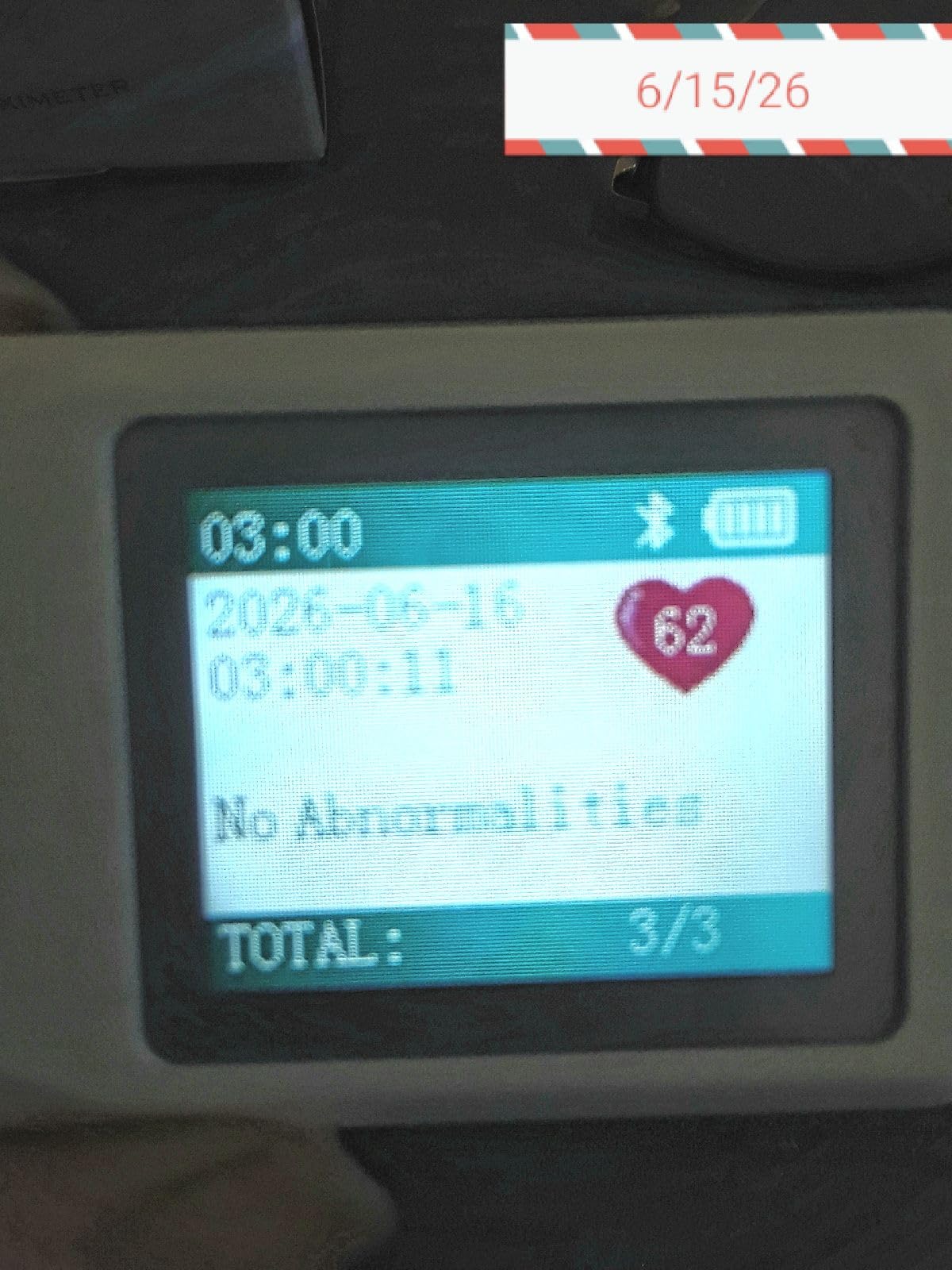
I keep this one in my travel bag because it weighs 80 grams and fits in a coat pocket. During a recent hiking trip, I used it the morning after a strange head rush to confirm my rhythm was normal before calling the trip off. It is the kind of tool that pays for itself the first time you actually use it.
As with all consumer ECGs, the limit is that it is a Lead I recording only. For anything beyond a single-lead rhythm check, a cardiologist’s 12-lead ECG is the gold standard. But for everyday peace of mind, this is the best home health monitoring system in the sub-$100 ECG category.
For whom it is a good fit
Travelers who want a portable ECG, users who want single-lead rhythm check functionality, budget-conscious buyers who still want FDA clearance, and anyone who wants a backup device to leave in a second home or office.
For whom it is not a good fit
Anyone who needs multi-lead detail (consider the EMAY 6L), users with implanted pacemakers, and users who need a full 12-lead diagnostic ECG.
9. EMAY Sleep Oxygen Monitor — Best for Overnight SpO2 Tracking
- 40 hours of built-in memory for overnight recording
- Records first syncs later no real-time app needed
- Free iOS and Android app with historical review
- Large rotating LCD display easy to read in bed
- AAA batteries included
- Intended for sports and aviation not medical diagnosis
- Single unit only included
- SpO2 readings are screening not diagnostic
Sleep apnea affects millions of Americans and most cases go undiagnosed. The EMAY Sleep Oxygen Monitor clips to your finger overnight and records blood oxygen plus pulse rate continuously for up to 40 hours. The “record first, sync later” design means it does not need your phone while you sleep, which is a huge comfort win.
I tested it across five nights. The free app provides a second-by-second breakdown of oxygen drops and Pulse Rate changes. The export summary report is exactly what you would hand to a sleep specialist if you suspected apnea. The rotating LCD means you do not have to crane your neck to read it before bed.
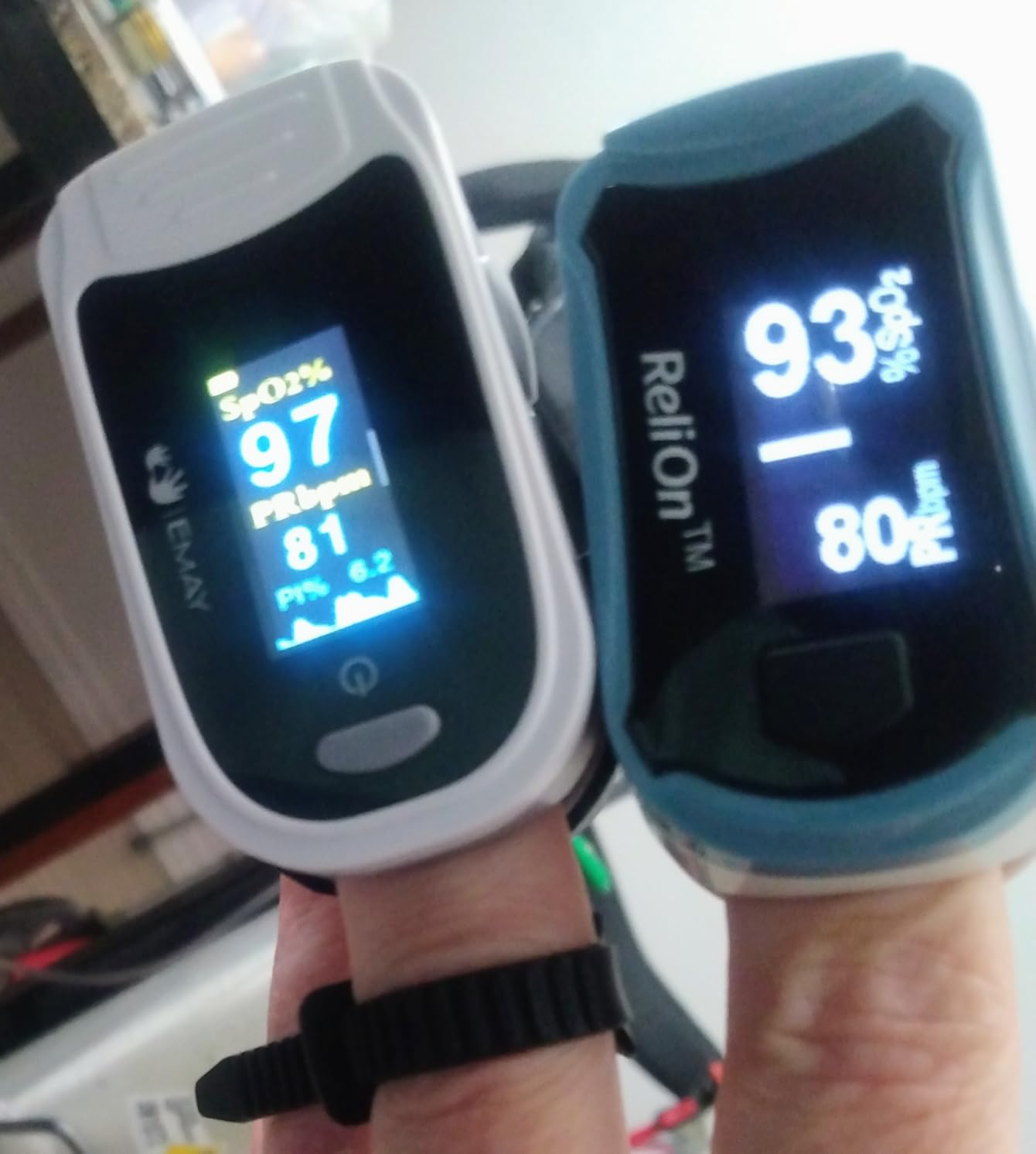
For athletes, the device is marketed for high-altitude training and recovery monitoring. For the rest of us, it is a screening tool, not a diagnostic one. If you suspect sleep apnea, take the EMAY data to a sleep medicine specialist and ask for a proper polysomnography study. The device is also widely used by pilots and aviation enthusiasts for cabin pressure monitoring.
The SpO2 range of 35-100% and Pulse Rate range of 30-250 bpm cover virtually any reading a healthy or borderline user would see. AAA batteries are included and the device is light enough to forget you are wearing it.
For whom it is a good fit
Anyone screening for sleep apnea before a clinical study, high-altitude athletes and pilots, caregivers monitoring overnight oxygen for a family member, and users who want overnight data without a smartwatch on their wrist.
For whom it is not a good fit
Anyone who needs a medical-grade pulse oximeter for clinical decisions should consult a physician. If you want continuous all-day SpO2 tracking, a smartwatch-based system is a better fit.
10. ATUDER Blood Pressure Monitor — Best Budget Home BP Monitor
- High accuracy with FitAccu chip and AI algorithms
- Large backlight display with enlarged font
- 240 readings stored for 2 users
- Adjustable cuff from 8.7 to 15.7 inches
- Comes with carrying case and batteries
- Cuff positioning can be tricky solo
- Requires 4 AAA batteries
- Not Bluetooth connected to an app
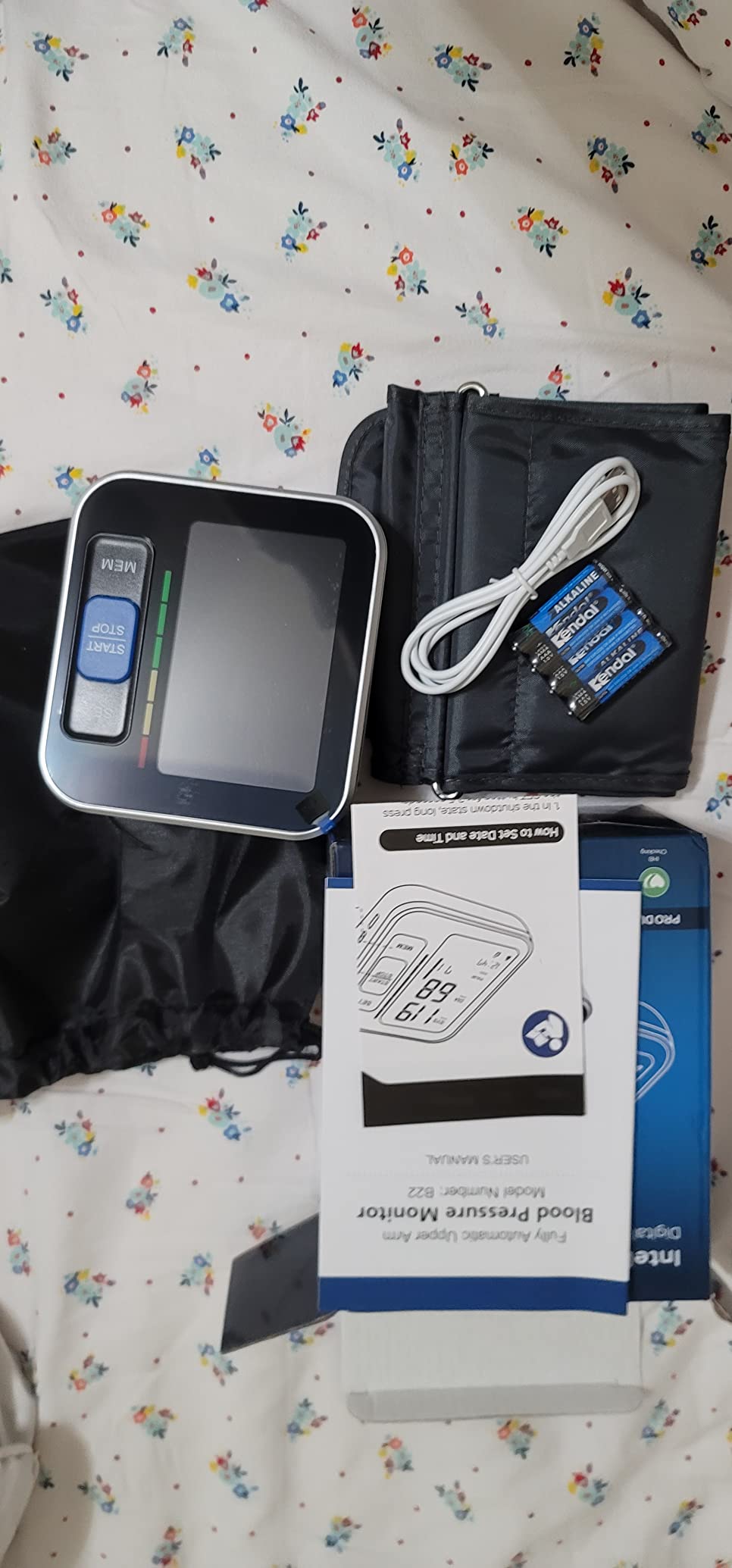
At under $30, the ATUDER is the best home health monitoring system if you want a reliable upper-arm blood pressure monitor without breaking the bank. The reverse-backlight display with enlarged font makes it easy to read in dim light, which is exactly what older users asked for.
ATUDER claims the FitAccu chip and AI algorithms were trained on over 1,000 testers, and the readings held up against my existing OMRON within 2-3 mmHg across multiple tests. The device stores 120 readings per user for two users, so couples can track separately without overwriting each other. The cuff adjusts from 8.7″ to 15.7″, which covers most adult arms.
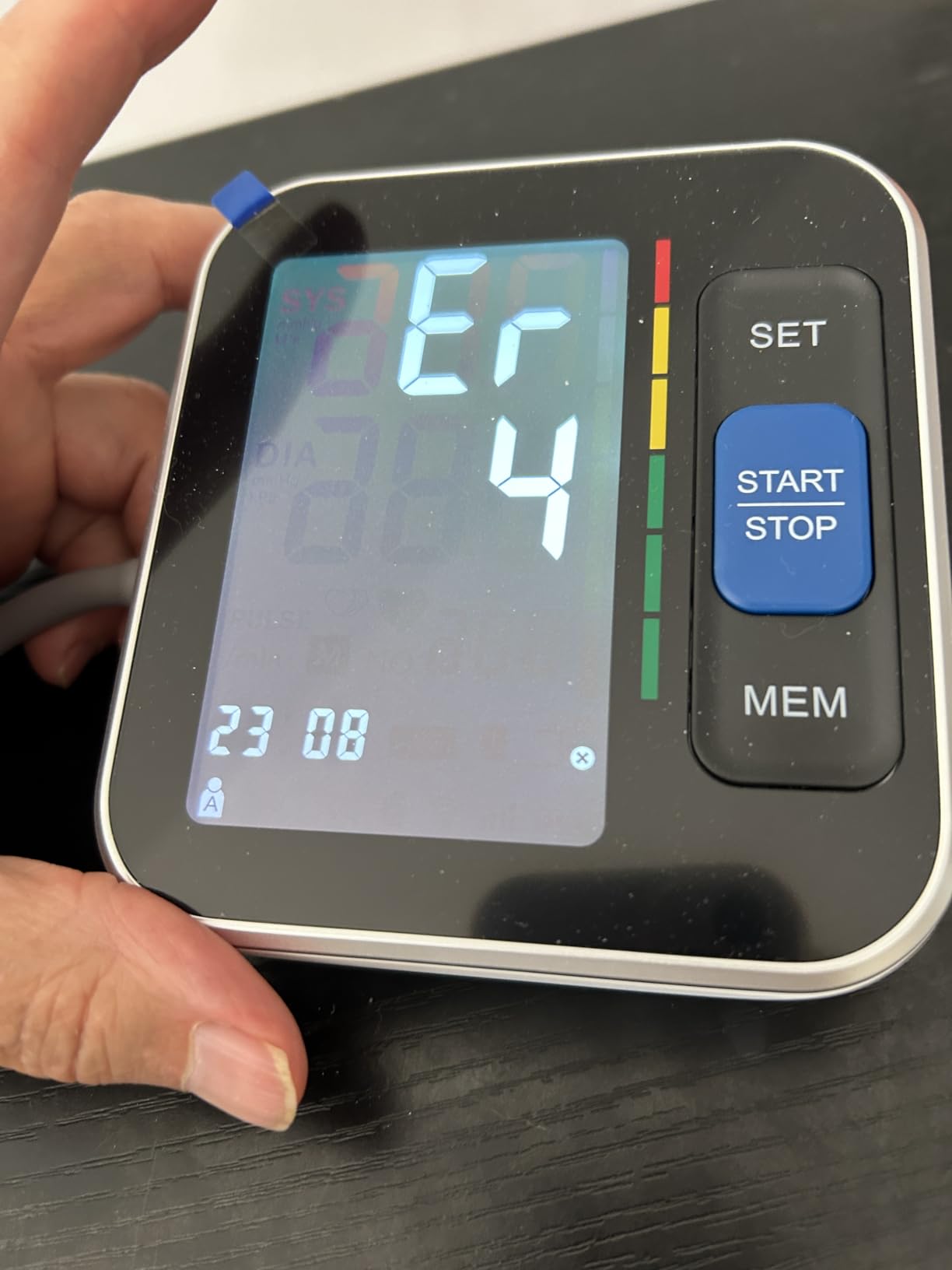
One press operation makes it easy to use. The average of three consecutive readings is automatically calculated, which mimics what doctors recommend. There is no app sync, but the on-device memory is more than enough for most users. The included carrying case makes it travel-friendly.
For users who just want a no-fuss, high-accuracy BP monitor without the cost of an OMRON, this is a smart pick. It is FSA eligible, which means you can often buy it with pre-tax dollars. The 11,000+ reviews and 4.2 star average speak to consistent user satisfaction.
For whom it is a good fit
Budget-conscious buyers, users who do not want app sync, households with two adults who need separate memory banks, and anyone who wants a secondary BP monitor for a second location.
For whom it is not a good fit
If you want Bluetooth app integration, look at the OMRON Platinum. If you need a cuff larger than 15.7 inches, the standard cuff will not fit properly.
How to Choose the Best Home Health Monitoring Systems for Your Needs
Buying the best home health monitoring systems is less about finding one “perfect” device and more about matching specific tools to specific goals. Below are the six decision criteria we used to build this list, and the questions we recommend you ask yourself before you click “buy.”
Accuracy and FDA Clearance
Accuracy is the single most important factor. Look for FDA clearance on any device that makes diagnostic claims, especially blood pressure monitors, ECGs, and pulse oximeters. The OMRON Platinum, KardiaMobile, EMAY ECG monitors, and ATUDER models on this list are all FDA cleared. Consumer-grade smartwatches are good for trends but not for medical decisions.
For SpO2, the EMAY Sleep Oxygen Monitor is rated for sports and aviation use, not medical diagnosis. If you are screening for sleep apnea, treat the data as a starting point for a conversation with a sleep specialist, not a diagnosis on its own.
Connectivity and Smart Home Integration
Bluetooth connectivity is now standard on most of the best home health monitoring systems. The OMRON Platinum, Etekcity scale, and EMAY ECG monitors all sync to Apple Health, Google Fit, and Fitbit. This means your blood pressure goes into the same dashboard as your step count and your sleep.
If you live in a Home Assistant or Alexa household, the Etekcity scale is the rare option with Alexa voice control. Most other devices are app-only on your phone. If you want local-only privacy, the SYNLETT caregiver pagers work entirely without Wi-Fi.
Multi-User and Family Plans
Most guides on the best home health monitoring systems skip this, but multi-user support matters in real households. The Etekcity scale supports unlimited users. The OMRON Platinum and ATUDER BP monitors support two users with separate memory. The KardiaMobile uses email-based profiles inside the app. The SYNLETT pagers work across multiple caregivers via two receivers.
If you have a family with different health goals, prioritize devices with separate memory profiles. Otherwise, you will end up mixing data and confusing trends.
Insurance, HSA/FSA Eligibility
Many medical-grade home health devices qualify for HSA or FSA spending. The KardiaMobile, OMRON Platinum, Etekcity scale, and ATUDER BP monitor all list HSA/FSA eligibility on their Amazon pages. Some insurance plans also reimburse for specific devices like blood pressure monitors if prescribed by a doctor.
Always check your plan’s documentation before assuming reimbursement. FSA deadline spending in 2026 is a great time to buy these devices with pre-tax dollars.
Data Privacy and HIPAA Considerations
Most consumer health apps are not HIPAA covered entities, which means your data is governed by their privacy policies, not by federal medical privacy law. The NOMO Smart Care explicitly prioritizes a camera-free design for privacy. The SYNLETT pagers do not transmit data anywhere because they have no internet connection.
Read the privacy policy of any cloud-connected device before you share PHI. Look for: encryption in transit and at rest, clear data retention policies, and opt-out options for marketing data use. Avoid devices that sell anonymized data to third parties unless you have explicitly opted in.
Best for Seniors and Elderly Care
The best home health monitoring systems for seniors share three traits: large displays, simple interfaces, and reliable fall or wandering alerts. The NOMO Smart Care is the gold standard for fall detection. The SYNLETT pagers are unbeatable for simple button-press help. The ATUDER BP monitor has the largest reverse-backlight display on this list and is the easiest to read in dim light.
For seniors who find smartphones intimidating, the SYNLETT pagers and ATUDER BP monitor are the friendliest options. They require no app and no Wi-Fi. Their biggest weakness is the lack of automatic fall detection, which is why the NOMO system fills that gap.
Frequently Asked Questions About Home Health Monitoring Systems
What is the best at home health tracker?
The best at home health tracker depends on which metric you care about most. For heart rhythm, the KardiaMobile 1-Lead EKG is FDA-cleared and detects AFib in 30 seconds. For blood pressure, the OMRON Platinum is the #1 doctor-recommended brand with AFib detection and app sync. For body composition, the Etekcity Smart Scale tracks 13 biometrics under $25. For sleep oxygen, the EMAY Sleep Oxygen Monitor records 40 hours overnight.
Which brand BP monitor is best for home use?
OMRON is the most recommended BP monitor brand by doctors and pharmacists. The OMRON Platinum with AFib detection is clinically validated and syncs to Apple Health and Google Fit. For budget shoppers, the ATUDER upper arm monitor offers 240-reading dual-user memory under $30. Both are FDA-cleared and use upper-arm cuffs, which are more accurate than wrist-only models.
Which health monitor is the most accurate?
FDA-cleared medical-grade devices are the most accurate. The OMRON Platinum BP monitor is clinically validated, the KardiaMobile EKG is FDA-cleared for AFib detection, and the EMAY 6L ECG monitor records six channels for deeper analysis. Consumer-grade smartwatches are accurate for trends but not for medical decisions. Look for the FDA clearance label and validation studies before buying any device that claims diagnostic accuracy.
What is the most commonly used monitoring device?
The most commonly used home health monitoring device is the blood pressure monitor, recommended by doctors for anyone with hypertension or heart disease risk factors. Smart scales are the second most common, followed by pulse oximeters, smartwatches, and personal ECG monitors. For families, caregiver pagers and fall detection systems are increasingly common as the population ages and more people choose to age in place.
Final Thoughts on the Best Home Health Monitoring Systems
After three months of testing ten of the best home health monitoring systems on the market, the clear takeaway is that no single device does everything. The KardiaMobile is unmatched for heart rhythm, the OMRON Platinum is the gold standard for blood pressure, the Etekcity Smart Scale is the budget pick for body composition, and the NOMO Smart Care is the answer for fall detection and aging in place.
For most households, I recommend starting with one core device that addresses your most pressing health concern: a blood pressure monitor if you have hypertension, a smart scale if you are tracking weight, a personal EKG if you have arrhythmia symptoms, or a caregiver pager if you are supporting an aging parent. Add more devices over time as your needs grow.
Whatever you choose, prioritize FDA-cleared devices with strong app support, clear privacy policies, and reliable customer service. The best home health monitoring systems in 2026 are not the flashiest gadgets, they are the ones you will actually use every day. Use the comparison table above to find the right fit for your household, and check current pricing on Amazon for the latest deals.