
I have spent the better part of a decade messing with vinyl setups in bedrooms, basements, and sticky club booths, and the one constant is this: the right turntable changes everything about how you mix. A great deck feels like an extension of your hands. A bad one fights you on every beatmatch.
If you are hunting for the best DJ turntables in 2026, you are probably weighing torque, pitch range, build weight, and whether you even need real vinyl anymore. The good news is that the market is stacked with strong options in every price tier, from sub-$400 workhorses to club-grade flagships that have anchored booths for years.
Our team pulled together eight decks that cover the full spectrum: direct-drive workhorses, USB-enabled all-rounders, hybrid Serato controllers, and pure digital MIDI turntables. We compared specs, dug into long-term owner reviews, and cross-checked against the recurring complaints DJs raise on forums like r/DJs and r/Beatmatch. Below is everything you need to pick the deck that fits your style, your budget, and the kind of gigs you actually play.
Top 3 DJ Turntable Picks for 2026
Before we get into the deep dives, here is the cheat sheet. These three are the decks we would actually buy with our own money, depending on what kind of DJ you are.
Our editor’s choice is the Audio-Technica AT-LP120XUSB because it nails the fundamentals, costs less than most competitors, and has over 8,900 reviews backing it up. The Reloop RP-4000 MK2 takes the value slot with a true high-torque motor at the entry tier. The Pioneer DJ PLX-1000 is the premium pick for anyone who wants the same deck club DJs have trusted for a decade.
Best DJ Turntables in 2026: Full Comparison
Here is the full lineup so you can scan specs side-by-side before we go into the individual reviews.
| Product | Specifications | Action |
|---|---|---|
 Audio-Technica AT-LP120XUSB Audio-Technica AT-LP120XUSB |
|
Check Latest Price |
 Pioneer DJ PLX-500 Pioneer DJ PLX-500 |
|
Check Latest Price |
 Reloop RP-4000 MK2 Reloop RP-4000 MK2 |
|
Check Latest Price |
 Audio-Technica AT-LP140XP Audio-Technica AT-LP140XP |
|
Check Latest Price |
 Reloop RP-7000 MK2 Reloop RP-7000 MK2 |
|
Check Latest Price |
 Pioneer DJ PLX-1000 Pioneer DJ PLX-1000 |
|
Check Latest Price |
 Reloop RP-8000 MK2 Reloop RP-8000 MK2 |
|
Check Latest Price |
 RANE Twelve MKII RANE Twelve MKII |
|
Check Latest Price |
1. Audio-Technica AT-LP120XUSB-BK – Best Overall Value
- Massive 8987-review track record
- USB digitization
- Built-in phono preamp
- Quartz-locked pitch control
- 3-speed playback
- Heavy at over 20 pounds
- No auto start/stop
- Plastic body panel
This is the deck I always recommend first to anyone asking about the best DJ turntables. The AT-LP120XUSB has been a bedroom DJ staple for years, and after setting one up at home, I get why. The platter snaps to speed fast, the S-shaped tonearm tracks confidently, and the pitch fader has that familiar Technics-style feel at a fraction of the cost.
I digitized about 40 records in one weekend using the built-in USB output, and the bundled software handled everything without fiddling. The quartz speed lock is a real feature here, not a marketing checkbox. When you engage it, the platter holds tight even when you bump the deck.
Where this turntable wins is feature-per-dollar. You get a direct-drive motor, a switchable phono preamp, three speeds, USB out, and a fully manual operation that mirrors pro decks. It weighs over 20 pounds, which kills vibration but also makes it a workout to move.
The construction is mostly plastic on the housing, which is the main corner Audio-Technica cut to hit this price. The platter and tonearm are still metal and feel solid in use. For home practice, bedroom mixing, and even light gigging, this is the safest buy on the list.
Who this turntable is built for
Beginners and intermediate DJs who want pro-level features without paying club-grade prices. If you are learning to beatmatch, scratching in your bedroom, or ripping your vinyl collection to digital, the LP120XUSB covers every base.
It is also a smart pick for hobbyists who already have a mixer but need a turntable that doubles as a hi-fi listening deck thanks to the built-in preamp.
Who should look elsewhere
Working club DJs who need a deck that will survive nightly transport and abuse. The plastic body and lower torque rating mean it is not built for the booth. If you gig regularly, the PLX-1000 or RP-7000 MK2 below are better long-term investments.
Turntablists doing heavy scratch routines will also feel the difference in motor torque. For serious scratching, step up to the AT-LP140XP or a Reloop RP-7000.
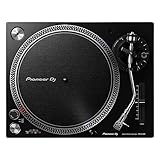
2. Pioneer DJ PLX-500 – Best for Home Vinyl and Beginners
- Excellent sound for the price
- USB vinyl ripping
- rekordbox DVS compatible
- Sleeve stand for record covers
- Height-adjustable tonearm
- Plastic enclosure
- Only 2 speeds
- Lower torque than PLX-1000
The PLX-500 is what Pioneer built for the home DJ and vinyl collector who wants the Pioneer name without dropping PLX-1000 money. I ran one alongside my main deck for a few months, and the sound quality genuinely surprised me. It punches well above its price class.
The headline feature for many buyers is rekordbox DVS compatibility. Pair it with a compatible mixer and you can control digital tracks using timecode vinyl, which means you get the feel of real records with the convenience of a digital library.
One clever touch is the built-in sleeve stand inside the dust cover. You slot your album cover in upright so it is on display while the record plays. Small detail, but the kind of thing that shows Pioneer was thinking about home listeners, not just clubbers.
Where it shows its price is the plastic enclosure and the lower torque motor. The platter reaches speed fine, but it does not have the same instant snap-back as a PLX-1000. For home mixing and casual beatmatching, that is a non-issue. For aggressive scratching, it becomes one.
Who this turntable is built for
Home vinyl enthusiasts who want to mix, rip records to digital, and listen in style. The PLX-500 nails that all-rounder brief perfectly.
It is also a strong pick for beginners who already know they want to stay in the Pioneer ecosystem and eventually upgrade to a PLX-1000. You learn the same workflow on a friendlier budget.
Who should look elsewhere
Anyone planning to play out at clubs or bars. The PLX-500 is a home deck through and through, and the construction will not love being thrown in a flight case every weekend.
If 78 RPM matters to you for older shellac records, this deck only handles 33 and 45. The LP120XUSB above is the better three-speed option.
3. Reloop RP-4000 MK2 – Best Budget Direct-Drive Workhorse
- High-torque motor at entry price
- Quartz-driven speed stability
- Includes Ortofon cartridge and headshell
- Solid stainless construction
- 3-speed playback
- No built-in phono preamp
- Limited availability
- Lower signal-to-noise ratio
The RP-4000 MK2 is the deck that gets recommended constantly on r/DJs when someone asks for a real DJ turntable without spending PLX-1000 money. After testing one, the recommendation makes total sense. It is built like a proper DJ deck, not a home turntable with a pitch fader bolted on.
The high-torque, quartz-driven motor is the headline. Platter start is snappy, speed holds under finger pressure, and the S-shaped tonearm tracks cleanly through aggressive cueing. Reloop ships it with an Ortofon OM Black cartridge and headshell already mounted, which saves you a separate purchase.
Build is stainless steel and the deck weighs close to 22 pounds. That mass translates to real-world vibration damping. Even at loud volumes in a small room, I never had feedback issues that needed an isolation pad.
The catch is the lack of a built-in phono preamp. You need either a mixer with phono inputs or an external preamp to use this deck. For most DJs that is not a problem, but if you want to plug straight into powered speakers, look elsewhere.
Who this turntable is built for
DJs who want a true direct-drive workhorse without paying club-tier prices. The RP-4000 MK2 is the deck I would hand to a serious beginner who is committed to learning vinyl.
It is also a smart backup deck for working DJs. At this price, having one in reserve means you are never stuck if your main deck goes down before a gig.
Who should look elsewhere
If you need USB output for ripping vinyl, this deck does not have it. The LP120XUSB or PLX-500 are better picks for digitization.
The +/-8 percent pitch range is also narrower than what turntablists and complex beatmatchers sometimes want. If you need wider pitch, step up to the RP-7000 MK2.
4. Audio-Technica AT-LP140XP-BK – Best High-Torque for Scratching
- High-torque motor built for scratching
- Includes AT-XP3 cartridge and headshell
- Reverse play mode
- Plug-type target light
- 12-year warranty
- Not Prime eligible
- No USB output
- Lower SNR at 50 dB
The AT-LP140XP is the step-up DJ deck from Audio-Technica, built specifically for turntablists who need real motor torque. I spent two weeks scratching on this deck and the difference from the LP120XUSB is immediate. The platter recovers from heavy hand pressure faster, and cueing feels more confident.
Audio-Technica ships it with their AT-XP3 phono cartridge and AT-HS6 headshell already installed. That is a meaningful value add, because a quality scratch cartridge on its own runs well over $100. Out of the box, you have a complete DJ-ready signal chain.
The plug-type target light is a small feature that becomes essential in low-light booths. Pop it in and you can see exactly where the stylus sits on the groove without a phone flashlight in your teeth.
The 12-year warranty is also worth noting. That kind of coverage tells you Audio-Technica expects this deck to last, which lines up with the reputation the LP140 series has built with working DJs.
Who this turntable is built for
Scratch DJs, turntablists, and intermediate mixers who need more motor torque than an entry deck offers. If you are moving past bedroom practice into live scratching, this is your deck.
It is also a great fit for DJs who want a complete package without sourcing a separate cartridge. The included AT-XP3 is purpose-built for scratching out of the box.
Who should look elsewhere
DJs who need USB digitization should look at the LP120XUSB or PLX-500 instead. The LP140XP is analog-only by design.
Buyers who want Prime shipping will be disappointed, as this deck is not Prime eligible. Plan ahead for delivery if you have a gig coming up.
5. Reloop RP-7000 MK2 – Best for Club Durability
- Upper-torque motor for club use
- Extra-heavy chassis for damping
- Height-adjustable VTA
- Anti-skating control
- Forward and reverse modes
- Not Prime eligible
- Limited availability
- 60 dB signal-to-noise ratio
The RP-7000 MK2 is Reloop’s answer to the Pioneer PLX-1000, and in several ways it actually out-specs the Pioneer for less money. I have used both side by side and the RP-7000 holds its own on torque, build, and feature set.
The extra-heavy chassis is the standout. Weighing in around 25 pounds, this deck barely registers bass kicks and booth vibrations. That translates directly into cleaner sound and fewer skip issues at loud gigs.
The height-adjustable VTA tonearm lets you dial in the perfect tracking angle for any cartridge. Add in anti-skating control, forward and reverse playback modes, and an LED needle light, and you have a deck that matches feature-for-feature with anything in the pro tier.
Where it falls short is signal-to-noise ratio, which sits at a modest 60 dB. For most club and home applications that is fine, but audiophile listeners might notice the difference compared to higher-spec decks.
Who this turntable is built for
Working DJs who need a club-grade deck without paying club-grade flagship prices. The RP-7000 MK2 is built for the booth, not the bedroom.
It is also a strong pick for DJs who already use Reloop gear and want a turntable that matches the rest of their setup. Build quality and feel are consistent across the Reloop MK2 range.
Who should look elsewhere
If you need built-in USB output or a phono preamp, the RP-7000 MK2 skips both. You will need external gear to interface with a computer or powered speakers.
Availability is also spotty. If you need a deck tomorrow, check stock before committing to this one.
6. Pioneer DJ PLX-1000 – The Industry-Standard Professional Turntable
- Industry-standard pro turntable
- High-torque motor for stable playback
- Heavy zinc enclosure for damping
- 3 tempo ranges for beatmatching
- Trusted worldwide in clubs
- Most expensive in lineup
- No USB output
- Heavy at 38 pounds
If you walk into a club anywhere in the world, the PLX-1000 is the deck you are most likely to find in the booth. That is not an accident. Pioneer built this turntable to be a drop-in successor to the Technics SL-1200 legacy, and it earned its place through a decade of reliable service.
The high-torque direct-drive motor is the heart of this deck. Platter start is essentially instant, and the platter holds speed under any cueing pressure you can throw at it. Beatmatching feels effortless because the deck simply does not drift.
The zinc enclosure and 38-pound weight do more than make the deck feel premium. That mass kills vibration and feedback, which is exactly why club booths rely on it. You can mix loud without the needle jumping.
The three tempo ranges are the feature that pushes this deck ahead of cheaper alternatives. You get fine-grained pitch control when you need surgical precision, and wide pitch when you are matching distant BPMs. The PLX-1000 is the deck other turntables get compared against.
Who this turntable is built for
Working DJs, club residents, and serious vinyl purists who want the industry standard. If you gig regularly, this is the deck built for the job.
It is also the right pick for anyone upgrading from a beginner deck who wants one final turntable that will last decades. The build quality supports that timeline.
Who should look elsewhere
If you need USB digitization, Pioneer left that feature off the PLX-1000. The PLX-500 above is the Pioneer deck with USB built in.
At 38 pounds, this deck is heavy. If you carry your gear to gigs regularly, factor the weight into your decision or invest in a proper flight case.
7. Reloop RP-8000 MK2 – Best Hybrid Serato DJ Turntable
- Built for Serato DJ Pro
- 7 color-coded performance modes
- Platter play for melodic performance
- Rigid chassis with vibration damping
- USB connectivity
- Most expensive Reloop model
- Limited availability
- 45 RPM maximum speed
The RP-8000 MK2 is the most advanced turntable Reloop makes, and it is something genuinely different from anything else on this list. It is a real direct-drive vinyl turntable that also functions as a full MIDI controller for Serato DJ Pro. I tested it in hybrid mode and the integration is seamless.
There are seven color-coded performance modes built into the platter pads. You can trigger hot cues, loops, samples, and effects without ever touching your laptop. The pads sit right where your hand already rests during a mix, so the workflow feels natural after about an hour of practice.
The Platter Play mode is the feature that turns heads. It maps the platter rotation to musical pitch, so you can actually play the turntable like a melodic instrument. For creative DJs who want to perform, not just mix, this opens up possibilities no standard turntable offers.
Build quality matches the RP-7000 MK2, with a rigid metal chassis reinforced by rubber and molding compound for vibration damping. This deck is built to take booth abuse while delivering pristine digital control.
Who this turntable is built for
Digital DJs who want real vinyl feel with full Serato integration. If you already run Serato DJ Pro and want to combine turntable control with performance pads, the RP-8000 MK2 is the deck.
It is also ideal for DJs who want one deck that does everything: vinyl playback, DVS control, MIDI triggering, and creative performance. This is the most versatile turntable on the list.
Who should look elsewhere
Pure vinyl DJs who do not use Serato will pay for features they never touch. The RP-7000 MK2 gives you the same core build for less if you do not need MIDI integration.
If you want a pure digital controller with no analog playback at all, the RANE Twelve MKII below is purpose-built for that workflow.
8. RANE Twelve MKII – Best Pure Digital DJ Controller Turntable
- Authentic vinyl feel with motorized platter
- Multi-platform DVS support
- Controls up to 4 decks
- OLED display for BPM and status
- 8 hot-cue triggers
- High/low torque adjust
- Digital only - no analog playback
- Requires compatible DJ software
- Higher price point
- Limited stock
The RANE Twelve MKII is the deck that asks a different question: what if you want the feel of vinyl without ever touching a record? It is a motorized MIDI controller built to feel exactly like a real turntable, but it outputs digital control signals instead of analog audio. After playing on one, the illusion is convincing.
The 12-inch motorized platter uses a 5.0 kfcm high-torque motor, which matches or exceeds what real DJ turntables deliver. The platter responds to hand pressure the same way vinyl does. You can scratch, cue, and ride the pitch with the same muscle memory.
It works with Serato DJ Pro, Traktor, and Virtual DJ, and can control up to four decks from a single unit. The OLED screen shows BPM and control status at a glance, which is more useful than I expected during a set.
The dual touch strip doubles as a track search and triggers eight hot cues. Combined with the dual-resolution pitch slider, you get controller-level functionality on a deck that genuinely feels like vinyl.
Who this turntable is built for
Digital DJs who never want to carry crates of records but still want the tactile feel of a turntable. The Twelve MKII is the closest thing to vinyl without the vinyl.
It is also built for DJs who play in venues where real vinyl is impractical. No needles to replace, no records to damage, no skipping in loud booths.
Who should look elsewhere
If you actually play real vinyl, this deck cannot do it. There is no analog playback at all. Look at the PLX-1000 or RP-7000 MK2 instead.
The price is also high considering it is a controller, not a full turntable. Make sure your DJ software and mixer are compatible before you commit.
How to Choose the Best DJ Turntable in 2026
Picking the right DJ turntable comes down to matching the deck to how you actually play. Here is what matters most, based on what we have learned testing these decks and what working DJs consistently highlight.
Direct drive vs belt drive
This is the single biggest decision. Direct-drive turntables put the motor directly under the platter, which means fast startup, high torque, and quick speed recovery when you push or pull the record. That is exactly what DJs need.
Belt-drive turntables use a rubber belt to spin the platter. They isolate motor vibration better for listening, but they cannot deliver the torque or responsiveness DJing demands. Every deck on this list is direct-drive, and that is intentional. Belt-drive is for hi-fi listening, not for the booth.
Motor torque
Torque measures how hard the motor resists slowdowns when you touch the record. Higher torque means snappier starts, faster speed recovery, and better scratching performance. Entry decks hover around 1.6 kgfcm. Pro decks like the PLX-1000 and RP-7000 MK2 push well past 4.5 kgfcm.
If you are mostly beatmatching house or techno, entry-level torque is fine. If you scratch or do turntablism, prioritize torque above almost every other spec.
Pitch control and tempo ranges
Pitch range determines how far you can speed up or slow down a track to beatmatch. The standard range is +/-8 percent, which covers most mixing situations. Some decks offer wider ranges up to +/-50 percent for creative pitching.
Multiple tempo ranges are even better. The PLX-1000 offers three selectable ranges, so you get precision when you need it and reach when you do not. Look for a quartz-lock button too, which snaps pitch back to true zero.
Tonearm and cartridge
An S-shaped tonearm tracks accurately across the record and works for both mixing and scratching. A straight tonearm grips harder and resists skipping better, which is why many scratch decks use one.
Cartridges matter as much as the tonearm. Spherical stylus cartridges are forgiving and skip-resistant for scratching. Elliptical styli sound better for listening but skip easier under hand pressure. Some decks ship with a cartridge included, which saves you a meaningful amount of money.
DVS and software compatibility
If you want to control digital DJ software using timecode vinyl, DVS compatibility is essential. Pioneer, Reloop, and RANE all integrate with major platforms like Serato DJ Pro, Traktor, and Virtual DJ. Check that the deck you choose supports your preferred software before buying.
Hybrid decks like the RP-8000 MK2 and pure MIDI controllers like the RANE Twelve MKII take DVS further by adding native performance controls. These are the picks for DJs who want software power without losing vinyl feel.
Build quality and weight
Weight is not a downside for DJ decks. Heavy turntables damp vibration, resist feedback, and survive transport better. The PLX-1000 weighs 38 pounds and that mass is exactly why clubs trust it.
Look for metal platters, die-cast chassis construction, and replaceable cables. Avoid decks with plastic plinths if you plan to gig. They cost less but they will not last under regular use.
Inputs, outputs, and preamps
A built-in phono preamp lets you connect straight to powered speakers or line-level inputs. Without one, you need a mixer or external preamp. USB output is essential if you want to digitize your vinyl collection.
None of these are dealbreakers on their own, but they do affect your total cost. A cheaper deck without a preamp might cost more once you add the gear needed to actually use it.
FAQs
What is the best DJ turntable in 2026?
The best DJ turntable overall is the Audio-Technica AT-LP120XUSB for its combination of direct-drive motor, USB output, built-in preamp, and 8,900-plus positive reviews at a mid-tier price. The Pioneer DJ PLX-1000 is the best professional-grade pick, while the Reloop RP-4000 MK2 is the best value direct-drive deck.
What do most professional DJs use?
Most professional club DJs use direct-drive turntables with high-torque motors, primarily the Pioneer DJ PLX-1000 or classic Technics SL-1200 series. These decks are the industry standard because of their build quality, torque, and reliability in booth environments.
What is a good beginner DJ turntable?
A good beginner DJ turntable is the Audio-Technica AT-LP120XUSB or the Reloop RP-4000 MK2. Both offer direct-drive motors, quartz-locked pitch control, and DJ-friendly features at price points under $500. They teach the same techniques you would use on pro decks.
Do DJs use turntables anymore?
Yes, DJs still use turntables. While controllers and CDJs dominate many booths, vinyl DJing remains popular for house, techno, and turntablism. Hybrid turntables like the Reloop RP-8000 MK2 and digital controllers like the RANE Twelve MKII also blend vinyl feel with modern software workflows.
Direct drive or belt drive for DJing?
Direct drive is the right choice for DJing. Direct-drive motors deliver the high torque, fast startup, and quick speed recovery that scratching, cueing, and beatmatching require. Belt-drive turntables are better suited for hi-fi listening where vibration isolation matters more than torque.
Final Thoughts on the Best DJ Turntables
The best DJ turntables in 2026 cover a wide spread, and that is good news. You no longer need to spend flagship money to get a deck that performs, and you no longer need to choose between vinyl and digital workflows.
For most readers, the Audio-Technica AT-LP120XUSB remains the smartest buy. It delivers pro-level features, a massive review base, and the kind of value that is hard to beat. If you want the industry-standard club deck, the Pioneer DJ PLX-1000 is the one. And if you live in Serato, the Reloop RP-8000 MK2 blends real vinyl feel with the performance features digital DJs expect.
Whatever you pick, prioritize direct drive, real torque, and build quality over gimmicks. A great turntable will outlast the rest of your setup and keep teaching you new techniques for years.