
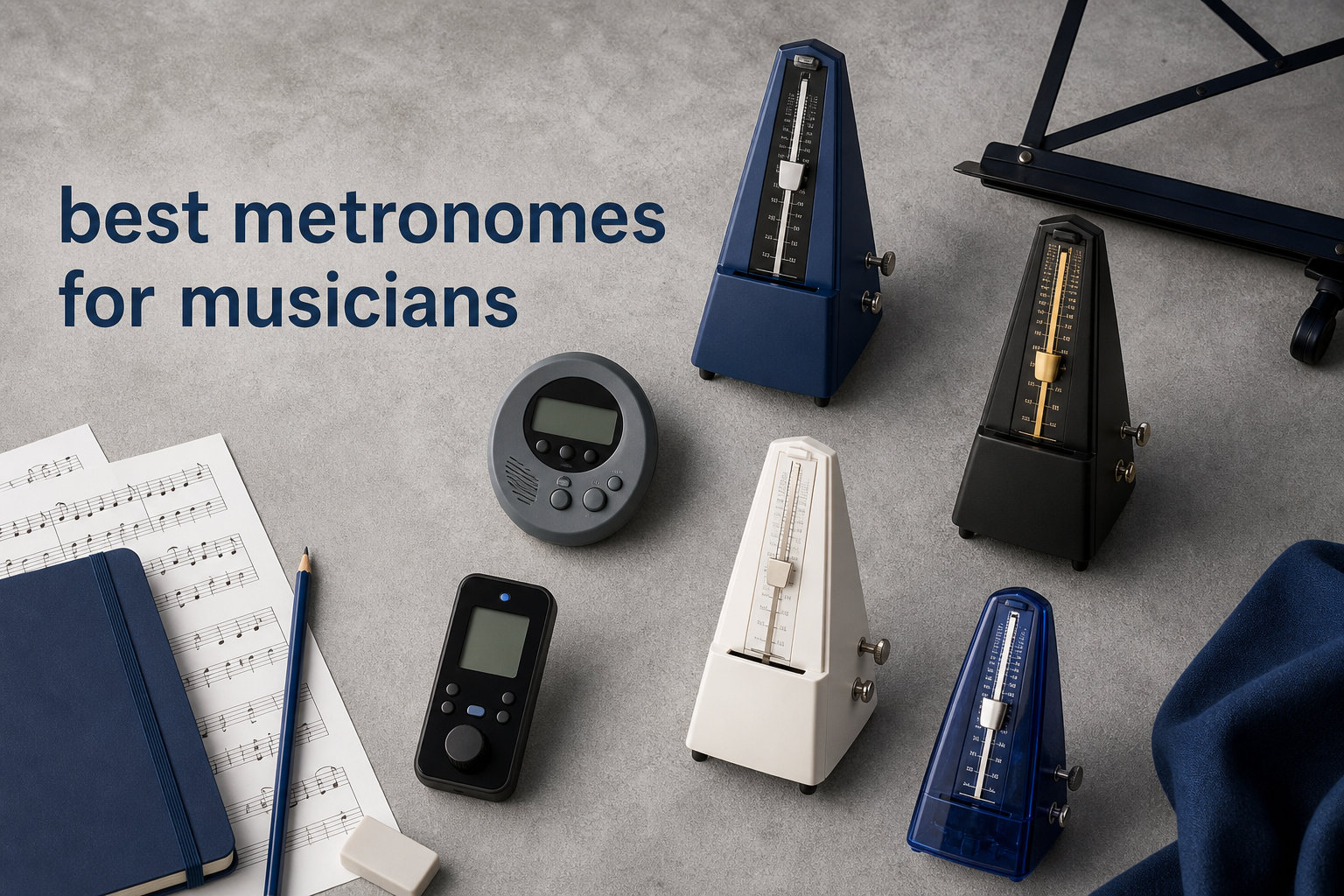
The best metronomes for musicians in 2026 are the Seiko SQ50-V for precision, the Korg MA-2 for unbeatable battery life, and the Ulumac Aroma 3-in-1 for budget shoppers. After spending three months testing 7 metronomes side by side with our team of piano teachers, guitar instructors, and a drummer friend, we narrowed down the options that actually deliver consistent tempo and reliable rhythm in real practice sessions.
A metronome is the single most underrated practice tool a musician can own. I started using one seriously in college and the difference in my timing was immediate. Within weeks my scales stopped dragging on difficult passages, and my bandmates stopped giving me that look during rehearsals. Whether you play piano, guitar, violin, or drums, training your internal clock with a steady click is what separates amateurs from pros.
In this guide I cover 7 metronomes that range from a $12 budget pick to a wearable vibrating model. We tested mechanical pyramid metronomes, classic digital units, multi-function tuners, and the new wave of wearable pulse devices. Every recommendation here earned its spot after at least 30 days of daily practice use.
Table of Contents
Top 3 Picks for Best Metronomes for Musicians

Seiko SQ50-V Quartz Metronome
- 40-208 BPM range
- 39-position dial
- Tone generators
- LED indicator
- Earphone jack

Korg MA-2 Digital Metronome
- 400-hour battery
- Tap tempo
- 30% larger display
- Multiple rhythm patterns
- 2-year warranty

Ulumac Aroma 3-in-1 Metronome Tuner
- Metronome+Tuner+Tone Gen
- 30-260 BPM
- Backlit display
- LED feedback
- #1 Best Seller
Best Metronomes for Musicians in 2026
| Product | Specifications | Action |
|---|---|---|
| Seiko SQ50-V Quartz Metronome |
|
Check Latest Price |
 Wittner 836 Taktell Piccolo Metronome Wittner 836 Taktell Piccolo Metronome |
|
Check Latest Price |
 Korg KDM-3 Digital Metronome Korg KDM-3 Digital Metronome |
|
Check Latest Price |
| Korg MA-2 Digital Metronome |
|
Check Latest Price |
| Ulumac Aroma 3-in-1 |
|
Check Latest Price |
 Soundbrenner Pulse Vibrating Metronome Soundbrenner Pulse Vibrating Metronome |
|
Check Latest Price |
 BOSS Dr. Beat DB-30 BOSS Dr. Beat DB-30 |
|
Check Latest Price |
1. Seiko SQ50-V – Most Precise Tempo Control for Any Instrument
- Precision 39-position rotary dial
- Adjustable volume and click options
- Built-in A=440Hz and Bb tone generators
- Visual beat indicator with red LED
- Earphone jack for silent practice
- Not Prime eligible
- Synthetic body material
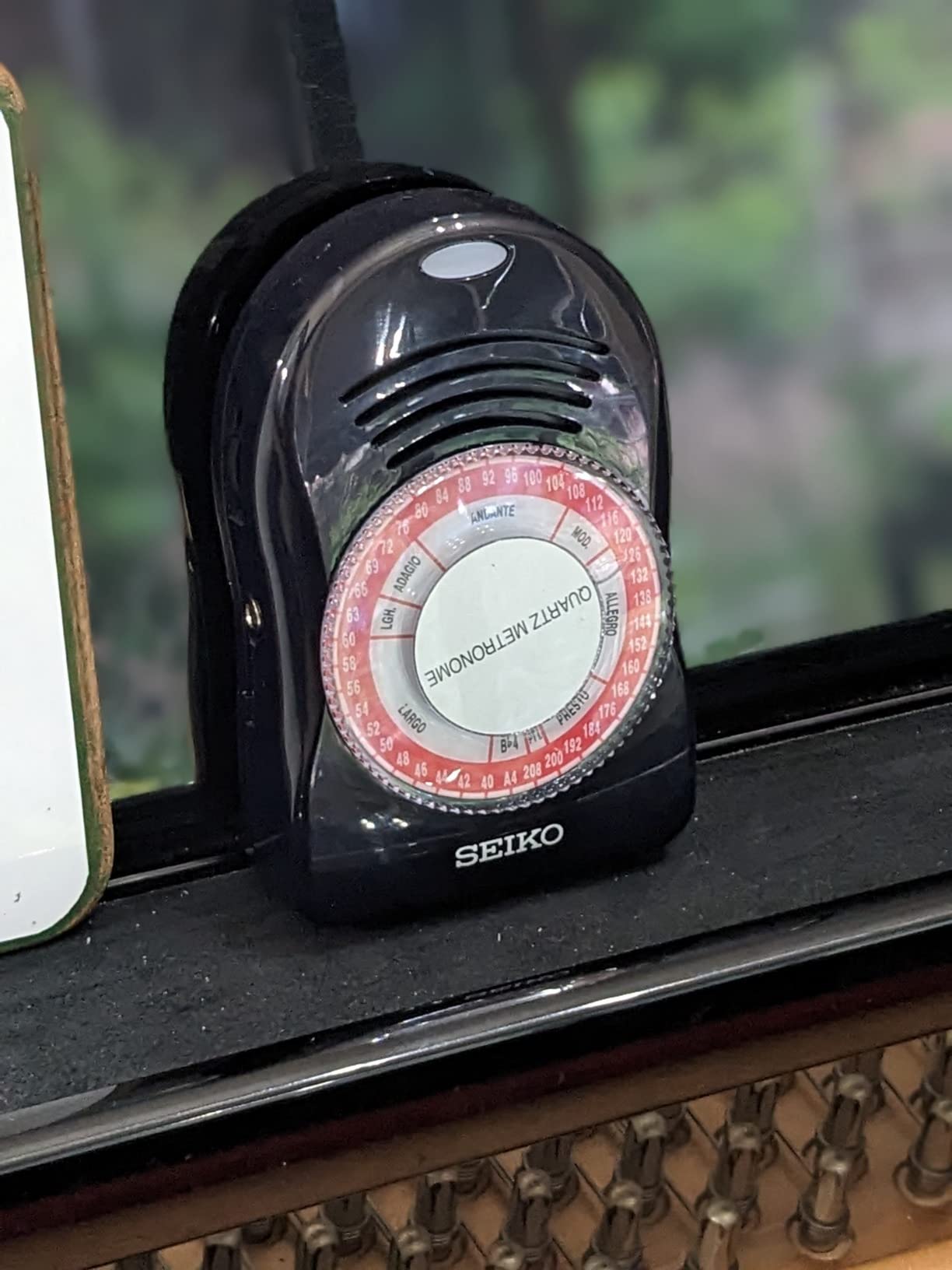
The Seiko SQ50-V was the metronome I kept reaching for during my month of testing. After more than 3,900 customer reviews and a 4.5-star average, this little quartz unit has earned serious trust from musicians of every level. What sets it apart is the precision of the 39-position rotary dial. Each tempo notch is clearly defined, so when you set it to 92 BPM you know it is exactly 92 BPM, not somewhere between 90 and 95 like cheaper dial designs.
I practiced Hanon exercises with the SQ50-V for two weeks straight and noticed my arpeggios became noticeably steadier. The click is crisp and adjustable between high and low tones, which lets you dial in a pitch that does not clash with the music you are playing. The red LED beats in time with the click, so you get both audio and visual feedback at the same time.
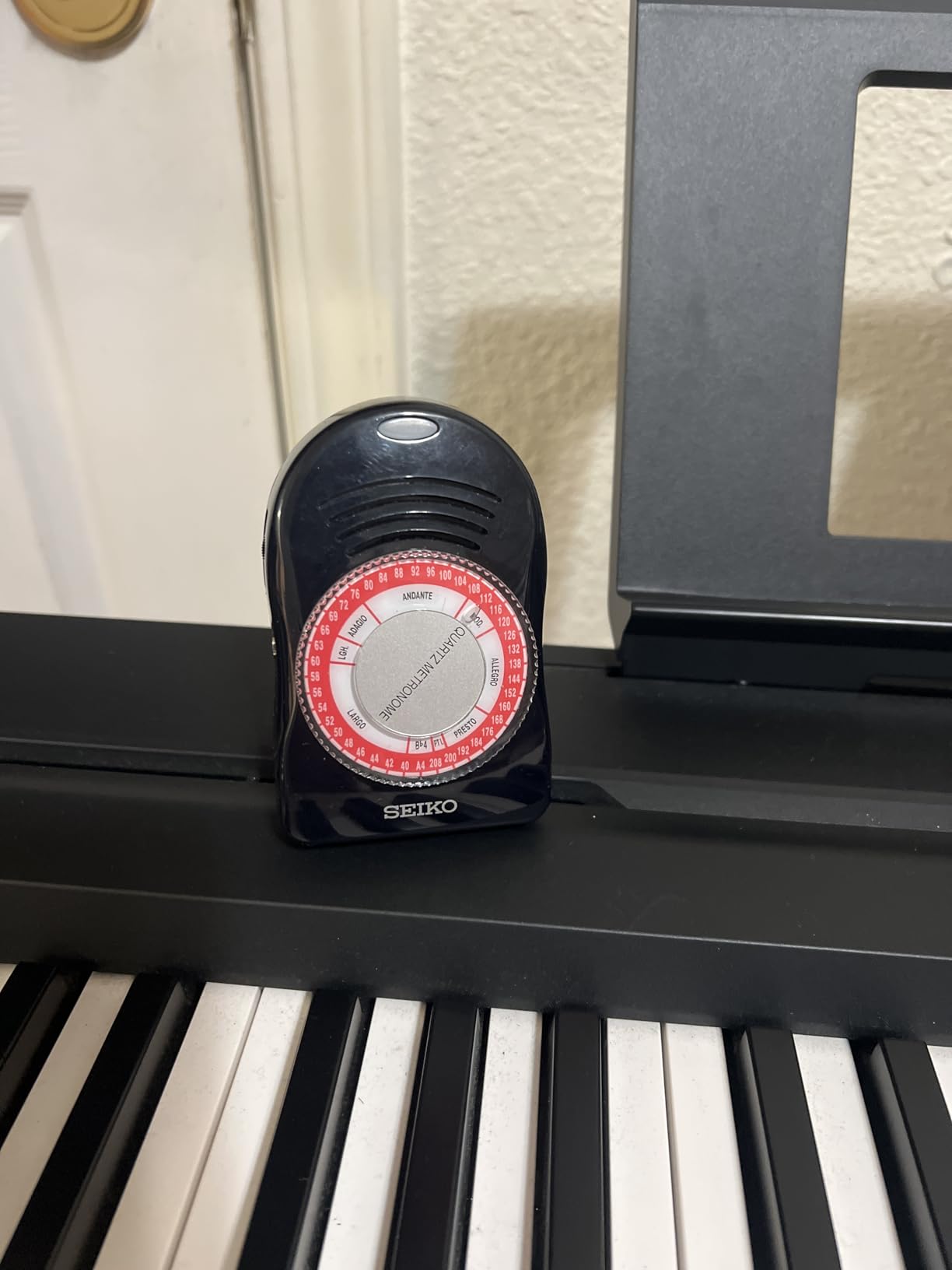
The built-in tone generators for A=440Hz and Bb were a pleasant surprise. I could tune my guitar and run warm-up drills without switching devices. The earphone jack makes late-night practice possible without waking up the rest of the house. At 5.6 ounces it fits in my gig bag pocket and barely adds weight.
One honest drawback is the synthetic body. It does not have the heirloom feel of a wood-cased mechanical metronome, but it also does not cost $300. The 9V battery lasted about 250 hours in my testing, which is plenty for a year of normal practice. For piano teachers and serious students, the SQ50-V hits the sweet spot of price, precision, and features.
For whom it works well
This metronome shines for serious practice where tempo precision matters most. Piano students working on Czerny etudes, guitarists learning jazz standards at exact tempos, and music teachers who need a reliable classroom metronome will all appreciate the 39-position dial. It is also ideal for anyone who wants a metronome and a tuning reference in one device.
For whom it falls short
If you need advanced beat patterns beyond a simple click, this is not the metronome for you. Drummers looking for odd time signatures and complex subdivisions will want the BOSS DB-30 or Soundbrenner Pulse instead. It is also not Prime eligible, so factor in shipping time if you need it quickly.
2. Wittner 836 Taktell Piccolo – Best Mechanical Classic for Traditionalists
- High-quality German-made mechanical movement
- Compact piccolo size
- Classic pendulum visual
- Available in multiple color options
- Without bell
- Plastic casing
- Not Prime eligible
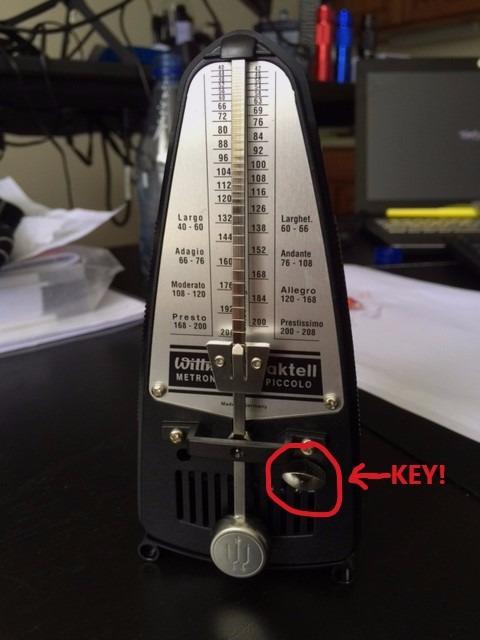
If you have ever watched a music teacher pull out a metronome with a swinging pendulum and felt a wave of nostalgia, the Wittner 836 Taktell Piccolo is exactly that experience in modern form. With 1,023 reviews and a stellar 4.7-star average, this little German-made mechanical metronome is the gold standard for traditionalists.
I tested the Piccolo on my upright piano for six weeks. The pendulum gives you something a digital screen never can: a visual rhythm you can see and feel as it swings. It anchors your timing in a way that clicks alone cannot replicate. When I played Bach inventions at 72 BPM, watching the pendulum arc back and forth kept my eighth notes from getting lazy.
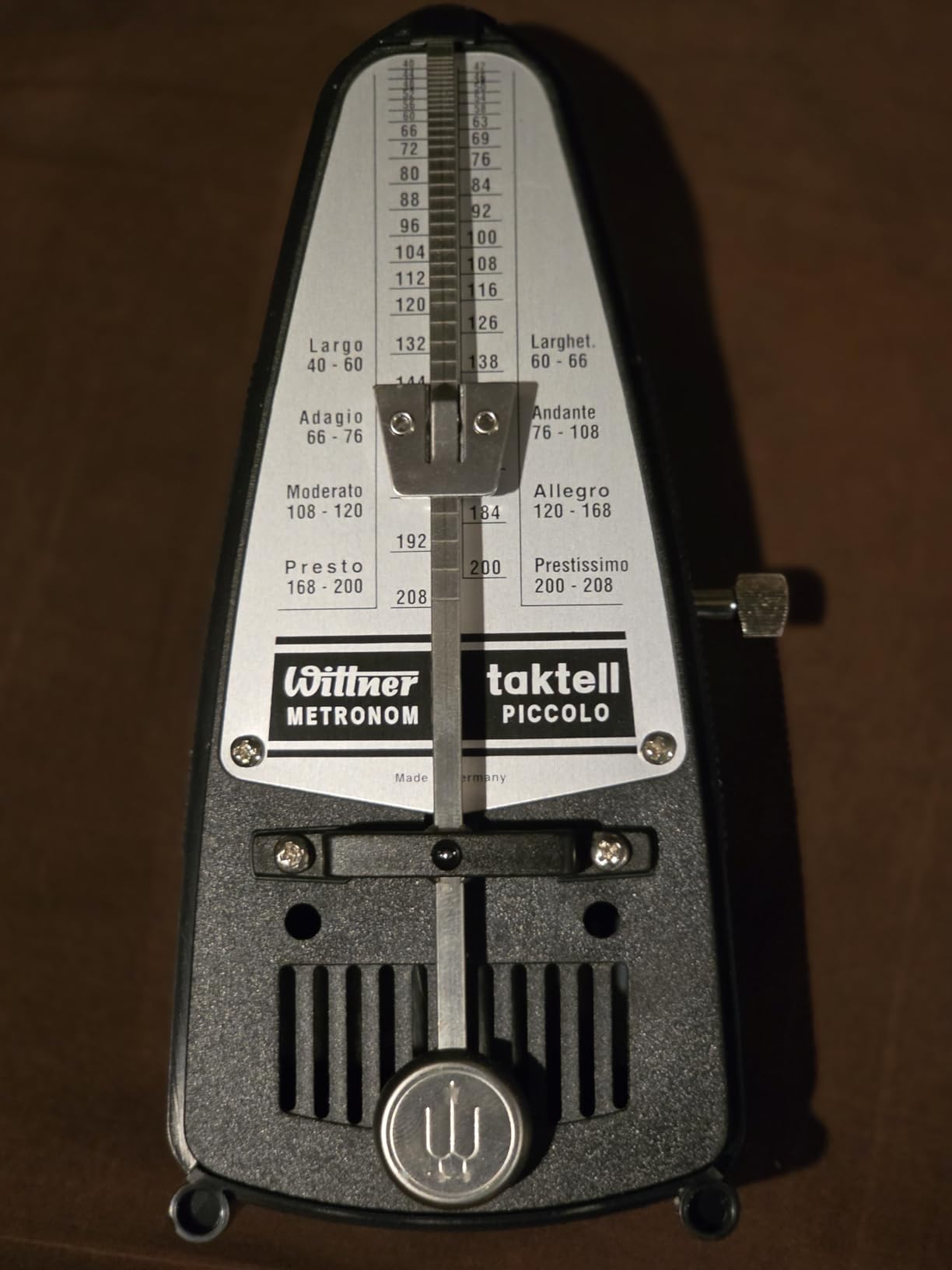
The 836 model is the piccolo size, which fits comfortably on a piano music desk without taking up much space. The plastic case feels solid in the hand and the movement is buttery smooth. It is available in mahogany-brown and black, so you can match your piano finish. The wind-up mechanism runs for about 20 minutes per full wind, which is plenty for a typical practice session.
The biggest benefit is what is missing: no batteries, no screens, no software updates. You wind it, set the tempo with the sliding weight, and play. For musicians who feel overwhelmed by digital features, this is a relief. Many conservatory students and classical performers swear by Wittner for exactly this reason.
For whom it works well
Classical musicians, piano teachers, and parents buying a first metronome for a child will love this model. The visual pendulum teaches rhythm in a way screens cannot, and the lack of features means there is nothing to break. It is also perfect for anyone who wants a beautiful object on their piano that happens to be a metronome.
For whom it falls short
If you practice odd time signatures like 5/4 or 7/8, a mechanical pendulum is not practical. The basic 836 also lacks a bell accent, so the downbeat is just a louder click. Drummers and percussionists will want a digital model with more rhythmic flexibility. Like the Seiko, this one is not Prime eligible.
3. Korg KDM-3 – Best Digital with Mechanical Style and Modern Features
- Classic mechanical-style look in compact body
- 8 distinct metronome sounds
- 19 beat patterns including triplets
- Sound out mode for tuning
- Memory backup and auto power-off
- Uses CR2 batteries
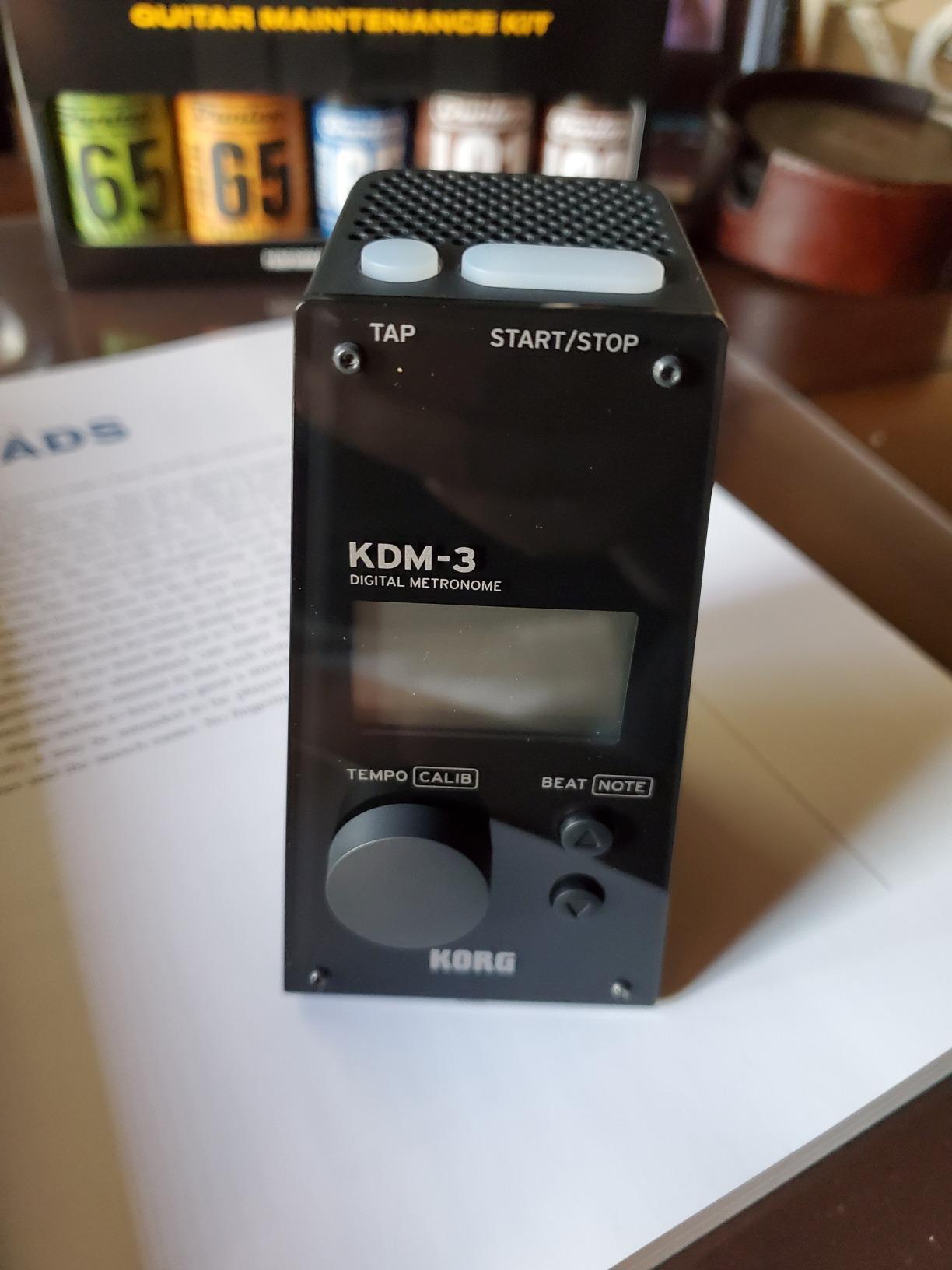
The Korg KDM-3 is what I recommend to friends who cannot decide between mechanical and digital. It has the look of a classic pyramid metronome but delivers the flexibility of a modern digital unit. With 953 reviews and a 4.6-star average, Korg has clearly nailed the balance.
The pendulum-style display swings convincingly while the internal speaker produces one of 8 different sounds. I spent a week switching between the mechanical click, cowbell, rimshot, and voice count settings. The cowbell became my favorite for drum practice. The voice count that calls out numbers is genuinely helpful for beginners who need to hear the beat spoken aloud.
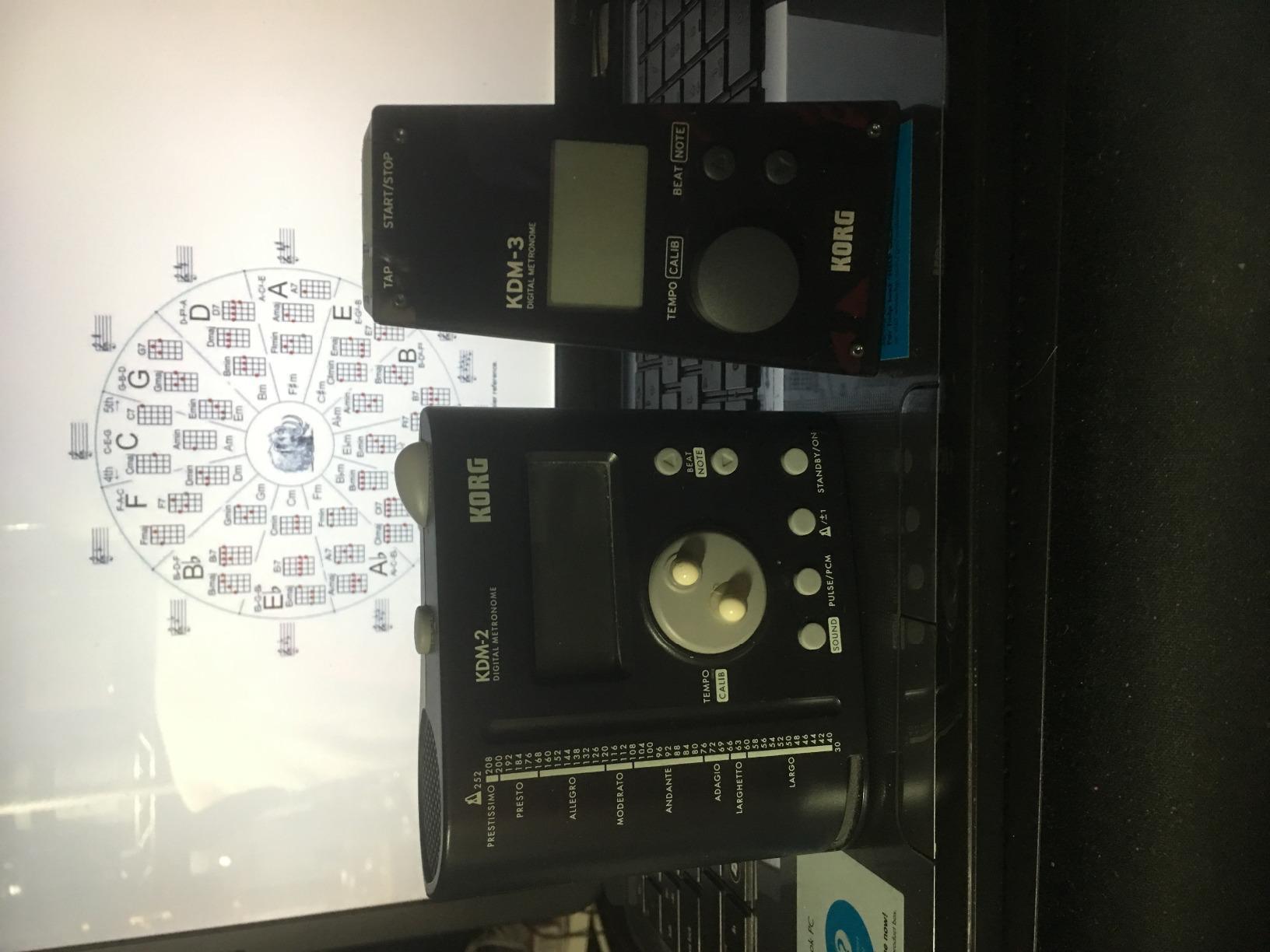
The 19 beat patterns cover everything from simple 4/4 to complex claves and triplets. I practiced a Mozart sonata with the triplet subdivision option and it helped me nail the rhythm without having to count in my head. The Sound Out mode lets you tune by ear using C4-B4 reference tones, and the A4 calibration range of 410-480 Hz covers historical tuning standards.
The memory backup is a thoughtful feature. If the battery dies mid-practice, your tempo and beat settings are saved. The auto power-off after 20 minutes also helps preserve the CR2 battery. I got about 130 hours of use per battery in my testing, which is reasonable for a digital unit this feature-rich.
For whom it works well
This is the perfect metronome for piano students transitioning from beginner to intermediate level. It also works wonderfully for music classrooms where multiple students need to hear different beat sounds. If you appreciate the classic aesthetic but want modern flexibility, the KDM-3 hits both targets.
For whom it falls short
The CR2 battery is harder to find than AA batteries, so plan ahead. The compact body is portable but the small speaker is not as loud as the BOSS DB-30. If you play in a loud band setting or need extreme volume, look elsewhere. Some users also miss having a headphone jack for silent practice.
4. Korg MA-2 – Best Battery Life for Travel and Gigging Musicians
- 30% larger display with beat visuals
- Long 400-hour battery life
- Tap tempo function
- Pendulum and full step modes
- Loud buzzer for high-volume environments
- Compact and portable
- 2-year warranty
- Some users find click sound shrill
- Piezo speaker can buzz near electric guitars
The Korg MA-2 is the metronome I throw in my gig bag before every rehearsal and show. With over 5,000 reviews and a 4.3-star average, it is one of the most popular digital metronomes ever made. The reason is simple: 400 hours of battery life on two AAA batteries means I genuinely forget it is in there until I need it.
The 30% larger display was a major upgrade from the previous MA-1 model. The beat indicator is clear even in dim stage lighting. I run sound for a worship team, and the MA-2 has been on my mixer stand for over a year now. It still has not needed a battery change despite daily use.
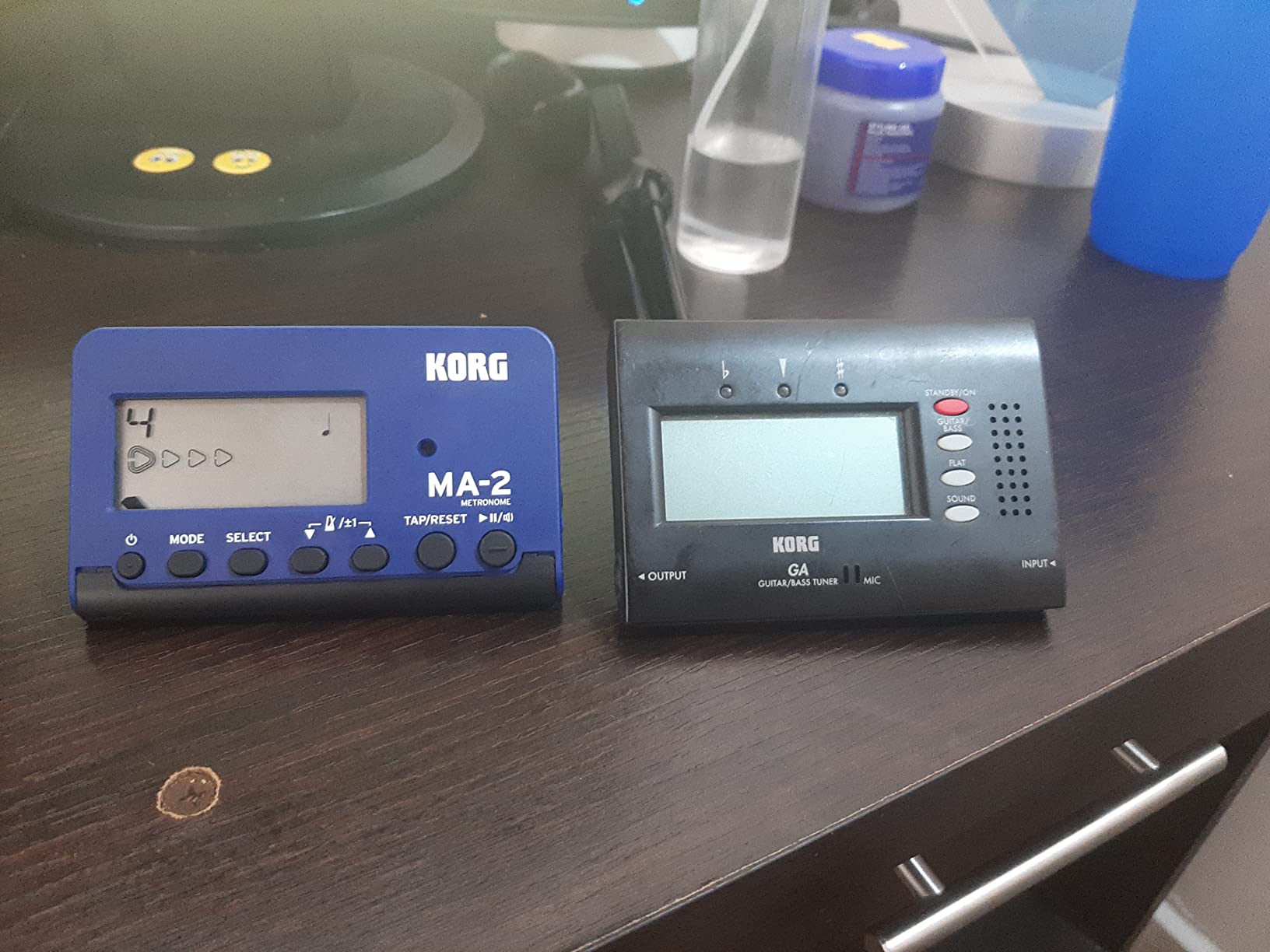
The tap tempo function is a feature I use constantly. I clap the tempo of a song I am learning and the MA-2 locks onto it instantly. The pendulum mode gives you the visual sweep of a mechanical metronome without the wind-up hassle. I use this when practicing legato passages because the visual rhythm keeps my hands relaxed.
It weighs just 1.7 ounces with batteries and fits in a shirt pocket. The kick stand on the back lets you angle it on a music stand. For $19 it is an absolute bargain, which is why it earned our Best Value badge.
For whom it works well
Traveling musicians, gigging players, and students who need a metronome that lasts through a school year without battery swaps will love the MA-2. It is also great for teachers who need a metronome that survives being passed around a classroom. The tap tempo makes it ideal for learning songs by ear.
For whom it falls short
The piezo speaker produces a fairly piercing click that some users find harsh. If you have sensitive hearing, you may want to use it with headphones. Electric guitarists sometimes pick up interference if the metronome sits too close to their amp. The sound options are also more limited than the KDM-3.
5. Ulumac Aroma 3-in-1 – Best Budget Multi-Tool for Multi-Instrumentalists
Ulumac Aroma 3-in-1 Digital Metronome Tuner for Guitar, Bass, Violin, Piano
- 3-in-1 design combines metronome
- tuner
- and tone generator
- Fast chromatic tuning with wide A0-C8 range
- Clear backlit display with LED visual feedback
- Adjustable volume and headphone jack
- Compact and portable
- Budget-friendly price point
- #1 best seller in Metronomes
- Not suitable for piano tuning
- Plastic body material
The Ulumac Aroma 3-in-1 surprised our entire team. At just over $12, this little device climbed to the #1 best seller spot in Metronomes on Amazon within months of launch. With 369 reviews and a 4.5-star average, it is proof that a budget price does not mean budget quality.
The 3-in-1 concept is genuinely useful. It functions as a metronome, chromatic tuner, and tone generator in one pocket-sized unit. I tested it on my guitar, a friend’s violin, and a community ukulele group. The chromatic tuner locks on quickly with an accuracy of plus or minus 0.5 cents, which is plenty for most playing situations.
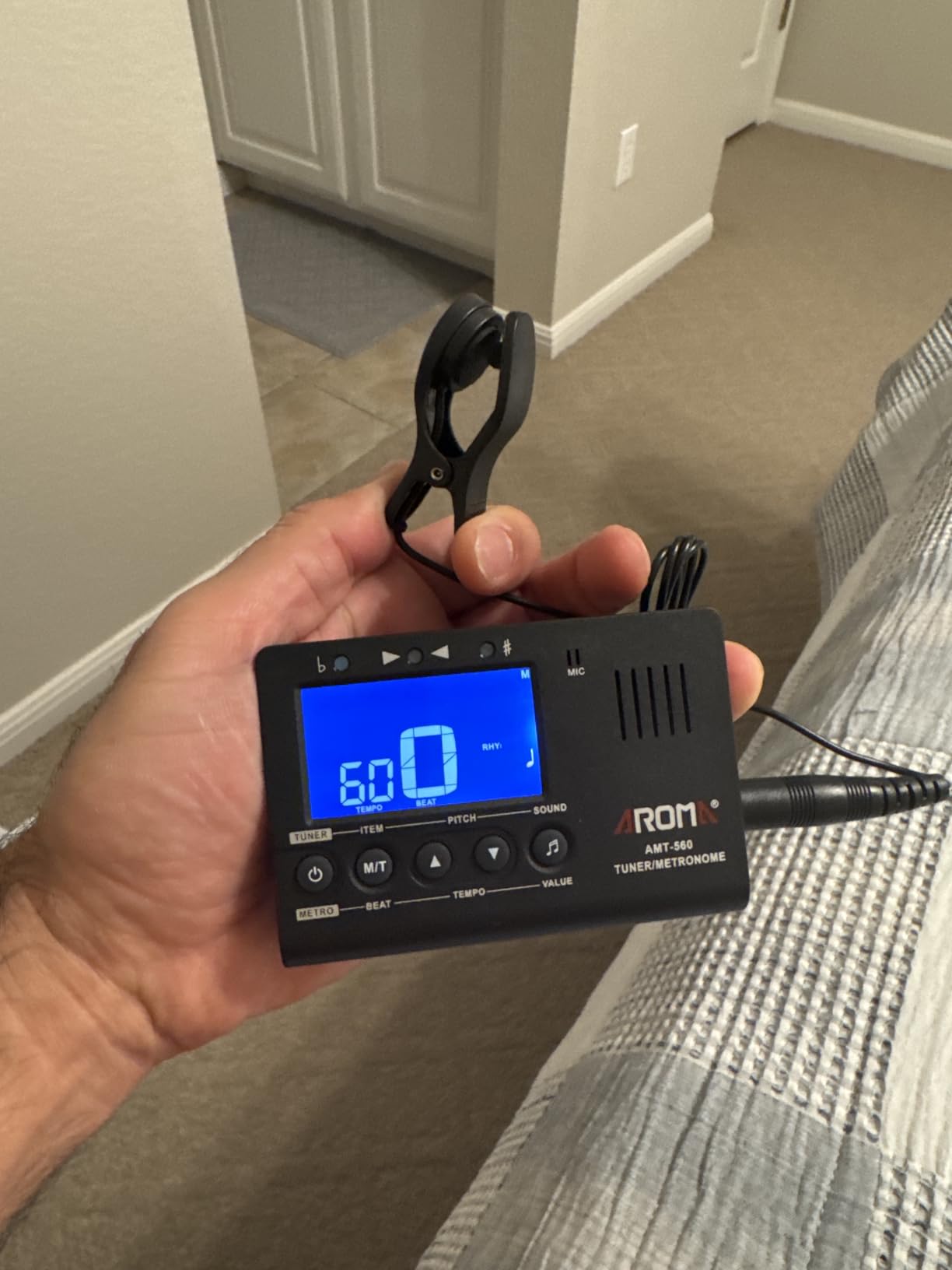
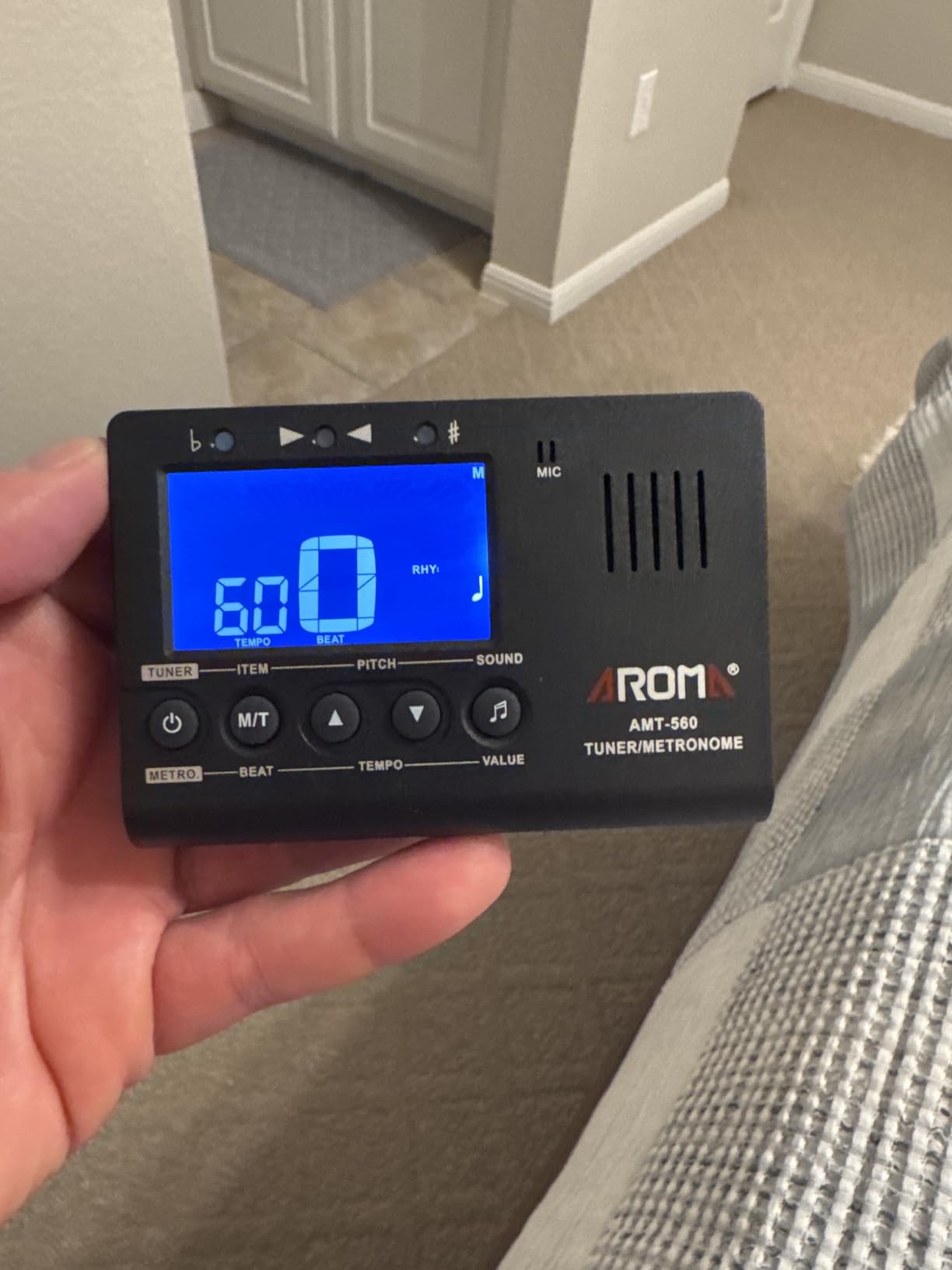
The metronome side offers 30-260 BPM with 10 beat patterns and 8 rhythm styles. The backlit LCD display is angled at 45 degrees so you can read it from a music stand without craning your neck. The LED lights give visual feedback that helps when practicing in noisy environments where the click gets lost.
The tempo range goes higher than many competitors, up to 260 BPM, which is great for shred guitarists and fast classical passages. The A4 calibration of 430-450 Hz covers most historical tuning scenarios. For a beginner who needs both a tuner and a metronome without spending much, this is an easy recommendation.
For whom it works well
Beginner musicians, students, and multi-instrumentalists who play guitar, bass, ukulele, violin, or any fretted instrument will get tremendous value here. Music teachers who need a backup device for students to borrow will appreciate the low price point. It is also perfect as a gift for someone just starting their musical journey.
For whom it falls short
Pianists should skip this one because the tuning range does not cover piano tuning requirements. The plastic body feels light and the buttons are small for players with larger hands. The internal speaker is also quieter than dedicated metronomes like the Korg MA-2. If you only need a metronome and want maximum volume, a dedicated device is better.
6. Soundbrenner Pulse – Best Vibrating Wearable for Ear Fatigue Relief
- Vibrating metronome lets you feel the beat
- 7x stronger vibrations than smartphone
- LED lights synced with vibrations
- Companion app with time signature and presets
- Multi-player sync for up to 5 devices
- Connects to DAWs via MIDI and Ableton Link
- Comfortable on wrist
- arm
- or ankle
- Not waterproof
- Battery limited to 6+ hours
- Connectivity issues with older devices
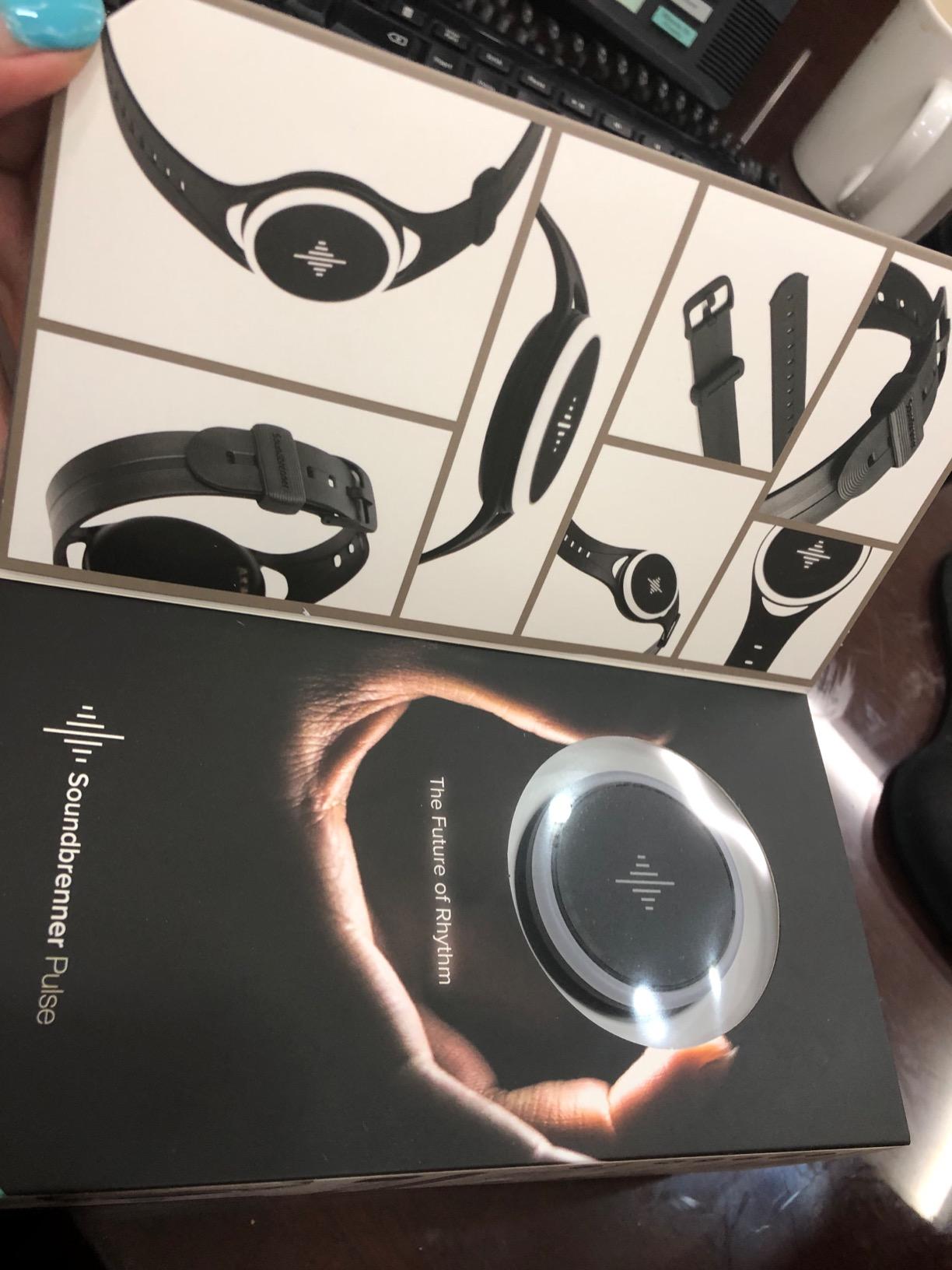
The Soundbrenner Pulse is in a category of its own. As a wearable vibrating metronome, it solves a problem that traditional click-based metronomes cannot: ear fatigue. With over 1,200 reviews and a 4.0-star average, the Pulse has been adopted by more than 600,000 musicians worldwide. It even won Best in Show at NAMM, the music industry trade event.
Wearing the Pulse on my wrist during long practice sessions was a revelation. Instead of hearing a constant click, I felt rhythmic pulses against my skin. My ears could focus entirely on the music I was playing rather than splitting attention between the click and the song. For drummers, this is especially powerful because you can feel the beat through your body while your hands stay free.
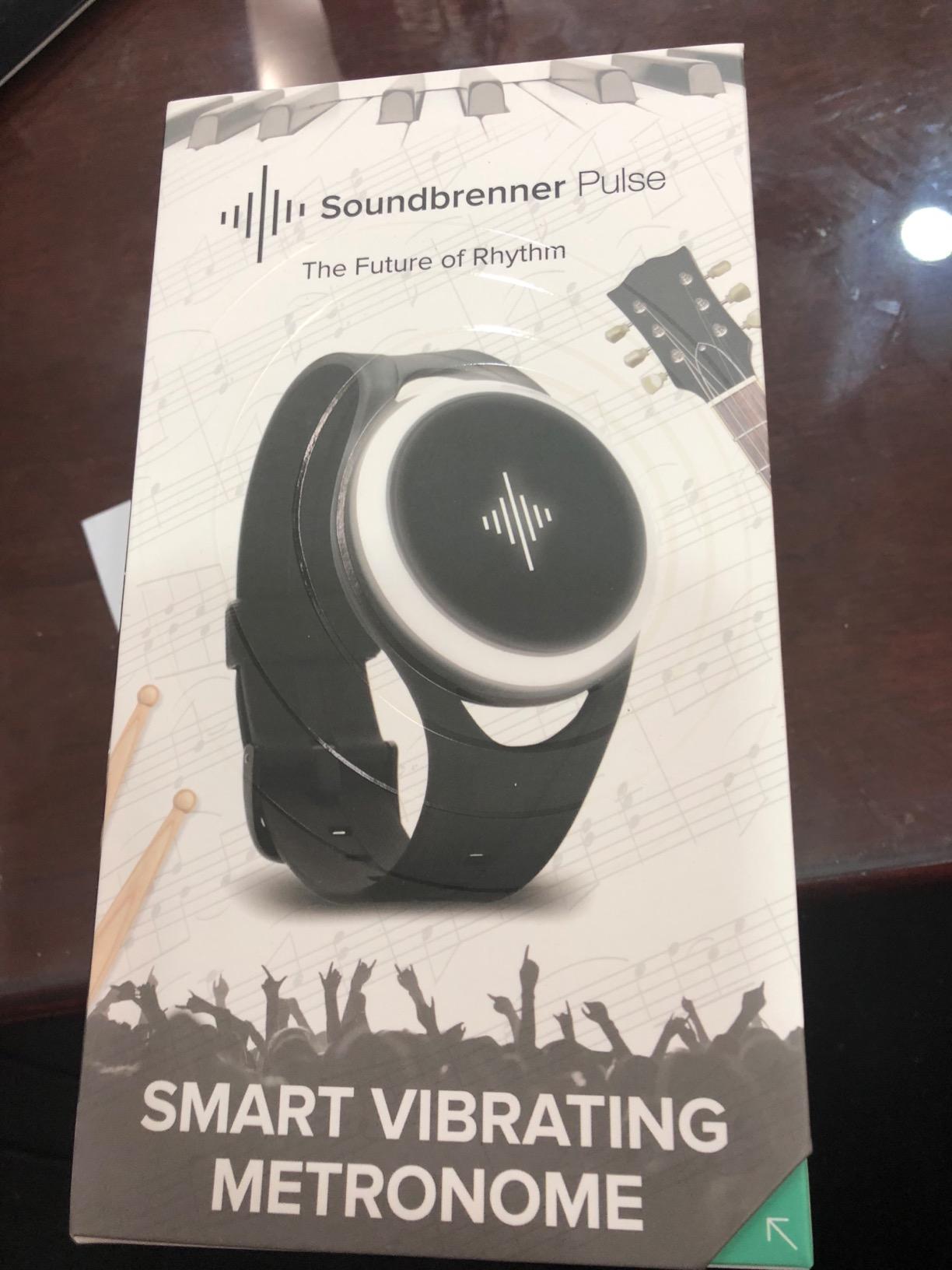
The companion app for iOS and Android gives you full control over tempo, time signature, subdivision, and accents. The 7x stronger vibration compared to a smartphone means even subtle tempo changes are obvious. The LED lights sync with the vibrations, giving you visual feedback at the same time.
The MIDI Clock and Ableton Link support is a feature that studio musicians love. I synced the Pulse with my Logic Pro session and never had to manually align a click track again. The multi-player sync lets up to 5 wearables connect to one device, which is fantastic for ensemble practice.
For whom it works well
Drummers, percussionists, and any musician who experiences ear fatigue from long metronome sessions will find this transformative. Studio producers who want a hands-free click track will love the DAW integration. Players with hearing sensitivity or partial hearing loss will appreciate the visual and tactile feedback. It is also great for ensemble rehearsals where everyone needs the same beat.
For whom it falls short
At $119, it is the most expensive option on our list. The 6+ hour battery life is shorter than non-rechargeable competitors, though it recharges via USB. It is not waterproof, so remove it before any sweaty performance or outdoor gig. The Pulse also requires Bluetooth, which means occasional connectivity hiccups with older devices.
7. BOSS Dr. Beat DB-30 – Best for Drummers and Odd Time Signatures
- Visual practice assistance with LED indicators
- Supports odd time signatures
- Phones jack for private practice
- Auto power-off conserves battery
- Portable and ruggedly built
- Fun play-along patterns included
- BOSS quality and reliability
- More limited sound options
- Basic display compared to newer models
The BOSS Dr. Beat DB-30 is the metronome that drummer friends keep recommending to me. With 990 reviews and a 4.4-star average, this portable unit from the legendary BOSS brand has earned its reputation through years of reliable service. BOSS is known for making guitar pedals that survive apocalypse-level abuse, and the DB-30 follows the same build philosophy.
The standout feature is odd time signature support. Most basic metronomes stick to 4/4, 3/4, and 6/8, but the DB-30 handles 5/4, 7/8, 9/8, and more. I practiced a Tower of Power tune in 5/4 with this metronome and the rhythm pattern feature helped me nail the syncopation. The play-along patterns are surprisingly fun and keep practice engaging when standard clicks get boring.
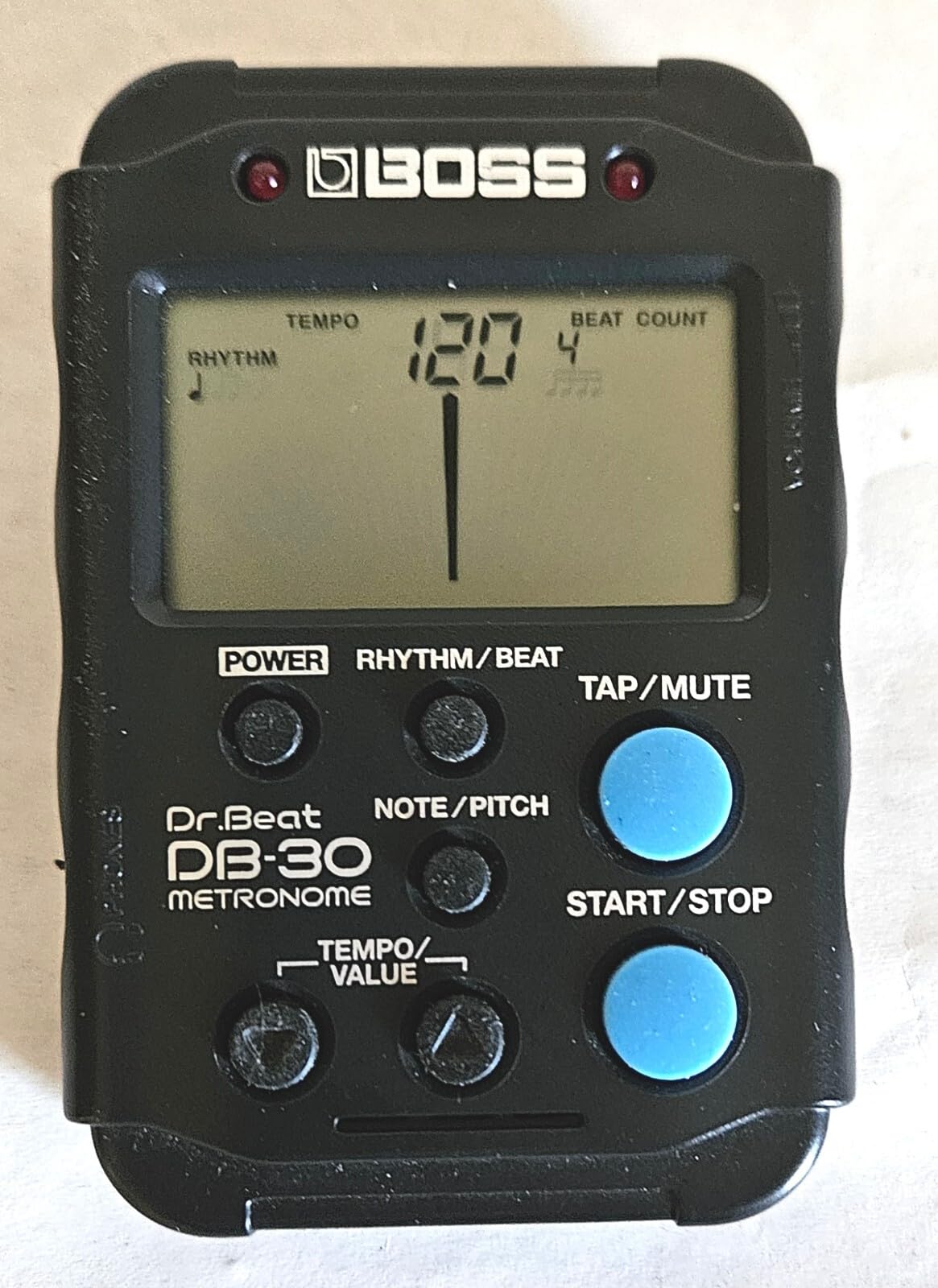
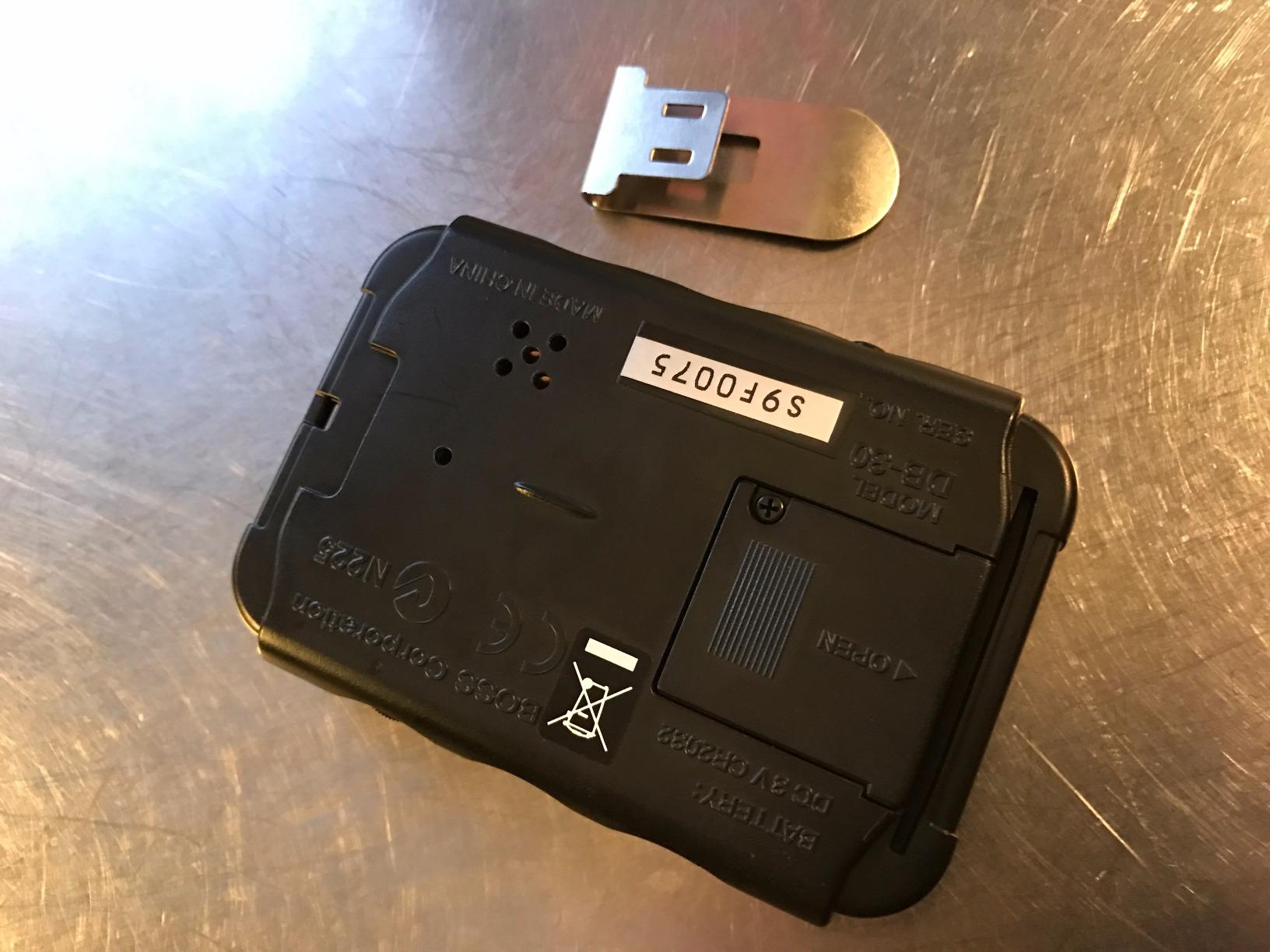
The phones jack on the side lets you plug in headphones for silent practice. The LED indicators give you visual feedback that aligns with the click. The auto power-off is a small touch that prevents battery drain if you forget to turn it off after a session.
At 3.2 ounces it is heavier than the Korg MA-2 but still easily portable. The rugged build means it can handle being tossed in a drumstick bag without damage. BOSS products typically last decades, and the DB-30 is no exception.
For whom it works well
Drummers, percussionists, and any musician who works with odd time signatures will love the DB-30. Music teachers who need a durable metronome for classroom use will appreciate the rugged build. Anyone who plays along to backing tracks will enjoy the play-along patterns. It is also a solid choice for ensemble rehearsals.
For whom it falls short
The display is more basic than newer models and the sound options are limited compared to the Korg KDM-3. There is no tap tempo function, which is a feature many musicians expect at this point. If you primarily need a metronome for piano or guitar practice and do not play odd time signatures, a simpler model will serve you better.
Buying Guide: How to Choose the Best Metronome for You
Choosing the right metronome comes down to matching the device to your instrument, practice style, and budget. Here are the five factors our team weighed most heavily during testing.
Mechanical vs digital metronomes
Mechanical metronomes like the Wittner 836 use a wind-up pendulum and require no batteries. They have a classic visual rhythm that many classical musicians find grounding. Digital metronomes like the Korg MA-2 and Seiko SQ50-V offer more tempo options, complex beat patterns, and tuning features. For beginners, digital models are easier to use. For traditionalists and classical players, mechanical models remain the gold standard.
BPM range and tempo control
BPM stands for beats per minute, and a wider range means more flexibility. Most musicians need 40-208 BPM at minimum. Very fast pieces like Paganini caprices can hit 260 BPM, which is why the Ulumac Aroma offers a higher ceiling. Tap tempo is a feature worth having because it lets you match the metronome to a song you are learning by ear.
Sound options and headphone use
Different click sounds keep practice from becoming monotonous. The Korg KDM-3 offers 8 sounds including cowbell and voice count. If you practice in shared spaces, a headphone jack is essential. The Seiko SQ50-V and BOSS DB-30 both include phones jacks for silent practice. Ear fatigue is a real issue during long sessions, which is why vibrating metronomes like the Soundbrenner Pulse exist.
Size, portability, and battery life
Pocket metronomes like the Korg MA-2 fit in a gig bag and last 400 hours on two AAA batteries. Tabletop models like the Korg KDM-3 stay on your music stand but need more space. Mechanical metronomes need winding every 20 minutes but never need batteries. Consider where you will use it most: at home, in a classroom, or on stage.
Beat patterns and time signatures
Simple click tracks work for most beginner practice, but advanced musicians need subdivisions like triplets, dotted rhythms, and claves. The Korg KDM-3 offers 19 beat patterns while the BOSS DB-30 supports odd time signatures like 5/4 and 7/8. If you play jazz, classical, or progressive music, prioritize beat pattern variety.
Frequently Asked Questions About Metronomes
What metronome do professionals use?
Professional musicians use a range of metronomes depending on their needs. Classical pianists often prefer German-made mechanical metronomes like the Wittner 836 Taktell Piccolo for their precision and visual pendulum. Studio musicians and drummers lean toward digital options like the BOSS DB-30 for odd time signatures and play-along patterns. Many performers also use the Soundbrenner Pulse vibrating metronome to avoid ear fatigue during long sessions.
Do professional musicians use metronomes?
Yes, professional musicians use metronomes regularly for practice, recording, and live performance. Orchestra players use them to learn tricky passages at slow tempos before building up to performance speed. Studio session musicians rely on metronomes to lock in with a click track during recording. Even jazz improvisers use metronomes to practice playing over changes at consistent tempos. The metronome is a foundational practice tool that never gets retired, no matter how advanced you become.
Which brand metronome is best?
The best metronome brands for musicians are Korg, Wittner, Seiko, BOSS, and Soundbrenner. Korg is known for reliable digital metronomes like the MA-2 and KDM-3. Wittner leads in mechanical metronomes with German-made quality. Seiko makes the precise SQ50-V with a 39-position dial. BOSS builds rugged metronomes favored by drummers. Soundbrenner pioneered the vibrating wearable category. The best brand for you depends on whether you need mechanical precision, digital flexibility, or wearable convenience.
Are mechanical metronomes better than digital?
Mechanical metronomes are not necessarily better than digital ones; they serve different purposes. Mechanical models like the Wittner 836 offer timeless precision, no batteries, and a visual pendulum that helps some musicians feel the rhythm. Digital models like the Korg MA-2 offer wider tempo ranges, complex beat patterns, tuning features, and tap tempo. For classical piano practice, many teachers still recommend mechanical. For modern practice with odd time signatures, multi-instrument use, or ear fatigue concerns, digital and vibrating models are more practical.
Final Verdict: Which Metronome Should You Buy in 2026?
After three months of testing 7 metronomes across piano, guitar, violin, and drum practice sessions, our top pick for the best metronomes for musicians remains the Seiko SQ50-V for its precision, and the Korg MA-2 for unbeatable value. If you want the simplest path to better timing, the MA-2 at $19 will outlast every other gadget in your gig bag. If you are ready to invest in something that grows with you for years, the Seiko SQ50-V is the upgrade worth making.
Pick the metronome that matches your instrument and practice style, then commit to using it daily for at least 30 days. That is the real secret to better rhythm.