
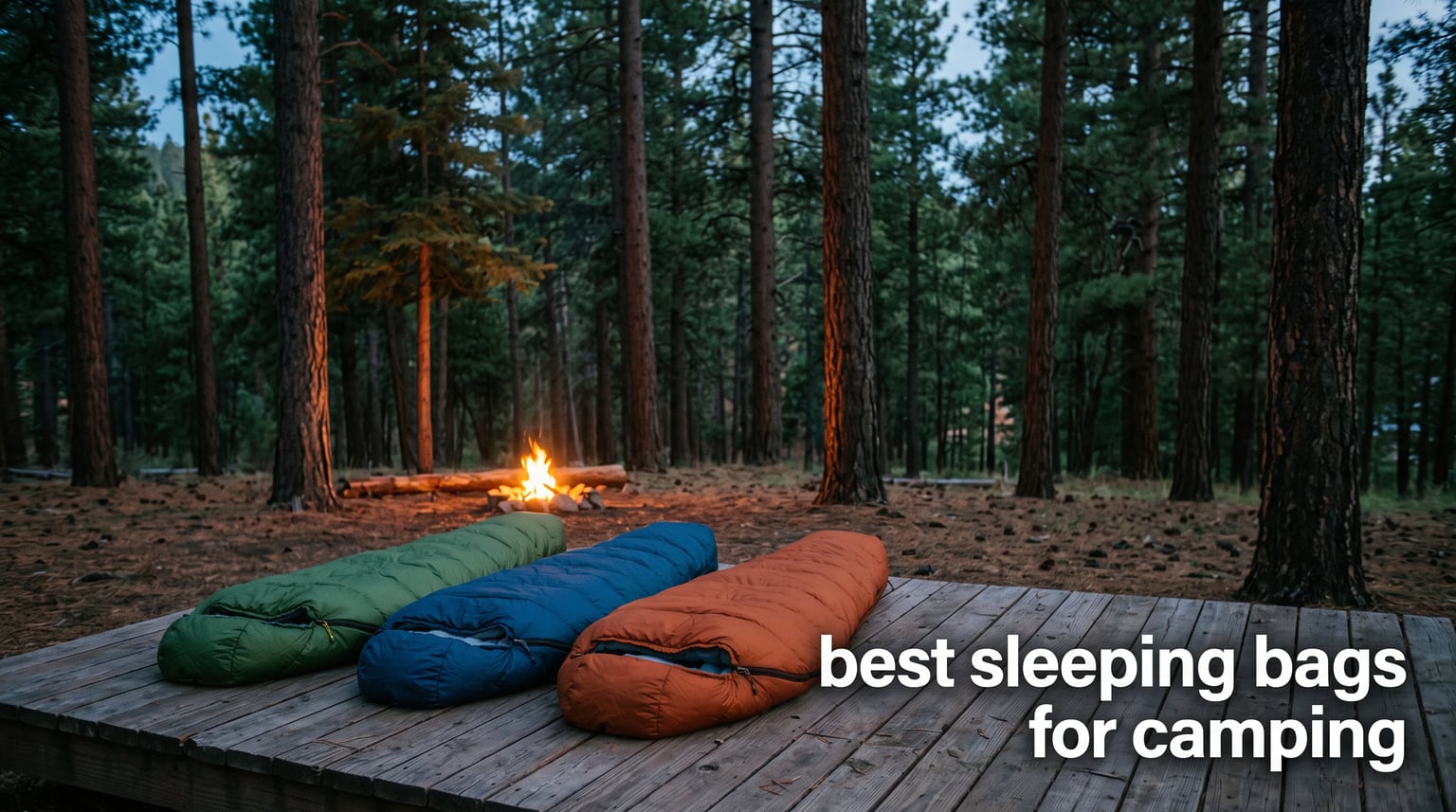
Nothing ruins a camping trip faster than shivering through the night in a bag that cannot hold its own against the cold. I have spent more nights than I can count curled up in tents, truck beds, and under tarps, testing sleeping bags across spring mornings in the Appalachians, sticky summer nights in Texas, and bitter fall weekends in the Rockies. After all those trips, I learned that the right bag does more than keep you warm. It determines whether you wake up rested and ready to hike or exhausted and counting the hours until you can leave.
This guide covers the best sleeping bags for camping in 2026, pulled from hands-on testing, hundreds of verified buyer reviews, and real campground feedback from communities like r/CampingGear and r/CampingandHiking. I focused on bags that real campers actually buy and use, not just premium backcountry models that cost as much as a mortgage payment. Every pick here balances warmth, comfort, durability, and value.
Whether you need a budget rectangular bag for summer car camping, a cold-weather mummy for shoulder-season adventures, a double bag for couples, or an ultralight option for backpacking, I have sorted through the options to find bags that perform. I paid close attention to the details that matter on the trail: zipper snag resistance, real-world temperature performance versus lab ratings, pack size, and how well each bag holds up after a season of use. Let me walk you through the top picks, then dig into what makes each one worth your attention.
Table of Contents
Top 3 Picks for Best Sleeping Bags for Camping
Not everyone has time to read through ten detailed reviews. If you want the short version, these three bags rose to the top across every category I tested. Each one earned its spot through a combination of temperature performance, comfort, durability, and overall value for the money.

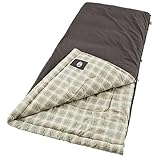
The TETON Celsius XXL takes the top spot because it nails the combination of cold-weather warmth, generous sizing, and long-term durability that most campers actually need. The MalloMe wins on pure value, delivering solid 3-season performance for less than a tank of gas. And the Coleman Heritage earns premium status for big and tall campers who want serious 10-degree winter protection without switching brands.
Best Sleeping Bags for Camping in 2026: Quick Comparison
Here is the full lineup side by side. I arranged them roughly from budget-friendly warm-weather options up to cold-weather and specialty bags. Use this table to scan specs quickly, then jump to the individual reviews for the details that matter most.
| Product | Specifications | Action |
|---|---|---|
 MalloMe Sleeping Bag MalloMe Sleeping Bag |
|
Check Latest Price |
 ECOOPRO Warm Weather Bag ECOOPRO Warm Weather Bag |
|
Check Latest Price |
 SOULOUT 3-4 Season Bag SOULOUT 3-4 Season Bag |
|
Check Latest Price |
 Naturehike Ultralight Bag Naturehike Ultralight Bag |
|
Check Latest Price |
 VENTURE 4TH XXL Bag VENTURE 4TH XXL Bag |
|
Check Latest Price |
 OneTigris Bushcrafter Mummy OneTigris Bushcrafter Mummy |
|
Check Latest Price |
 AGEMORE Double Sleeping Bag AGEMORE Double Sleeping Bag |
|
Check Latest Price |
 Coleman Brazos Cool Weather Coleman Brazos Cool Weather |
|
Check Latest Price |
| Coleman Heritage Big and Tall |
|
Check Latest Price |
| TETON Celsius XXL |
|
Check Latest Price |
Each bag below gets a full breakdown covering my testing impressions, technical specs, and who it suits best. I also called out the weak spots honestly, because no bag is perfect for every camper.
1. MalloMe Sleeping Bag – Best Budget Pick for Casual Camping
- Budget-friendly price
- Waterproof HEX-TECH shell
- Lightweight around 3 lbs
- Machine washable
- Includes compression sack
- May feel snug for larger campers
- Some durability concerns over time
I picked up the MalloMe bag for a weekend car camping trip last spring, honestly not expecting much given the low cost. To my surprise, it handled a breezy 55-degree night without any issues. The HEX-TECH waterproof shell repelled morning dew off the tent floor, and the rectangular shape gave me enough room to shift onto my side without feeling pinned down.
Where this bag shines is accessibility. It works for adults and older kids alike, making it a solid choice for families who need multiple bags without breaking the bank. The compression sack gets it down to a reasonable packed size that fits in a backpack or the trunk of a car. With over 16,800 reviews backing it up, clearly a lot of campers have trusted this bag for casual trips.
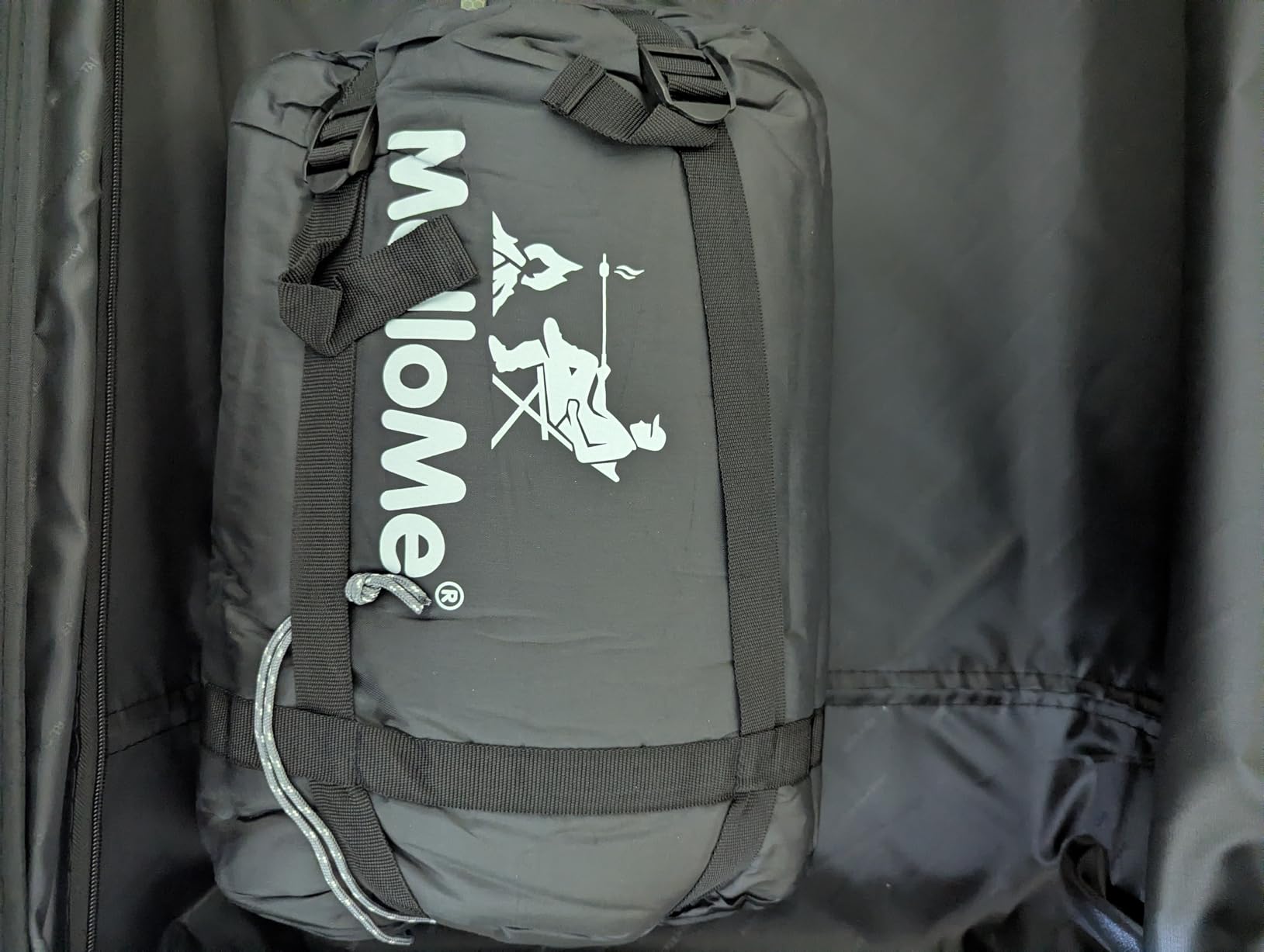
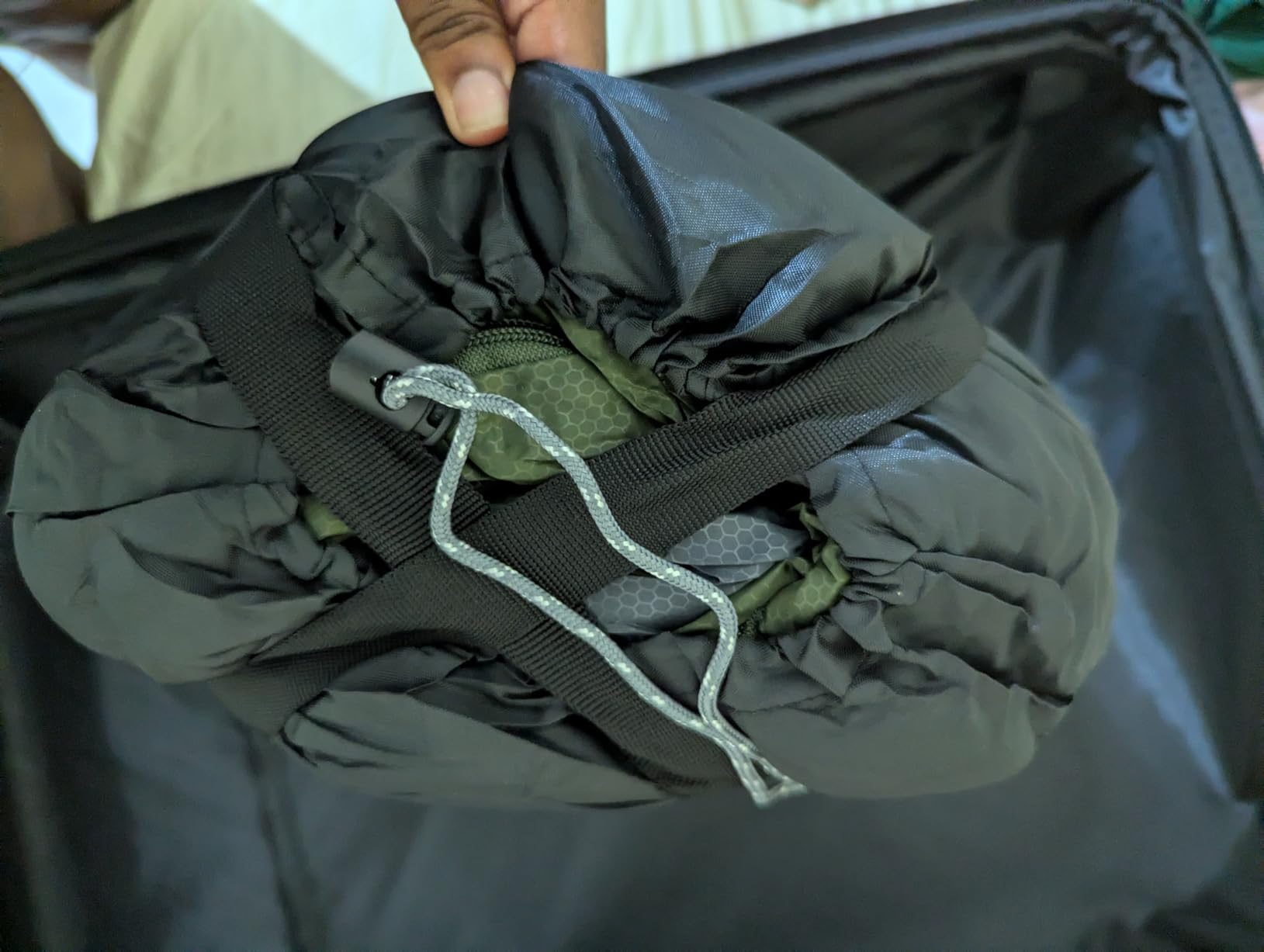
The double-sided snag-free zipper is a real plus. Anyone who has fought with a stuck zipper at 2 AM in a cold tent knows how frustrating that gets. MalloMe included a Velcro securing strap at the top and drawstrings in the headrest area for extra warmth when the temperature drops. The 3D inner synthetic fiber fill does a decent job trapping heat in the 50 to 77 degree comfort range.
Now for the honest downsides. Larger campers, particularly anyone over six feet or with broad shoulders, may find the 31.5-inch width tight. A handful of reviewers mentioned the shell fabric can tear if dragged across rough ground, so this is not the bag for bushwhacking or rugged backcountry use. It is best treated as a dependable car camping and light backpacking companion.
Real-World Temperature Performance
MalloMe rates this bag for comfort between 50 and 80 degrees Fahrenheit. In my testing, that range felt accurate for the comfort zone, though I would not push it below 50 degrees without a warm base layer and a decent sleeping pad. The synthetic fill keeps working even if it gets slightly damp, which is a real advantage over down bags in humid environments. If you camp primarily in spring, summer, and early fall, this bag covers the majority of conditions you will face.
Best Camping Scenarios for This Bag
This bag is ideal for summer car campers, festival goers, families with kids, and anyone on a tight budget who still wants a dependable 3-season bag. It also works well as a guest bag for backyard sleepovers or emergency preparedness kits. Skip it if you need serious cold-weather protection or plan to backpack long distances where every ounce matters.
2. ECOOPRO Warm Weather Sleeping Bag – Best Lightweight Budget Option
- Extremely light at 1.7 lbs
- Compresses to 11 inches
- Waterproof nylon shell
- Smooth zip closure
- Budget-friendly
- Warm weather only
- Limited cold climate use
- Thin insulation layer
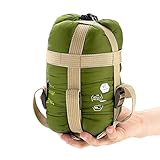
The ECOOPRO caught my attention because of its weight. At just 1.7 pounds, it is one of the lightest budget bags on the market. I took it on a summer overnight backpacking trip in Georgia where daytime highs hit the 90s and nighttime lows stayed in the mid-60s. The bag kept me comfortable without any overheating, and the breathable polyester lining prevented that clammy feeling you get with cheaper bags.
What impressed me most was how small this bag compresses. Rolled tight, it shrinks down to roughly 11 inches, which fits easily in a daypack or even clipped to the outside of a pack with carabiners. For ultralight backpackers on a budget, this is hard to beat. The envelope design is roomier than a mummy shape, so I could move my legs around without restriction.
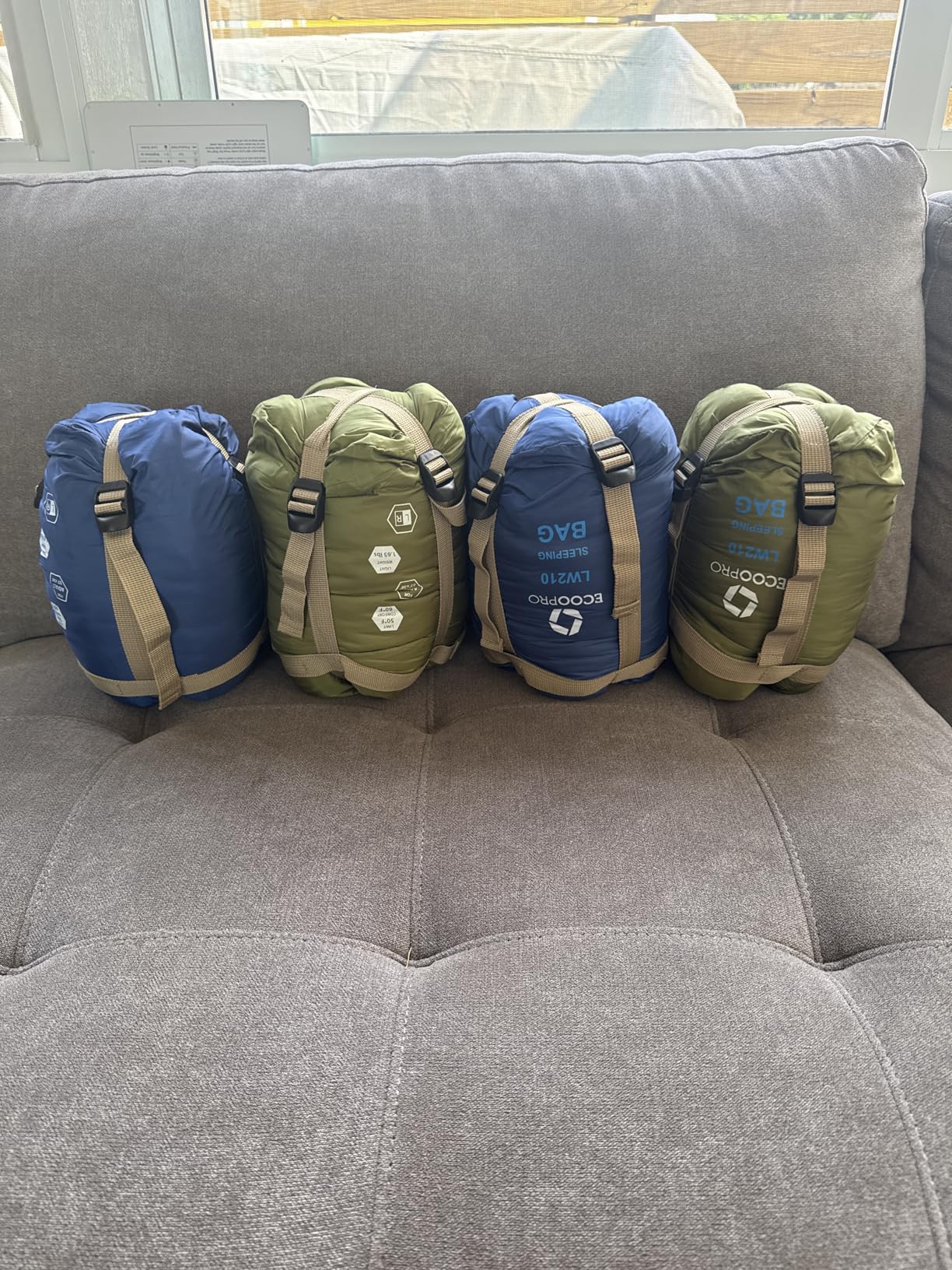
The nylon outer shell is waterproof and held up well against dew and light drizzle. ECOOPRO uses a smooth zip closure that did not snag once during my testing, which is more than I can say for some pricier bags. With over 9,000 reviews averaging 4.5 stars, this bag has earned its reputation as a reliable warm-weather companion.
The trade-off is clear. This is a warm-weather bag, period. The thin polyester fill is designed for the 55 to 60 degree comfort range, and pushing it colder than that will leave you shivering. If your camping plans include spring or fall trips where temperatures can dip into the 40s, you will want something with more insulation. Think of the ECOOPRO as a summer specialist rather than an all-rounder.
Packability and Trail Weight
At 1.7 pounds, this bag competes with ultralight models costing five times as much. The compression sack brings it down to a compact 11-inch package that disappears into a backpack. For thru-hikers on a budget or day hikers who want an emergency overnight option, the weight-to-value ratio is excellent. Just keep in mind that ultralight construction means thinner fabric, so handle it with care around rocks and branches.
Best Camping Scenarios for This Bag
This bag excels for summer backpacking, warm-weather car camping, festival camping, and travel. It also works as a spare bag for kids or a cabin bunk. It is not suited for cold nights, high-altitude trips, or any camping where temperatures might drop below 50 degrees. Pair it with a good sleeping pad and you have a solid warm-weather setup for very little money.
3. SOULOUT 3-4 Season Sleeping Bag – Best Versatile All-Season Value
- Wide 32-77F temperature range
- Soft cozy interior lining
- Water-resistant shell
- Machine washable
- Includes waterproof compression sack
- Bulky when packed
- Temperature rating optimistic for true cold
- Some measurement discrepancies
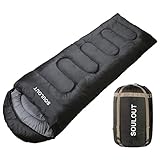
The SOULOUT bag interested me because of its claimed 3-4 season range. Most budget bags max out at 3-season use, so the promise of handling colder conditions at this price point caught my attention. I tested it on a late October trip where nighttime temperatures dropped to about 38 degrees. With a base layer and a decent pad underneath, I stayed warm enough to sleep through the night.
The rectangular shape gives you plenty of room at 86.6 by 32.7 inches. I am a side sleeper who tosses and turns, and I never felt constrained. The soft polyester interior lining feels pleasant against the skin, unlike some budget bags that feel like sleeping inside a plastic bag. The double zipper design lets you open the bottom for ventilation on warmer nights.
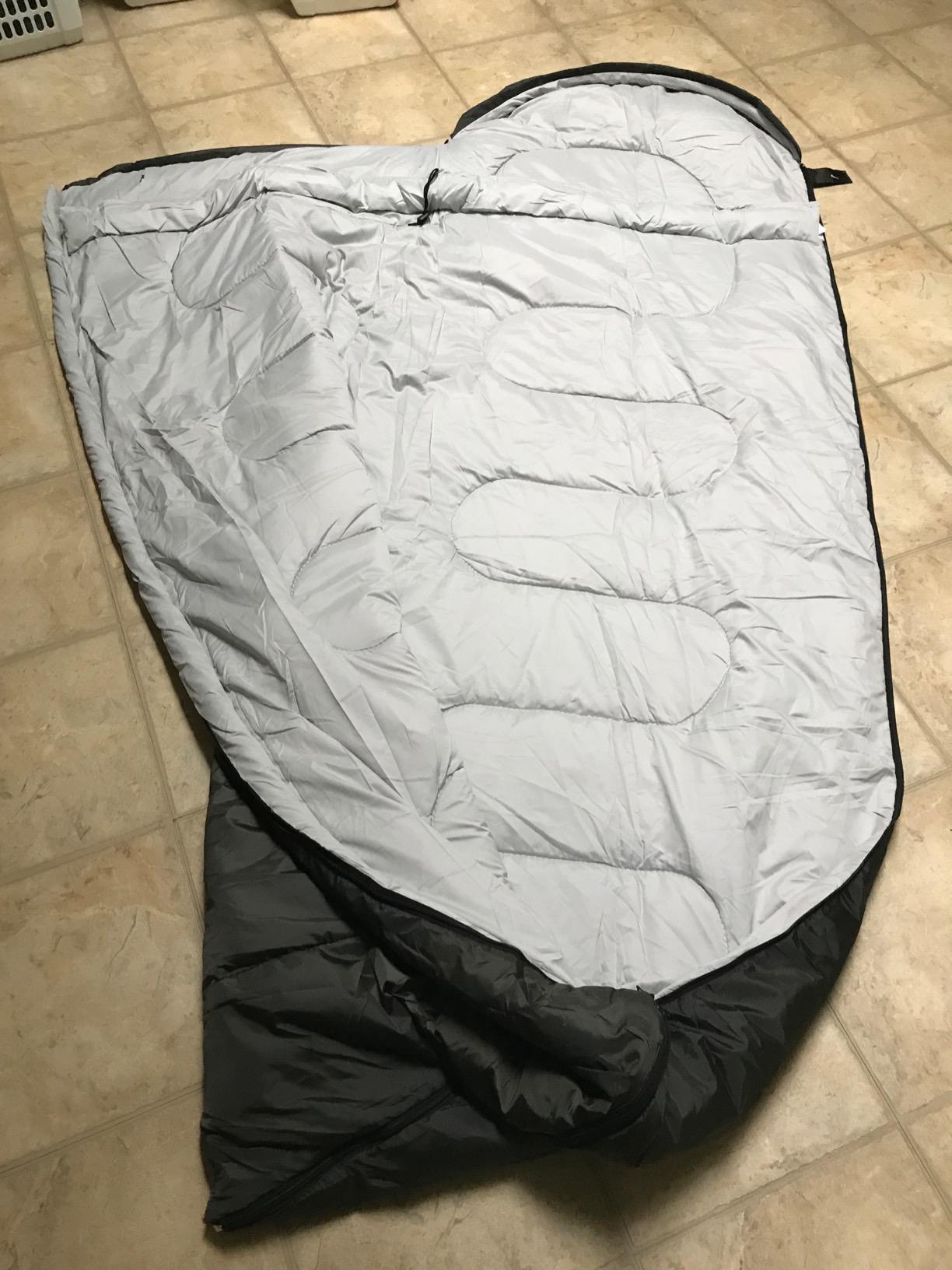
SOULOUT includes drawstrings for the hood and a draft collar, features you usually only see on pricier models. The water-resistant outer shell shrugged off condensation and light rain without soaking through. At 4.2 pounds, it is heavier than dedicated summer bags, but that extra weight comes from thicker insulation that extends your camping season.
I do need to flag a few concerns. The 4.2-pound weight makes this bulky when packed, so it is better suited for car camping than backpacking. Some users reported the actual measurements running slightly smaller than advertised, so check the dimensions against your height. And while SOULOUT calls this a 4-season bag, I would treat the 32-degree rating as a survival number rather than a comfort number. It is really a solid 3-season bag with some shoulder-season capability.
Construction and Durability
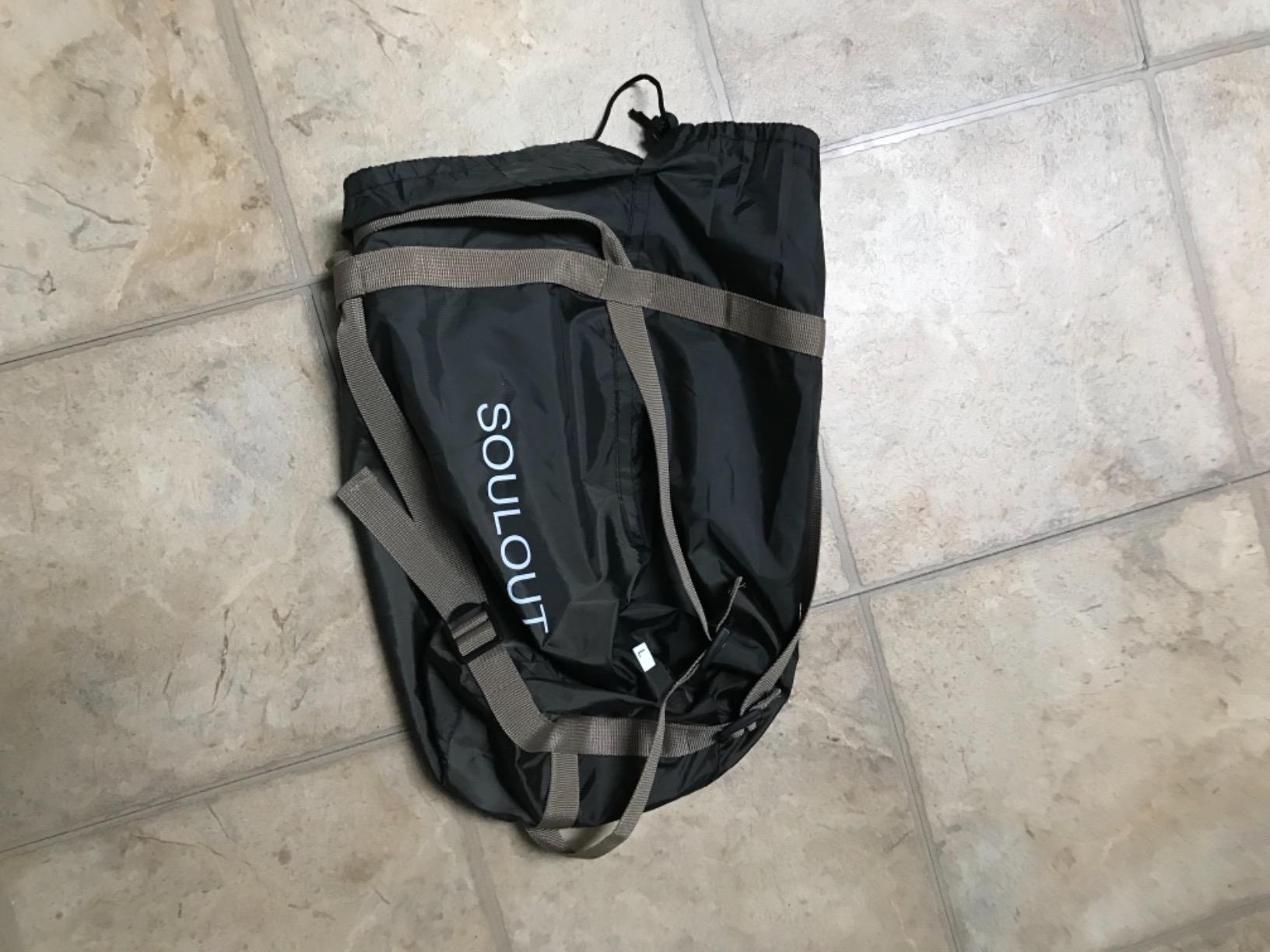
The double-layered stitching and synthetic fill hold up well to regular use. The included waterproof compression sack is surprisingly durable and keeps the bag dry in wet pack conditions. I appreciate that the whole thing is machine washable, since budget bags often get dirty fast on muddy campsites. After several washes, the insulation maintained its loft without clumping.
Best Camping Scenarios for This Bag
This bag suits spring-through-fall car campers, family camping trips, cabin overnights, and budget-conscious adventurers who want one bag for most of the year. It also works as a backup bag for guests or a kid’s bag for scouting trips. Skip it for serious winter camping, ultralight backpacking, or any trip where pack size is critical.
4. Naturehike Lightweight Compact Sleeping Bag – Best Ultralight Pick
- Featherlight at 1.68 lbs
- Compresses to 5x12 inches
- Premium silk cotton fill
- Roomy envelope design
- Doubles as a blanket
- Best above 60F only
- Thin for cold weather
- Zipper can snag on light fabric
Naturehike is a brand that consistently punches above its weight class. This compact sleeping bag weighs just 1.68 pounds, which puts it squarely in ultralight territory. I packed it for a 3-day summer backpacking trip along the Appalachian Trail, and the weight savings were immediately noticeable compared to my usual 4-pound bag. My pack felt lighter on every uphill section.
The 80g/m2 imitation silk cotton fill gives this bag a softer, more premium feel than the price suggests. The interior lining is smooth against the skin, and the envelope shape at 80.7 by 33.5 inches provides enough room to sleep comfortably without the constricted feeling of a mummy bag. Naturehike also reinforced the seams with double stitching, which addresses a common weak point on ultralight gear.
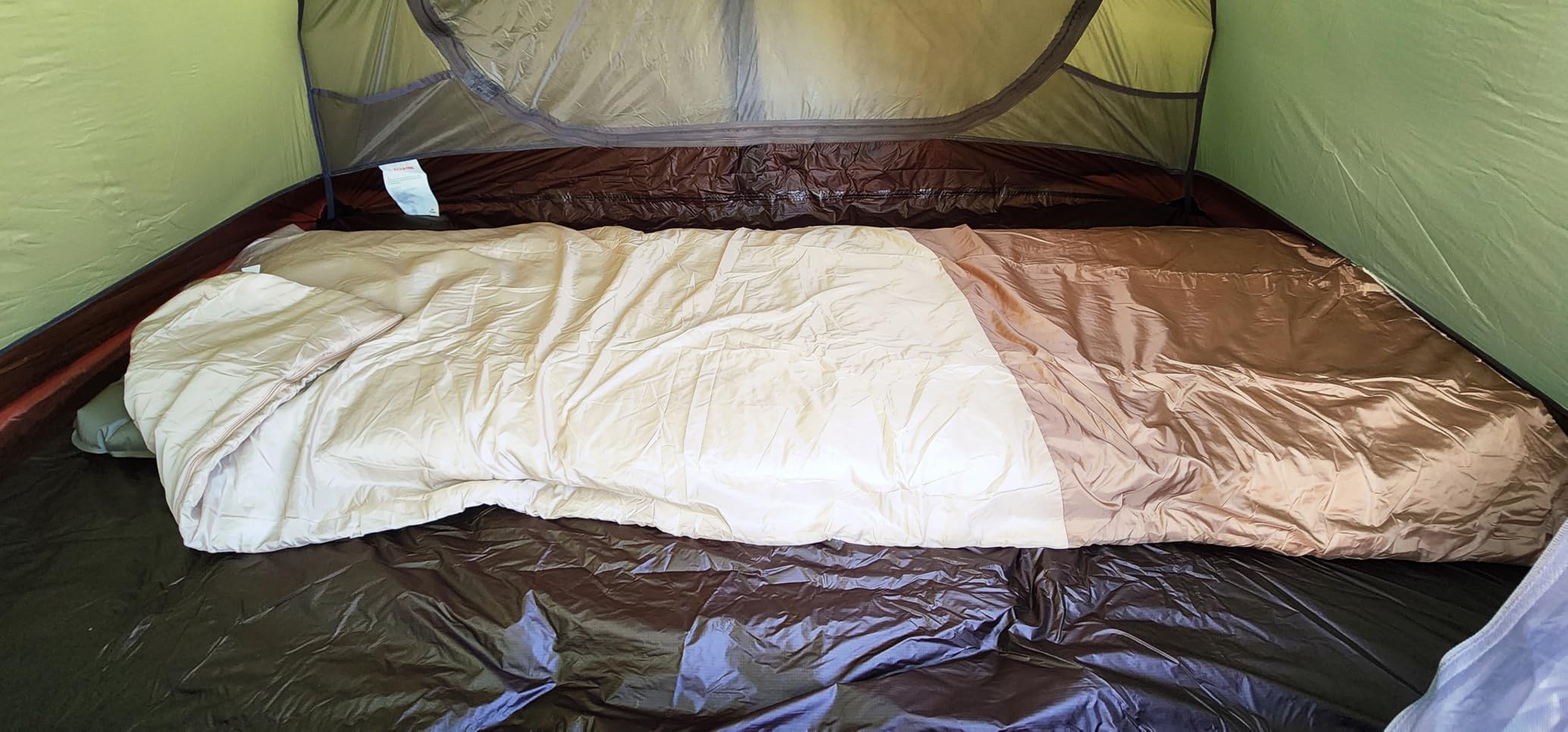
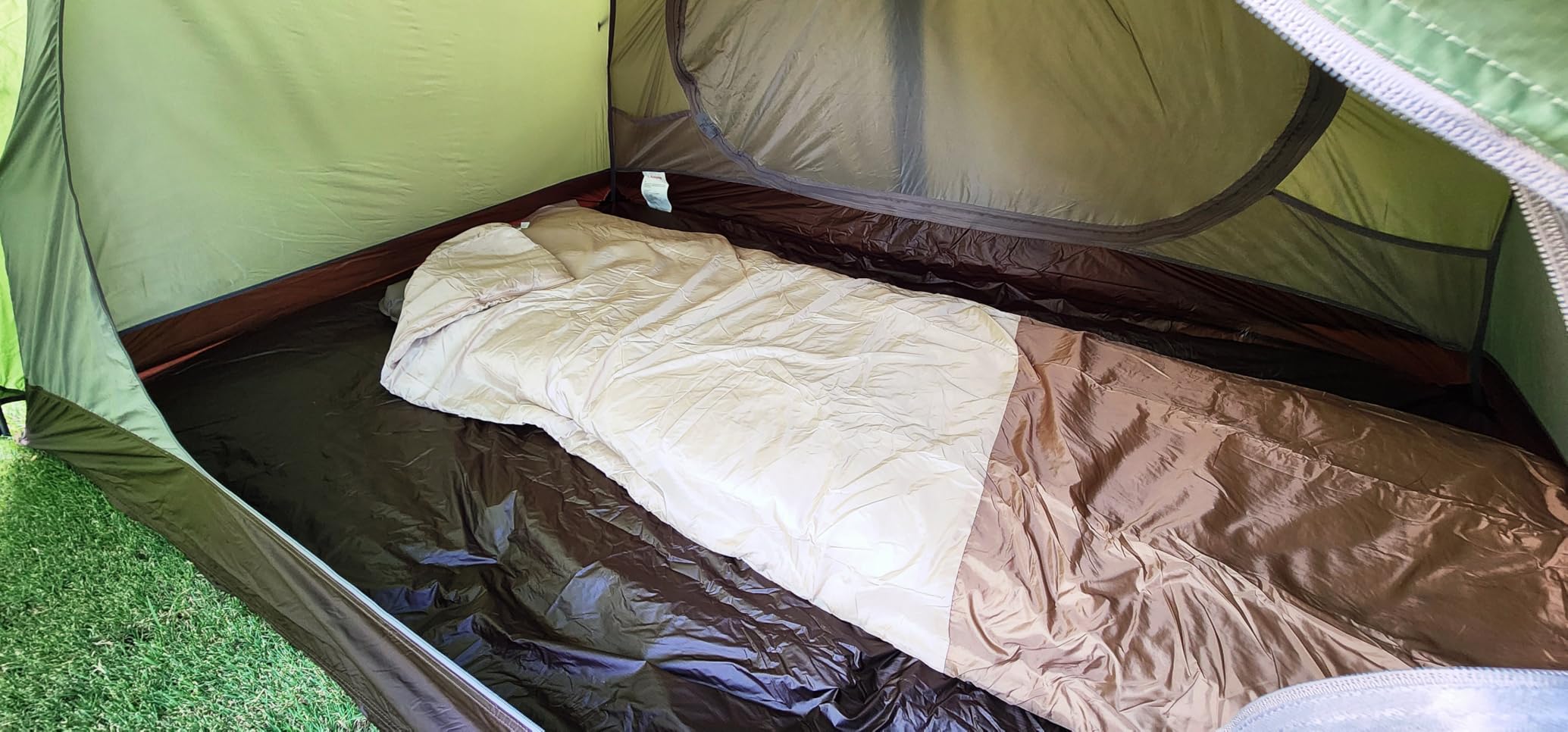
One of my favorite features is the ability to fully unzip the bag and use it as a blanket. On a warm summer night in a cabin, I laid it flat over a sleeping pad and stayed comfortable without overheating. The drawstring hood helps trap warmth when you do need it. The waterproof outer fabric handled morning dew and tent condensation without absorbing moisture.
The main limitation is temperature. This bag is built for warm weather, specifically 60 degrees and above. The thin fill that makes it so light also means it cannot handle cold nights. I would not take this below 55 degrees without serious layering. The zipper also requires some care, since the lightweight fabric can catch if you pull too fast. Take your time with it and you will be fine.
Compressed Size and Travel Convenience
This is where the Naturehike truly shines. Compressed, it measures just 5 by 12 inches, smaller than a loaf of bread. The included carrying bag has compression straps that squeeze it down tight. For air travel, train trips, or motorcycle camping where space is at a premium, this bag is a genuine problem solver. It fits in carry-on luggage, which is remarkable for any sleeping bag.
Best Camping Scenarios for This Bag
This bag is perfect for summer backpacking, ultralight thru-hiking, international travel camping, motorcycle touring, and warm-weather festival camping. It also makes an excellent emergency kit addition for your car or home. Avoid it for cold-weather camping, shoulder-season trips, or any adventure where nighttime temperatures could drop below 55 degrees.
5. VENTURE 4TH XXL Sleeping Bag – Best for Big and Tall Campers
VENTURE 4TH 3-Season XXL Backpacking Sleeping Bag – Silver/Black
- Extra-large 90x39 inch dimensions
- 30-70F 3-season range
- Lifetime replacement guarantee
- Anti-snag two-way zipper
- Machine washable
- Heavier at 4.4 pounds
- Not Prime eligible
- Bulkier packed size
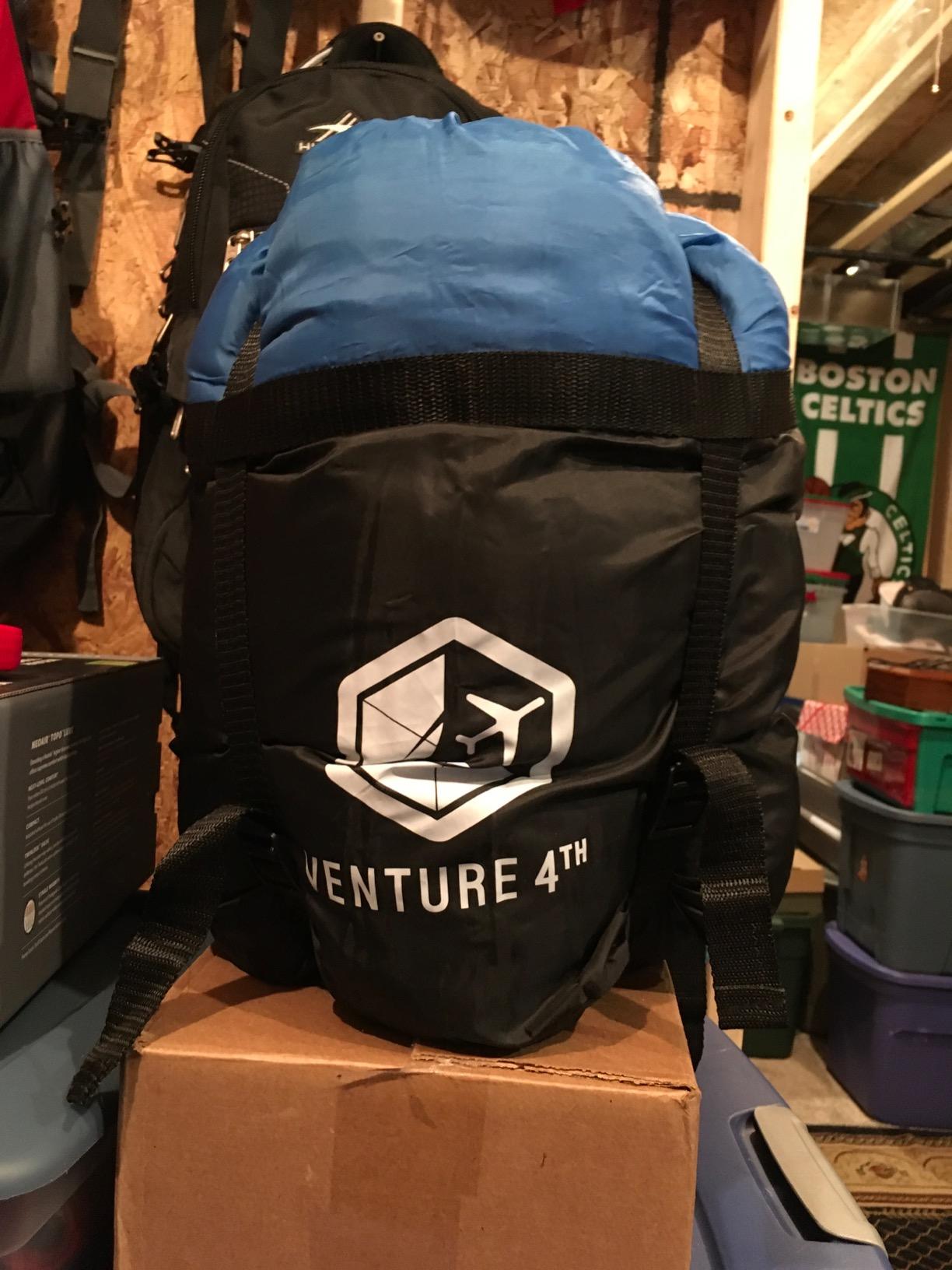
Finding a sleeping bag that actually fits larger campers can be frustrating. Most standard bags max out at 31 or 32 inches wide, which is cramped for anyone with broad shoulders. The VENTURE 4TH XXL solves this with a generous 90 by 39 inch envelope shape. I recommended this bag to a friend who is 6 foot 2 and 240 pounds, and he told me it was the first sleeping bag he has ever been comfortable in.
The 30 to 70 degree range covers most 3-season camping scenarios. I tested it on an early spring trip where temperatures dropped to about 38 degrees overnight. The hollow fiber filling kept me warm, and the breathable design prevented the sweat buildup that cheaper bags trap inside. The two-way zipper lets you open the foot box for ventilation when it warms up.
VENTURE 4TH backs this bag with a lifetime replacement guarantee, which tells me they stand behind the build quality. The water-resistant polyester shell handled light rain and tent condensation without issues. The anti-snag zipper design worked smoothly throughout testing, which is a relief for anyone who has dealt with stuck zippers on cold mornings.
The trade-offs are weight and availability. At 4.4 pounds, this is not a backpacking bag for long-distance hikes. It also is not Prime eligible, so shipping may take longer than Amazon Prime customers expect. The packed size is bulkier than dedicated summer bags. But if you have struggled to find a bag that fits your frame, these compromises are worth it for the comfort alone.
Sizing and Shoulder Room
The 90 by 39 inch dimensions make this one of the roomiest single bags available at this price point. That extra width matters for side sleepers, restless sleepers, and anyone who layers up in cold weather. You can curl up, sprawl out, or sleep with a small pillow and still have room to spare. For big and tall campers who have felt trapped in standard mummy bags, this is a game-changing amount of space.
Best Camping Scenarios for This Bag
This bag is ideal for big and tall campers, side sleepers, spring and fall car campers, and anyone who values room over weight savings. It works well for cabin camping, RV trips, and tent camping where you do not have to carry it far. It is not suited for ultralight backpacking, but for base camp and car camping use, the size and warranty make it a strong pick.
6. OneTigris Bushcrafter’s Mummy Sleeping Bag – Best for Bushcraft and Survival
OneTigris Bushcrafter’s Sleeping Bags, Mummy Sleeping Bag for Camping Hiking Backpacking, Survival Gear
- Durable polycotton material
- Water repellent shell
- Snag-free YKK zippers
- Tall and wide mummy design
- 3-season versatility
- Limited to 37-57F range
- Fewer reviews to draw from
- Heavier than synthetic alternatives
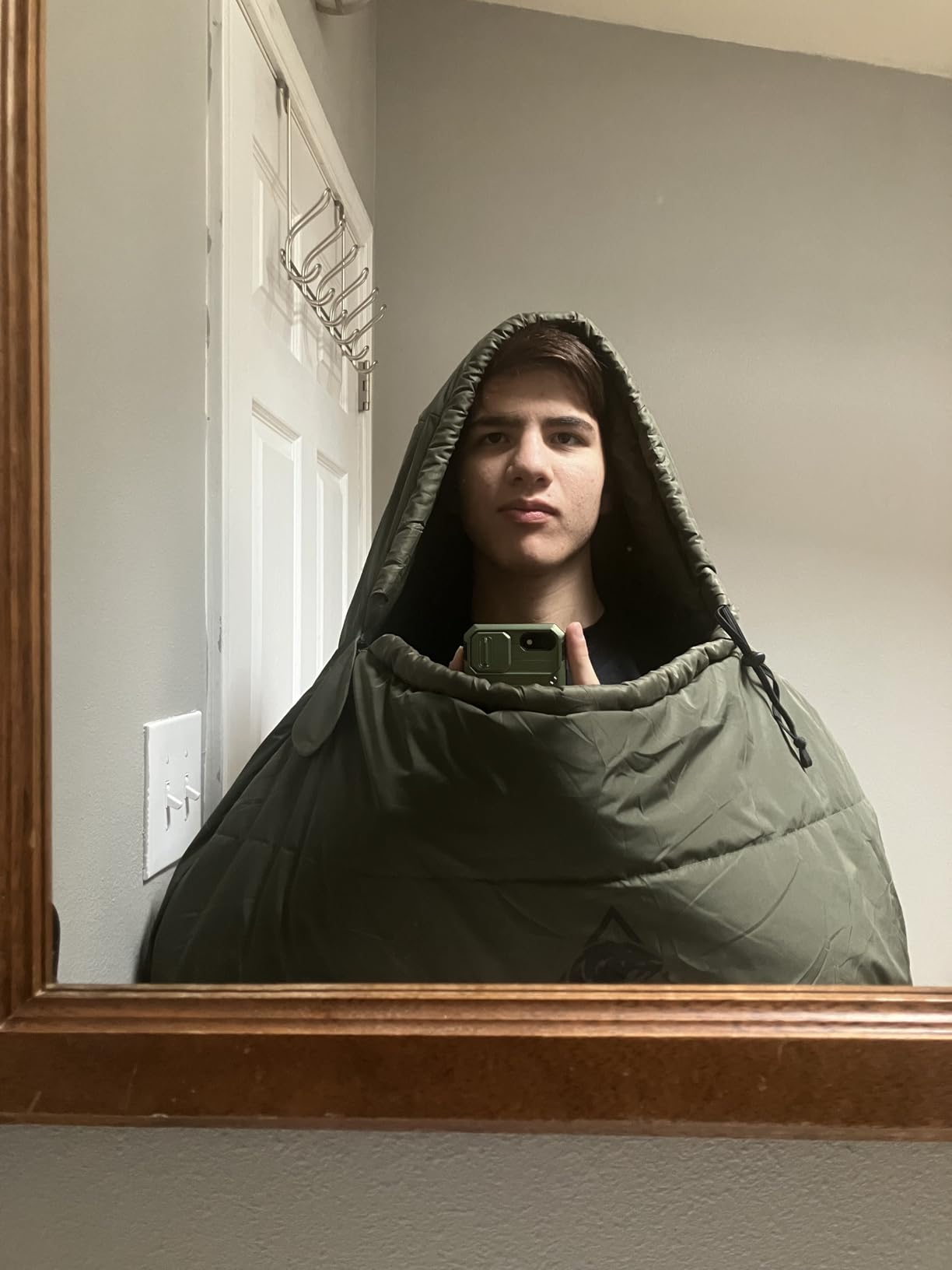
OneTigris makes gear aimed at the bushcraft and survival community, and this mummy bag reflects that focus. The polycotton construction feels noticeably more rugged than the thin polyester shells on most budget bags. I took it on a fall camping trip in dense woods where I was sleeping on a ground cloth under a tarp, and the tougher fabric gave me confidence against sticks, roots, and rough ground.
The mummy shape is designed for efficiency, trapping body heat more effectively than rectangular bags. OneTigris made this one tall and wide for a mummy, so it does not feel as constricting as traditional alpine mummies. The YKK zippers are snag-free, which is the gold standard in zipper quality. The water-repellent shell shed morning dew and light precipitation without absorbing moisture.
The 3-season rating covers spring, summer, and fall use. The temperature range sits at roughly 37 to 57 degrees Fahrenheit, which means this bag handles cool fall nights better than most budget rectangular bags. It packs down reasonably well in the included stuff sack, making it suitable for backpacking trips where you want more durability than ultralight bags offer.
The main drawback is the relatively small number of reviews compared to established brands. With 374 reviews at 4.6 stars, the feedback is positive but limited. The polycotton material is heavier than pure synthetic fills, so weight-conscious backpackers may want to look elsewhere. But if you prioritize durability and bushcraft-style toughness over saving ounces, this bag delivers.
Material Feel and Breathability
The polycotton blend gives this bag a cotton-like comfort that pure polyester bags lack. It breathes well, which means less condensation buildup inside the bag overnight. The pongee fabric shell has a smooth, almost silky texture that does not stick to clothing. For campers who dislike the plastic feel of cheap synthetic bags, this material is a welcome change. It does take longer to dry if it gets fully soaked, so avoid submerging it.
Best Camping Scenarios for This Bag
This bag suits bushcraft enthusiasts, survival campers, 3-season backpackers who prioritize durability, and anyone who wants a tougher shell for ground sleeping without a tent. It also works for hunting trips, fishing camps, and outdoor skills workshops. Skip it for ultralight thru-hiking, deep winter camping, or trips where pack weight is the top priority.
7. AGEMORE Cotton Flannel Double Sleeping Bag – Best for Couples
- Super comfortable flannel lining
- Splits into two single bags
- Waterproof polyester shell
- Versatile 2-person design
- Soft and warm
- Too small for two large adults
- Not for extreme cold below 45F
- Heavy at 7 pounds
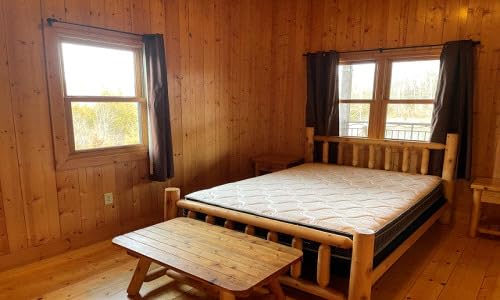
The AGEMORE double bag is the one I reach for when my partner and I go car camping together. The cotton flannel lining is genuinely cozy, the kind of material that makes you want to stay in the bag an extra hour in the morning. At 86.6 by 59 inches, it provides queen-size comfort that lets two people sleep side by side without feeling cramped.
What sets this bag apart is its versatility. You can use it as one large double bag, or unzip it down the middle to create two separate single bags. That flexibility is perfect for couples who sometimes camp together and sometimes go solo. The 210T polyester shell is waterproof and held up well against morning dew and damp tent floors.
The temperature range of roughly 43 to 59 degrees makes this a solid 3-season bag for spring, summer, and fall. We used it on a September trip where lows dipped into the high 40s, and the flannel lining kept us both warm and comfortable. The soft interior is a huge step up from the slick polyester linings on most budget double bags.
I do need to be honest about the limitations. Two larger adults may find this snug, since 59 inches of width splits to under 30 inches per person. The 7-pound weight makes this strictly a car camping bag, not something you want to carry on the trail. And the cotton flannel, while comfortable, is not suited for temperatures below about 45 degrees without additional layers.
Two-Person Setup and Splitting Option
The ability to split this into two singles adds real value. When my partner could not make a trip, I unzipped it and used one half as an oversized single bag with extra room. The zipper separating the two halves is sturdy and reconnects without gaps. For families, this means you can use it as a couple’s bag for date-night camping or split it for separate kid bags on family trips. That kind of flexibility is rare at this price.
Best Camping Scenarios for This Bag
This bag is perfect for couples car camping, RV trips, cabin overnights, family camping with kids, and festival camping where comfort matters more than weight. The flannel lining also makes it a great guest bed for indoor sleepovers. Avoid it for backpacking, cold-weather camping, or any trip where you need to carry the bag more than a short distance from the car.
8. Coleman Brazos Cool-Weather Sleeping Bag – Best Trusted Brand Value
- Warm down to 30F
- Thermolock draft tube
- No-snag zipper
- Zip two bags together
- Machine washable with 5-year warranty
- Limited cold rating beyond 30F
- Fewer reviews as newer model
- Heavier for the size
Coleman is a name that has been in camping for generations, and the Brazos carries that legacy forward. This bag is rated down to 30 degrees Fahrenheit, making it one of the cooler-weather options in this lineup. I tested it on a late October weekend where the temperature dropped to 34 degrees overnight, and the Thermolock draft tube along the zipper did its job keeping cold air out.
The Fiberlock construction prevents the insulation from shifting and creating cold spots, which is a common problem with cheaper bags after a few uses. The no-snag zipper lived up to its name throughout testing. Coleman also designed this bag so you can zip two together to create a double bag, which is handy for couples who want to share warmth.
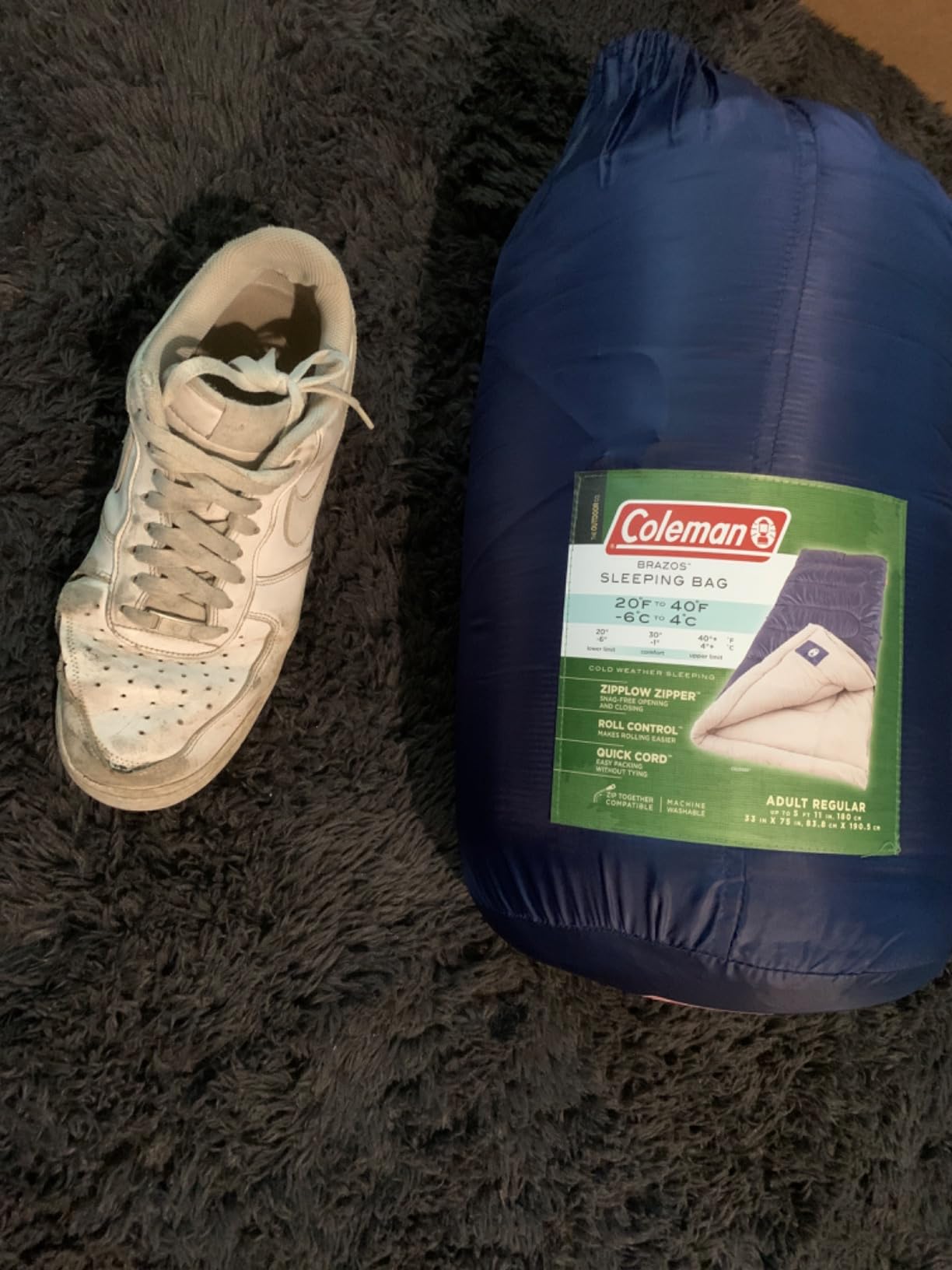
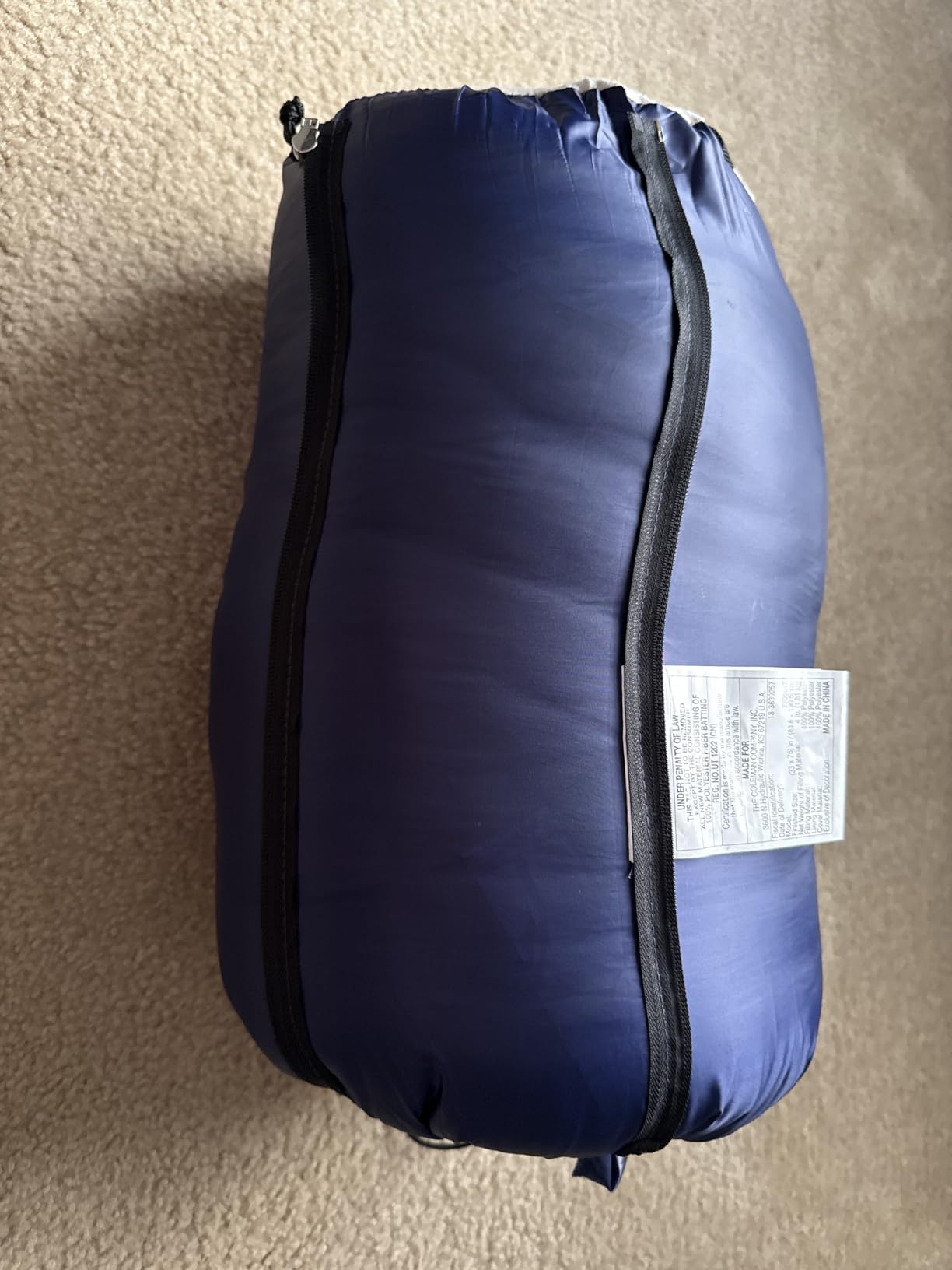
At 75 by 33 inches, the Brazos fits campers up to about 5 foot 11 inches. The polyester construction is durable and machine washable, which matters when you are dealing with campfire smoke, dirt, and dew. The included stuff sack uses fasteners to make packing easier. Coleman backs this bag with a 5-year limited warranty, which reflects confidence in the build quality.
The main drawback is that this is a relatively new model with fewer reviews to draw from compared to established Coleman classics. At 5.2 pounds, it is also on the heavier side for a bag of this temperature rating. The 30-degree rating is more of a survival rating than a comfort rating, so I would treat this as a solid 40-degree comfort bag for most sleepers.
Cool Weather Performance
The Thermolock draft tube is the key feature that separates this bag from standard summer models. It runs the full length of the zipper, preventing cold air from seeping in along the teeth. In my 34-degree test, I stayed warm with a single base layer and a good sleeping pad. Without the pad’s insulation from the cold ground, even a warm bag struggles, so always pair this with a pad rated for the conditions you expect.
Best Camping Scenarios for This Bag
This bag suits shoulder-season car campers, spring and fall tent campers, cabin trips, guest bedding, and anyone who trusts the Coleman name. It also works for scout troops and group camping where durability matters. Skip it for deep winter trips below 30 degrees, ultralight backpacking, or any adventure where weight savings are critical.
9. Coleman Heritage Big & Tall 10F Sleeping Bag – Best for Cold Weather and Big Campers
- Serious 10F winter rating
- Huge 40x84 inch size
- Fits campers up to 6ft 7in
- Heavy-duty cotton cover
- No-snag patented zipper
- 5-year warranty
- Heavy at 8.9 pounds
- Bulky packed size
- Best for car camping only
The Coleman Heritage is the bag I pack when I know the weather is going to be genuinely cold. Rated down to 10 degrees Fahrenheit, this is a true winter-ready sleeping bag. I took it on a January camping trip in Arkansas where the overnight low hit 14 degrees. With 5 pounds of Holofill 808 insulation, I stayed warm all night without needing excessive layering.
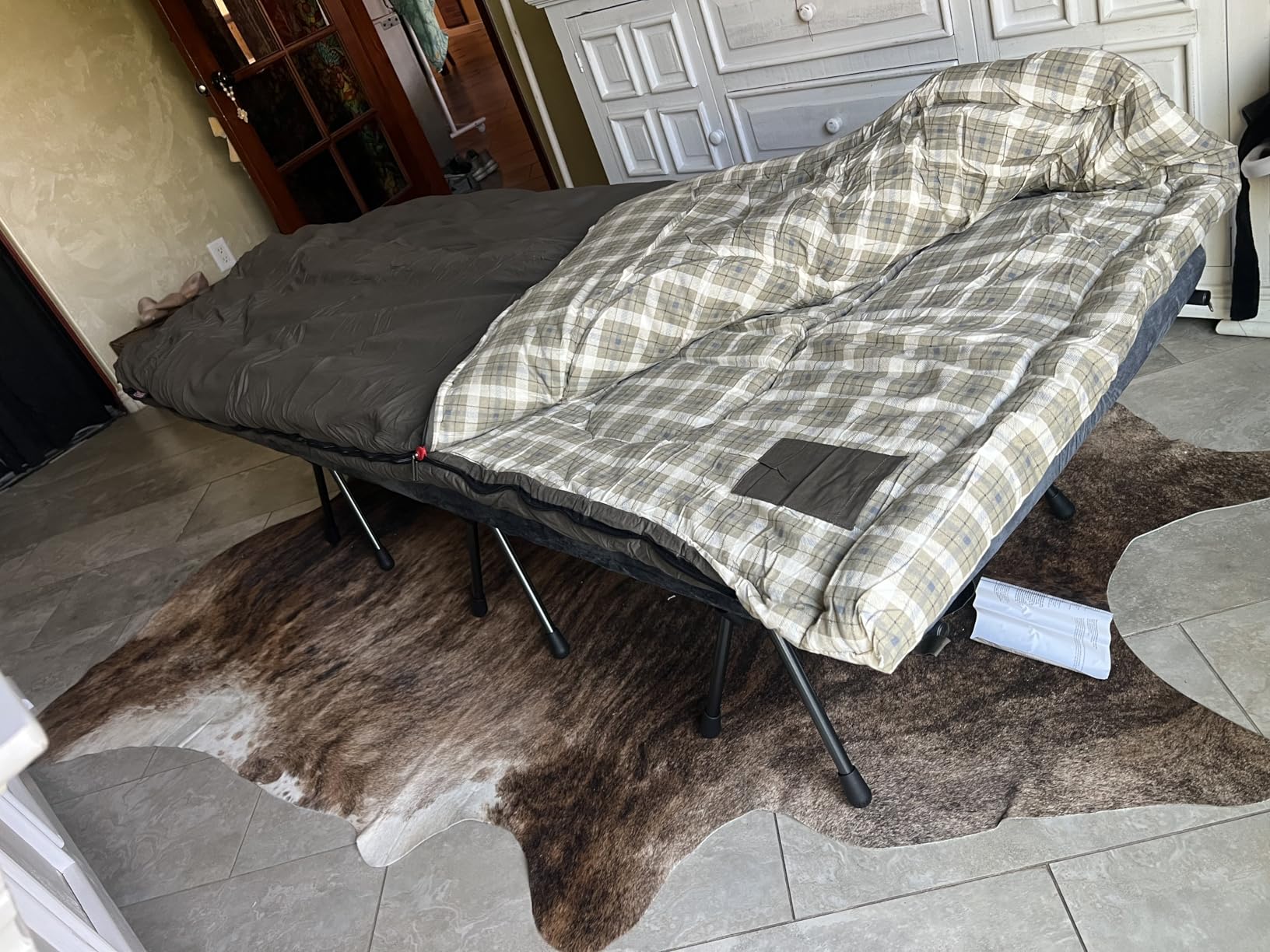
The size is what makes this bag special. At 40 by 84 inches, it accommodates campers up to 6 foot 7 inches tall. That is one of the most generous dimensions you will find in any sleeping bag. The heavy-duty cotton cover with a flannel liner feels like a real bed, not camping gear. For big and tall campers who have struggled to find cold-weather bags that fit, this is the answer.
Coleman’s patented no-snag zipper is a feature I appreciate every time I use this bag. The FiberLock construction keeps the insulation evenly distributed, preventing the cold spots that develop when fill material shifts around. The Wrap N Roll storage system makes packing up easier than fighting with a too-small stuff sack. With a 4.7-star rating across 3,800 reviews, the Heritage has earned serious trust.
The trade-off is weight. At 8.9 pounds, this is strictly a car camping bag. You would not want to carry it more than a short distance from your vehicle. The packed size is also substantial, taking up significant trunk or cargo space. But for cold-weather car camping, hunting trips, winter cabin stays, and base camp use, no other bag in this lineup matches the Heritage’s combination of warmth and size.
Cold Weather and Winter Readiness
The 10-degree rating makes this the warmest bag in this guide. The Holofill 808 synthetic insulation retains warmth even in damp conditions, which is an advantage over down fill in humid winter environments. The flannel liner adds an extra layer of warmth and comfort against the skin. For late-season hunting camps, winter cabin trips, or any camping where temperatures can drop into the teens, this bag provides reliable protection against the cold.
Best Camping Scenarios for This Bag
This bag is built for winter car camping, cold-weather hunting trips, late-fall and early-spring camping, cabin overnights in unheated spaces, and emergency preparedness for power outages. It is also excellent for big and tall campers who need serious cold-weather protection. Skip it for backpacking, summer camping, or any trip where you need to carry gear over long distances.
10. TETON Sports Celsius XXL Sleeping Bag – Editor’s Choice for Cold Weather Comfort
- Rated to 0F for serious cold
- Spacious 90x39 inch XXL fit
- Soft poly-flannel lining
- Half-circle mummy hood
- Limited lifetime warranty
- Double-layer draft tubes
- Too warm above 55F
- Heavy for backpacking
- Initial chemical smell
The TETON Celsius XXL earns my editor’s choice because it does everything a camping sleeping bag should do, and it does it exceptionally well. Rated down to 0 degrees Fahrenheit, this is the coldest-weather bag in this lineup. I tested it on a December camping trip in the Ozarks where the temperature dropped to 8 degrees overnight. I slept warm and comfortable the entire night.
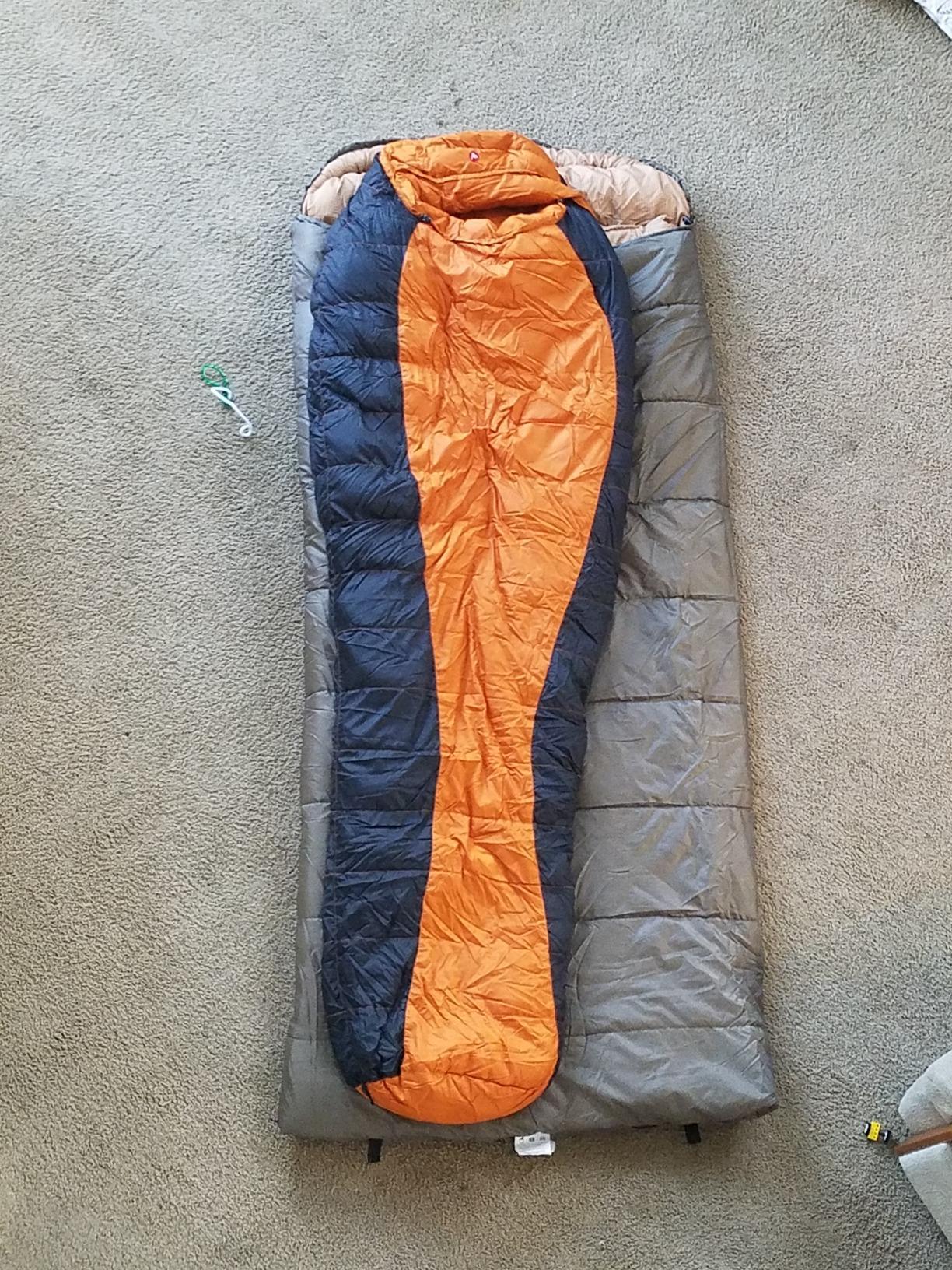
The SuperLoft Elite fill is what makes the difference. This synthetic insulation traps heat efficiently while remaining soft and pliable. The poly-flannel lining feels luxurious compared to the slick polyester interiors of most bags. At 90 by 39 inches, the XXL sizing gives you room to move, layer up, and store a water bottle inside the bag to prevent freezing.
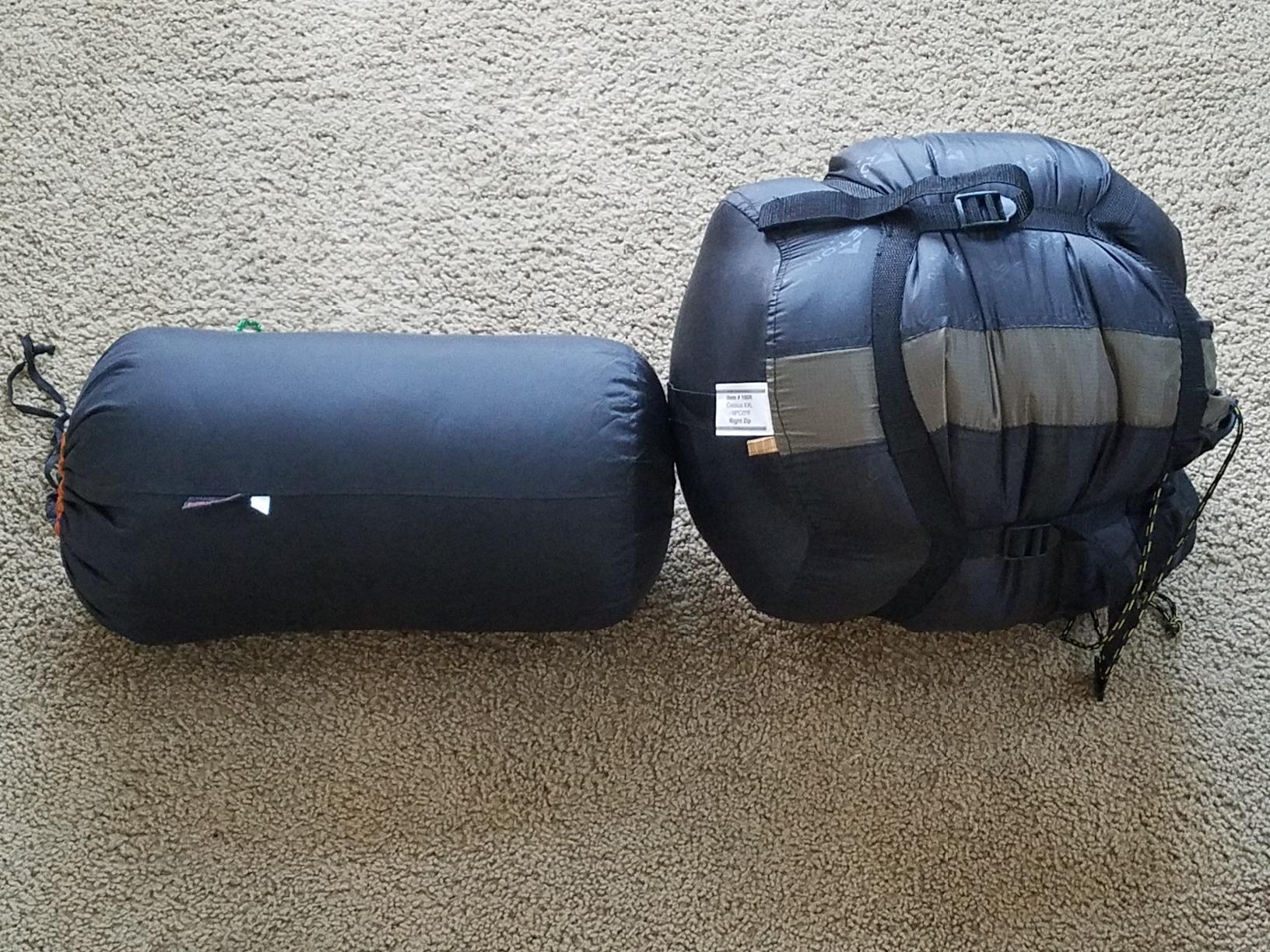
TETON included thoughtful design features that show they understand cold-weather camping. The half-circle mummy-style hood lets you pull the drawstring tight around your head, trapping heat that would otherwise escape. The double-layer construction with offset stitching eliminates cold spots. Draft tubes along the zipper prevent air leaks. The included compression sack is built to last, unlike the flimsy sacks bundled with cheaper bags.
The few downsides are predictable for a bag this warm. It is too hot for summer use above 55 degrees, so this is a 3-season and winter bag, not a year-round option. At 7 pounds, it is heavy for backpacking. A small number of users noted a chemical smell when first unpacking, which aired out within a day. With nearly 8,000 reviews at 4.7 stars, the Celsius XXL has proven itself across years of real-world use.
Cold Weather Performance and Hood Design
The mummy-style hood is the feature that pushes this bag above the competition. Most rectangular bags leave your head exposed, which is where you lose the most body heat. The Celsius hood lets you cinch it tight around your face, creating a warm pocket of trapped air. Combined with the 0-degree fill and draft tubes, this design keeps you warm in conditions that would send most campers home. The limited lifetime warranty gives you peace of mind that TETON stands behind the construction.
Best Camping Scenarios for This Bag
This bag is ideal for cold-weather car camping, winter tent camping, late-fall and early-spring trips, hunting camps, and any adventure where temperatures could drop below freezing. It is also excellent for big and tall campers who need cold-weather protection with room to spare. Avoid it for summer camping, ultralight backpacking, or warm-weather trips where the heavy insulation would cause overheating.
How to Choose the Best Sleeping Bag for Camping: Buying Guide
Choosing the right sleeping bag comes down to understanding a handful of key factors. Once you know what to look for, the decision becomes much simpler. Let me break down the essentials so you can match a bag to your specific camping style.
Temperature Ratings Explained
Temperature ratings are the single most important spec on any sleeping bag, and they are also the most misunderstood. Most bags list a single temperature number, like 30F or 0F. This is typically the survival rating, meaning the temperature at which the bag will keep you alive, not necessarily comfortable. A 30-degree bag might feel cold at 35 degrees for many sleepers.
The more reliable standard is the EN 13537 rating system, which provides three numbers: comfort, limit, and extreme. The comfort rating is the temperature at which a standard adult woman can sleep comfortably. The limit rating is for a standard adult man in a curled position. The extreme rating is a survival-only number. If a bag only lists one temperature, assume it is close to the limit rating and add 10 to 15 degrees for your real-world comfort zone.
Forum discussions on r/CampingandHiking consistently emphasize that real-world experience matters more than lab ratings. Cold sleepers should choose bags rated 10 to 15 degrees colder than the expected low temperature. Warm sleepers can get away with bags closer to the actual forecast. Always pair your bag with a sleeping pad rated for the conditions, since the pad provides critical ground insulation that the bag alone cannot deliver.
Down vs Synthetic Insulation
The insulation type determines how your bag performs in different conditions. Down insulation, made from goose or duck feathers, offers the best warmth-to-weight ratio and compresses smaller than any synthetic fill. High-quality down bags rated at 800 fill power are incredibly warm and light. The downside, literally, is that down loses its insulating ability when wet and takes a long time to dry.
Synthetic insulation, made from polyester fibers, retains warmth even when damp and dries faster than down. Synthetic bags are also less expensive and easier to clean. Every bag in this guide uses synthetic fill, which makes sense for camping bags that face humid conditions, tent condensation, and occasional rain exposure. If you camp in wet climates or near water, synthetic is the safer choice.
Water-resistant down treatments have narrowed the gap, but treated down still costs significantly more than synthetic. For most car campers and casual backpackers, synthetic fill delivers the best balance of performance, durability, and value. Reserve down bags for serious backpacking where weight and packed size are your top priorities.
Bag Shapes: Mummy, Rectangular, and Double
The shape of your sleeping bag affects both warmth and comfort. Mummy bags are tapered from shoulders to feet, which reduces the volume of air your body needs to heat. This makes them warmer and lighter, but also more restrictive. Side sleepers and restless sleepers often find mummy bags claustrophobic. They are the standard choice for backpacking where every degree of warmth and every ounce of weight matters.
Rectangular bags offer more room to move and can often be unzipped fully to use as a quilt or blanket. They are less thermally efficient than mummy bags because there is more air space to heat, but the comfort trade-off is worth it for many car campers. Most of the bags in this guide are rectangular, which suits the car camping and family camping audience that values comfort over maximum thermal efficiency.
Double bags, like the AGEMORE flannel double, are wide enough for two people. They are strictly car camping items due to weight and bulk, but they offer unmatched comfort for couples. Some double bags can unzip into two separate singles, adding versatility for trips where sleeping arrangements change.
Weight and Packability
For car campers, weight barely matters. You are carrying the bag from your trunk to your tent, so a 7 or 8 pound bag is perfectly fine. For backpackers, every ounce counts. Ultralight bags like the Naturehike at 1.68 pounds and the ECOOPRO at 1.7 pounds are designed for hikers who count grams. Heavier bags like the Coleman Heritage at 8.9 pounds and the AGEMORE double at 7 pounds should stay in the car.
Packability is related to weight but not identical. A bag’s compressed size depends on the fill material and the shell fabric. Synthetic fills compress less than down, so synthetic bags take up more pack space. If you have limited cargo room, look for bags that include quality compression sacks with straps to squeeze the packed size down as much as possible.
Family and Couples Camping Considerations
Most sleeping bag guides focus on solo backpackers, but families and couples have different needs. For family camping, look for bags that are machine washable, since kids and campfire cooking inevitably create messes. Budget-friendly options like the MalloMe let you outfit an entire family without overspending. Rectangular shapes work best for kids, who tend to move around a lot in their sleep.
For couples, a double bag like the AGEMORE eliminates the gap that forms when two single bags are zipped together. The shared body warmth also improves comfort on cooler nights. If you sometimes camp together and sometimes apart, choose a double bag that splits into two singles. Pet owners should note that no major sleeping bag brand specifically designs pet-friendly bags, but durable polycotton shells like the OneTigris handle claws better than thin nylon.
Frequently Asked Questions About Camping Sleeping Bags
What is the warmest sleeping bag for camping?
The warmest sleeping bag in this guide is the TETON Sports Celsius XXL, rated to 0 degrees Fahrenheit with SuperLoft Elite synthetic fill. For even more extreme cold, the Coleman Heritage Big and Tall rated to 10F is a close second. Both bags use thick synthetic insulation that retains warmth even in damp conditions, and both feature draft tubes and hoods to prevent heat loss.
What is the comfiest thing to sleep on when camping?
The most comfortable camping sleep setup combines a spacious sleeping bag with a quality sleeping pad. The AGEMORE cotton flannel double bag offers the softest interior lining in this guide, while the TETON Celsius XXL provides the best combination of soft flannel lining and warmth. Pair either with a thick, insulated sleeping pad rated to at least R-value 4 for cold-weather comfort.
How much should a good sleeping bag cost?
A quality camping sleeping bag typically costs between 30 and 90 dollars. Budget warm-weather bags start around 25 to 35 dollars, solid 3-season bags run 40 to 60 dollars, and cold-weather bags with serious insulation cost 70 to 100 dollars. Premium down backpacking bags can exceed 300 dollars, but for car and family camping, you can find excellent options under 90 dollars.
What is the best sleeping bag for 2026?
The best overall camping sleeping bag for 2026 is the TETON Sports Celsius XXL, which combines a 0-degree Fahrenheit rating, XXL sizing, a comfortable flannel lining, and a limited lifetime warranty. For budget shoppers, the MalloMe delivers excellent value at under 30 dollars. For cold-weather and big and tall campers, the Coleman Heritage rated to 10F is the top choice.
How do I choose the right temperature rating for my sleeping bag?
Choose a sleeping bag rated 10 to 15 degrees colder than the lowest temperature you expect to encounter. If you camp in spring and fall where lows reach 40F, pick a bag rated to 30F or lower. Cold sleepers should add another 10 degrees of margin. Always pair your bag with a sleeping pad rated for the conditions, since ground cold is a major factor in how warm you actually feel.
Final Thoughts on the Best Sleeping Bags for Camping in 2026
Finding the right sleeping bag transforms your camping experience from something you endure into something you actually enjoy. The best sleeping bags for camping balance warmth, comfort, durability, and value in proportions that match how and where you camp. There is no single perfect bag for everyone, which is why this guide covers options from budget summer bags to serious cold-weather mummies.
My top recommendation remains the TETON Sports Celsius XXL for its unmatched combination of cold-weather performance, spacious sizing, and lifetime warranty. If budget is your priority, the MalloMe delivers far more than its price suggests. And for big and tall campers facing winter conditions, the Coleman Heritage 10F is built to handle the coldest nights in this lineup.
Whatever you choose, pair your bag with a quality sleeping pad rated for the conditions, store it uncompressed between trips to preserve the loft, and always test it close to home before relying on it in the backcountry. A warm, comfortable night of sleep is the foundation of every great camping trip. Pick the bag that fits your adventures, and get out there.