
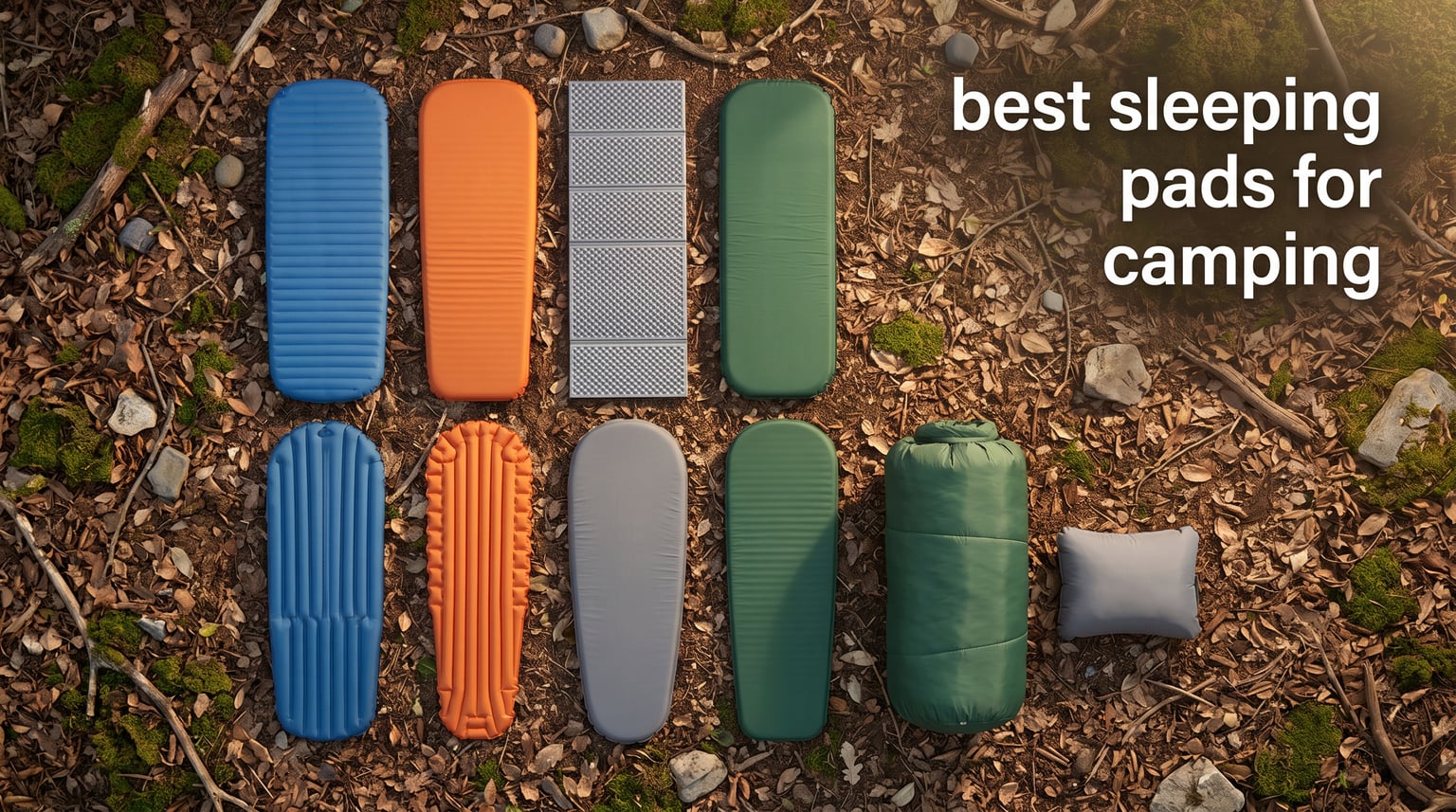
A bad night of sleep can ruin an otherwise perfect camping trip. I learned that the hard way on a cold October weekend in the Smokies when my cheap foam pad did almost nothing against the frozen ground, and I spent half the night shivering instead of resting.
The right sleeping pad does two jobs at once: it cushions your body so you wake up without an aching back, and it stops the cold ground from pulling heat out of you while you sleep. That second job is more important than most people realize, and it is measured by something called R-value, which I will explain in detail later in this guide.
Our team spent several months comparing the best sleeping pads for camping across weekend car-camping trips, fast-and-light backpacking overnights, and a few shoulder-season outings that dropped into the 30s. We looked at comfort, warmth, packed size, durability, and noise, because a crinkly pad will absolutely wake up your tentmate at 2 a.m.
After testing dozens of pads and reading through thousands of verified buyer reviews, we narrowed the field to eight standouts for 2026. Whether you want plush luxury for the campsite, ultralight gear for the trail, or a budget option that actually performs, there is a pick here for you.
If you are short on time, my top recommendation is the Therm-a-Rest MondoKing 3D for car camping and the Therm-a-Rest NeoAir Xlite NXT for backpacking. For the tightest budget, the Sleepingo Ultralight packs a surprising amount of value for the price.
Table of Contents
Top 3 Picks for Best Sleeping Pads for Camping
These three pads rose to the top during our testing for different reasons. The MondoKing 3D delivers near-mattress comfort, the Gear Doctors Oxylus balances price and 4-season warmth, and the Sleepingo gets you on the trail for the lowest possible cost.

Best Sleeping Pads for Camping in 2026
Here is a side-by-side look at all eight pads we tested this season. Use it to compare specs at a glance before diving into the full reviews below.
| Product | Specifications | Action |
|---|---|---|
 Therm-a-Rest MondoKing 3D Therm-a-Rest MondoKing 3D |
|
Check Latest Price |
 Therm-a-Rest NeoAir Xlite NXT Therm-a-Rest NeoAir Xlite NXT |
|
Check Latest Price |
 NEMO Switchback Foam NEMO Switchback Foam |
|
Check Latest Price |
| Sleepingo Ultralight |
|
Check Latest Price |
 Gear Doctors Oxylus Gear Doctors Oxylus |
|
Check Latest Price |
 Coleman Self-Inflating with Pillow Coleman Self-Inflating with Pillow |
|
Check Latest Price |
 Klymit Insulated Static V Luxe Klymit Insulated Static V Luxe |
|
Check Latest Price |
 CYMULA Memory Foam Mattress CYMULA Memory Foam Mattress |
|
Check Latest Price |
1. Therm-a-Rest MondoKing 3D – Best Overall for Car Camping Comfort
Therm-a-Rest MondoKing 3D Self-Inflating Camping Sleeping Pad, XX-Large – 80 x 30 Inches
- 4.25-inch thickness rivals a real mattress
- 7.0 R-value handles deep winter
- Self-inflating TwinLock valve
- TwinLock valve for easy inflation
- Heavy at 5.5 pounds
- Premium price point
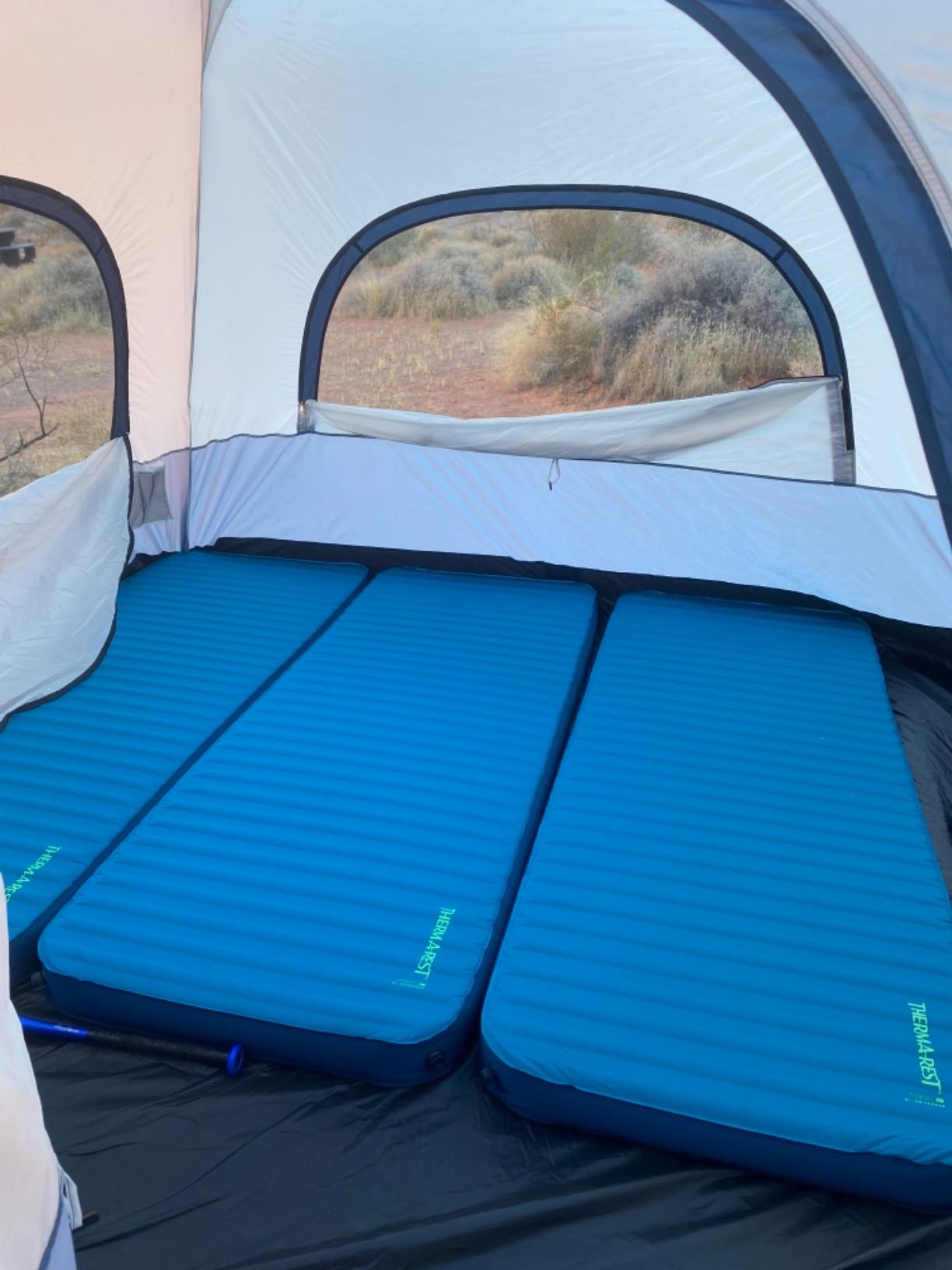
The MondoKing 3D is the closest thing I have found to sleeping on a real mattress in the woods. At 4.25 inches thick and 30 inches wide, it cradles side sleepers like me without any hip or shoulder contact with the ground.
Setup is genuinely effortless. I unrolled it, opened the TwinLock valve, and walked away to set up the rest of camp. By the time the stove was lit, the pad had drawn in enough air on its own that I only needed a few breaths to top it off.
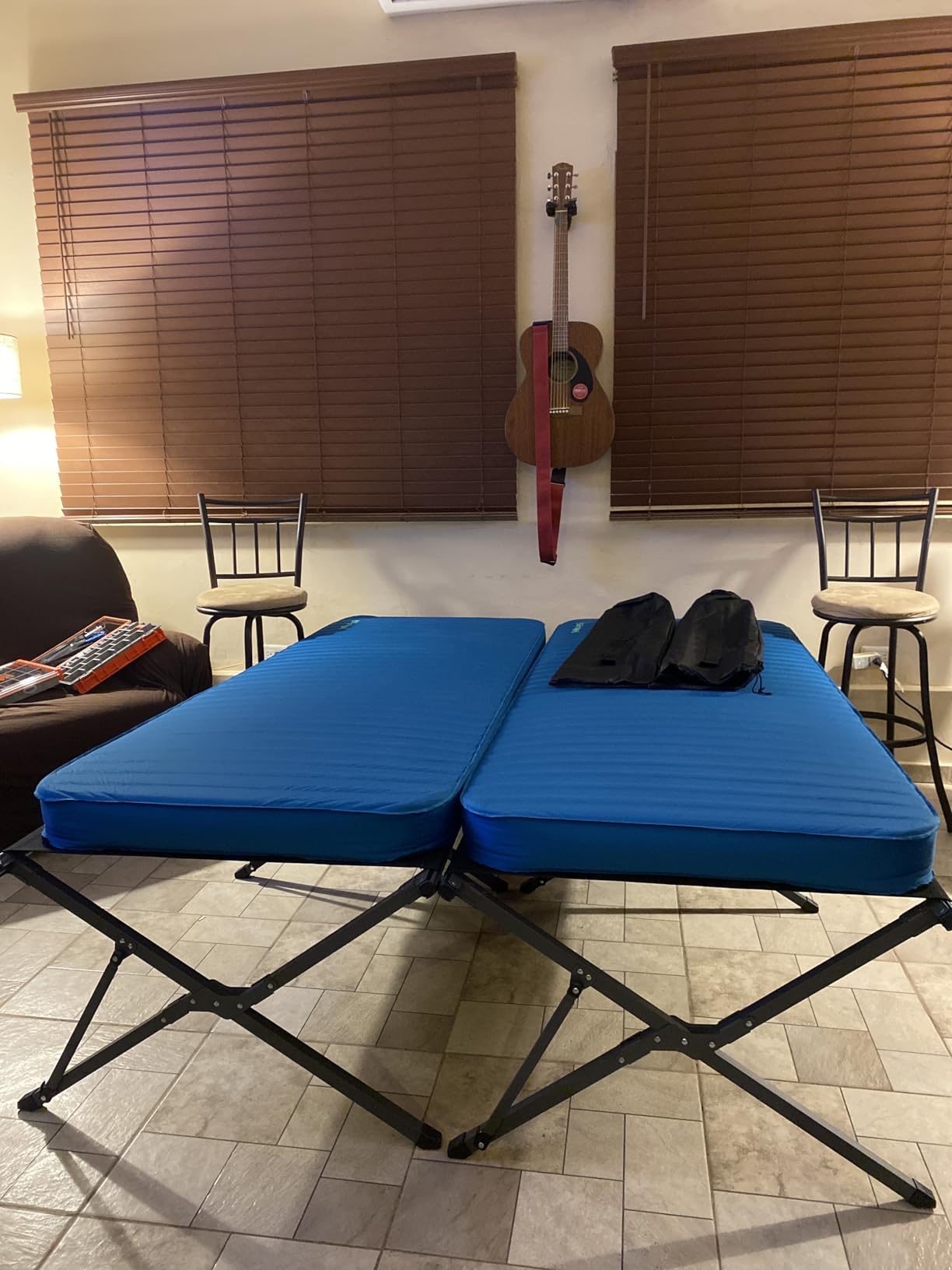
The 7.0 R-value is the real headline. That number puts this pad firmly in 4-season territory, meaning the frozen Tennessee ground that wrecked my trip a few years back would not stand a chance against the MondoKing.
Construction feels premium in hand, with stretch-knit top fabric and a 3D design that keeps you centered even if you toss and turn. The downside is bulk. At 5.5 pounds, this is not a pad you want to carry more than a few hundred feet from the car.
Best Use Cases for the MondoKing 3D
This pad shines for car camping, truck-bed setups, base camps, and winter overnights where you can leave it set up for days. Think of it as a portable bed more than a piece of backpacking gear.
Side sleepers and larger campers especially benefit from the 30-inch width and 4.25-inch thickness, which together prevent the hip-bottoming that plagues thinner pads.
What to Watch Out For
The packed size is larger than most air pads, so make sure your tent bag or vehicle has room. Also, while the self-inflating foam is convenient, fully topping it off still takes a few breaths.
For the price, expect a long-term investment. Therm-a-Rest backs it with a limited lifetime warranty, and the build quality suggests it will deliver many seasons of use.
2. Therm-a-Rest NeoAir Xlite NXT – Best Ultralight Backpacking Pad
Therm-a-Rest NeoAir Xlite NXT Ultralight Camping and Backpacking Sleeping Pad, Solar Flare, Regular Small
- Ultralight at just 11.5 oz
- Warm 4.5 R-value for 3-season
- Foam-free packable design
- WingLock valve is fast
- Higher price point
- Narrow 20-inch width
The NeoAir Xlite NXT is the pad I reach for when every ounce counts. At 11.5 ounces for the regular size, it weighs less than most water bottles and disappears into the bottom of my pack.
Despite the weight, Therm-a-Rest managed to pack in a 4.5 R-value, which is enough warmth for most 3-season trips and even some shoulder-season overnights. The NXT version is also noticeably quieter than older NeoAir models, a long-standing complaint from forum users.
The 3-inch thickness is impressive for the weight. I never felt the ground even when I shifted onto my side, and the triangular cell matrix feels supportive rather than bouncy.
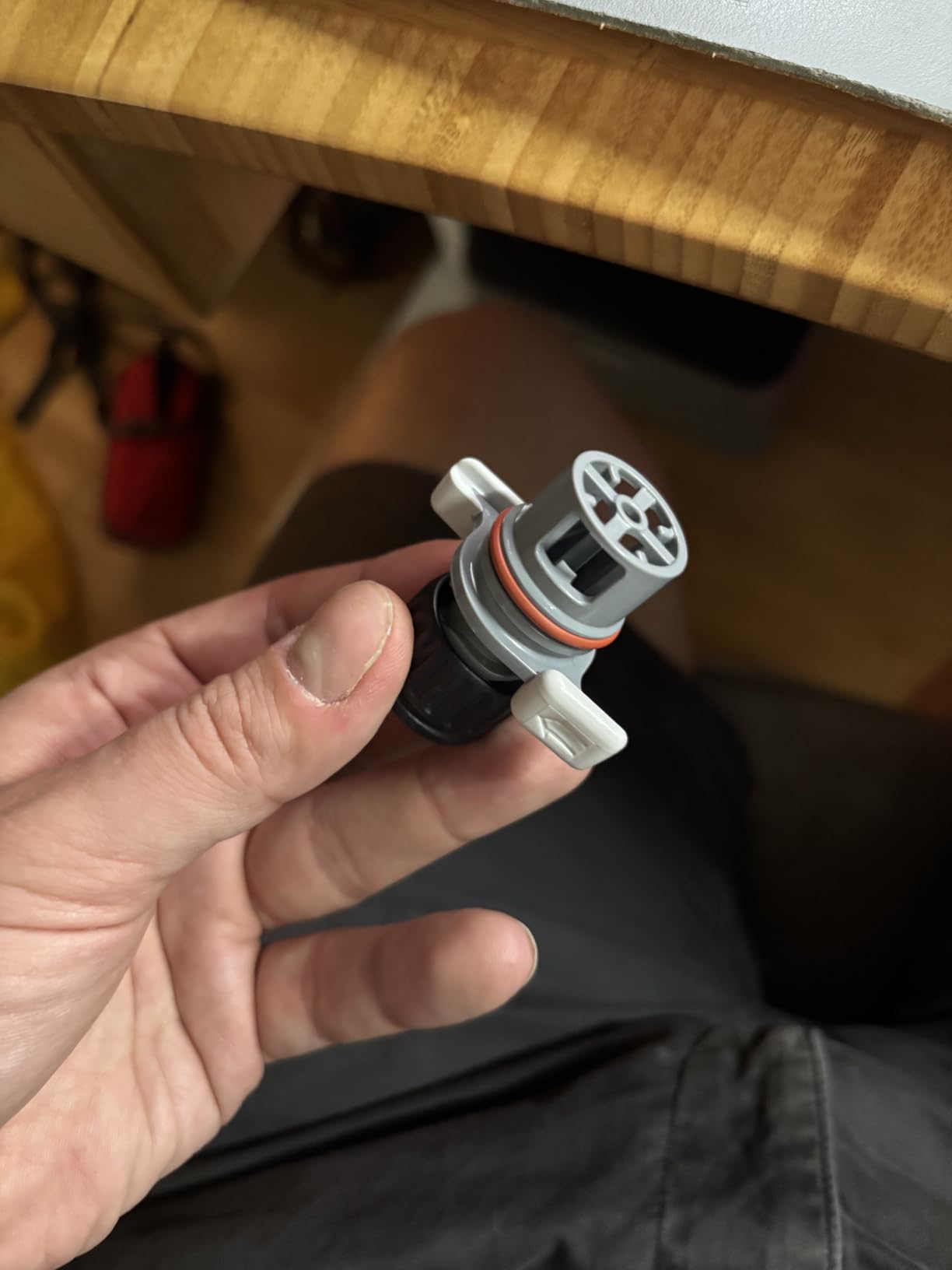
The WingLock valve is one of the better designs on the market. It lets you inflate in one direction without air escaping when you take a breath, and a separate deflate tab drops the pad flat in seconds.
Best Use Cases for the NeoAir Xlite NXT
This is a backpacking pad first and foremost. Anyone counting ounces on multi-day trips, thru-hikes, or fast-packing routes will appreciate the warmth-to-weight ratio.
It also works well for bikepacking and any trip where packed size matters more than plush comfort. Just be ready to sleep on a narrower surface.
What to Watch Out For
The 20-inch width feels tight if you are used to wider pads, and side sleepers with broad shoulders may want the large size. The price is also steep for a single pad.
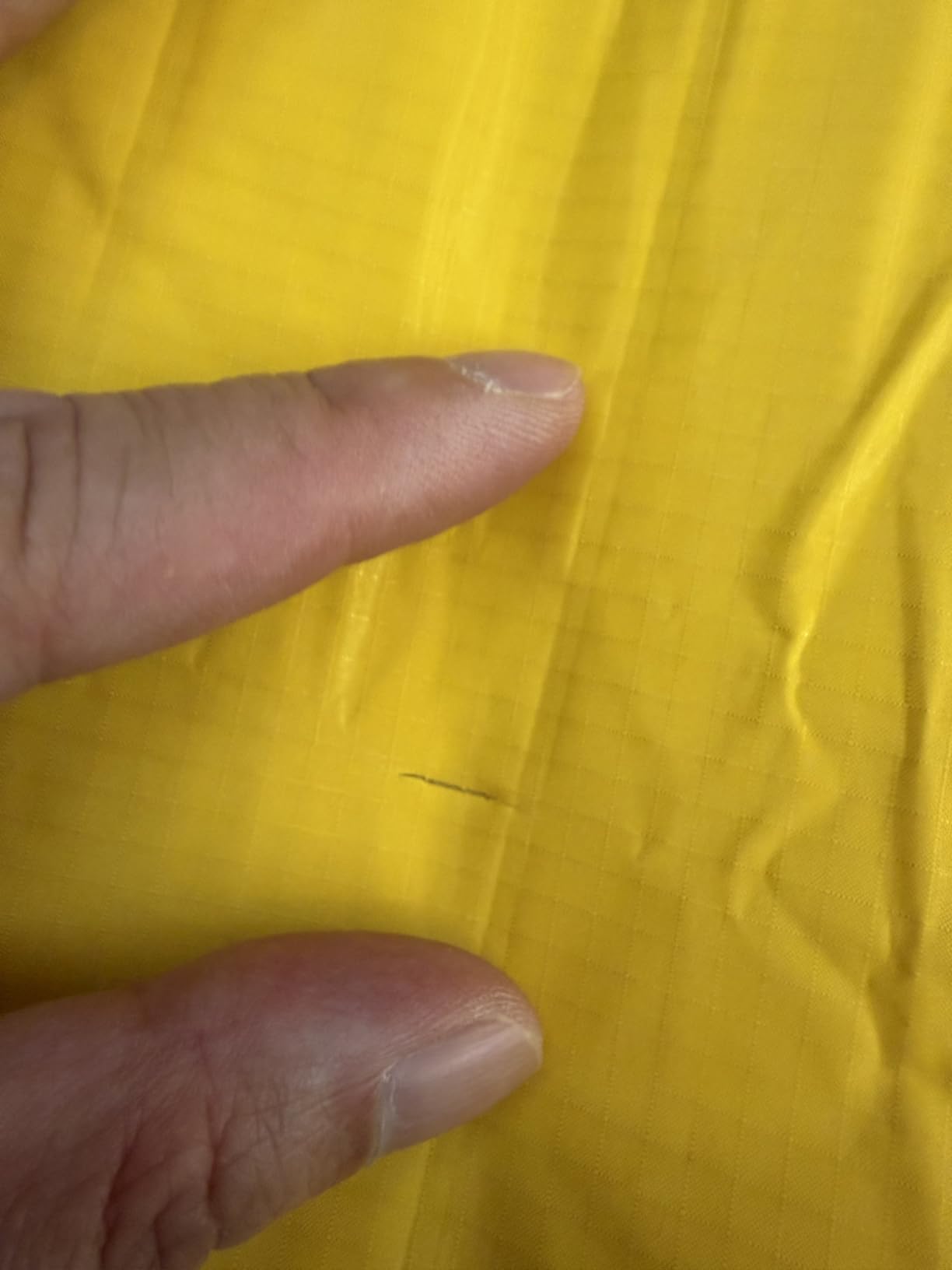
The NXT is more durable than older Xlite versions, but it is still a thin air pad. Pairing it with a thin closed-cell foam pad for rougher sites is a smart long-term move.
3. NEMO Equipment Switchback – Best Closed-Cell Foam Pad
NEMO Equipment Switchback Foam Sleeping Pad – Sunset Orange – Reg
- Hexagonal nesting pattern
- Dual-density foam
- Metallized thermal film
- Virtually indestructible
- Lower 2.0 R-value
- Less plush than air pads
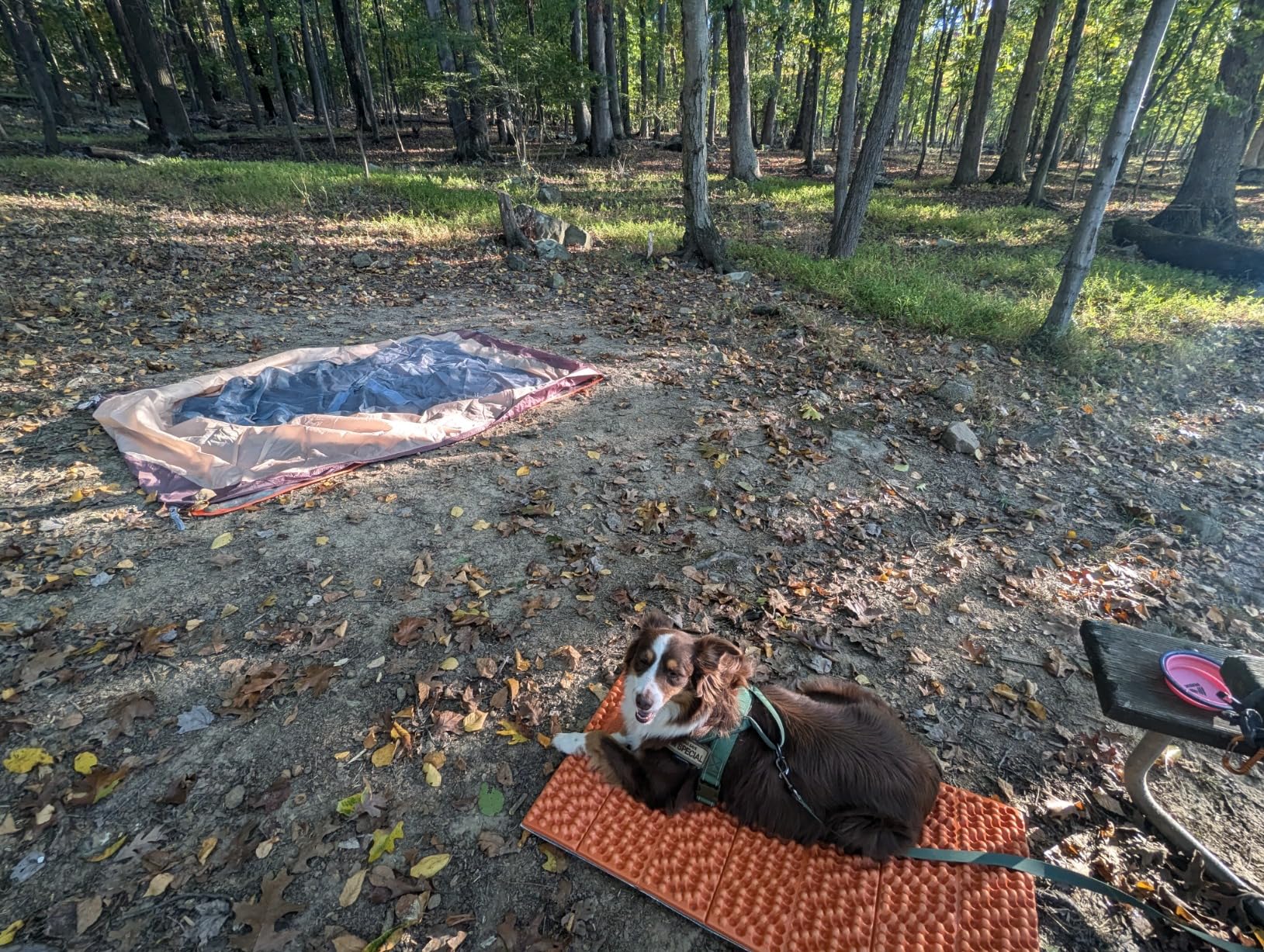
The NEMO Switchback is the foam pad I keep coming back to. It is the kind of gear you can toss in the truck, sit on at camp, use as a frame in a frameless pack, and still sleep on without worrying about punctures.
The hexagonal nesting pattern looks gimmicky until you lie on it. The dual-density foam puts softer material where your hips and shoulders land, with firmer foam under the rest of your body for support.
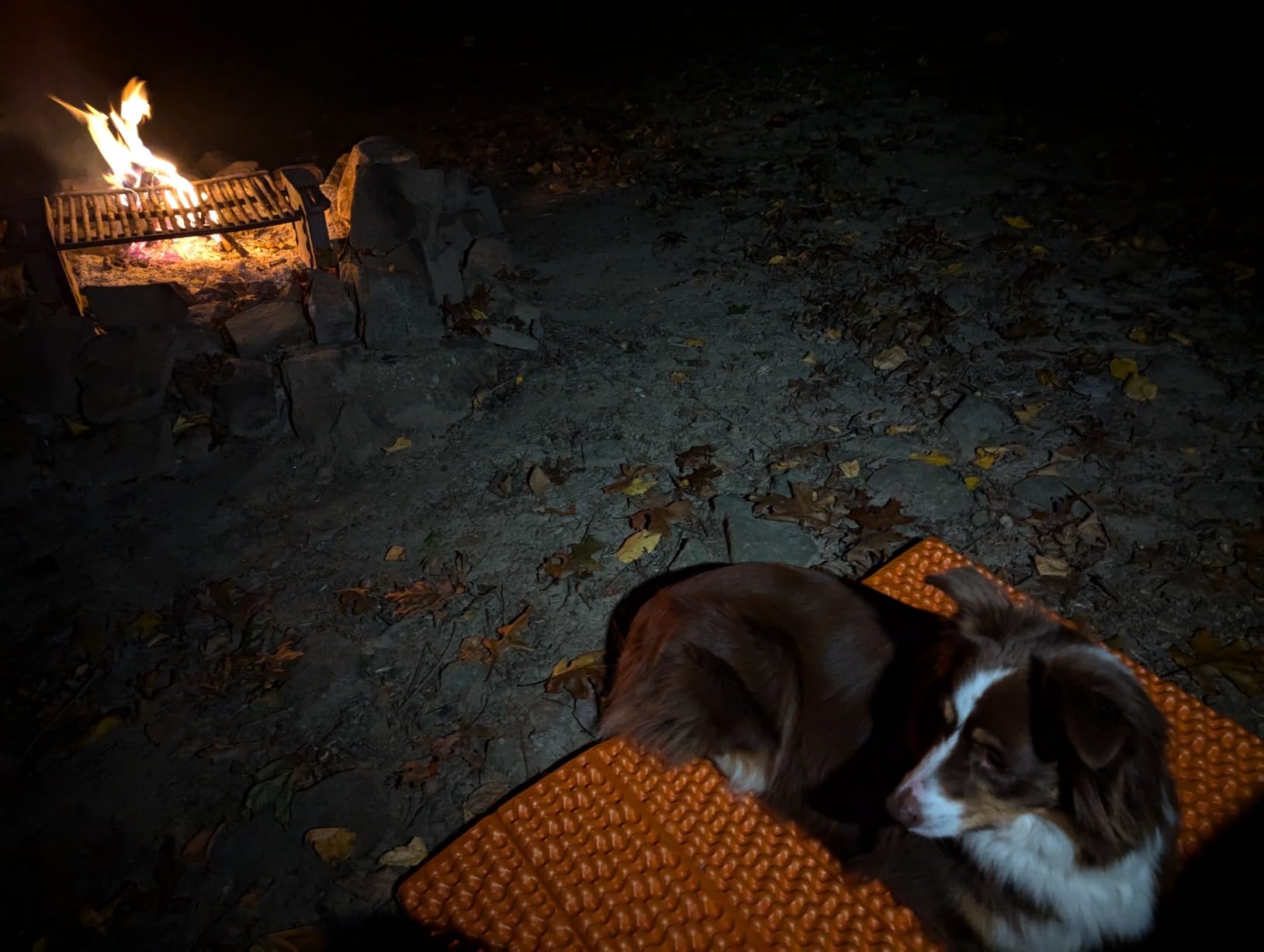
A metallized thermal film reflects body heat back toward you, which is a meaningful upgrade over basic closed-cell foam. That said, the 2.0 R-value is best suited to summer and mild shoulder-season trips.
At 4.7 stars across nearly 700 reviews, this is one of the highest-rated pads in the entire roundup. The simplicity and indestructibility win people over.
Best Use Cases for the Switchback
Use it solo for summer backpacking, river trips, and ultralight fast-packing where puncture risk is high. It also makes an excellent backup or under-pad for an inflatable in winter.
Boaters, climbers, and anyone who abuses gear will appreciate that this pad simply cannot pop. It is the closest thing to a buy-it-for-life option in this list.
What to Watch Out For
The R-value of 2.0 limits cold-weather use, and foam pads are noticeably less plush than inflatables. Side sleepers may find pressure points if used alone.
The folded size is bulkier than an air pad packed away, so plan for strapping it to the outside of your pack rather than fitting it inside.
4. Sleepingo Ultralight Sleeping Mat – Best Budget Backpacking Pad
Sleeping Pad – Ultralight Sleeping Mat – Inflatable & Compact Camping Air Mattress for Backpacking, Hiking
- Weighs less than 1 lb
- Packs smaller than a water bottle
- Waterproof ripstop nylon
- Fast inflation
- Lower 2.1 R-value
- Can be noisy
The Sleepingo Ultralight is the pad I recommend to anyone new to backpacking who is not ready to spend three figures on gear. At under a pound and well under most premium pads in price, it removes the cost barrier to getting outside.
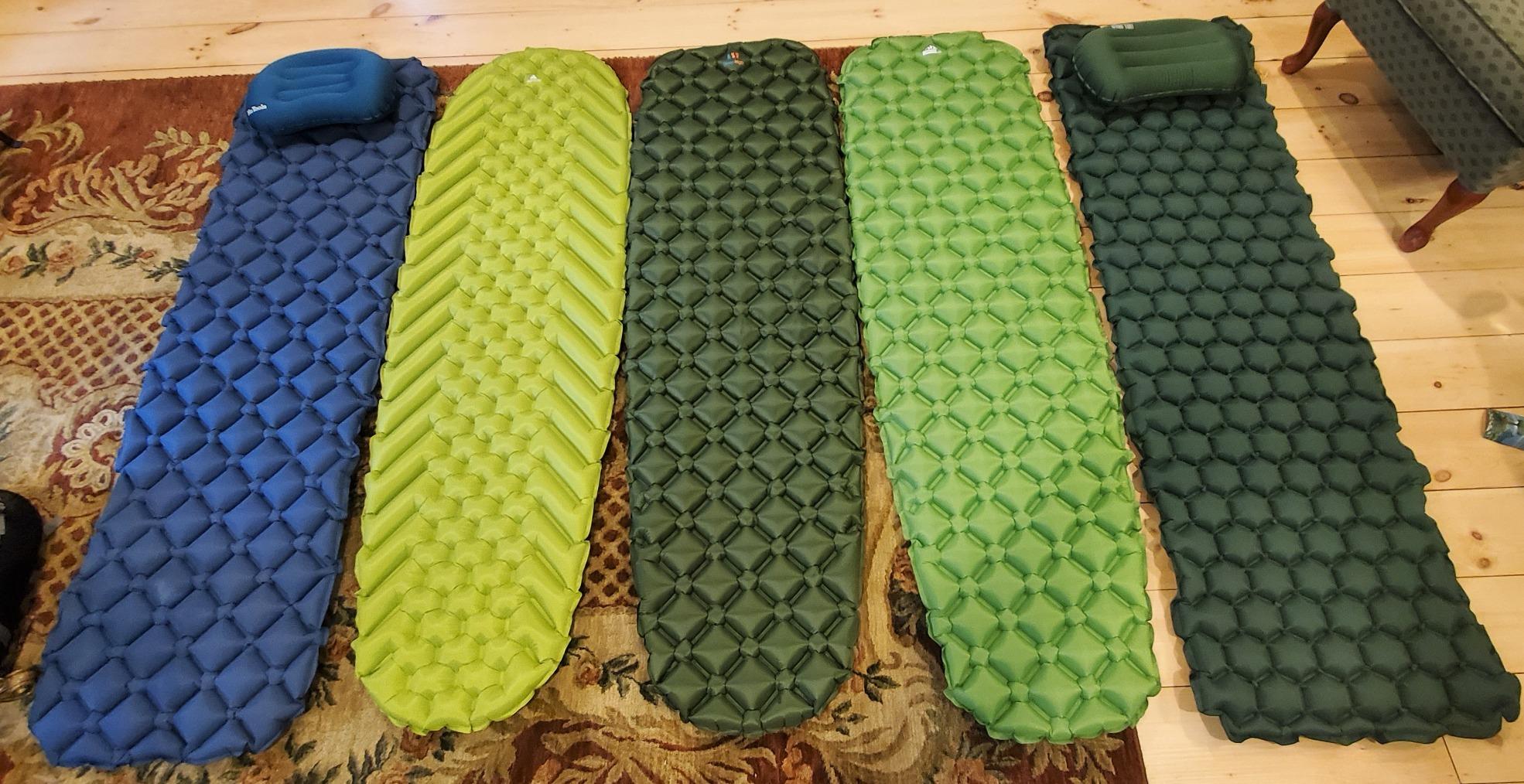
What surprised me most was the packed size. It compresses smaller than a one-liter water bottle, which means even a small daypack can carry it without complaint.
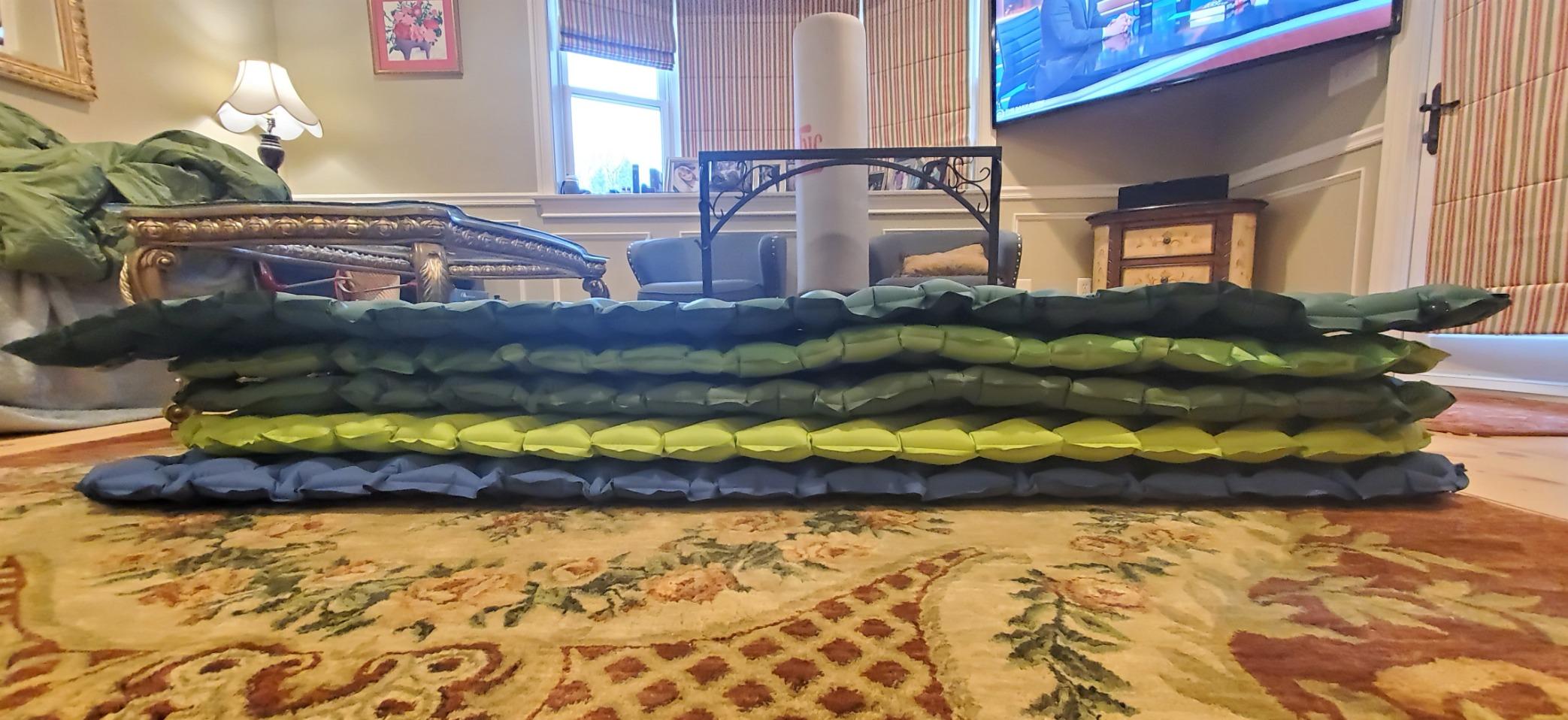
Inflation is fast thanks to the included stuff-sack pump design, taking only a couple of minutes rather than the breath-draining experience of older budget pads. The 2-inch thickness is enough for back sleepers on mild nights.
The 2.1 R-value is the main compromise. This is a warm-weather pad, full stop. Below 50 degrees Fahrenheit at night, you will start to feel the cold creeping up from the ground.
Best Use Cases for the Sleepingo
This pad is ideal for summer backpacking, festival camping, scout trips, and loaning to friends who show up unprepared. The 34,000-plus reviews tell you plenty of beginners have used it successfully.
It also works as a guest pad or a backup for a primary inflatable. The low price makes it easy to justify keeping a second one around.
What to Watch Out For
The fabric can be noisy compared to premium pads, which is a common complaint on forums. If you are a restless sleeper sharing a tent, expect some rustling.
Durability is acceptable for the price but not exceptional. Treat it gently, clear your tent site of sharp debris, and consider a thin foam under-pad on rough ground.
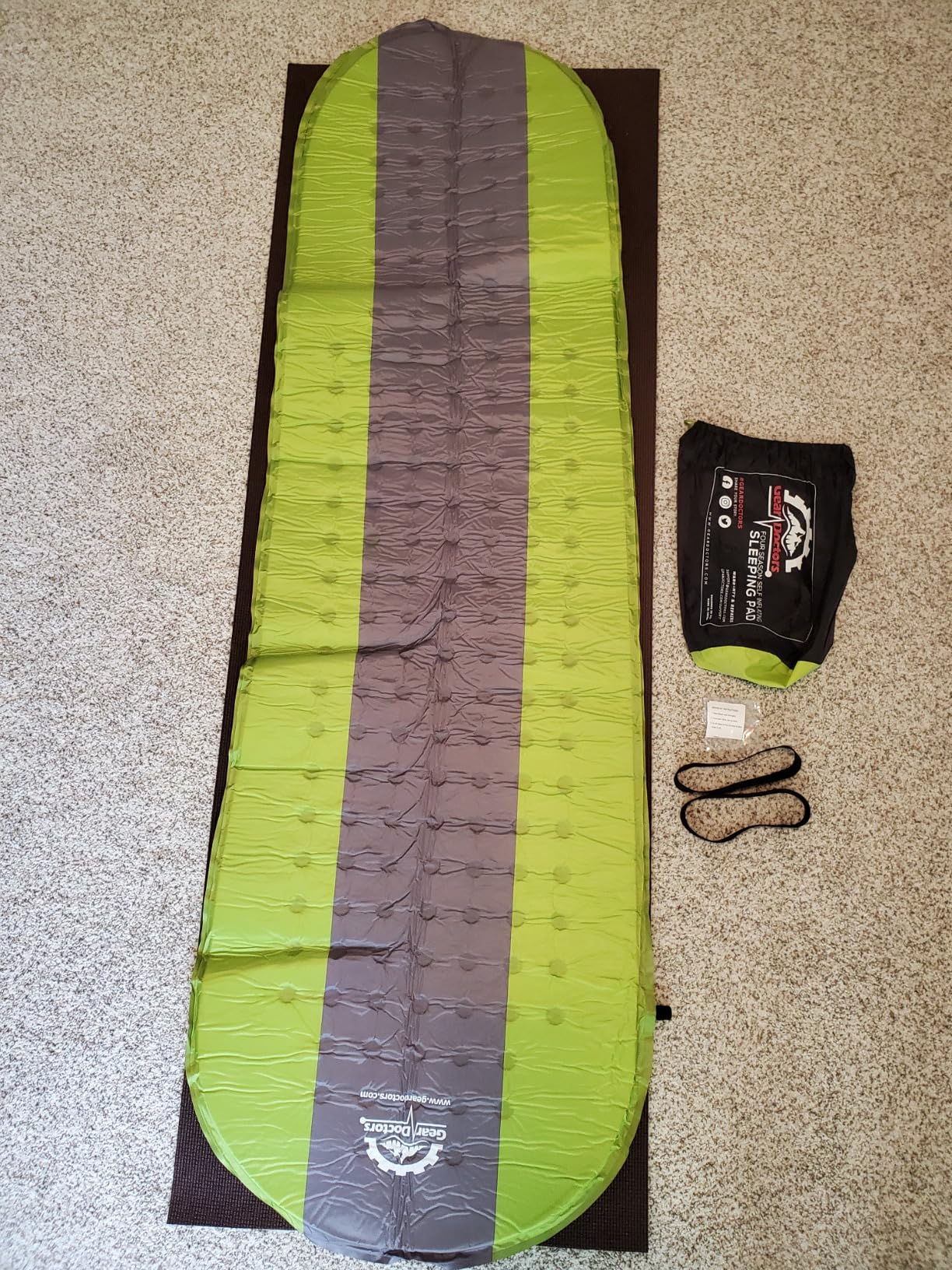
5. Gear Doctors Oxylus Self-Inflating – Best Value for 4-Season Camping
- 4.3 R-value for 4-season use
- Self-inflating foam core
- Waterproof top
- Budget-friendly price
- Heavier at 2.2 pounds
- Lower weight capacity than premium pads
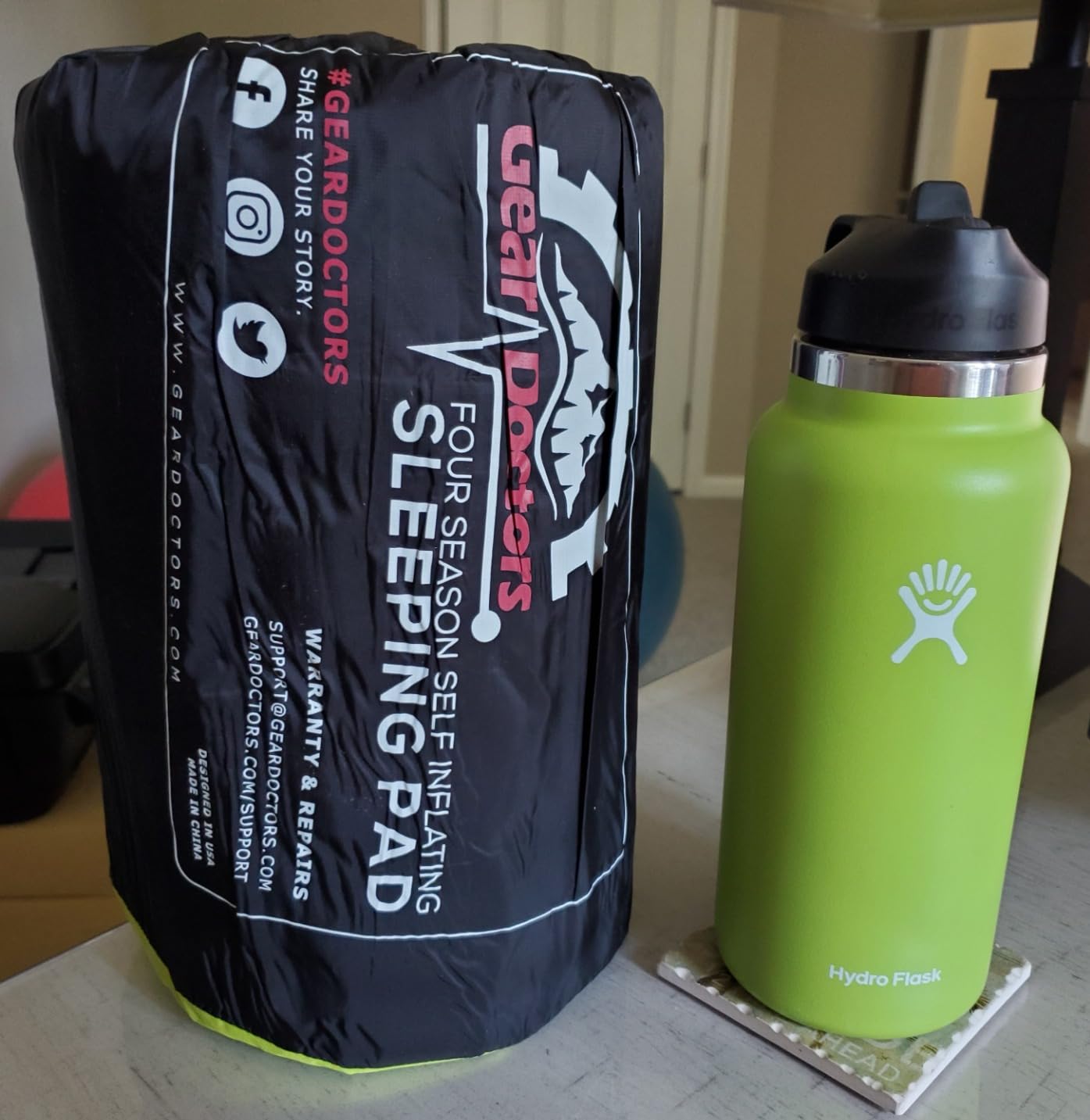
The Gear Doctors Oxylus hits a sweet spot that few pads manage: real 4-season warmth at a price that does not sting. The 4.3 R-value puts it ahead of more expensive pads I have tested.
The hybrid air-foam construction means it self-inflates when you open the valve, then tops off with a few breaths. That combo removes the breathless inflation routine that drives people crazy on cold mornings.
The waterproof top fabric is a nice touch, especially for damp campsites. I tested it on a misty weekend in the Appalachians and woke up dry even when condensation formed on the tent walls overnight.
With a 4.5-star rating across nearly 5,000 reviews, the Oxylus has earned its reputation. Most buyers praise the warmth-to-price ratio and the ease of setup.
Best Use Cases for the Oxylus
This is a versatile all-rounder for car camping, scout trips, and shoulder-season backpacking where you can afford 2.2 pounds. It also works as a dedicated winter pad for shorter hikes.
Families love it because the price makes it easy to outfit multiple people without going broke. Buy two or four and the cost still beats one premium luxury pad.
What to Watch Out For
At 2.2 pounds, this is not an ultralight pad. Long-distance backpackers will likely want something lighter, even at a higher price.
The weight capacity is lower than premium models, so larger campers may want to size up or step up to a more robust pad for full support.
6. Coleman Self-Inflating Sleeping Pad with Pillow – Best for Family Camping
- Built-in pillow included
- Self-inflating convenience
- Quick deflation valve
- Trusted Coleman brand
- Heavy at 6.4 pounds
- Lower insulation for cold weather
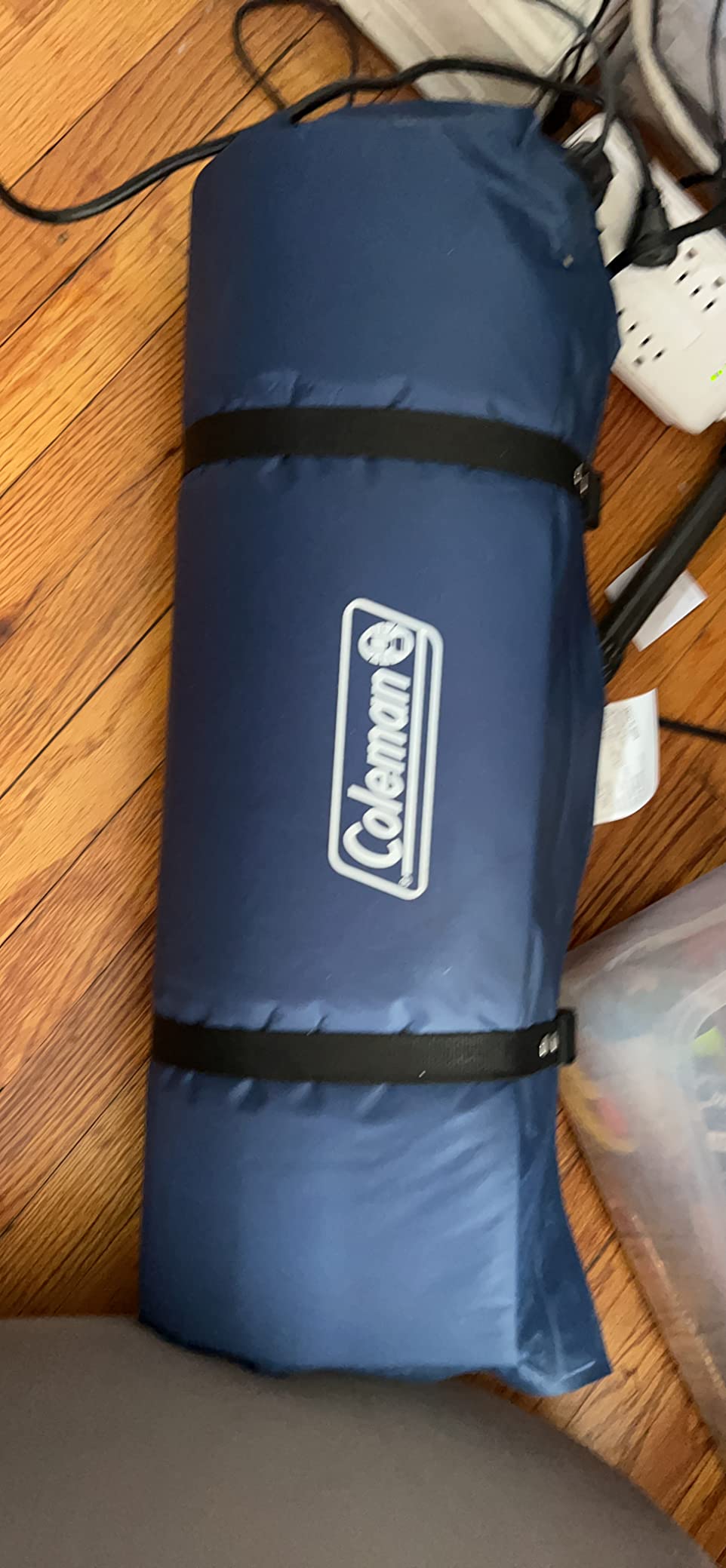
The Coleman Self-Inflating Pad is the campsite workhorse I grew up seeing at every state park. The built-in pillow alone makes it worth considering for anyone tired of stuffing a jacket under their head.
Self-inflation works as advertised. Unroll, open the valve, and the foam core expands on its own. A few breaths finish the job, and you are ready for the night.
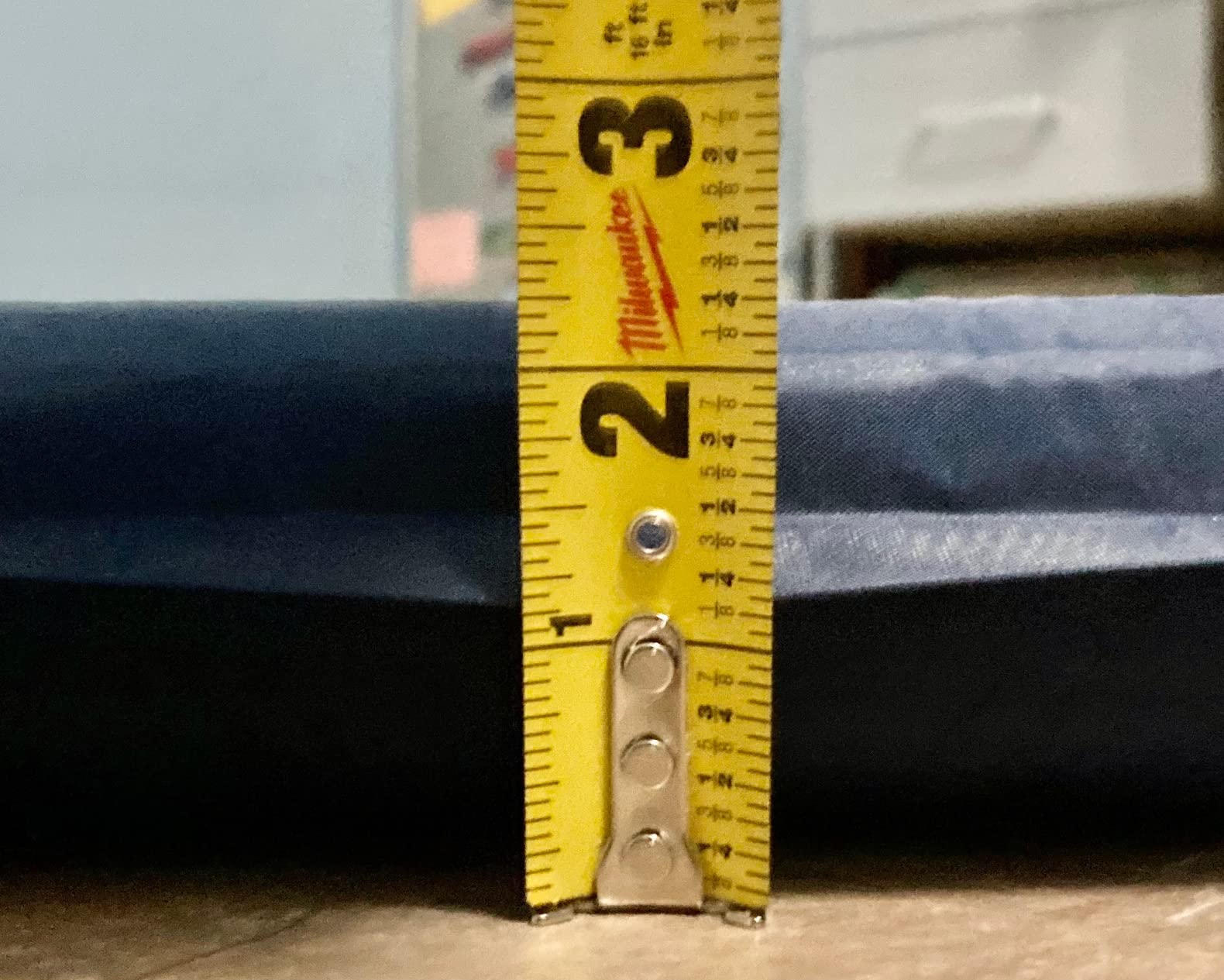
The 2.5-inch thickness is comfortable enough for back sleepers and casual car campers. The 25-inch width accommodates most body types without crowding.
This is the pad I recommend for families outfitting a tent for the first time. The price is approachable, the brand is trusted, and the built-in pillow is one less thing to pack.
Best Use Cases for the Coleman
Car camping, lake-house weekends, kid-friendly campouts, and back-of-the-SUV sleep setups are the sweet spot. The integrated pillow makes it especially handy for younger campers.
It also doubles as a guest bed at home in a pinch. Roll it out in the living room for visiting family and skip the air mattress entirely.
What to Watch Out For
At 6.4 pounds and with a fairly large packed size, this is strictly a car-camping pad. Do not plan to carry it more than a short distance from your vehicle.
Insulation is modest, so for cold-weather trips you will want to add a foam pad underneath or pick a warmer option from this list.
7. Klymit Insulated Static V Luxe – Best 4-Season Insulated Pad
- R-Value 5 for true 4-season use
- V-Chamber design for support
- Welded body-mapped chambers
- Lightweight for the warmth
- Requires 20-30 breaths to inflate
- Higher price point than budget pads
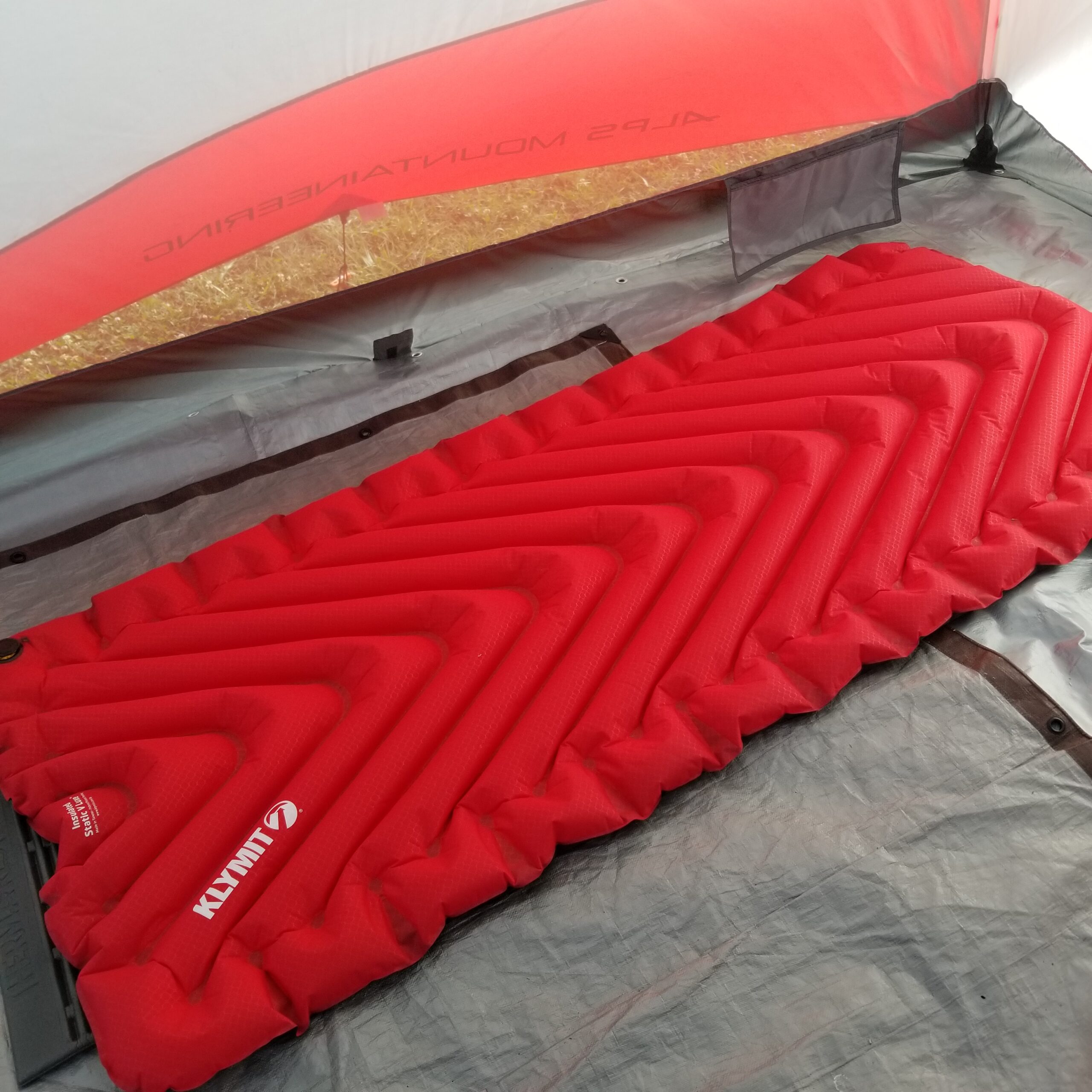
The Klymit Insulated Static V Luxe is the pad I trust for late-fall and early-spring trips when the temperature drops but I still want to keep my pack weight reasonable.
The V-Chamber design is Klymit’s signature feature, and it works. The chambers limit air movement inside the pad, which keeps warmth where your body needs it and reduces that water-bed bounce you get with simpler inflatables.
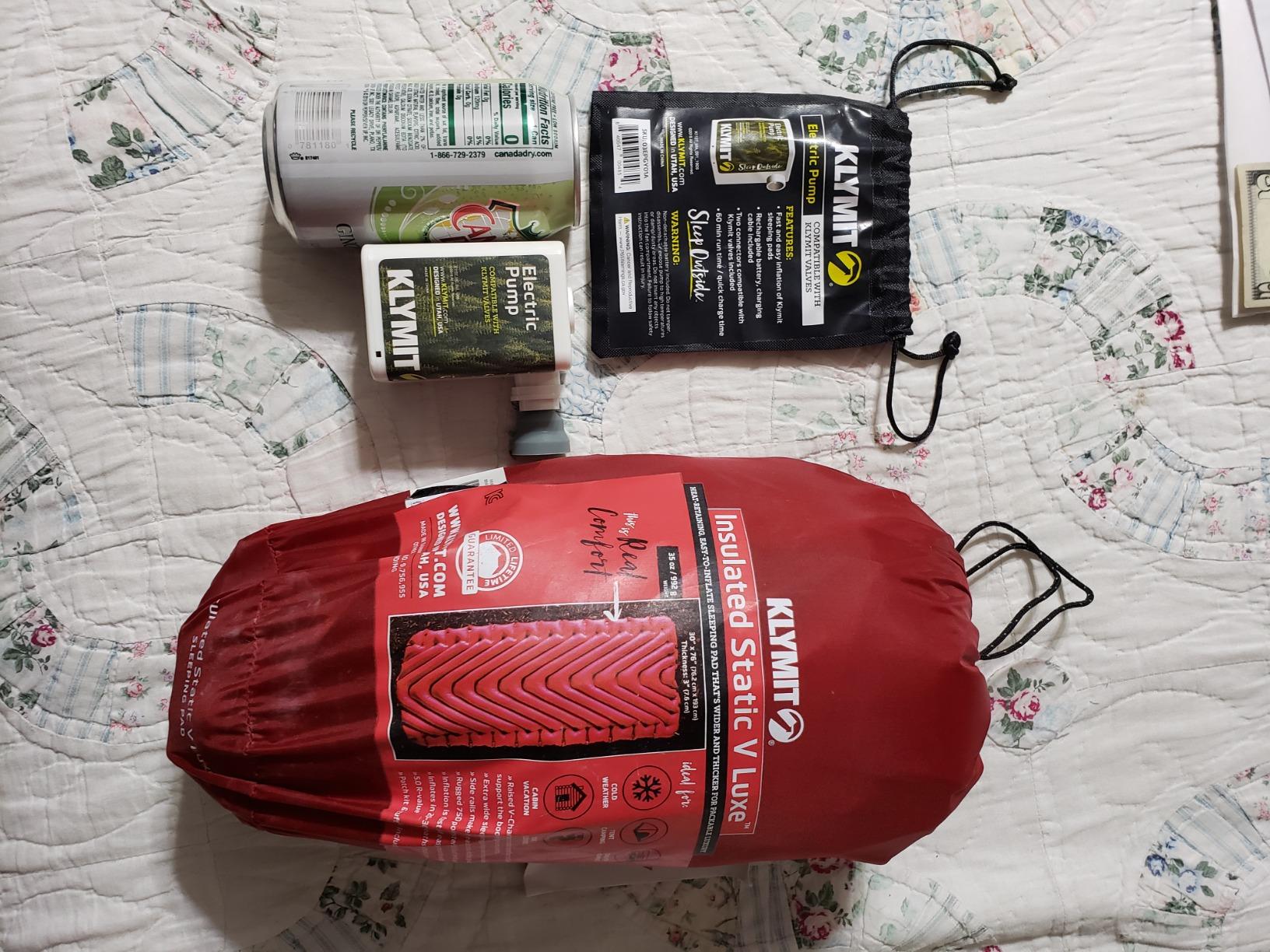
The 5.0 R-value is serious insulation. Paired with a decent sleeping bag, this pad has kept me comfortable on nights that dropped into the high 20s.
The 3-inch thickness and body-mapped chambers offer real comfort for side sleepers, who often get shortchanged by thinner pads. The welded seams feel durable enough for years of use.
Best Use Cases for the Static V Luxe
Shoulder-season backpacking, winter day-trip overnights, and any camping where the mercury might dip below freezing. This is one of the best warmth-to-weight values in the lineup.
Side sleepers and stomach sleepers will appreciate the deeper cushioning, and the price lands well below true alpine pads with similar R-values.
What to Watch Out For
Inflation takes 20 to 30 breaths, which is more effort than self-inflating pads. Consider adding a stuff-sack pump if you camp at altitude or just want to save your lungs.
The price is higher than budget pads but fair for the warmth. If you only camp in summer, you may be paying for insulation you do not need.
8. CYMULA Memory Foam Camping Mattress Pad – Best for Glamping Comfort
- CertiPUR-US certified memory foam
- Adapts to body shape
- Waterproof non-slip bottom
- Real mattress feel
- Heaviest at 7.5 pounds
- Requires 24-72 hours to fully expand
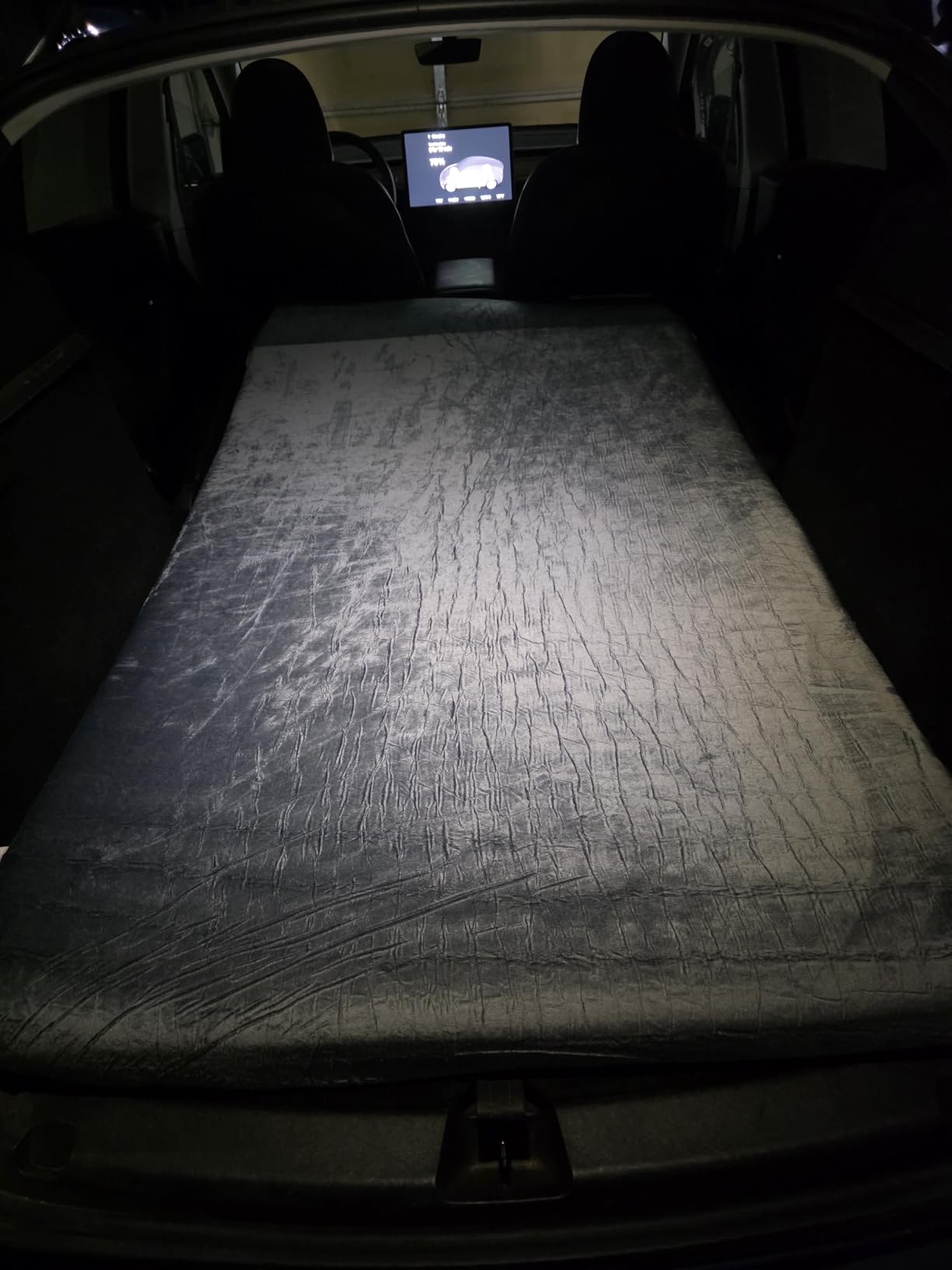
The CYMULA Memory Foam Mattress is the closest you can get to bringing your bed from home into a tent. If you have ever sworn off camping because you cannot sleep on thin foam, this is the pad that changes your mind.
The CertiPUR-US certified memory foam adapts to your body shape the way a real mattress does. Side sleepers, back sleepers, and stomach sleepers all reported noticeably better rest compared with air pads.
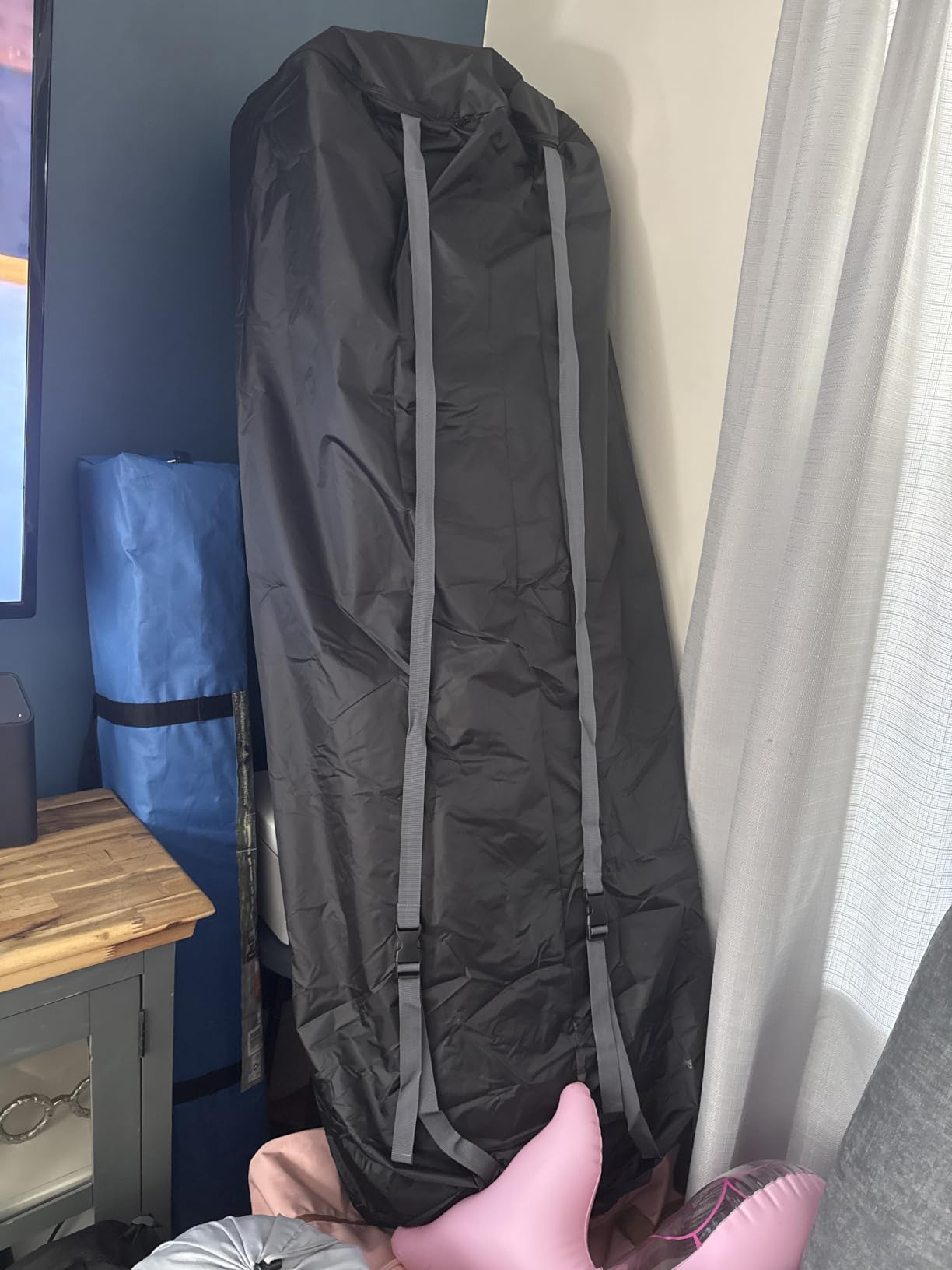
The waterproof non-slip bottom is a smart touch for tent floors, truck beds, and glamping setups on elevated platforms. The pad stays put even on smooth surfaces.
Buyers consistently rate this pad at 4.5 stars across nearly 2,000 reviews, praising the home-like comfort for car camping, cabin trips, and guest-room overflow.
Best Use Cases for the CYMULA
This pad is purpose-built for car camping, glamping, cabin overnights, RV use, and house guests. Anywhere you can drive the pad to the sleep spot, it shines.
It also makes a fantastic option for kids’ sleepovers, dorm rooms, or as a permanent under-bed backup at home. The memory foam genuinely rivals low-end home mattresses.
What to Watch Out For
At 7.5 pounds, this is the heaviest pad in the roundup and the bulkiest. It is not intended for backpacking of any kind.
Memory foam takes 24 to 72 hours to fully expand after unrolling, so plan to set it up ahead of your trip rather than expecting instant comfort straight out of the box.
Buying Guide: How to Choose a Sleeping Pad for Camping
Picking the best sleeping pads for camping comes down to five questions: how warm you sleep, where you are going, how far you are carrying the pad, how you sleep, and how much you want to spend. Let’s break each one down.
Understand R-Value Before Anything Else
R-value measures thermal resistance, which is a fancy way of saying how well the pad stops the cold ground from stealing your body heat. Higher numbers mean more warmth. There is no single perfect R-value, only the right one for your trips.
As a quick reference, an R-value around 2.0 works for summer nights above 50 degrees Fahrenheit. R-values of 3.0 to 4.0 cover 3-season use down to freezing. R-values of 5.0 and above handle 4-season and winter camping.
The pads in this roundup range from 2.0 on the NEMO Switchback to 7.0 on the Therm-a-Rest MondoKing. Match the rating to your coldest expected night, not your average one.
Pick the Right Construction Type
Sleeping pads fall into three main families. Air pads are light, packable, and require inflation, like the NeoAir Xlite NXT and Klymit Static V. Self-inflating pads use open-cell foam that expands on its own, like the MondoKing and Gear Doctors Oxylus. Closed-cell foam pads are the simplest, lightest, and most durable, like the NEMO Switchback.
Each type trades comfort, weight, and durability differently. Air pads win on weight and packed size, self-inflating pads win on convenience, and foam pads win on indestructibility.
Match the Pad to Your Camping Style
Car campers and glampers should prioritize thickness and width over weight. The MondoKing, Coleman, and CYMULA Memory Foam are all built for this audience. You will sleep better and the bulk does not matter.
Backpackers need to balance warmth, weight, and packed size. The NeoAir Xlite NXT and Sleepingo Ultralight lead the field here. Every ounce saved is an ounce you carry fewer miles.
Shoulder-season and winter campers should focus on R-value above all. The Klymit Static V Luxe and Gear Doctors Oxylus both deliver true 4-season warmth without alpine-pad prices.
Think About How You Sleep
Side sleepers need thicker pads, typically 3 inches or more, to keep hips and shoulders off the ground. The MondoKing, NeoAir NXT, Klymit, and CYMULA all clear that bar comfortably.
Back sleepers can get away with thinner pads, which opens up lighter or cheaper options. Stomach sleepers usually prefer firmer pads with minimal bounce, so foam and self-inflating designs tend to win.
If you toss and turn, look for pads with textured or chambered tops that hold you in place. V-Chamber and 3D-style designs both help here.
Factor In Noise Level
This is the most overlooked spec and the one forum users complain about most. Crinkly pads will wake your tentmate every time you shift, and restless sleepers will drive themselves crazy on loud fabrics.
Premium air pads have gotten much quieter in recent years, with the NeoAir NXT being a notable improvement over older Xlite models. Foam pads are essentially silent. Cheaper air pads, including the Sleepingo, are the noisiest of the bunch.
If you share a tent, prioritize this spec. Solo campers can usually tolerate more rustle in exchange for a lower price.
Consider Durability and Repair
Punctures happen, even on premium pads. Look for pads with included repair patches or buy a small repair kit to keep in your pack. Most modern pads use 30-denier or higher fabrics that handle typical camp debris well.
Foam pads are essentially immune to punctures, which is why backpackers and boaters love them as backups. If you want a pad that lasts a decade with zero maintenance, closed-cell foam is hard to beat.
Frequently Asked Questions
What is the most comfortable sleeping pad for camping?
The Therm-a-Rest MondoKing 3D is the most comfortable pad we tested, thanks to its 4.25-inch thickness, 30-inch width, and self-inflating foam core that mimics a real mattress. For glamping setups, the CYMULA Memory Foam Mattress rivals a home bed, but it is heavier and bulkier to transport.
What is the warmest sleeping pad for camping?
The Therm-a-Rest MondoKing 3D has the highest R-value in this roundup at 7.0, making it the warmest option and capable of handling deep-winter conditions. The Klymit Insulated Static V Luxe at R-value 5.0 is the warmest lightweight option for backpackers who still want serious insulation.
Are sleeping pads worth it for camping?
Yes, sleeping pads are essential, not optional. Without one, the cold ground pulls heat from your body even in mild weather, leading to poor sleep and potential cold exposure. A sleeping pad provides both cushioning for comfort and the thermal barrier measured by R-value that keeps you warm through the night.
What is the most comfortable thing to sleep on while camping?
For car camping, a thick self-inflating or memory foam pad like the Therm-a-Rest MondoKing 3D or CYMULA Memory Foam Mattress delivers the most mattress-like comfort. For backpacking, the Therm-a-Rest NeoAir Xlite NXT offers the best balance of cushion, warmth, and weight you can actually carry into the backcountry.
Final Thoughts on the Best Sleeping Pads for Camping in 2026
The best sleeping pads for camping in 2026 cover a wide range of needs, and there is no single winner for everyone. For car campers who want mattress-level comfort, the Therm-a-Rest MondoKing 3D is our editor’s choice. Backpackers chasing ounces should grab the NeoAir Xlite NXT. Budget-conscious adventurers will get excellent value from the Sleepingo Ultralight or Gear Doctors Oxylus.
Match your R-value to your coldest expected night, pick the construction type that fits your camping style, and prioritize comfort if you want to wake up actually rested. Any of the eight pads above will serve you well for years of trips to come.