
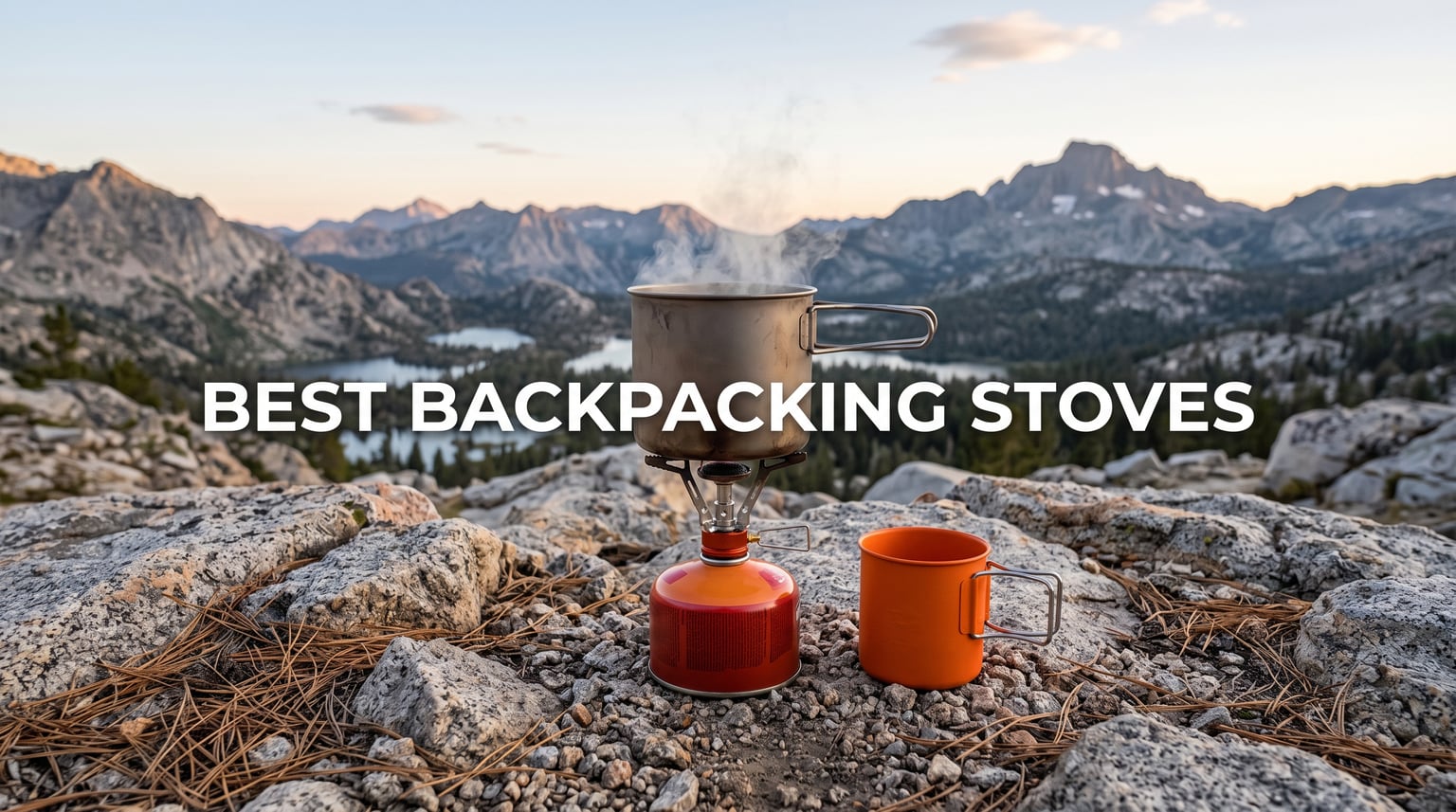
After spending the better part of two seasons testing backpacking stoves on weekend trips across the Appalachians and the Sierra Nevada, I learned something the spec sheets will never tell you. The best backpacking stoves are not always the lightest or the fastest. They are the ones that fire up reliably when you are tired, cold, and hungry after a long day on the trail.
My team and I ran eight stoves through real weekend trips rather than lab conditions. We boiled water at 9,000 feet in gusty wind. We cooked actual meals, not just dehydrated food packets. We tested simmer control on trail chili, scrambled eggs, and even grilled cheese. This guide covers what we found, written for the weekend backpacker who wants dependable hot food without obsessing over every gram.
Whether you are shopping for your first stove or upgrading from a budget model that finally gave out, this guide breaks down the best backpacking stoves of 2026 with honest pros, real-world testing notes, and specific recommendations for different trip styles. No marketing fluff, no reheated spec sheets, just what actually works on the trail.
Top 3 Backpacking Stoves for 2026


Our editor’s choice goes to the MSR PocketRocket Deluxe for its pressure-regulated burner and built-in piezo igniter. It just works, every single time, in conditions that would stall a cheaper stove. The Fire-Maple Fixed Star 1 takes the value crown by giving you an entire integrated cooking system for what most standalone stoves cost. And for ounce-counters watching their budget, the BRS-3000T is nearly impossible to beat on value.
Best Backpacking Stoves in 2026: Quick Comparison
| Product | Specifications | Action |
|---|---|---|
| MSR PocketRocket Deluxe |
|
Check Latest Price |
| Fire-Maple Fixed Star 1 |
|
Check Latest Price |
 BRS-3000T Titanium BRS-3000T Titanium |
|
Check Latest Price |
 MSR PocketRocket 2 MSR PocketRocket 2 |
|
Check Latest Price |
 Jetboil Flash Jetboil Flash |
|
Check Latest Price |
 Snow Peak LiteMax Titanium Snow Peak LiteMax Titanium |
|
Check Latest Price |
 MSR WhisperLite Universal MSR WhisperLite Universal |
|
Check Latest Price |
 MSR Dragonfly MSR Dragonfly |
|
Check Latest Price |
This table covers every stove we tested side by side. Use it as a quick reference, then dive into the individual reviews below for the details that spec sheets leave out.
1. MSR PocketRocket Deluxe – The All-Around Trail Workhorse
- Pressure regulator maintains output in cold weather
- Built-in piezo igniter fires on first click
- Broad burner head improves wind resistance and simmering
- Only 2.9 ounces with full feature set
- Folds compactly into included stuff sack
- Higher cost than basic canister stoves
- Fuel canister sold separately
I have used the MSR PocketRocket Deluxe on more trips than any other stove in this guide, and it has never once failed to light on the first try. The piezo push-start igniter is the feature that sold me. No fumbling with a lighter when your fingers are numb and the wind is howling. Just click and cook.
The pressure regulator is what separates the Deluxe from the standard PocketRocket 2. On a late October trip in the Smokies where temperatures dropped into the low 30s, my canister was cold enough that a non-regulated stove would have struggled. The Deluxe kept boiling water at the same pace it does in summer. That kind of consistency matters when you are relying on hot food to stay warm.
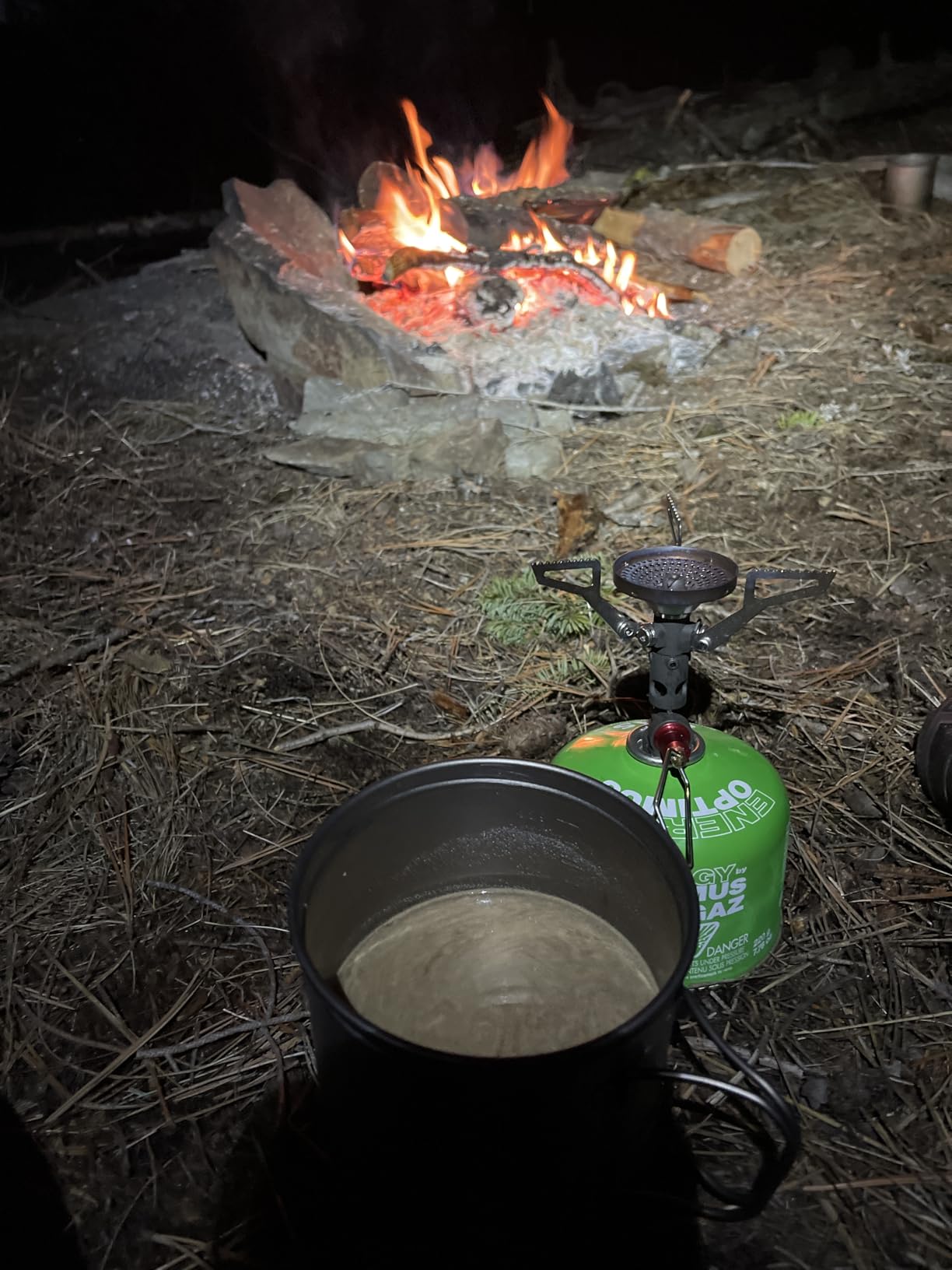
The broad burner head is wider than most canister stoves in this weight class. That wider flame pattern does two things well. It distributes heat more evenly across the bottom of your pot, which means fewer scorched spots when you are actually cooking rather than just boiling water. It also gives the flame more surface area to resist wind gusts.
Simmer control on the Deluxe genuinely works. I have made rice, scrambled eggs, and even a decent trail pizza dough on this stove. The flame adjusts smoothly from a gentle simmer to a roaring boil without the sudden jumps you get on cheaper valves. For weekend backpackers who want to cook real food rather than just rehydrate freezer bags, this is the stove I recommend first.
Wind and Cold Weather Performance
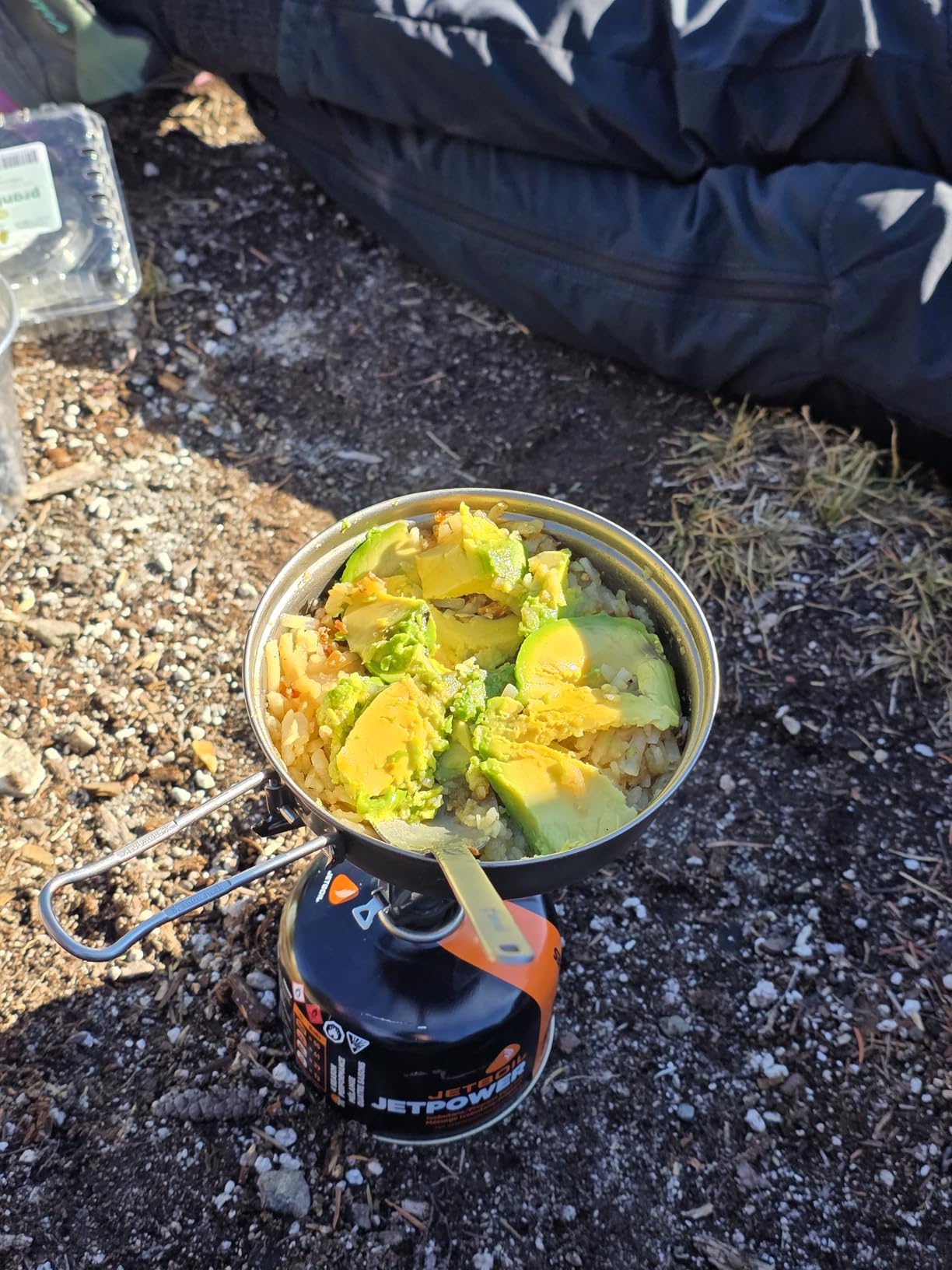
The broad burner head gives the Deluxe a real edge in wind, but it is not a windproof stove. I still use a lightweight windscreen on exposed ridgelines. Where the Deluxe truly shines is cold weather. The pressure regulator keeps fuel output steady even when the canister temperature drops, which is something the standard PocketRocket 2 cannot match.
If you backpack in shoulder seasons or at elevation where temps dip below freezing, the pressure regulation is worth every penny. It is the difference between a stove that works and one that sputters when you need it most.
Fuel Efficiency on Weekend Trips
On a typical two-night weekend trip with two people, I use roughly 50 to 70 grams of fuel with the Deluxe. That includes morning coffee, two dehydrated dinners, and a cooked breakfast. A standard 110g canister easily covers a long weekend for two.
The simmer control actually helps with efficiency. Being able to dial back the flame instead of running full blast means you waste less fuel on tasks that do not need maximum heat. Over a season of trips, that adds up to fewer canister purchases.
2. Fire-Maple Fixed Star 1 – Best Value Integrated System
- Complete integrated system with pot for the price of a standalone stove
- Heat exchange base reduces boil time by 30 percent
- Everything nests inside the 1 liter pot
- Built-in piezo igniter
- Locking stainless steel handle stays secure
- Heavier than standalone canister stoves
- Not compatible with Coleman fuel canisters
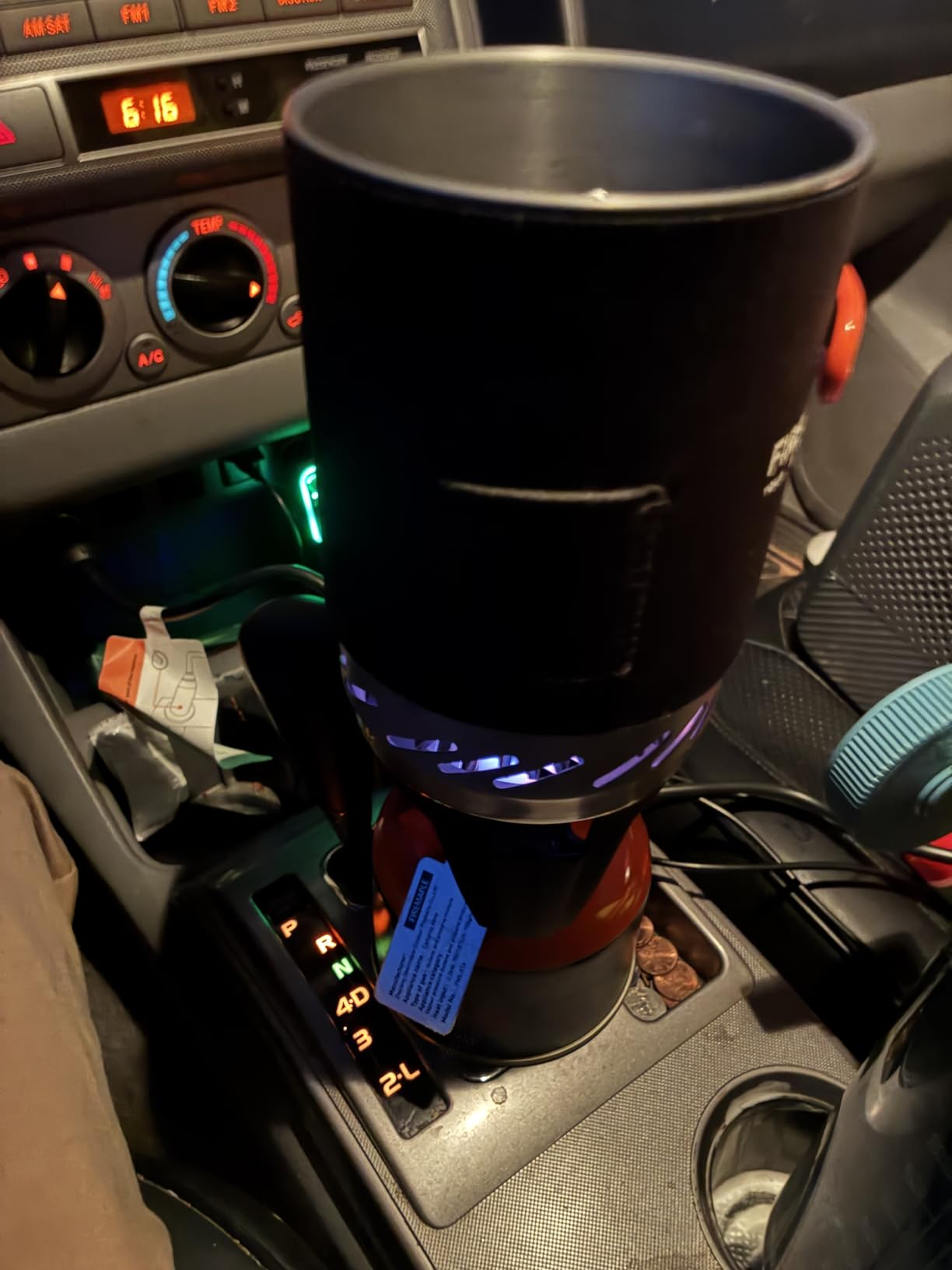
The Fire-Maple Fixed Star 1 genuinely surprised me. I expected a budget integrated system to feel flimsy and underperform. Instead, it delivered boil times and convenience that rival stoves costing twice as much. The heat exchange technology at the base of the pot is the real story here, trapping heat that would otherwise escape around the sides.
For weekend backpackers who want an all-in-one setup without paying premium brand prices, this is the stove I recommend. You get the pot, the burner, a neoprene cozy, a lid, and a measuring cup bottom. Everything packs into the one liter cookpot, which means your entire kitchen fits in one compact package.
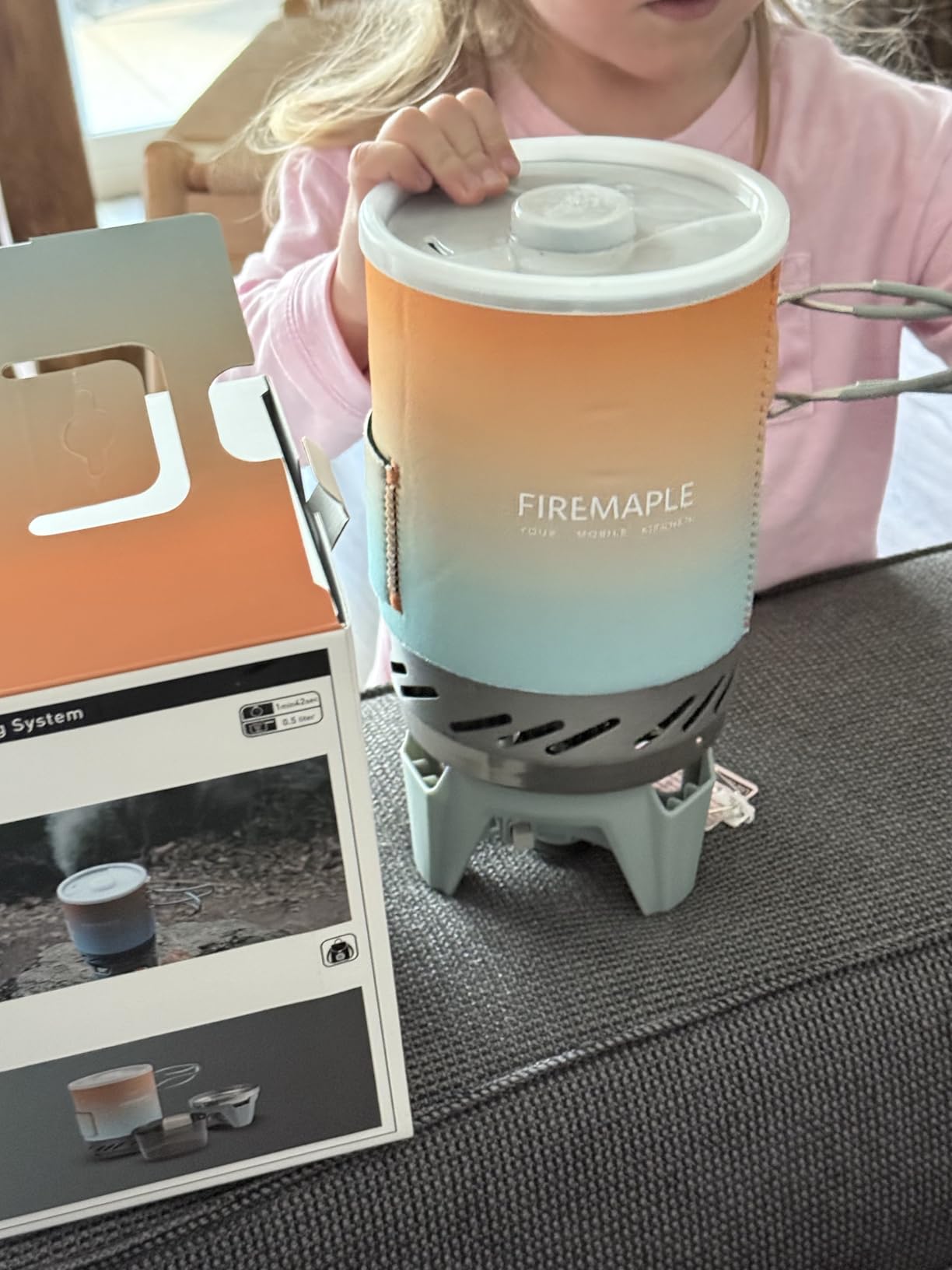
The boil time claim of 30 percent faster than traditional stoves held up in my testing. I brought 16 ounces of cold stream water to a rolling boil in about 2 minutes and 15 seconds in calm conditions. In moderate wind, that stretched to about 2 minutes and 45 seconds, which is still faster than most standalone canister stoves.
The tradeoff is weight. At 18 ounces, this is not an ultralight setup. But for a weekend trip where you are only carrying it for a few miles to camp, the convenience of an integrated system with fuel efficiency is worth the extra ounces. You will burn noticeably less fuel than a standalone stove, which means you can carry a smaller canister.
Pot and Fuel Canister Compatibility
The Fixed Star 1 works with standard threaded isobutane, butane, and propane canisters from brands like MSR, Snow Peak, and Jetboil. The one exception is Coleman fuel canisters, which use a different threading and will not attach. This is an important detail that catches some buyers off guard.
The included one liter pot is hard anodized aluminum with a neoprene cozy. It is a solid pot for its purpose. The locking stainless steel handle feels secure and does not wobble, even when the pot is full of water.
Long-Term Durability Concerns
After about 20 uses, my Fire-Maple is holding up well with no signs of wear on the pot or burner. The piezo igniter still fires on the first click. That said, the build quality is not on the same level as MSR or Jetboil, and I have read reports of igniter failures after a season or two of heavy use.
For the cost, I consider this an acceptable tradeoff. Even if you need to replace it after a few seasons, you are still ahead compared to buying a premium integrated system. Just carry a backup lighter like every experienced backpacker does anyway.
3. BRS-3000T – The Ultralight Budget Champion
- Remarkable value for a functional backpacking stove
- At only 25 grams it is one of the lightest stoves made
- Titanium and copper construction
- Boils a liter in about 3 minutes
- Nests with a 110g canister in a 750ml pot
- No built-in igniter
- Inconsistent quality control between units
- Minimal pot supports can be tippy
The BRS-3000T is the stove that ultralight backpackers talk about in forums, and for good reason. It weighs less than an ounce and costs less than a large pizza delivery. For the value, it is remarkably capable, boiling a liter of water in about three minutes with a respectable 2700W output.
I tested the BRS-3000T as a backup stove and as a primary on a few short overnight trips. When it works, it works surprisingly well. The flame adjusts smoothly and the titanium construction feels solid for something so tiny. It folds down small enough to disappear in your pack.
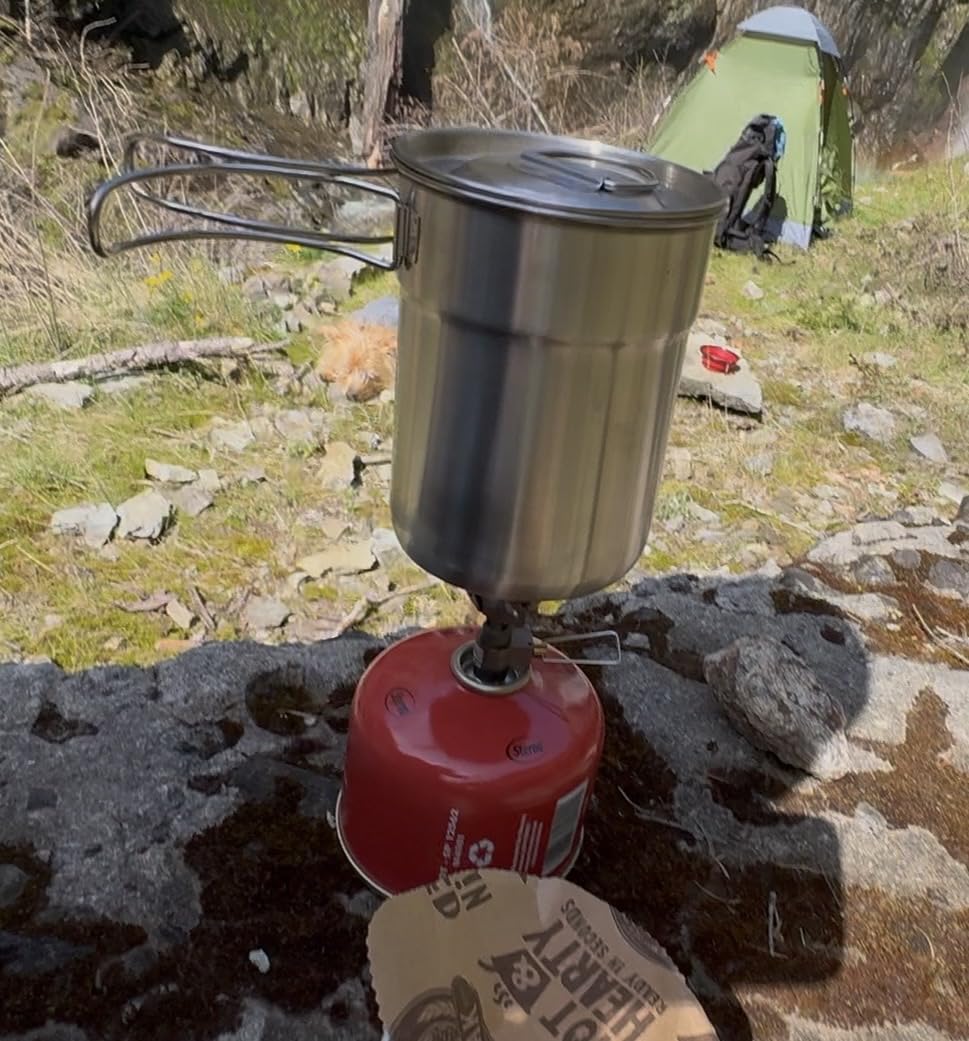
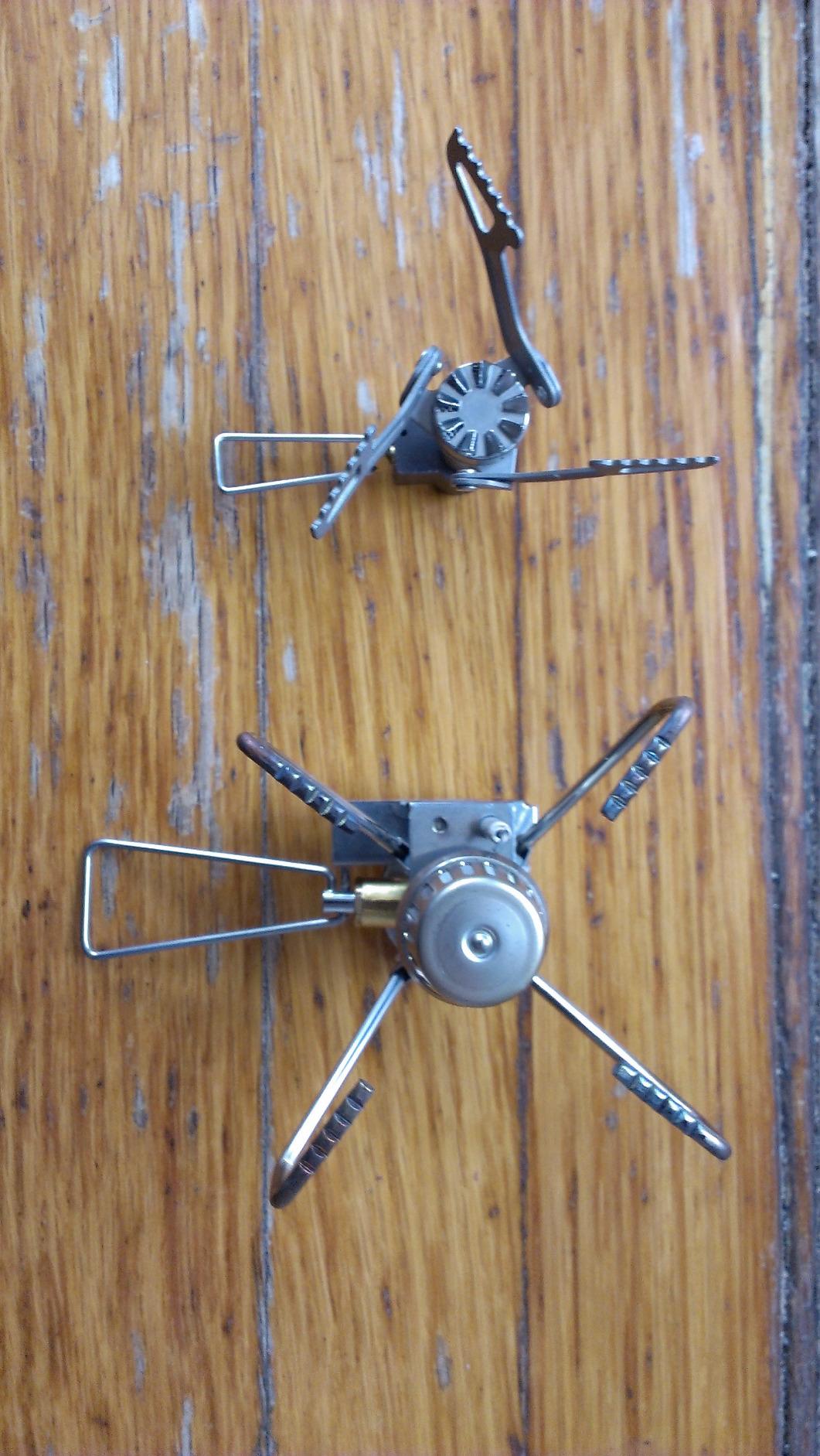
However, I need to be honest about the quality control issues that forum users have reported and that I experienced firsthand. The first unit I received had a slightly crooked burner head that caused an uneven flame. I returned it, and the replacement worked perfectly. This is a known issue with BRS stoves, and it is the main reason I cannot rate it higher despite the incredible value.
If you buy the BRS-3000T, test it at home before your trip. Light it, boil water, check the flame pattern. If you get a good unit, you have one of the best values in backpacking gear. If you get a bad one, exchange it immediately.
Quality Control and Reliability
The BRS-3000T is manufactured with inconsistent tolerances, which means your experience may vary from mine. Some units arrive perfect. Others have misaligned burners, stiff valves, or weak pot supports. This is the tradeoff for the low price point.
I recommend the BRS-3000T as a primary stove only for short, low-stakes trips where a stove failure means eating cold food for one night. For anything longer or more remote, pair it with a backup lighter and consider carrying a second stove. Many ultralight hikers use it as a dedicated backup to their primary stove.
Pot Stability for Real Cooking
The pot supports on the BRS-3000T are small and close together. This is fine for a narrow titanium mug or a small pot, but a wide pot or frying pan will feel tippy and unsafe. I would not attempt anything beyond boiling water on this stove.
If your trail cooking involves actual simmering or frying, look elsewhere. The BRS-3000T is a water boiler, pure and simple. Embrace that limitation and it becomes an excellent ultralight tool for freeze-dried meals and morning coffee.
4. MSR PocketRocket 2 – The Proven Classic
- Ultra reliable after years of proven performance
- Boils a liter in 3.5 minutes
- Genuine simmer control with smooth valve
- Only 2.6 ounces
- Serrated pot supports grip cookware securely
- No built-in piezo igniter
- No pressure regulator for cold weather
- Requires separate lighter or matches
The MSR PocketRocket 2 is the stove that most experienced backpackers started with, and many never saw a reason to switch. With over 4,200 reviews and a 4.8 star rating, it has earned a reputation for reliability that few products in any category can match. I carried one for three seasons before upgrading to the Deluxe.
What makes the PocketRocket 2 special is its simplicity. Thread it onto a canister, flip the valve, and light it with a lighter or match. No electronics to fail, no regulators to clog, no moving parts beyond the valve itself. In my experience, this stove just runs and runs.
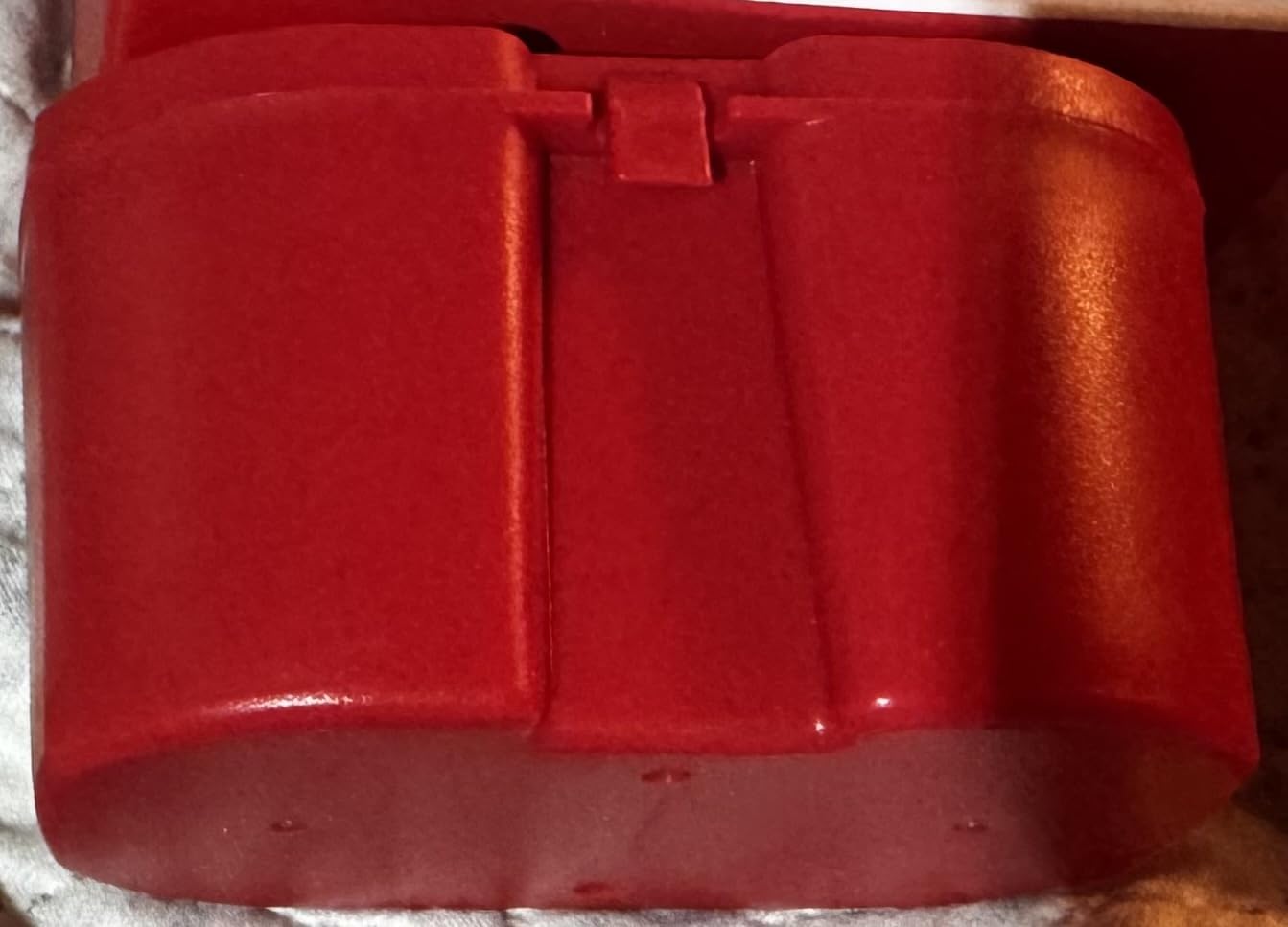
The boil time of 3.5 minutes for a liter is competitive, and the serrated pot supports are excellent. They grip your cookware better than smooth supports, which matters when you are stirring a pot on an uneven camp surface. The hard shell carry case is a nice touch that protects the stove in your pack.
The main drawbacks compared to the Deluxe are the lack of a piezo igniter and the absence of a pressure regulator. You will need to carry a lighter, and performance will drop in cold weather. For three-season weekend backpacking in mild to moderate conditions, neither of these is a dealbreaker.
Wind Performance Limitations
The PocketRocket 2 has a standard burner head without any special wind-resistant design. In breezy conditions, you will lose significant heat and boil times will stretch. A lightweight aluminum windscreen placed carefully around the stove makes a big difference.
Be careful with windscreens on canister stoves. You never want to trap heat around the fuel canister itself, as that can cause dangerous pressure buildup. Position the windscreen to block wind from the burner while leaving the canister exposed to ambient air.
Best Pot Pairings for Weekend Trips
The PocketRocket 2 works with almost any backpacking pot, but it pairs best with something in the 0.9 to 1.3 liter range for solo or two-person trips. The serrated supports handle both narrow titanium mugs and wider aluminum pots without issue.
For the best experience, pair it with a pot that has a heat exchanger ring on the bottom. This combination gives you near-integrated-system fuel efficiency with the flexibility of a standalone stove.
5. Jetboil Flash – Fastest Boil in the Lineup
- Boils 16 ounces in just 2 minutes
- One-step auto ignition with turn and click knob
- Color-coded safe-touch grip zones
- Insulated cozy keeps water hot longer
- Everything packs into the 1L cook cup
- Heaviest option for the weight conscious
- Limited to proprietary style cooking
- Higher cost for integrated system
The Jetboil Flash is the stove that answers the question of whether Jetboil is worth the extra weight, and for many weekend backpackers, the answer is yes. It boils 16 ounces of water in two minutes flat, which means coffee and dinner are ready before you finish setting up your tent.
The FluxRing technology at the base of the pot captures heat that would normally escape around the sides. Combined with the insulated cozy, this makes the Flash one of the most fuel-efficient stoves on the market. You will burn through a canister noticeably slower than with a standalone stove.
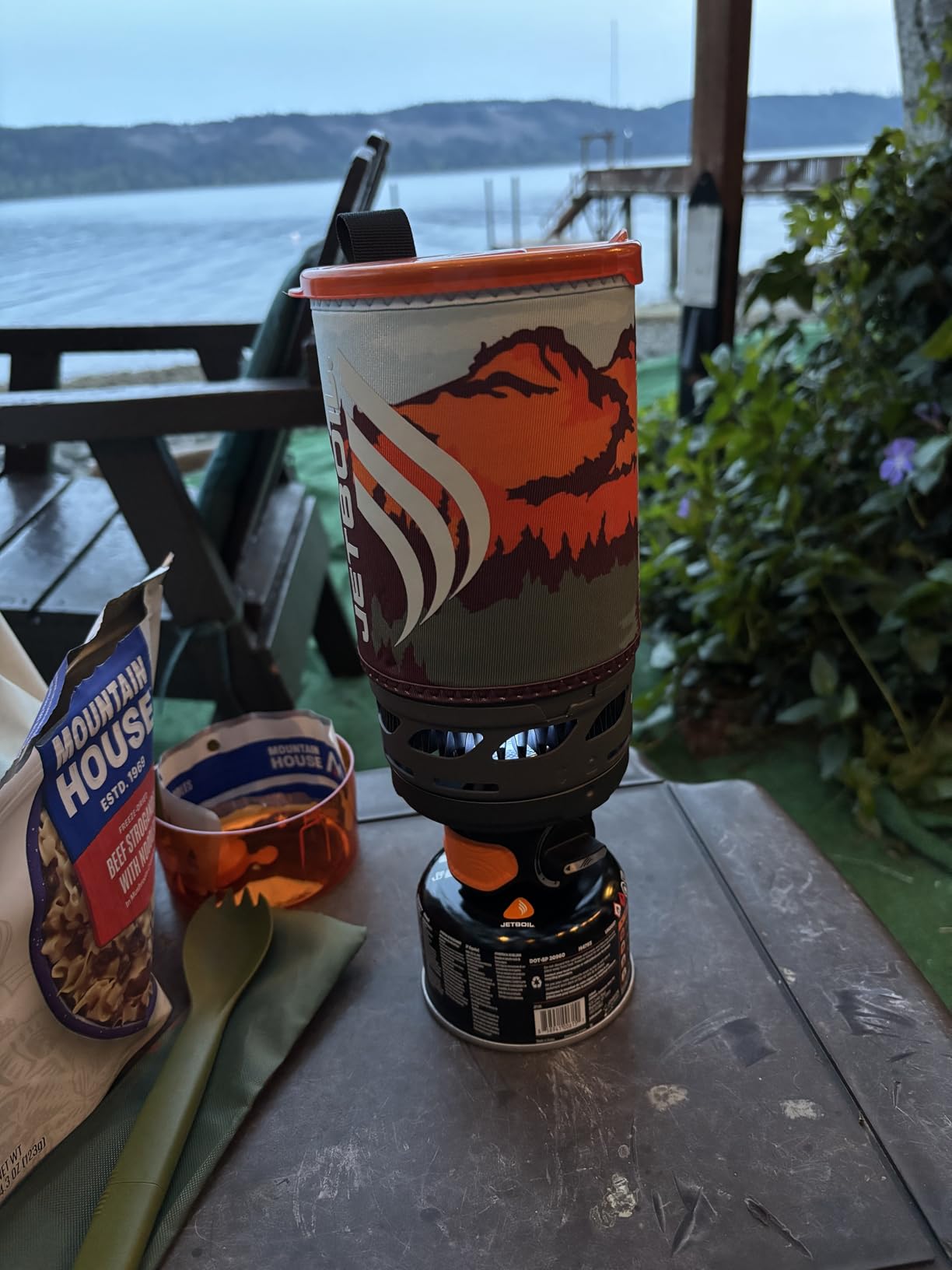
The one-step auto ignition is genuinely convenient. Turn the knob, click, and the burner lights. No lighter needed, no matches to keep dry. The color-coded temperature indicator on the cozy changes color as your water heats, so you know exactly when it reaches boiling without opening the lid.
The improved locking system with three locking points gives me confidence that the pot will not separate from the burner unexpectedly. The rubberized cool-grip area lets you pick up the pot immediately after boiling without burning your hands, which is a small luxury that matters on the trail.
Beyond Boiling: Can It Cook Real Food?
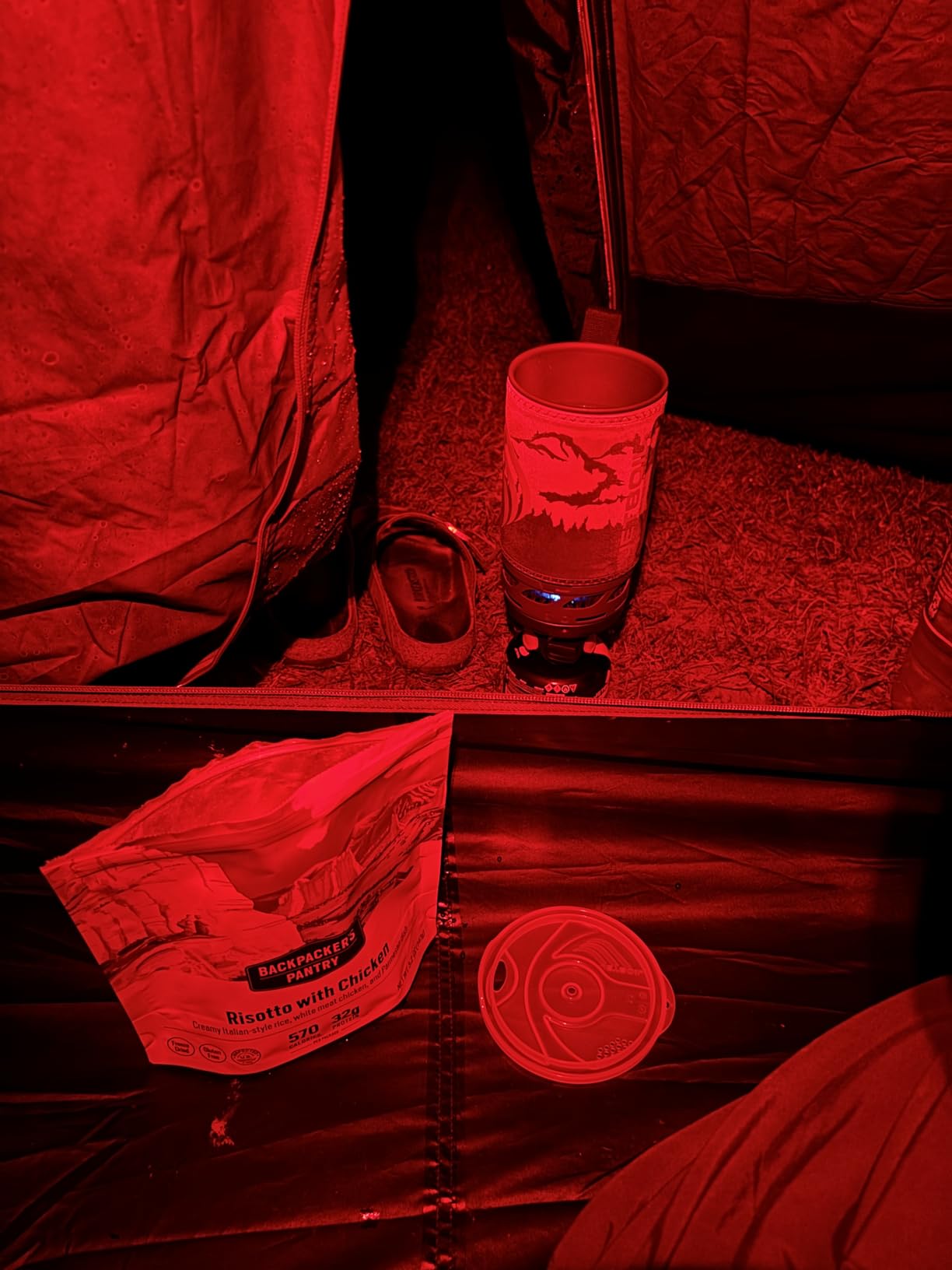
The Jetboil Flash is optimized for boiling water, and that is where it excels. The FluxRing pot is designed for liquid, and the narrow burner does not distribute heat across a wide pan. You can simmer in the included pot, but actual frying or cooking wide items is not practical.
If your trail menu is mostly dehydrated meals, oatmeal, coffee, and instant soups, the Flash is close to perfect. If you want to cook eggs, fry fish, or make trail pizzas, look at a standalone stove with simmer control instead. The Flash is a water boiler with lifestyle features, and it is honest about that.
Weight vs Convenience Tradeoff
At 13 ounces, the Flash is significantly heavier than standalone stoves like the PocketRocket or BRS-3000T. But that weight includes the pot, the cozy, and the burner all in one package. When you factor in the pot you would carry separately with a standalone stove, the weight gap narrows.
The real tradeoff is flexibility. The Flash locks you into a specific pot size and cooking style. A standalone stove lets you swap pots, use different sizes for different trips, and cook actual food. For weekend trips where convenience matters more than versatility, the Flash is hard to beat.
6. Snow Peak LiteMax Titanium – Refined Ultralight Simplicity
- Only 1.9 ounces of pure titanium
- Large pot support arms for stable platform
- Adjustable flame from simmer to rolling boil
- Durable titanium construction
- Snow Peak lifetime product guarantee
- No built-in piezo igniter
- Can get tippy with heavy loads
- Not ideal for windy conditions without a windscreen
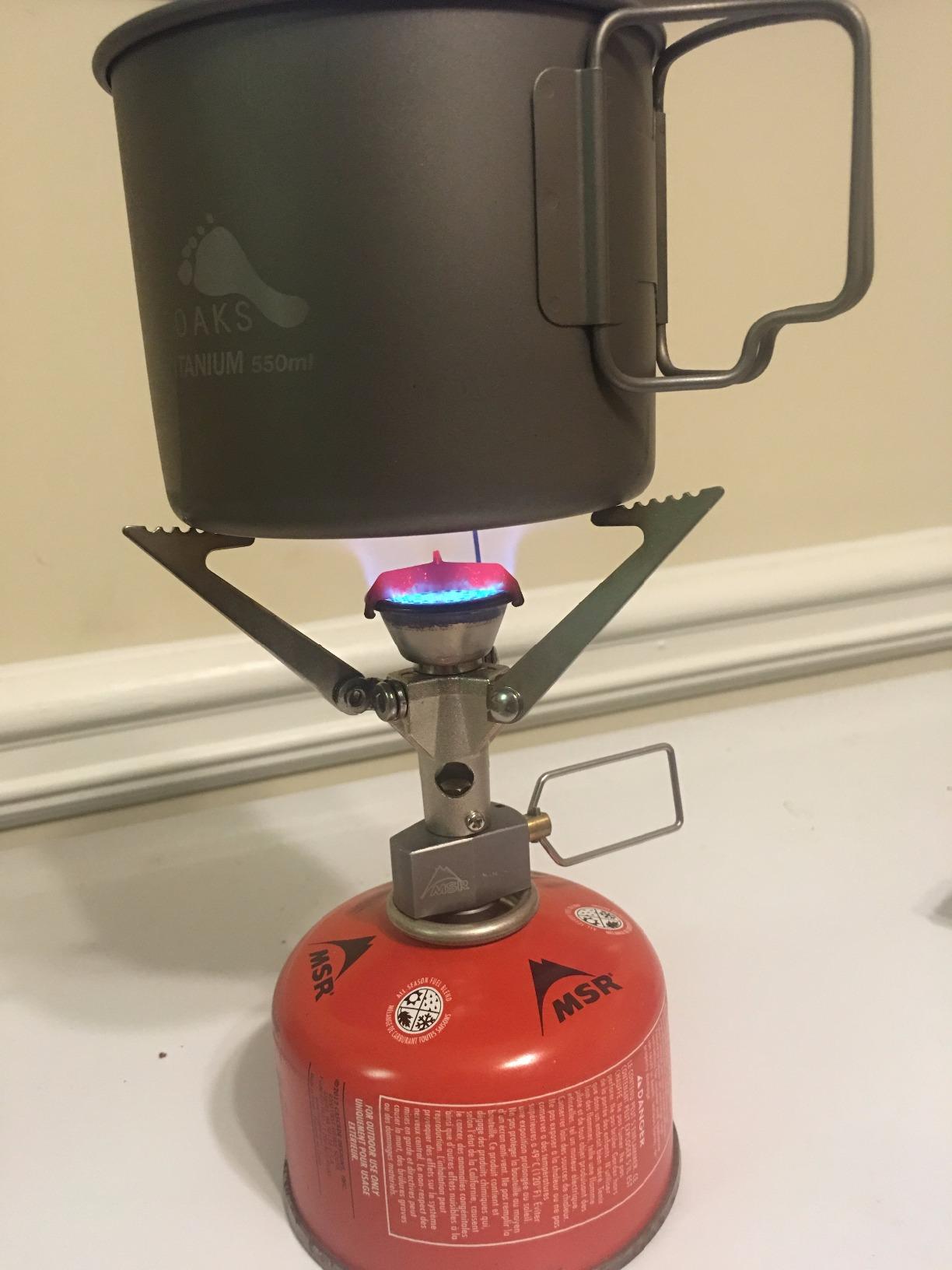
The Snow Peak LiteMax Titanium is a stove for backpackers who appreciate refined design and are willing to pay for quality. At 1.9 ounces, it is lighter than the PocketRocket 2 while offering larger pot supports and a broader burner head. The titanium construction means it will never corrode or wear out.
I tested the LiteMax on a three-day trip in the Sierra and came away impressed by the build quality. The foldable arms lock into place with a satisfying precision that cheaper stoves lack. The flame control valve is smooth and responsive, offering genuine simmer capability that rivals the PocketRocket Deluxe.
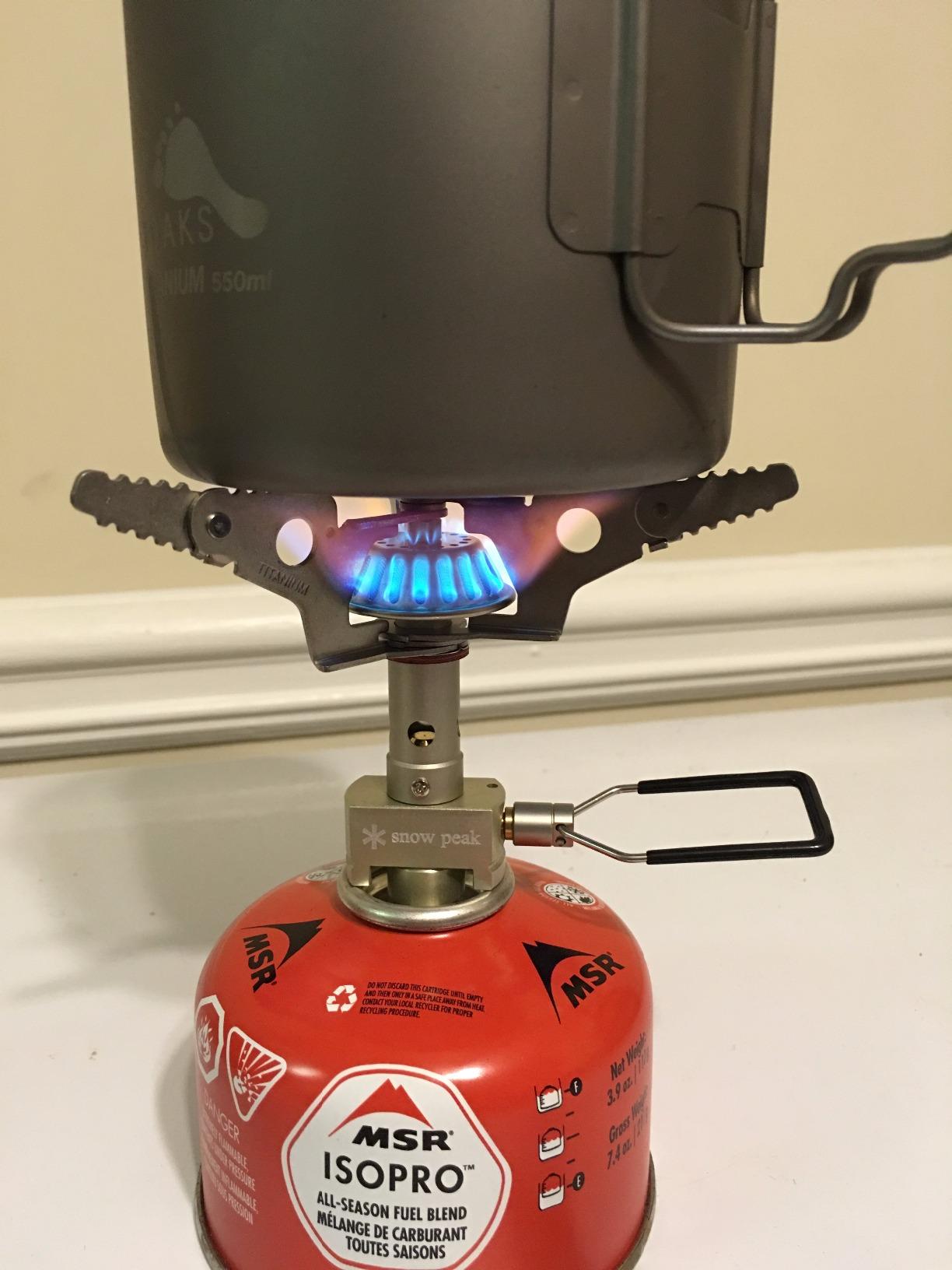
The large pot support arms are a standout feature. They provide a more stable platform than the narrow supports on the BRS-3000T or the PocketRocket 2, which means you can confidently use a wider pot. The arms fold flat for storage, and the whole stove fits inside a small titanium cup.
Snow Peak backs this stove with a lifetime product guarantee, which speaks to their confidence in the build. For backpackers who want one stove that will last decades, the LiteMax is a serious contender. The titanium will not degrade, and the simple design has almost nothing to break.
Wind Handling in Exposed Campsites
The LiteMax does not have any specialized wind resistance features. The foldable arms provide some built-in wind protection by partially blocking the burner, but in gusty conditions you will need a windscreen. The broad burner head actually makes it slightly more vulnerable to wind than stoves with narrow, focused flames.
I recommend carrying a lightweight foil windscreen if you camp above treeline or in exposed areas. The LiteMax rewards a sheltered cooking spot, and with even minimal wind protection, it performs excellently.
Pot Support Stability
The LiteMax pot supports are wider than most ultralight stoves, which is a genuine advantage. A standard 1 liter titanium pot sits securely, and even a wider 1.5 liter aluminum pot feels stable enough to stir without worry.
Where stability becomes an issue is with very heavy loads. If you are cooking a full meal for two in a large pot filled to the brim, the stove can feel tippy. Snow Peak recommends a canister stabilizer kit for heavy loads, and I agree. A small stabilizer adds almost no weight but makes a big difference in confidence.
7. MSR WhisperLite Universal – The Multi-Fuel Expedition Stove
MSR WhisperLite Universal Compact Hybrid Fuel Camping and Backpacking Stove
- Runs on virtually any fuel including gasoline and kerosene
- AirControl technology optimizes fuel-air mixture
- Canister liquid feed improves cold weather performance
- Self-cleaning Shaker Jet technology
- Made in the USA with 3-year warranty
- Heaviest stove in this guide
- Requires learning liquid fuel operation
- Stiff fuel hose can be awkward
The MSR WhisperLite Universal is overkill for a weekend trip on a maintained trail, and I say that as a compliment. This is the stove you buy when your adventures take you to places where finding the right isobutane canister is not guaranteed. It runs on white gas, gasoline, kerosene, and isobutane canisters.
I tested the WhisperLite Universal on a late-season trip where temperatures dropped well below freezing overnight. The ability to run liquid fuel through the canister liquid feed meant consistent performance when a standard canister stove would have been struggling. The Shaker Jet self-cleaning feature means you can clear a clogged fuel line in the field by simply inverting and shaking the stove.
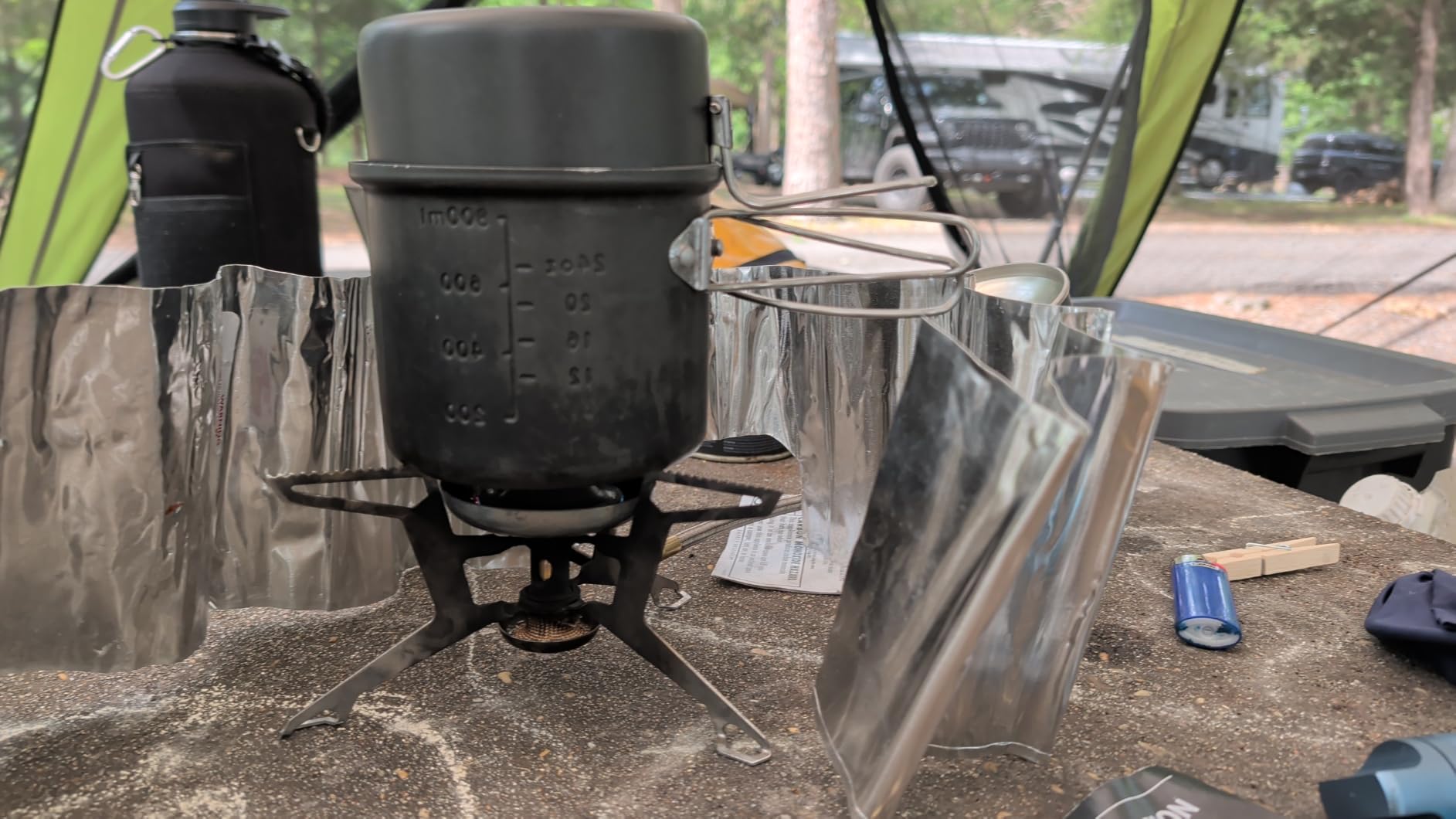
The AirControl technology is not marketing fluff. It genuinely optimizes the fuel-to-air mixture for whatever fuel you are running, which means consistent flame quality and efficient burning. Switching between canister and liquid fuel modes takes a few minutes and requires understanding the process, but it becomes second nature after a few uses.
Made in the USA with a 3-year warranty, the WhisperLite Universal is built for decades of hard use. This is expedition-grade equipment, and it feels like it. Every component is overbuilt for reliability rather than weight savings.
Setup and Maintenance Learning Curve
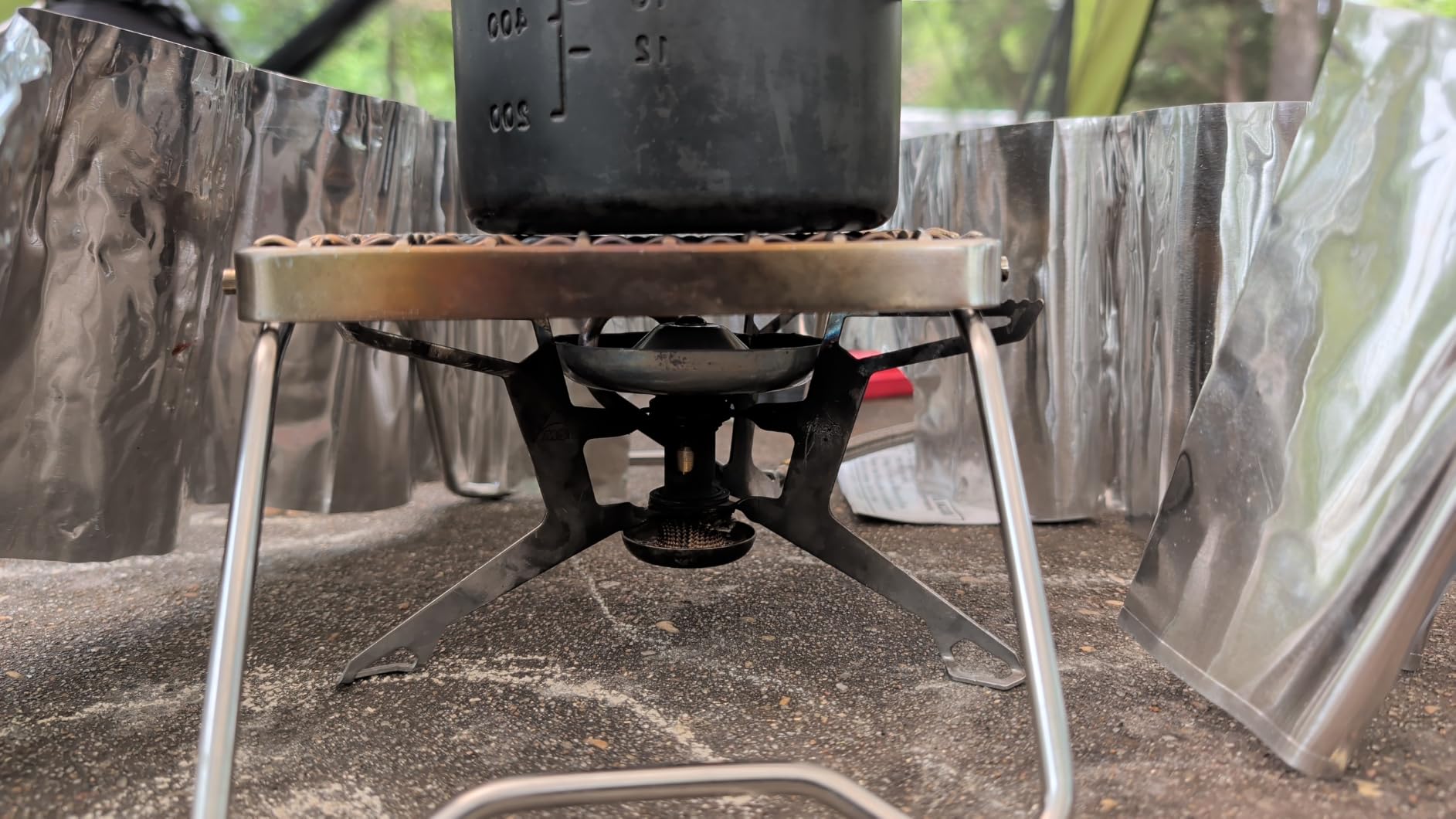
The WhisperLite Universal requires more setup than a canister stove. With liquid fuel, you need to pressurize the fuel bottle, connect the pump and fuel line, prime the burner, and then light it. The first few times take patience, but the process becomes quick with practice.
Maintenance is part of ownership. The Shaker Jet clears most clogs, but you should periodically clean the fuel line and check O-rings for wear. MSR sells a field maintenance kit, and I recommend carrying one on long trips. For weekend backpackers who only use canister mode, the learning curve is minimal.
When Multi-Fuel Capability Actually Matters
Multi-fuel capability matters when you travel internationally, go on extended expeditions, or camp in remote areas where canister fuel is unavailable. If you can buy white gas or even automotive gasoline, the WhisperLite Universal will run. That is a level of fuel security no canister stove can offer.
For typical weekend backpacking in the United States, where isobutane canisters are available at any outdoor store, the multi-fuel capability is unnecessary. Choose this stove if your adventures go beyond standard weekend trips, or if you want one stove that handles everything from summer weekends to winter mountaineering.
8. MSR Dragonfly – Best Simmer Control on the Trail
- Unrivaled flame control from true simmer to rolling boil
- Extra wide pot supports handle pots up to 10 inches
- Multi-fuel capability for expedition use
- Suspended burner cup reduces heat loss
- Shaker Jet field cleaning
- Compact fold to one-third size
- Very loud at full blast
- Heavier than canister alternatives
- Learning curve for liquid fuel operation
The MSR Dragonfly is the stove I reach for when I want to cook a real meal on the trail. Nothing in this guide matches its simmer control, and the dual-valve design gives you flame adjustment precision that feels like cooking on a home stove. I have made everything from pancakes to stir-fry on this thing.
The extra wide pot supports are a game changer for trail cooking. They handle pots up to 10 inches in diameter, which means you can use a real frying pan or a large group cooking pot without worrying about stability. No other stove in this roundup offers that kind of pot capacity.
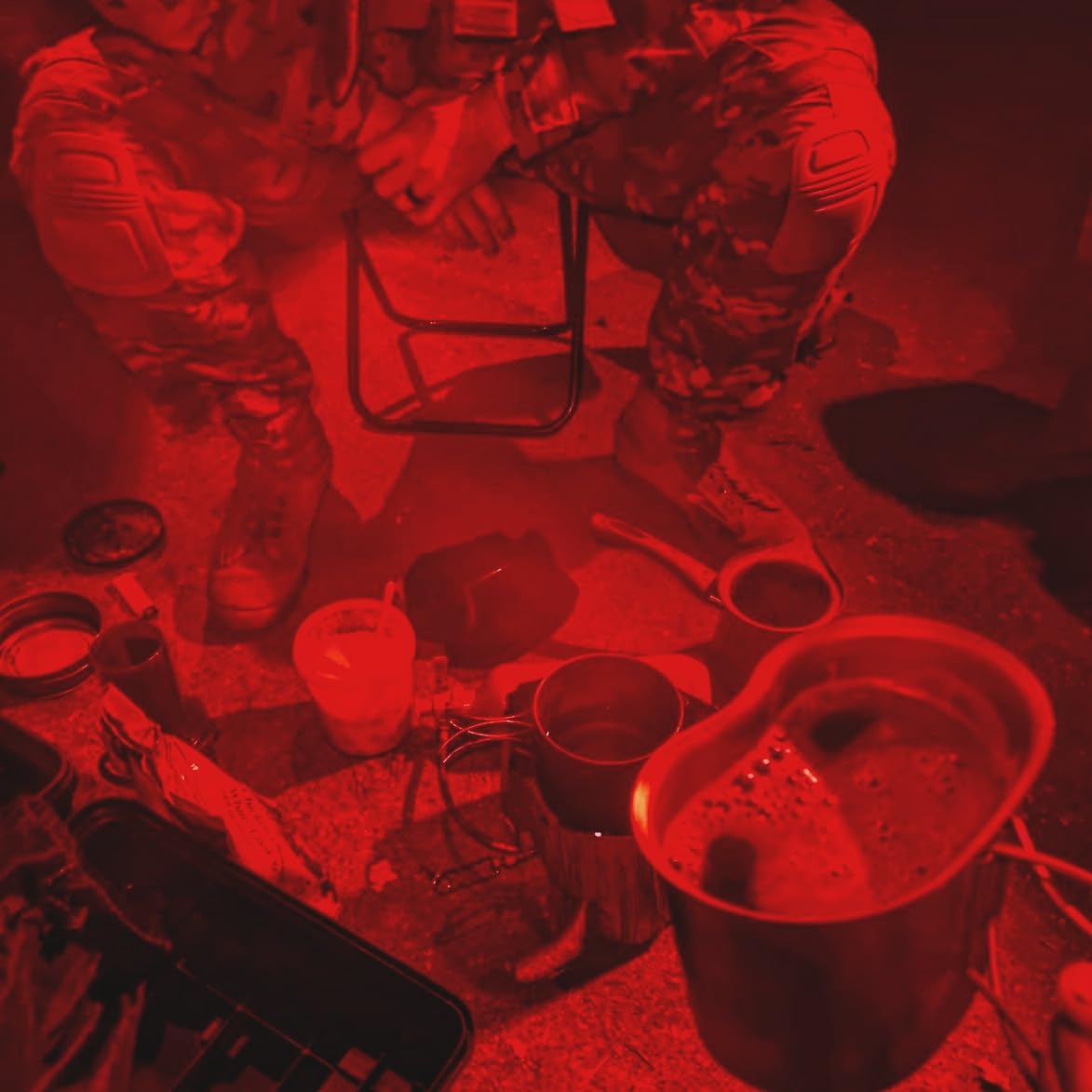
The multi-fuel capability runs the same range as the WhisperLite Universal, with the added bonus of diesel and jet fuel compatibility. The Shaker Jet technology means easy field cleaning, and the suspended burner cup design reduces heat loss for better efficiency than older liquid fuel designs.
The tradeoff is noise. At full blast, the Dragonfly sounds like a jet engine. It is loud enough to hear from a hundred yards away, which is either impressive or annoying depending on your perspective. For group basecamp cooking where performance matters more than quiet, this is not a problem.
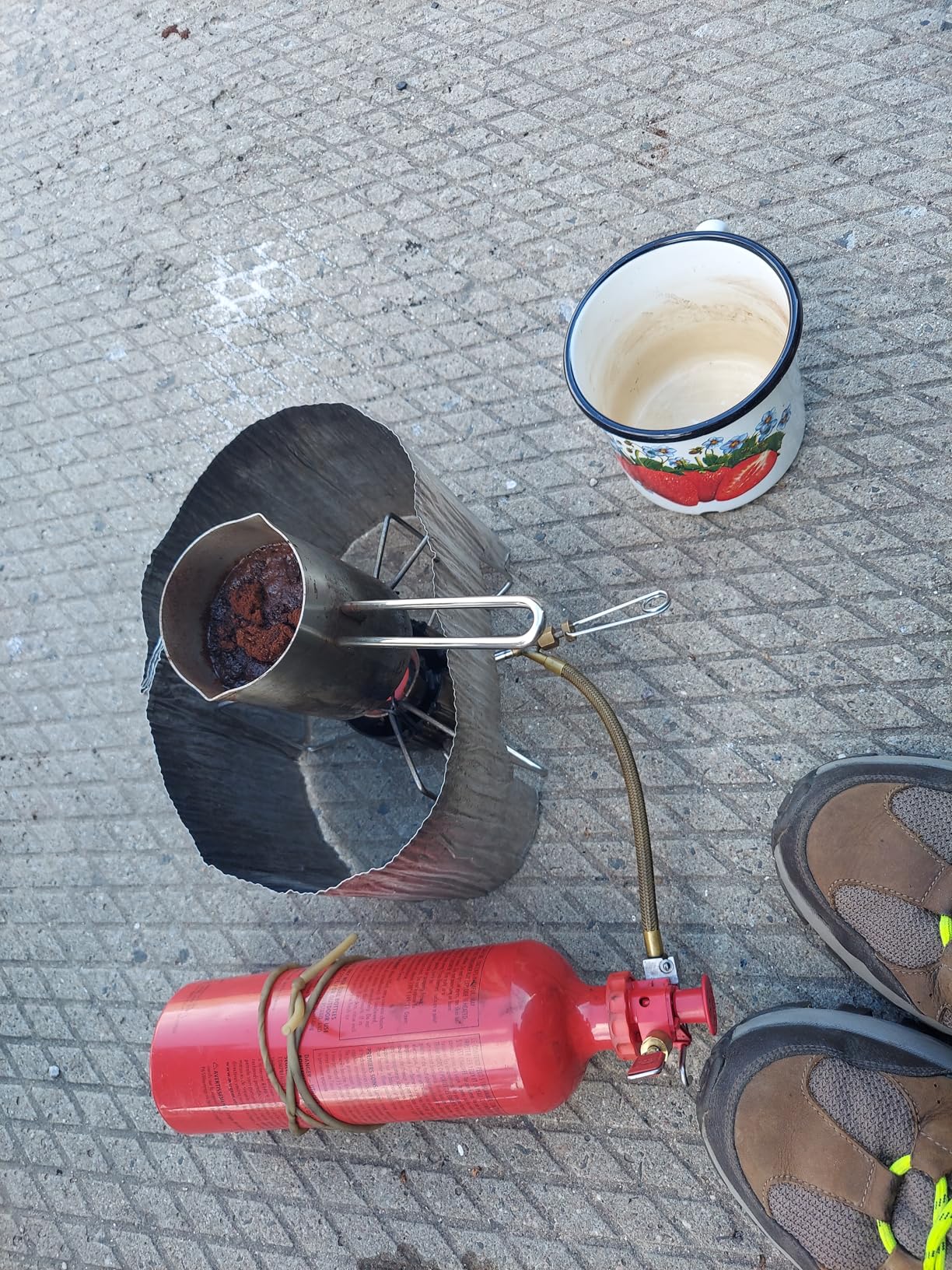
Simmer Control for Trail Gourmet Cooking
The Dragonfly’s dual-valve design is the secret to its legendary simmer control. One valve controls the main fuel flow, and the second fine-tunes the flame. This lets you hold a true low simmer for delicate cooking like rice, eggs, or sauces. No canister stove matches this level of precision.
If your idea of backpacking food extends beyond boiling water, the Dragonfly opens up possibilities that other stoves simply cannot match. I have made full breakfast spreads with eggs, bacon, and hash browns on the trail using this stove. It turns backcountry cooking from a chore into something you actually enjoy.
Noise Level and Group Camping Considerations
The Dragonfly is loud. There is no way around it. At full output, it produces a distinctive roaring sound that carries across a campsite. For solo trips or remote camping, this is a nonissue. For group camping in crowded sites, your neighbors will definitely hear you cooking.
For group trips where you are cooking for four or more people, the wide pot supports and serious output make the Dragonfly an excellent basecamp stove. The noise becomes background ambiance when you are feeding a hungry crew. Just be prepared for the occasional comment from your campsite neighbors.
How to Choose the Best Backpacking Stove for Your Needs
Choosing among the best backpacking stoves comes down to understanding your actual needs rather than chasing the lightest or fastest spec on paper. Here is how I think about the decision, based on hundreds of trail meals cooked across these eight stoves.
Canister Stoves vs Integrated Systems vs Liquid Fuel
Canister stoves like the PocketRocket and BRS-3000T are the most popular choice for good reason. They are simple, lightweight, and require no maintenance. Thread the stove onto a canister, open the valve, and light. The tradeoff is declining performance in cold weather and at altitude, plus dependence on finding the right canister.
Integrated systems like the Jetboil Flash and Fire-Maple Fixed Star 1 pair a burner with a matched pot that has heat exchange technology. They boil water faster and more efficiently than standalone stoves, but they lock you into a specific pot size and are less versatile for actual cooking.
Liquid fuel stoves like the WhisperLite and Dragonfly run on white gas and other fuels that are available worldwide. They perform better in extreme cold and at altitude, but they require maintenance, priming, and a learning curve. For most weekend backpackers, they are more stove than you need.
Weight vs Capability: Finding Your Sweet Spot
The lightest stove in this guide is the BRS-3000T at under an ounce. The heaviest is the MSR Dragonfly at 14.1 ounces. But weight alone does not tell the full story. You need to account for fuel weight, pot weight, and what you actually plan to cook.
For a weekend trip where you only boil water, an integrated system may actually weigh less when you factor in the reduced fuel consumption. For a trip where you want to cook real meals, a standalone canister stove with simmer control gives you more capability for less weight than a liquid fuel stove.
My recommendation for most weekend backpackers is to target the 2 to 4 ounce range for a standalone stove and pair it with a good pot. The PocketRocket Deluxe and LiteMax both sit right in that sweet spot.
Wind Resistance: What Actually Works
Manufacturer wind resistance claims are often exaggerated. In my testing, no standalone canister stove performed well in sustained wind without a windscreen. Integrated systems with heat exchange pots fared better because the pot itself blocks wind from the burner.
The real wind performers in this guide are the stoves with broad burner heads like the PocketRocket Deluxe and the integrated systems. But even those benefit from a lightweight windscreen. A piece of aluminum foil that weighs almost nothing can cut your boil time in half in windy conditions.
Always carry a windscreen, regardless of which stove you choose. It is the cheapest, lightest performance upgrade you can make to any backpacking stove.
Simmer Control for Real Trail Cooking
If your trail food plan extends beyond boiling water for dehydrated meals, simmer control matters. The stoves with genuine simmer capability in this guide are the PocketRocket Deluxe, the PocketRocket 2, the LiteMax, and especially the Dragonfly.
Stoves without real simmer control include the BRS-3000T, the Jetboil Flash, and the Fire-Maple Fixed Star 1. These are excellent water boilers but struggle with anything requiring gentle heat. The difference becomes obvious the first time you try to cook rice or scramble eggs.
For weekend backpackers who enjoy cooking, I recommend prioritizing simmer control. The ability to make a real hot meal transforms the trail experience, and the weight penalty for a stove with good flame control is minimal compared to the satisfaction of trail-cooked food.
Fuel Planning for Different Trip Lengths
A standard 110 gram isobutane canister provides roughly 60 to 90 minutes of burn time, depending on your stove and how you use it. For a weekend trip with one person boiling water for two dehydrated dinners, two breakfasts, and coffee, a 110g canister is plenty.
For two people on the same trip, plan on 110 to 230 grams. For trips longer than three nights, or if you are doing real cooking that requires longer burn times, carry a 230g canister or two smaller ones. Integrated systems are more fuel-efficient, which can save weight on longer trips.
Always carry a backup ignition source regardless of your stove. Piezo igniters can fail, especially in cold and wet conditions. A small Bic lighter weighs almost nothing and has saved more backpacking trips than any other single piece of gear.
FAQs
What is the most reliable backpacking stove?
The MSR PocketRocket 2 is the most reliable backpacking stove based on long-term field use and thousands of user reviews. Its simple design with no electronics means almost nothing can fail. The MSR PocketRocket Deluxe is equally reliable for wind and cold weather performance thanks to its pressure regulator.
What type of stove is best for backpacking?
For most weekend backpackers, a canister stove is the best type because it is lightweight, simple to operate, and requires no maintenance. Integrated stove systems like the Jetboil Flash are best if you primarily boil water and want maximum fuel efficiency. Liquid fuel stoves are best for cold weather, high altitude, and international travel where canister fuel may not be available.
Which backpacking stove lasts the longest?
The Snow Peak LiteMax Titanium and MSR WhisperLite are built to last the longest. The LiteMax features titanium construction with a lifetime guarantee, while the WhisperLite is made in the USA with field-serviceable parts that can be maintained indefinitely. Liquid fuel stoves generally outlast canister stoves because they are designed for expedition use with replaceable components.
Is Jetboil the best backpacking stove?
Jetboil is the best backpacking stove for speed and fuel efficiency if you primarily boil water. The Jetboil Flash boils 16 ounces in two minutes, making it the fastest in its class. However, Jetboil is heavier than standalone canister stoves and is limited in cooking versatility. If you want to cook real meals beyond boiling water, a standalone stove with simmer control is a better choice.
How do I choose a backpacking stove as a beginner?
As a beginner, start with a simple canister stove like the MSR PocketRocket 2 or Fire-Maple Fixed Star 1. These are affordable, easy to use, and require no maintenance. Consider an integrated system if you want an all-in-one package with a pot included. Avoid liquid fuel stoves until you have more experience, as they require priming and maintenance skills.
Final Thoughts on the Best Backpacking Stoves
After testing all eight of these stoves across multiple seasons and trail conditions, my top recommendation for most weekend backpackers is the MSR PocketRocket Deluxe. It hits the sweet spot of weight, reliability, simmer control, and cold weather performance that makes it the one stove I reach for first.
If budget is your primary concern, the Fire-Maple Fixed Star 1 gives you an entire integrated cooking system for the cost of a standalone stove. And for ultralight backpackers who only need to boil water, the BRS-3000T remains unbeatable on value despite its quality control variability.
The best backpacking stoves of 2026 are the ones that match your specific needs, trip style, and cooking preferences. Use this guide to find yours, and remember that the most important piece of gear is the one you actually know how to use. Get out there and cook something good on the trail.