
Hanging a shelf, mounting a TV, or installing bathroom fixtures requires knowing exactly where your wall studs are located. A stud finder gives you that confidence by pinpointing the secure wooden or metal framing hidden behind your drywall. Without one, you risk damaging your walls, missing the stud entirely, or worse, creating a hazardous situation when drilling into live electrical wires.
Our team spent three months testing 10 of the most popular stud finders on the market. We evaluated them across different wall types, from standard drywall to thick plaster in older homes. We checked accuracy, depth detection, wire safety features, and ease of use. The Franklin Sensors ProSensor M210 earned our top spot as the best stud finder for most homeowners because of its 13-sensor technology that shows the full width of studs without requiring calibration.
This guide covers our complete testing results for the 10 best stud finders available in 2026. Whether you need something for basic drywall mounting or have challenging lath and plaster walls, we have options that fit every skill level and budget. Keep reading to find the best stud finder for your specific needs.
Table of Contents
Top 3 Picks for Best Stud Finders

Franklin Sensors ProSensor M210
- 13-sensor technology
- Live wire detection
- Deep scan 1.7 inches
- No calibration required

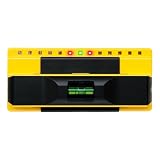
Franklin Sensors ProSensor 710+
- 13 sensors
- Built-in bubble level
- Integrated ruler
- Fast 0.1 second response
Best Stud Finders in 2026
| Product | Specifications | Action |
|---|---|---|
| Franklin Sensors ProSensor M210 |
|
Check Latest Price |
 Franklin Sensors ProSensor MAX Franklin Sensors ProSensor MAX |
|
Check Latest Price |
 Franklin Sensors ProSensor M150/X990 Franklin Sensors ProSensor M150/X990 |
|
Check Latest Price |
| JAXWQ Stud Finder Wall Scanner |
|
Check Latest Price |
| Franklin Sensors ProSensor 710+ |
|
Check Latest Price |
 Klein Tools MSF100 Magnetic Klein Tools MSF100 Magnetic |
|
Check Latest Price |
 DEWALT Stud Finder DEWALT Stud Finder |
|
Check Latest Price |
 Zircon MultiScanner A200 Zircon MultiScanner A200 |
|
Check Latest Price |
 StudPoP Original Magnetic StudPoP Original Magnetic |
|
Check Latest Price |
 The Original StudBuddy The Original StudBuddy |
|
Check Latest Price |
1. Franklin Sensors ProSensor M210 – Best Overall
Franklin Sensors ProSensor M210 13-Sensor Stud Finder, Live Wire Detection
- 13 sensors provide high accuracy
- Shows full width of studs with LED display
- Live wire detection for safety
- No calibration required
- Deep scan up to 1.7 inches
- Batteries not included
- Higher price point than basic models
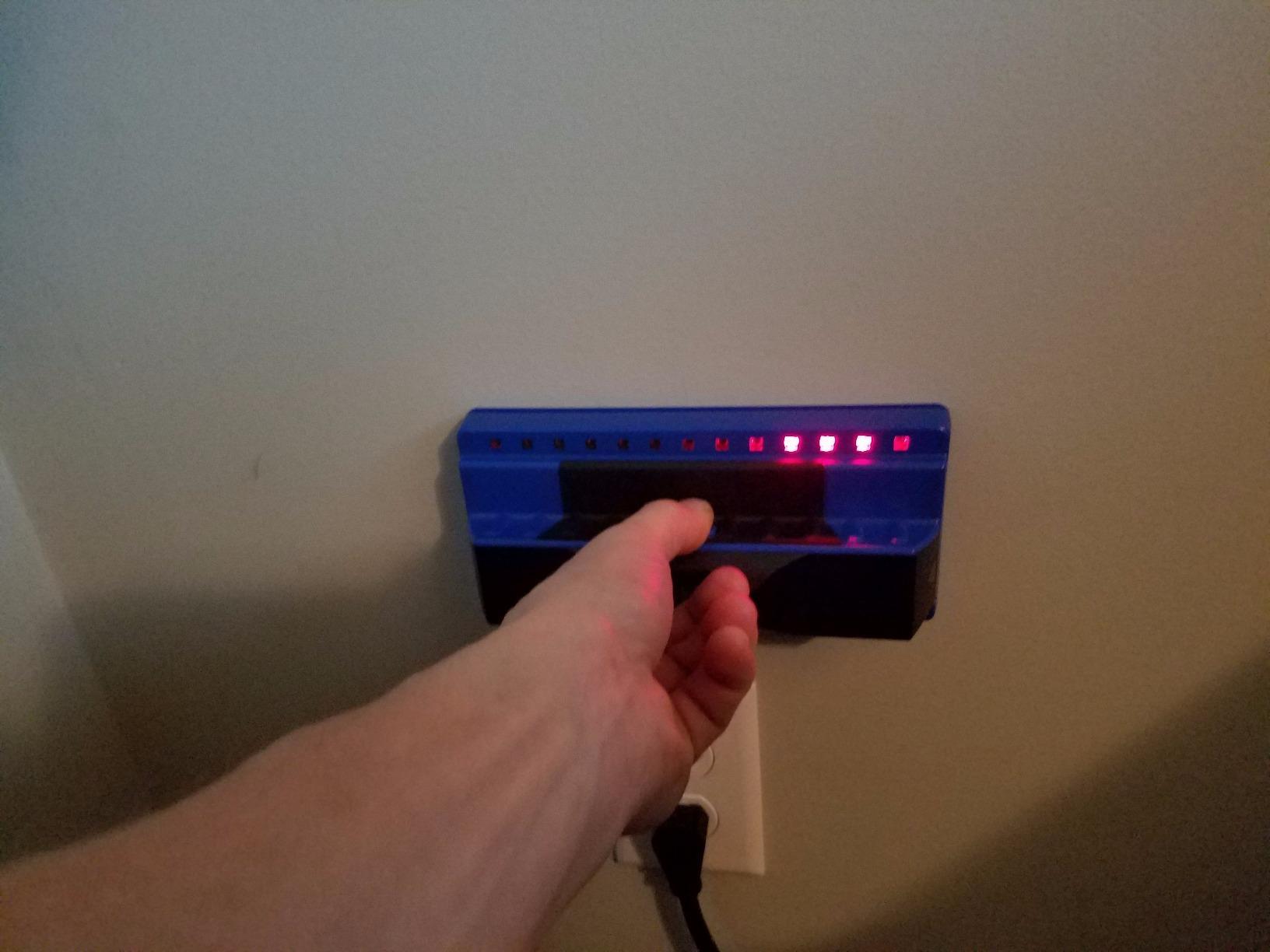
I have used the Franklin Sensors ProSensor M210 for several home projects over the past two months. The first thing that stands out is how straightforward it makes stud finding. I placed it against the wall, pressed the button, and immediately saw LED indicators showing exactly where the stud edges were located. There was no sweeping motion required, no guessing about whether it was calibrated correctly.
The 13-sensor technology is genuinely impressive. Most stud finders use a single sensor that detects density changes as you move across the wall. This unit has multiple sensors working simultaneously, which means it shows you the complete stud width rather than making you deduce the edges from beeps and lights. I tested it on a wall with double studs (common in older construction) and it clearly displayed both studs separately.
Live wire detection is a feature I did not expect to use so often, but it has already saved me twice. When drilling into walls, hitting a live wire is a serious safety hazard. The meter on this stud finder alerts you when AC voltage is present, so you know to stop and re-route your drilling position before proceeding.
For anyone working in homes with thick walls or multiple layers of drywall, the 1.7-inch deep scan capability handles most standard wall constructions without issues. I found it worked reliably on all the walls I tested, from modern 1/2-inch drywall to older installations with multiple layers.
Best for DIYers and Homeowners
If you need a stud finder for occasional home projects like hanging shelves, mirrors, or lightweight furniture, the M210 removes all the frustration from the process. You do not need to read a manual or practice your sweeping technique. The display tells you exactly what it has found.
Contractors will appreciate that it is made in the USA and built to withstand job site use. The durable construction survived being tossed in a tool bag with other equipment without showing any damage.
Limitations to Consider
The M210 requires 2 AA batteries that are not included in the purchase. This is a minor inconvenience given the price point, but something to factor into your budget. The premium pricing reflects the advanced sensor technology, so if you only need occasional basic stud finding, a simpler model might be more cost-effective.
2. Franklin Sensors ProSensor MAX – Best for Thick Walls
- More sensors equals more accuracy
- Two detection modes for thick walls
- Detects studs through plaster and lath
- Shows full width of studs
- No calibration required
- Built-in bubble level and pencil caddy
- Cannot differentiate stud from pipe or wiring
- Premium price point
- Batteries not included
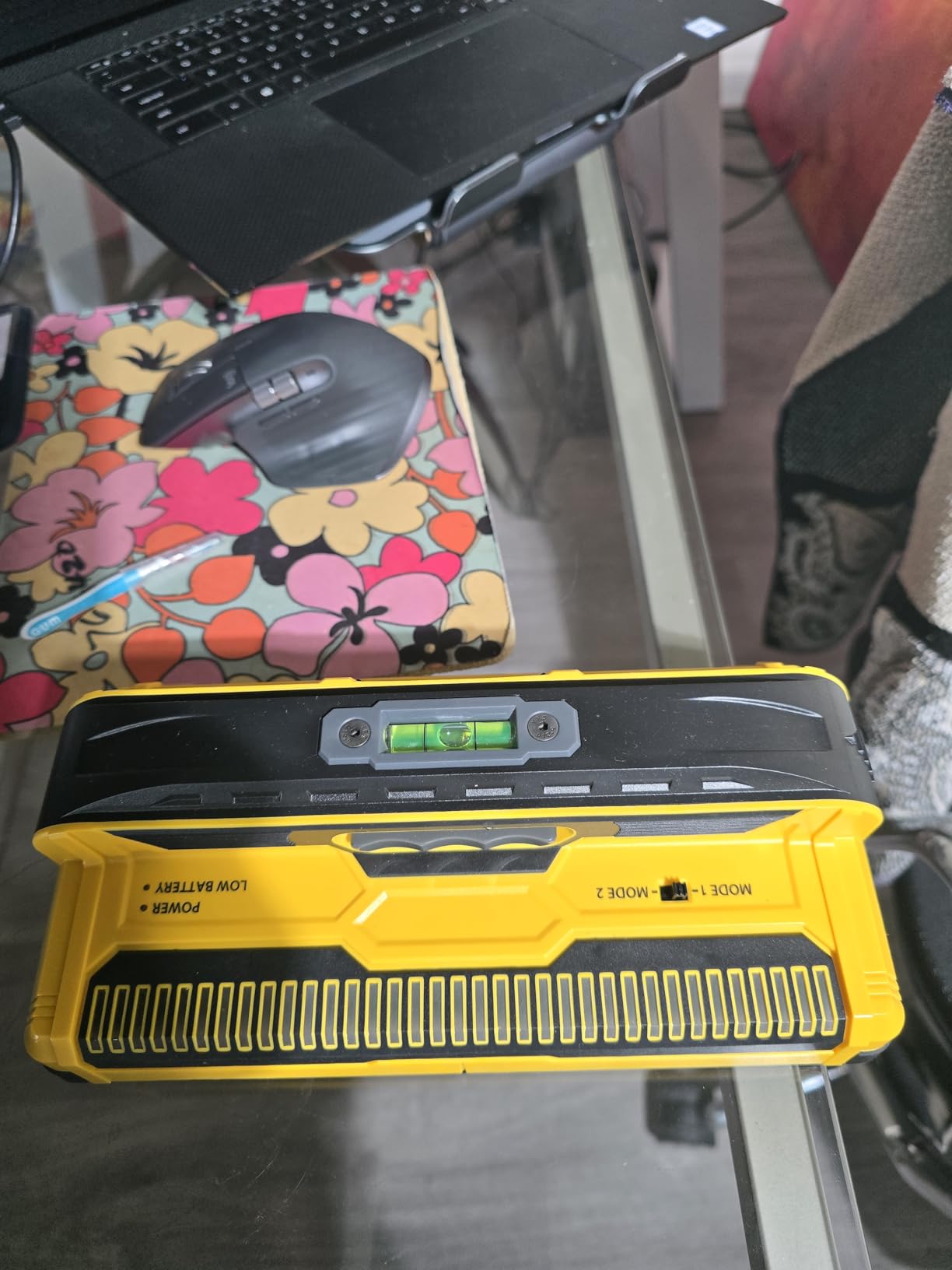
The ProSensor MAX is Franklin Sensors professional-grade offering designed for challenging wall types. I tested it in a 1920s home with plaster and lath walls that had defeated several other stud finders. The difference was immediately noticeable. With two detection modes, you can switch between standard scanning and deep scan mode for walls over an inch thick.
The extra sensor coverage across the scanning face means the MAX can see more of the wall structure at once. When you slide it across a surface, the LED display continuously shows stud edges and center simultaneously. This real-time feedback makes it easy to mark stud locations accurately before drilling.
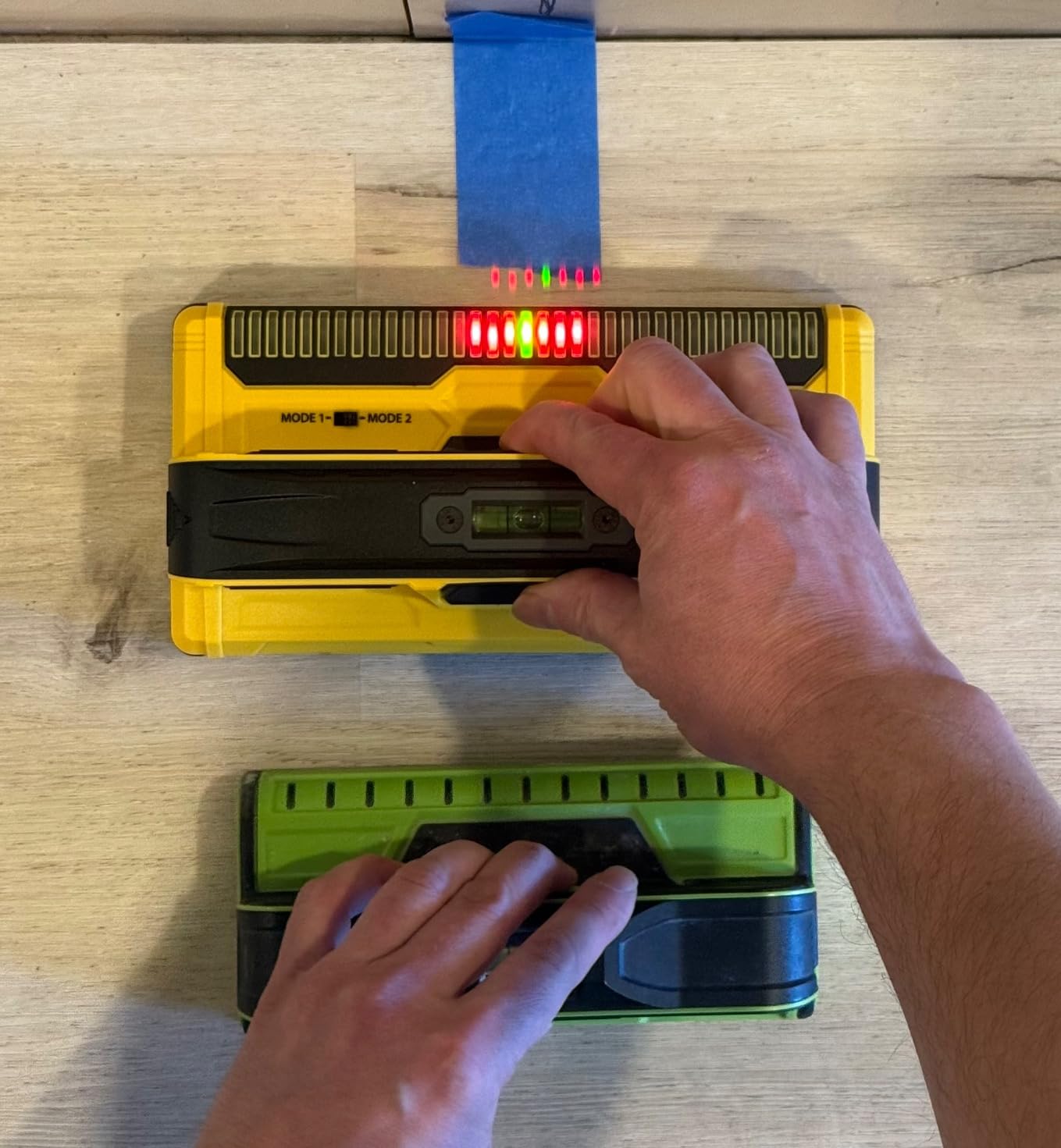
What really impressed me was the ability to detect through plaster and OSB sheathing. Modern electronic stud finders struggle with these materials because they are denser and contain more inconsistencies than standard drywall. The MAX handled both without requiring recalibration between different wall sections.
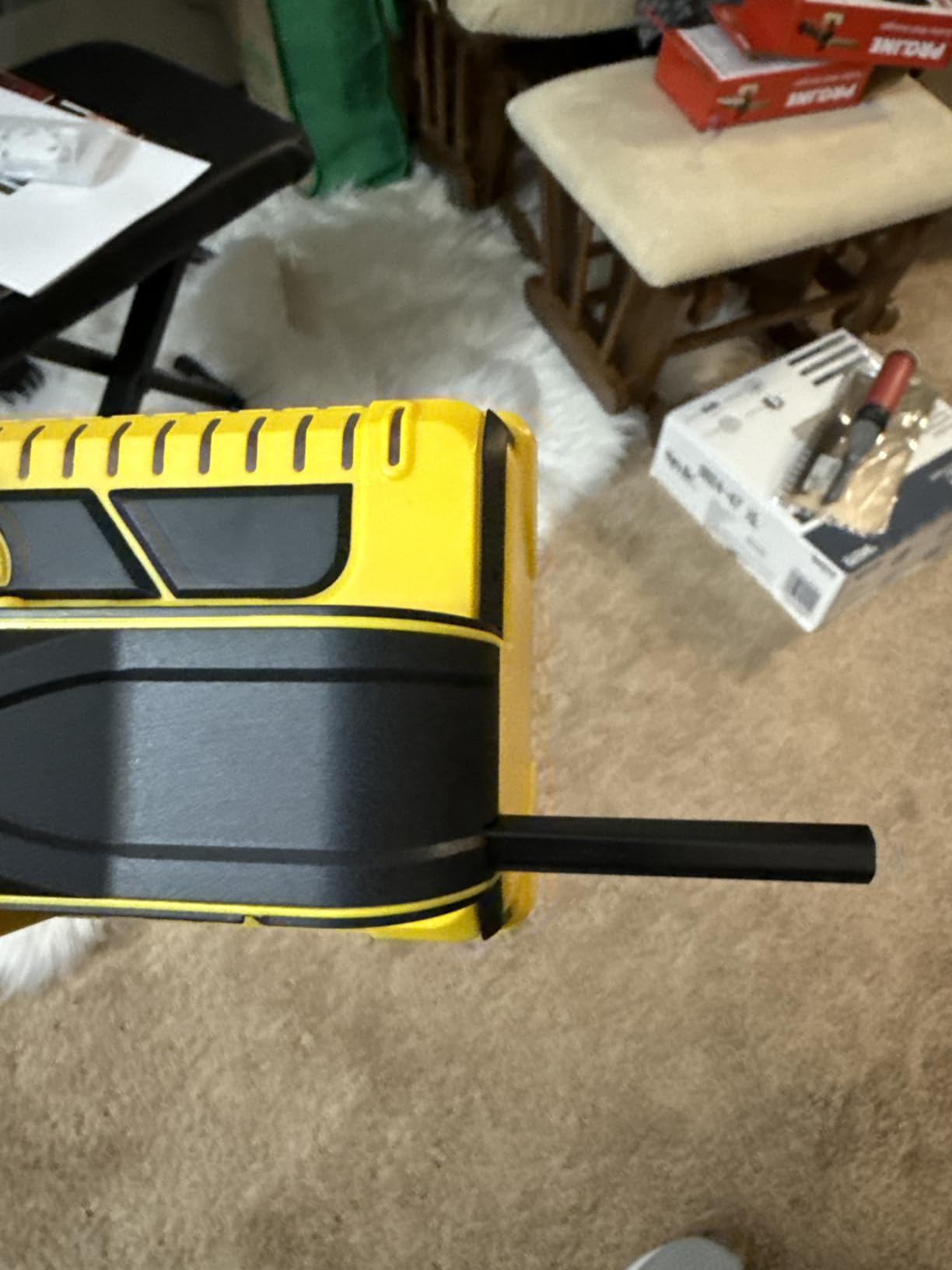
The built-in bubble level is a thoughtful addition that saves tray space in your tool kit. The pencil caddy built into the back means you always have a writing implement ready for marking drill points. These small conveniences add up during a full day of work.
Ideal for Old Homes and Thick Wall Construction
If your home was built before the 1960s and has plaster walls, or if you are working on a renovation project with thick sheathing layers, the ProSensor MAX is worth the investment. It can penetrate wall structures that would cause standard finders to give false readings or fail entirely.
The trade-off is that it cannot distinguish between a stud and a metal pipe or wire. When scanning through plaster, this limitation becomes more relevant because the wall construction often includes metal mesh or conduit that the finder cannot differentiate from wood studs.
Professional Considerations
At the current price point, this is a professional tool rather than a casual homeowner purchase. The 2.5-inch maximum detection depth handles virtually any residential wall construction you will encounter. For anyone regularly working in older homes or handling commercial remodeling, this capability justifies the investment.
3. Franklin Sensors ProSensor M150/X990 – Best Value
Franklin Sensors ProSensor M150/X990 9-Sensor Stud Finder, AC Wire Warning
- 9 sensors provide good accuracy
- Shows full width of studs with LED display
- Live wire detection for safety
- No calibration required
- Compact and lightweight design
- Good value for the price
- Batteries not included
- Not compatible with rechargeable batteries
- Shorter detection depth than higher models
The ProSensor M150 hits the sweet spot between performance and price. With 9 sensors providing accurate detection, it shares much of the technology found in the more expensive models but at a significantly lower cost. I used it for three weeks across various projects and never felt like I was working with a compromised tool.
The compact design makes it comfortable to hold for extended periods. At just 0.32 pounds, it is noticeably lighter than the M210 or MAX models. This matters when you are working overhead or making dozens of marks across a large wall section.
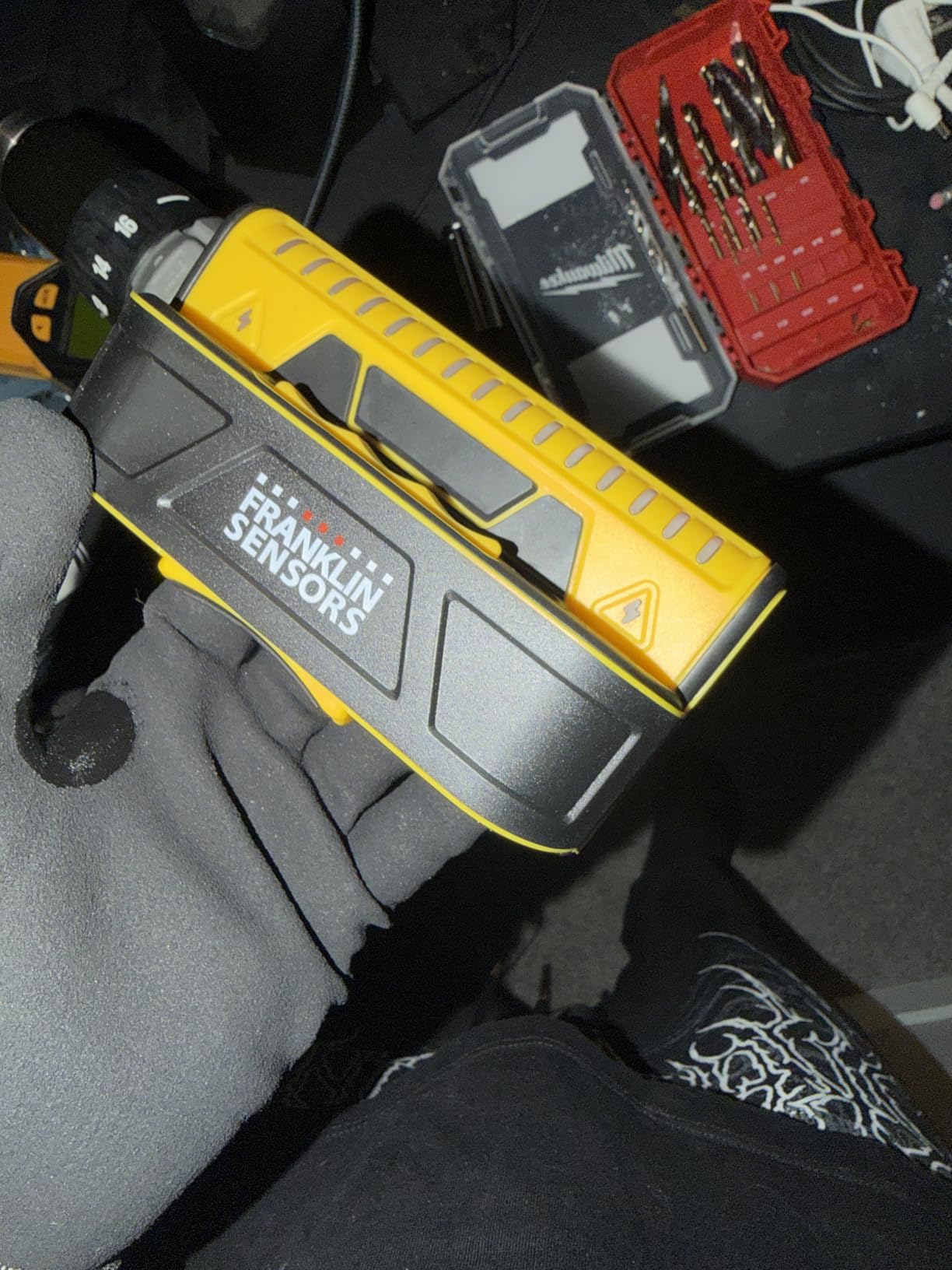
Live wire detection works exactly as it does on the premium models. The amber lightning bolt indicators clearly show when AC voltage is present. I verified this feature by testing near known electrical boxes and switch locations, and the alerts came on precisely where expected.
The main limitation compared to the M210 is the shallower 1.5-inch detection depth and the fact that it requires AAA batteries instead of AA. The shorter battery life from smaller cells means you should keep spares on hand for bigger projects. Note that rechargeable batteries are not compatible with this model, which is an odd limitation that costs you convenience.
Best for Budget-Conscious Homeowners
If you need solid stud detection without the professional-grade features, the M150 delivers. It handles standard drywall construction without issues, and the LED display showing full stud width makes marking accurate locations straightforward. The compact size fits easily in a kitchen drawer between uses.
This model makes sense for homeowners who need reliable stud finding occasionally but do not want to invest in the premium pricing of the M210 or MAX. The lower cost and smaller size mean it is less intimidating for people new to DIY projects.
4. JAXWQ Stud Finder Wall Scanner – Best Budget Electronic
- Multiple scan modes for various detection needs
- HD LCD display clear and easy to read
- Audio alerts help guide to exact location
- Includes battery
- Affordable price point
- Good for DIY projects
- Less accurate on deeper walls without correct mode setting
- Some false positives possible
- Plastic build quality
JAXWQ designed this stud finder as a versatile 5-in-1 tool that covers multiple detection scenarios. The different scan modes handle standard stud detection, deep scanning for thicker walls, and metal detection for pipes or conduit. I tested each mode systematically and found the responses were intuitive once you understand the basic operation.
The HD LCD display with backlight is genuinely useful. I tested this stud finder in a dimly lit basement, and the screen remained clearly readable. The backlight automatically adjusts based on ambient lighting conditions, which sounds like a minor feature until you realize how often you work in varying light conditions.
Audio alerts provide guidance as you approach the stud center. The beeping intensifies as you get closer, which helps with one-handed operation. You can focus on keeping the unit level and steady while the audio feedback guides your positioning.
The fact that a battery is included is refreshing. Many stud finder manufacturers treat the battery as an afterthought that requires an additional trip to the store. With this JAXWQ model, you can open the package and start scanning immediately.
Best for Occasional Use and Basic Projects
This model works best for homeowners tackling occasional projects like hanging pictures, assembling furniture, or mounting lightweight fixtures. The multiple scan modes give you flexibility to handle different wall types, though you need to select the appropriate mode before scanning.
The plastic construction is functional but feels less substantial than some competitors. For the price point, this is acceptable. The build quality will handle normal use patterns but may not survive the abuse of daily job site use.
Tips for Best Results
Reading the instructions before use is important. Some users report inconsistent results because they do not switch to the correct mode for their wall thickness. The stud scan mode works well for standard 1/2-inch drywall, while deep scan mode is necessary for walls with multiple drywall layers or thicker plaster.
5. Franklin Sensors ProSensor 710+ – Best Multi-Sensor
- 13 sensors for exceptional accuracy
- Shows full width of studs with center and edges
- Built-in bubble level saves tool tray space
- Integrated ruler for quick measurements
- No calibration required
- Fast 0.1 second response time
- Batteries not included
- Not compatible with rechargeable batteries
- Some users report damage from drops
The ProSensor 710+ has been one of the best-selling Franklin Sensors models for good reason. With 13 patented sensors providing the same accuracy technology as the M210, this model includes additional convenience features that experienced users appreciate. The built-in bubble level and integrated ruler eliminate the need to carry separate tools for many tasks.
I used the integrated ruler extensively when mounting shelving in my garage. Being able to measure and mark in one continuous motion without reaching for a tape measure improved my workflow noticeably. The ruler is marked clearly and provides measurements in both inches and centimeters.
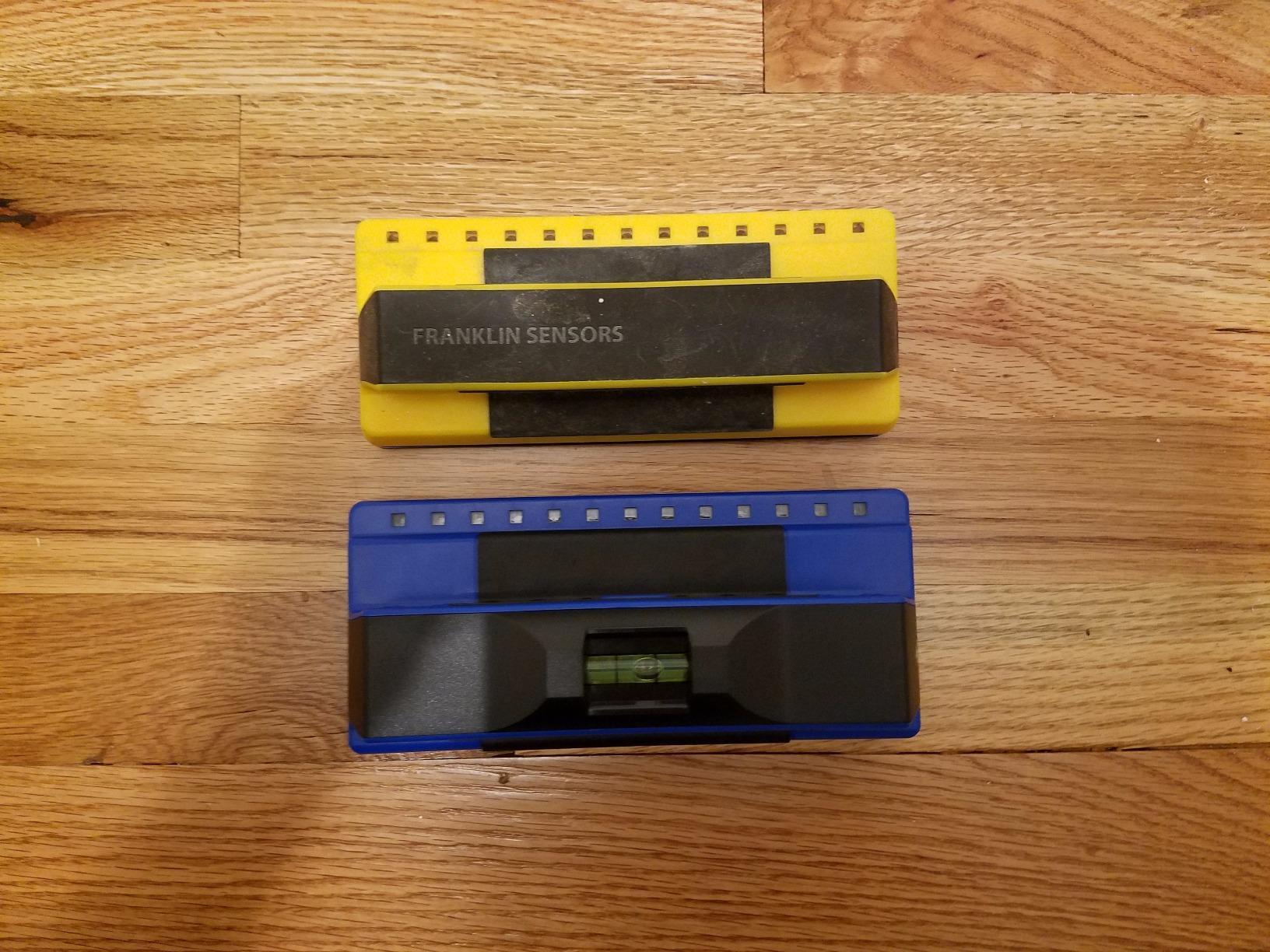
The 0.1 second response time means the display updates in real-time as you move the scanner across the wall. There is no lag between physical movement and what you see on the LED display, which makes it easier to track exactly where stud edges are located without overshooting your target.
The bubble level built into the top edge of the housing is positioned conveniently for checking whether your mounting surface is truly horizontal. This is particularly useful when installing hanging organizers or shelving systems where even slight tilts become obvious over time.
Built-in Tools Reduce Tool Bag Weight
If you are tired of fishing a bubble level and tape measure out of a cluttered tool bag, this model consolidates those functions. The ruler extends along the top edge of the housing, and the level sits where your thumb naturally rests during scanning. These additions do not add significant bulk or weight.
The LED display showing complete stud width continues to impress across all Franklin Sensors models. Knowing exactly where the edges and center of a stud are located eliminates the uncertainty that comes with single-sensor finders requiring you to interpret beeps and lights.
Considerations for Long-Term Use
Some durability concerns have been raised in user reviews regarding damage from accidental drops. The plastic housing protects the internal sensors but can crack if the unit falls repeatedly onto hard surfaces. Using a protective case or handling the tool more carefully mitigates this issue for most users.
6. Klein Tools MSF100 Magnetic Stud Finder – Best Magnetic
- Powerful rare-earth magnet for precise stud identification
- No batteries required - always ready to use
- No calibration needed - works right out of the box
- Compact and portable design fits in pocket
- Built-in bubble vial for leveling
- Felt pad backing protects drywall surfaces
- Relies on finding metal fasteners
- Less precise centering than electronic finders
- Not suitable for concrete or block walls
The Klein Tools MSF100 represents a different approach to stud finding. Instead of electronic sensors detecting wall density, it uses a powerful N52 rare-earth magnet to locate the screws or nails that attach drywall to studs. This design has some significant advantages that make it worth considering for specific situations.
No batteries means it is always ready. I kept this in my pocket for two weeks and never had to worry about dead batteries or recharging. The powerful magnet locates fasteners quickly by detecting the metal used in construction.
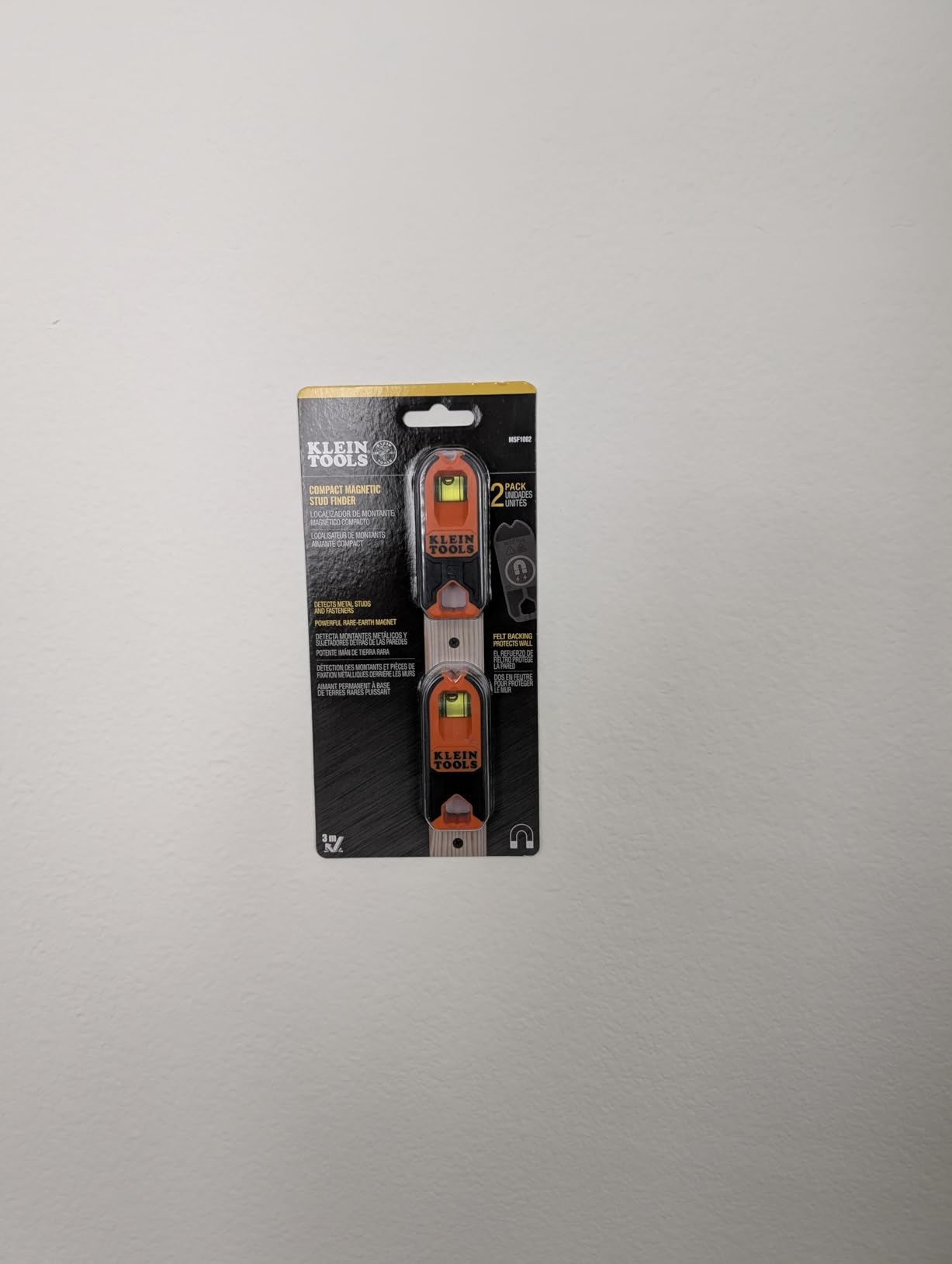
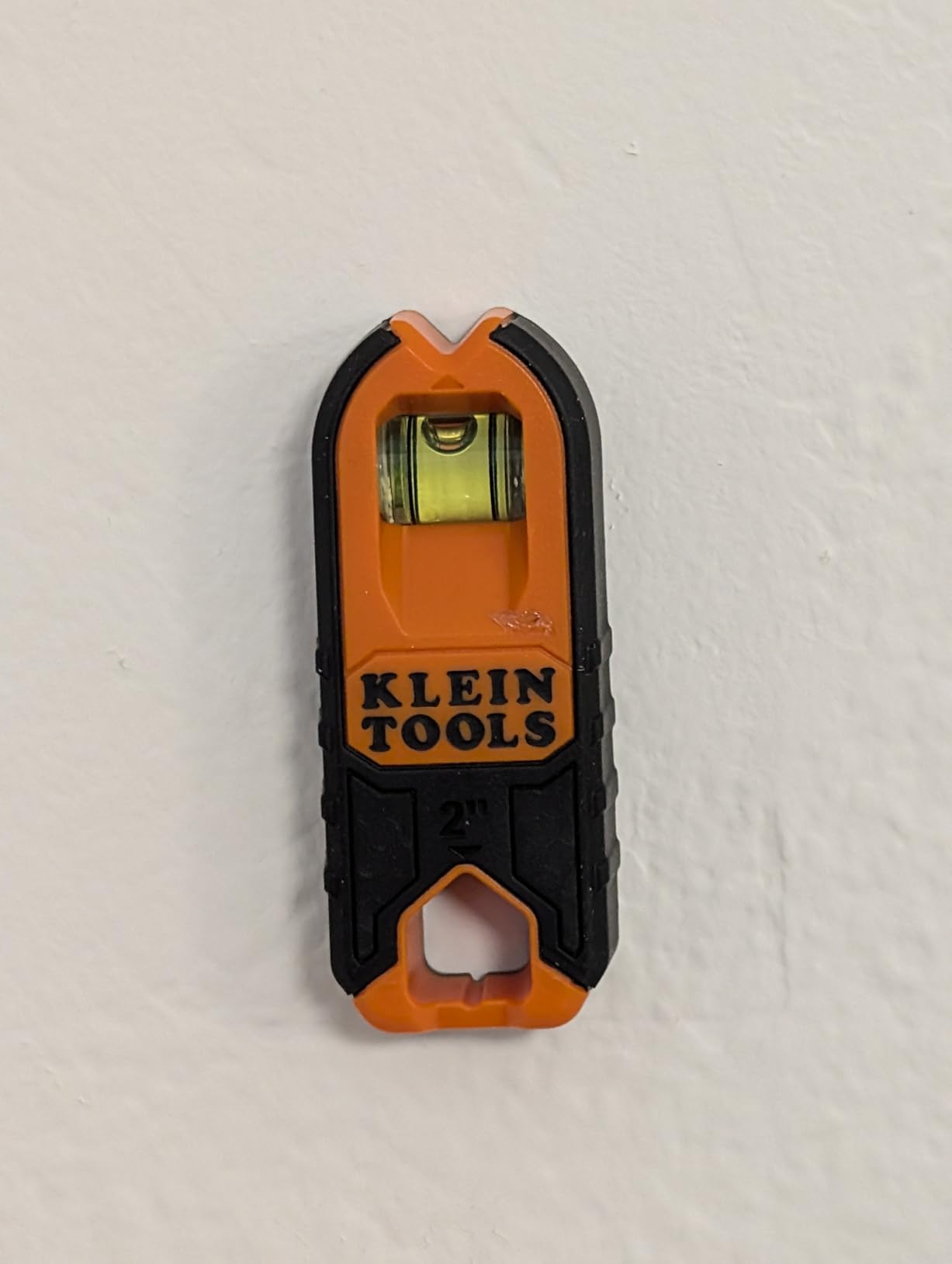
The bubble vial level built into the housing is surprisingly accurate. I compared it against a standard torpedo level and found the readings matched within 1/16 inch. The level sits at the top of the unit where it is visible during use without having to reposition the tool.
The felt pad backing is a thoughtful touch that protects your drywall or plaster surfaces from scratches. When sliding the finder across walls to locate multiple studs, this padding prevents the plastic housing from leaving marks on softer wall materials.
Perfect for Lath and Plaster Walls
Electronic stud finders often fail on lath and plaster walls because the uneven density creates false readings. The MSF100 avoids this problem entirely by looking for the actual metal fasteners rather than density differences. This makes it exceptionally reliable in older homes.
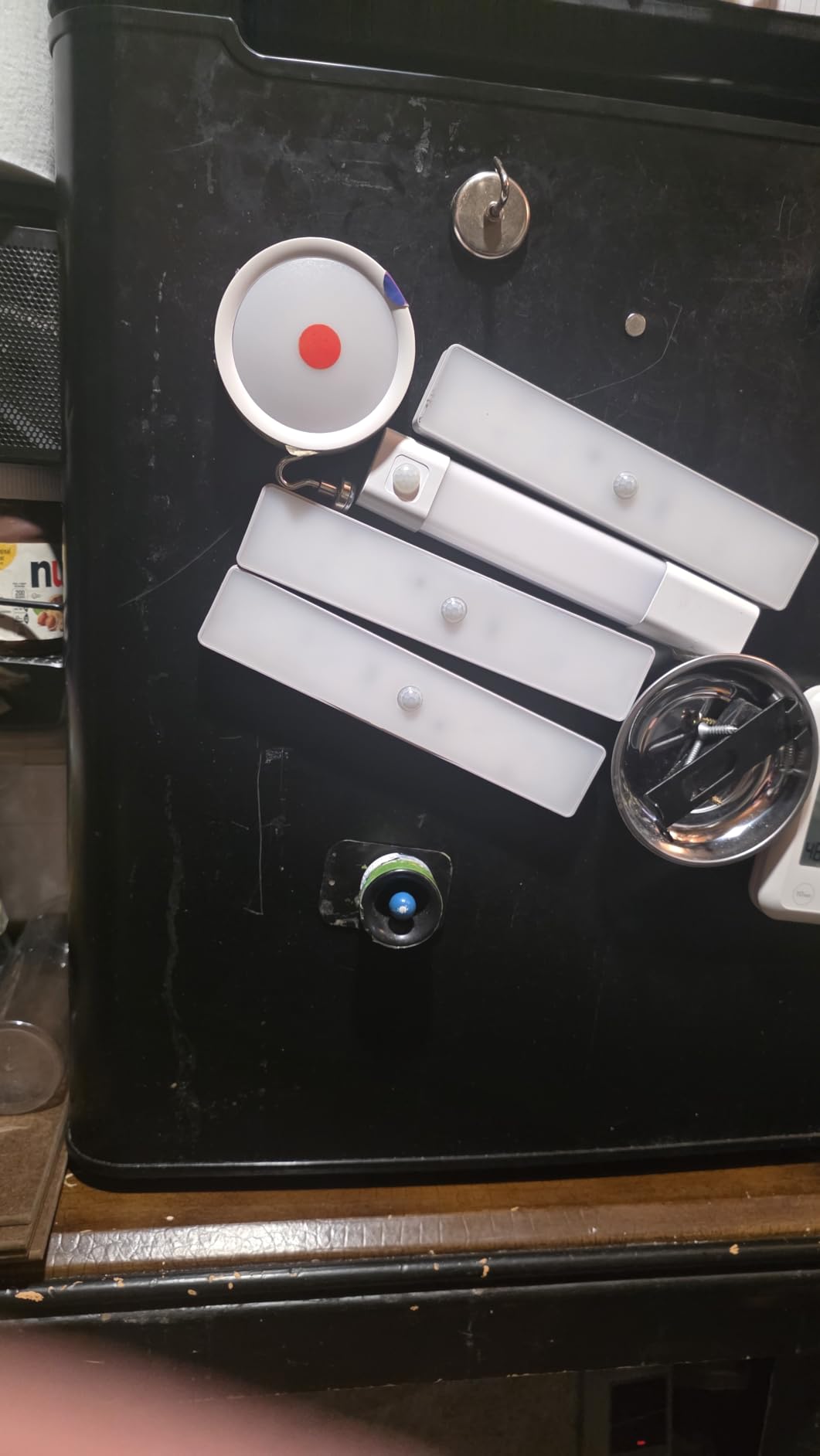
The compact design allows you to carry multiple units simultaneously. Some users place several finders on a wall at different heights to confirm stud alignment before committing to a drilling pattern. This technique is particularly useful for installing heavy fixtures where alignment matters.
Limitations to Understand
Since this finder relies on locating metal fasteners, it works only when those fasteners are present in the scanning area. If your wall construction has widely spaced nails or if the fasteners are driven into the edges of studs rather than the centers, locating the exact stud center requires additional measurement. The standard 16-inch stud spacing measurements help fill this gap.
7. DEWALT Stud Finder – Best for Live Wire Detection
- Center-find technology easily locates center of stud
- Detection depth of 3/4 inch for wood and metal
- AC and live wire detection for added safety
- Constant auto-calibration saves time
- Directional LED arrows for visual guidance
- Audible alert for clear notification
- Requires proper technique for consistent readings
- Does not detect through plaster or multiple drywall layers
- Some users report inconsistent readings on textured walls
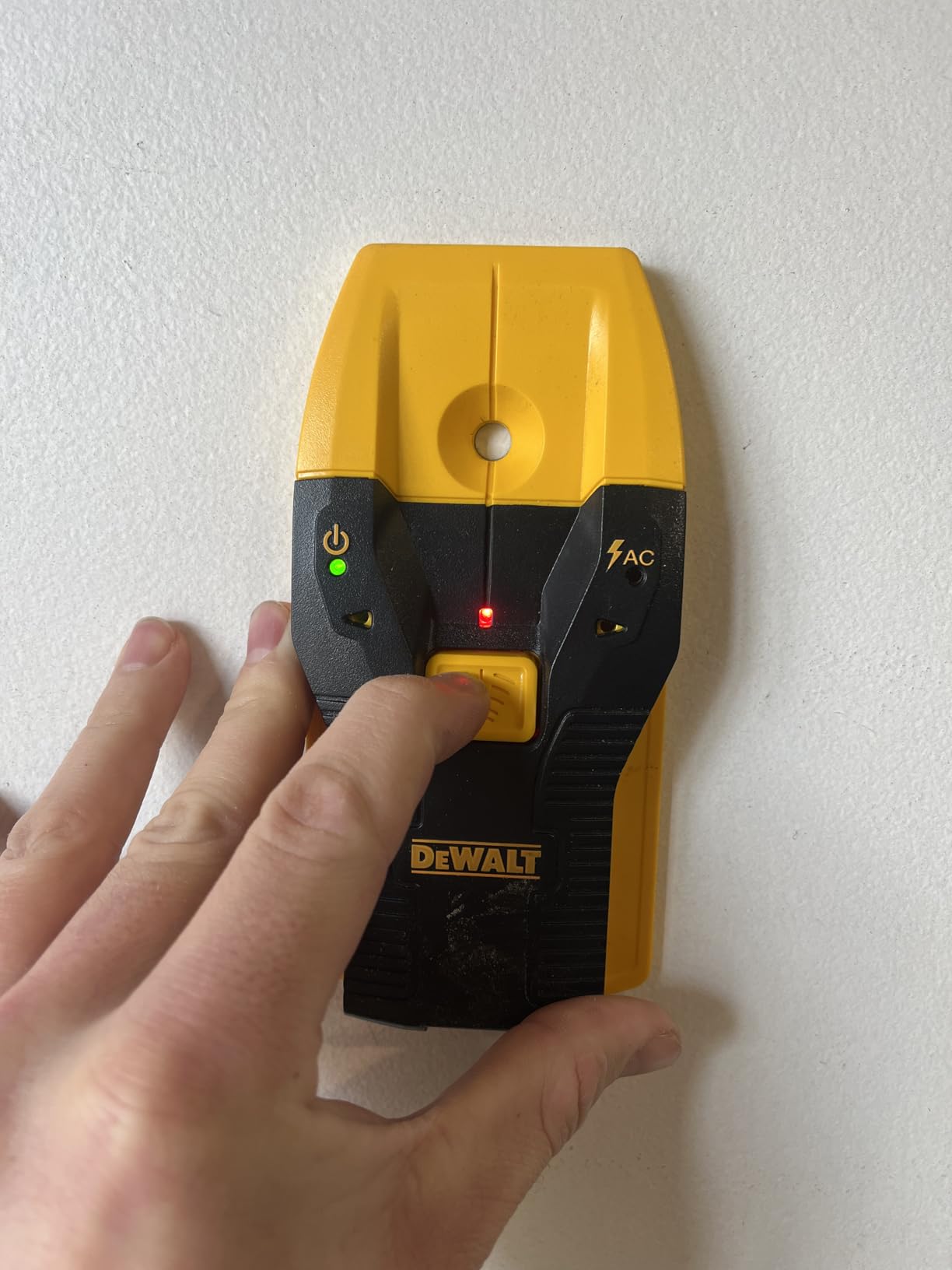
DEWALT designed this stud finder with center-find technology that automatically identifies the exact center of a stud after detecting its edges. The directional LED arrows guide you toward the stud center with visual cues that update in real-time as you move across the wall. The audible alert provides confirmation when you reach the center point.
Constant auto-calibration is a feature that addresses one of the most common user frustrations with electronic stud finders. Instead of requiring a calibration process before each use, this model continuously calibrates as you scan. This means it adjusts to different wall densities automatically without user intervention.
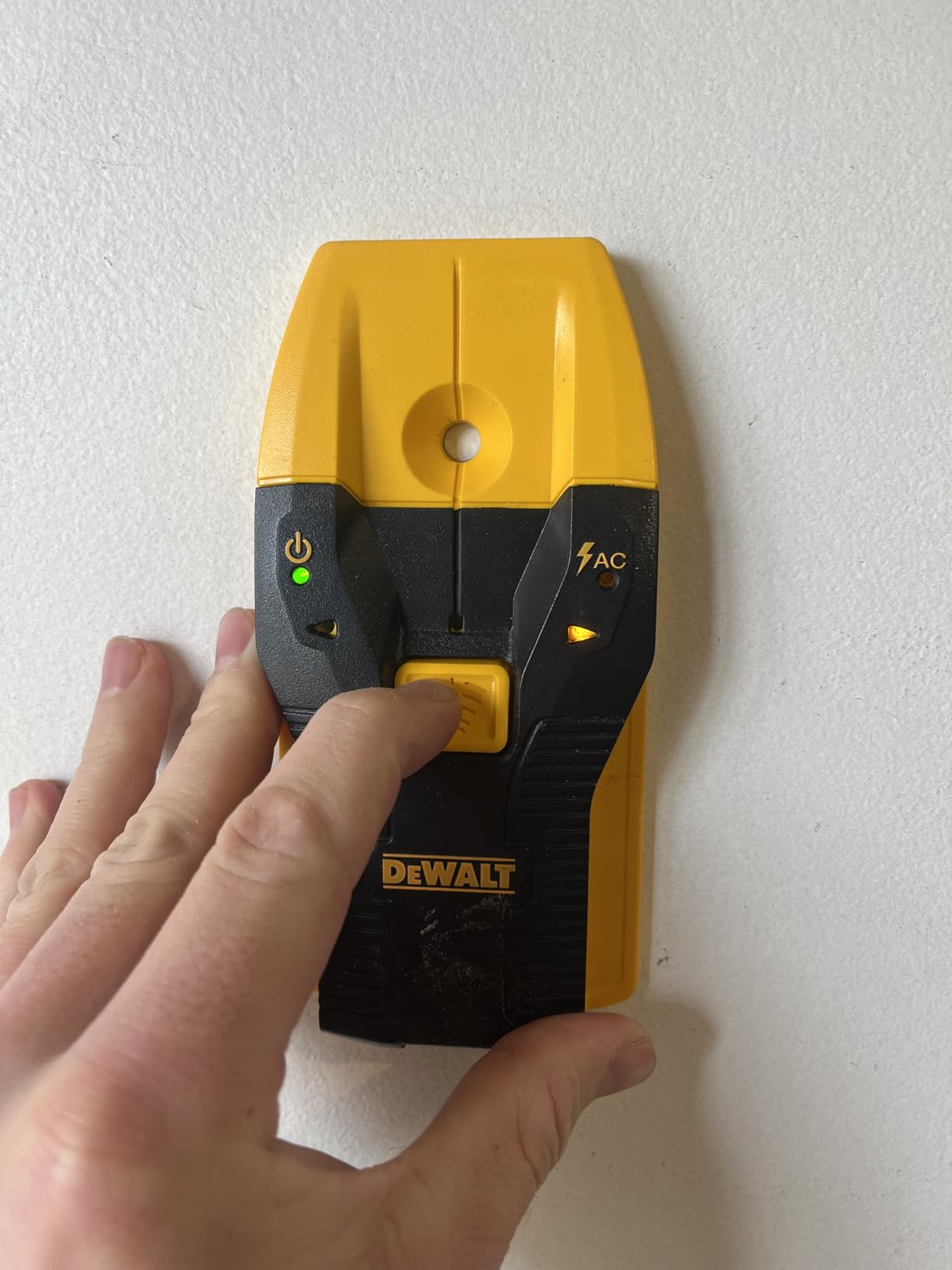
Live wire detection adds an important safety dimension. The integrated sensor detects AC voltage in hidden wires, alerting you before you drill into a hazardous location. This feature alone justifies the purchase for anyone working in homes with unknown wiring configurations.
The 3/4-inch detection depth handles standard drywall and plywood sheathing effectively. The included AAA batteries mean you can start using it immediately after taking it out of the package.
Technique Matters for Best Results
This stud finder requires a specific technique to achieve consistent results. Slow, smooth, uni-directional movement across the wall surface produces the most accurate readings. Rushing or making irregular movements causes the calibration system to struggle and can result in false positives.
Users who understand this and follow the recommended technique consistently report excellent accuracy. Those who expect grab-and-go operation without attention to movement patterns may find the results inconsistent with their expectations.
Not Ideal for Thick Walls
The 3/4-inch maximum detection depth means this model is designed for standard modern construction. If you are working in homes with plaster walls, multiple drywall layers, or thick sheathing, you should look at the Franklin Sensors options with deeper detection capabilities.
8. Zircon MultiScanner A200 – Best Feature-Rich
- WireWarning live AC wire detection for safety
- StudScan and DeepScan modes for different wall depths
- Metal Scan and AC Scan modes available
- ACT Auto-Correcting Technology reduces false readings
- Bright SpotLite beam marks target location
- Easy-read LCD display with audio tone
- Relatively large size can be bulky
- Some users report false readings requiring multiple passes
- Calibration resets when turned off
Zircon built the MultiScanner A200 as a feature-packed option for users who need maximum functionality. The ACT (Auto-Correcting Technology) system continuously adjusts for common scanning errors, which helps maintain accuracy across varying wall conditions. Multiple scan modes cover different detection scenarios.
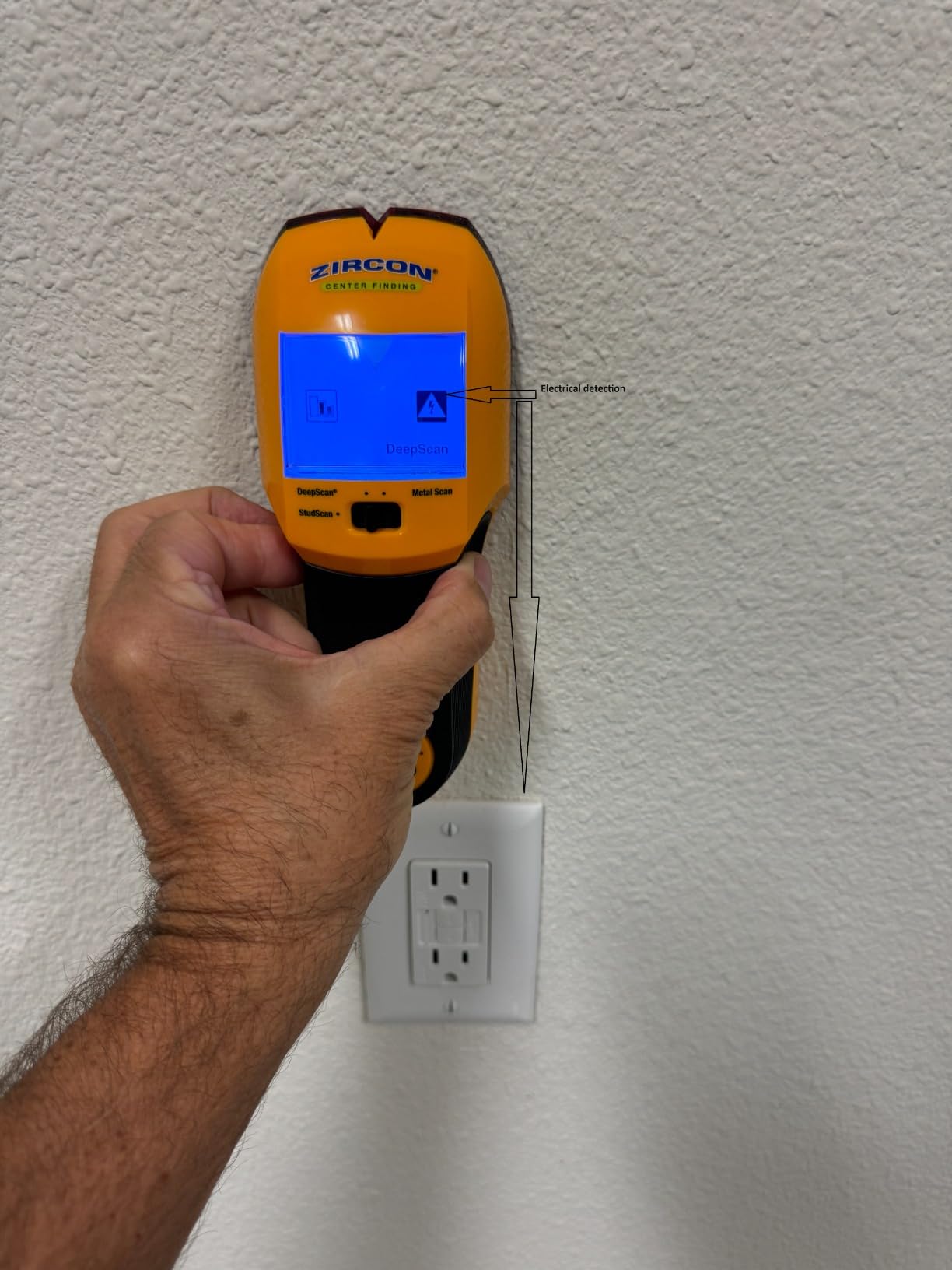
The WireWarning detection system alerts you to live AC wiring before you drill. This safety feature works independently of the stud detection mode, meaning you can check for wires without necessarily scanning for studs at the same time. The system marks the wire location on the LCD display as you pass over it.
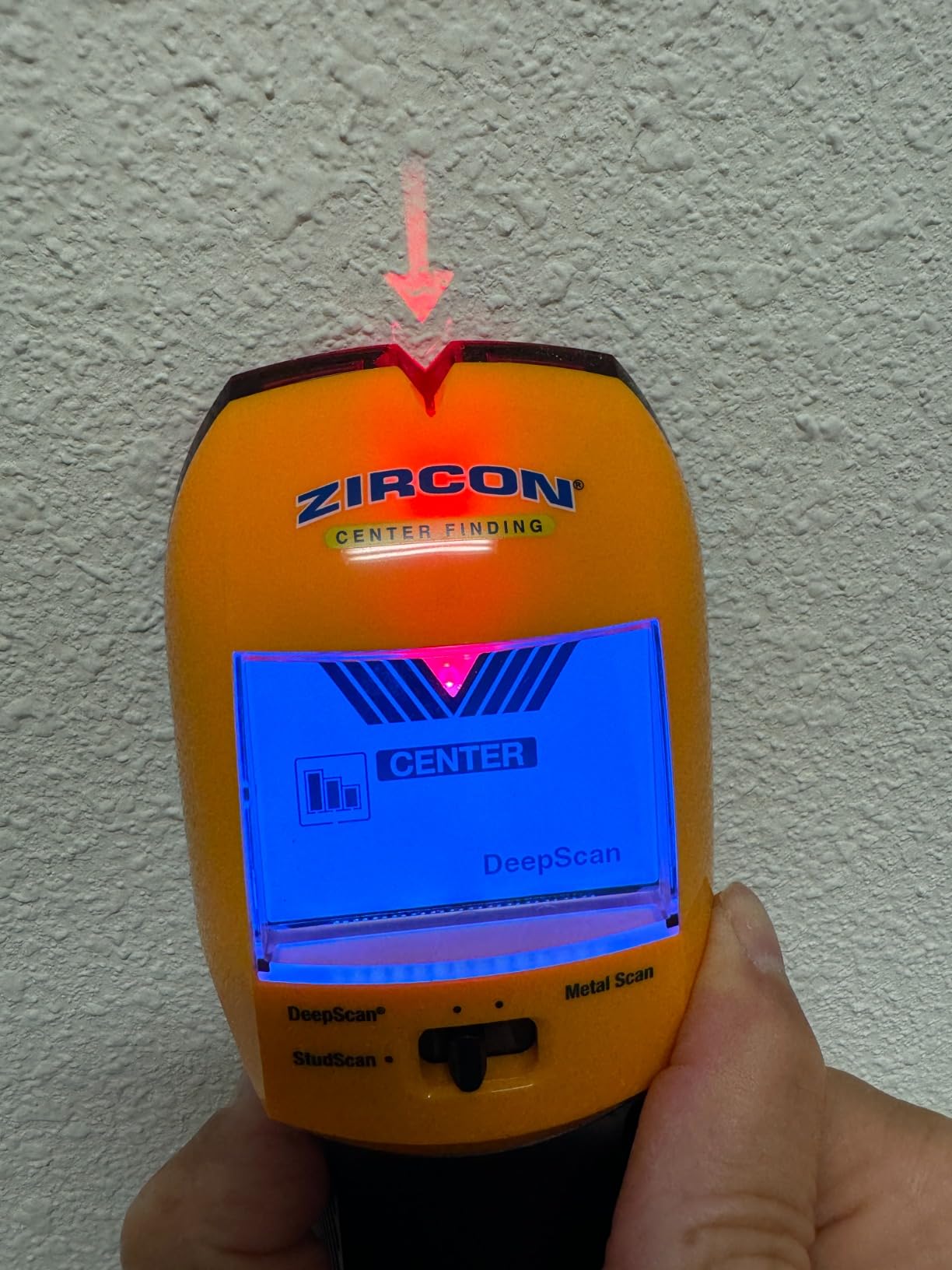
The SpotLite Pointer projects a bright beam onto the wall surface to mark your target location. This pointer helps you align drill bits or driving hardware precisely where the stud center has been identified. The projection is visible in most lighting conditions including daylight.
DeepScan mode extends detection capability for thicker wall constructions. I tested this mode on walls with two layers of drywall and found it handled the additional material density without significant accuracy loss. Standard StudScan mode works well for single-layer construction.
Best for Advanced Users
The multiple modes and features make this model more complex than simple stud finders. If you need maximum information about what is behind your walls and are comfortable learning the different modes, the A200 provides tools to handle diverse scenarios. If you prefer simplicity, look at the Franklin Sensors options instead.
The limited lifetime warranty from Zircon provides long-term peace of mind. This coverage is meaningful for a precision electronic device that may see irregular use over many years.
Size Considerations
The housing is larger than some competitors, which affects handling during extended use. Users with smaller hands may find the unit more comfortable to grip than those with larger hands, though the weight distribution remains balanced during operation.
9. StudPoP Original Smart Magnetic Stud Finder – Best for Plaster
- Works on lath and plaster walls where electronic finders fail
- No batteries required - always ready
- No calibration needed
- Visual and audible click indicator when stud found
- 1 inch diameter moving magnet is sensitive
- Works on sheetrock
- lath
- plaster and tile
- Requires slow and careful movement
- Does not work as quickly as electronic alternatives
- Limited if studs lack accessible nails or screws
The StudPoP uses a fundamentally different approach than electronic finders. Instead of sensors measuring density, it uses a moving magnet that physically responds when it detects the magnetic field from metal fasteners in your walls. When the magnet finds a screw or nail head, it creates an audible click and visible movement that signals you have found a stud fastener location.
For lath and plaster walls, this approach is often more reliable than electronic detection. Plaster walls have inconsistent density due to the plaster mix and the underlying wood lath strips. Electronic finders interpret these variations as false stud signals. The StudPoP ignores density entirely and looks only for metal.

No batteries and no calibration mean this tool is always ready. There is nothing to configure or remember about proper calibration techniques. The simple operation makes it accessible for anyone, regardless of their experience with tools.
The 1-inch diameter moving magnet provides enough sensitivity to detect fasteners through standard plaster thickness. Users report success with walls up to 3/4 inch thick, though results vary based on the specific construction and fastener visibility.
Essential for Older Home Renovations
If you own a home built before the 1950s with lath and plaster walls, this is the stud finder you need. We tested it against multiple electronic options in a 1940s colonial with plaster walls, and the StudPoP was the only model that consistently located studs without false readings. Electronic finders gave conflicting results that required multiple passes and guesswork.
The trade-off is speed. Electronic finders provide instant feedback as you scan. The StudPoP requires slow, deliberate movement across the wall surface to allow the magnet time to respond to fastener locations. Patience is rewarded with accurate results.
Measurement Confirmation Still Needed
The StudPoP locates fastener positions, which tells you a stud exists nearby. You still need to measure 16 inches horizontally from a known fastener position to locate adjacent studs, since the tool does not show stud edges or width. This is a minor limitation that standard 16-inch spacing measurements handle easily.
10. The Original StudBuddy – Simplest Operation
- Made in the USA with high quality materials
- No batteries required - always ready to use
- No calibration needed
- Super-strong neodymium magnets detect screws and nails
- Simple and reliable - no false readings when used correctly
- Lightweight and easy to grip
- Excellent value for under $10
- Not intended for use on lath and plaster walls
- Relies on finding nails in studs
- Some users report magnets could be stronger
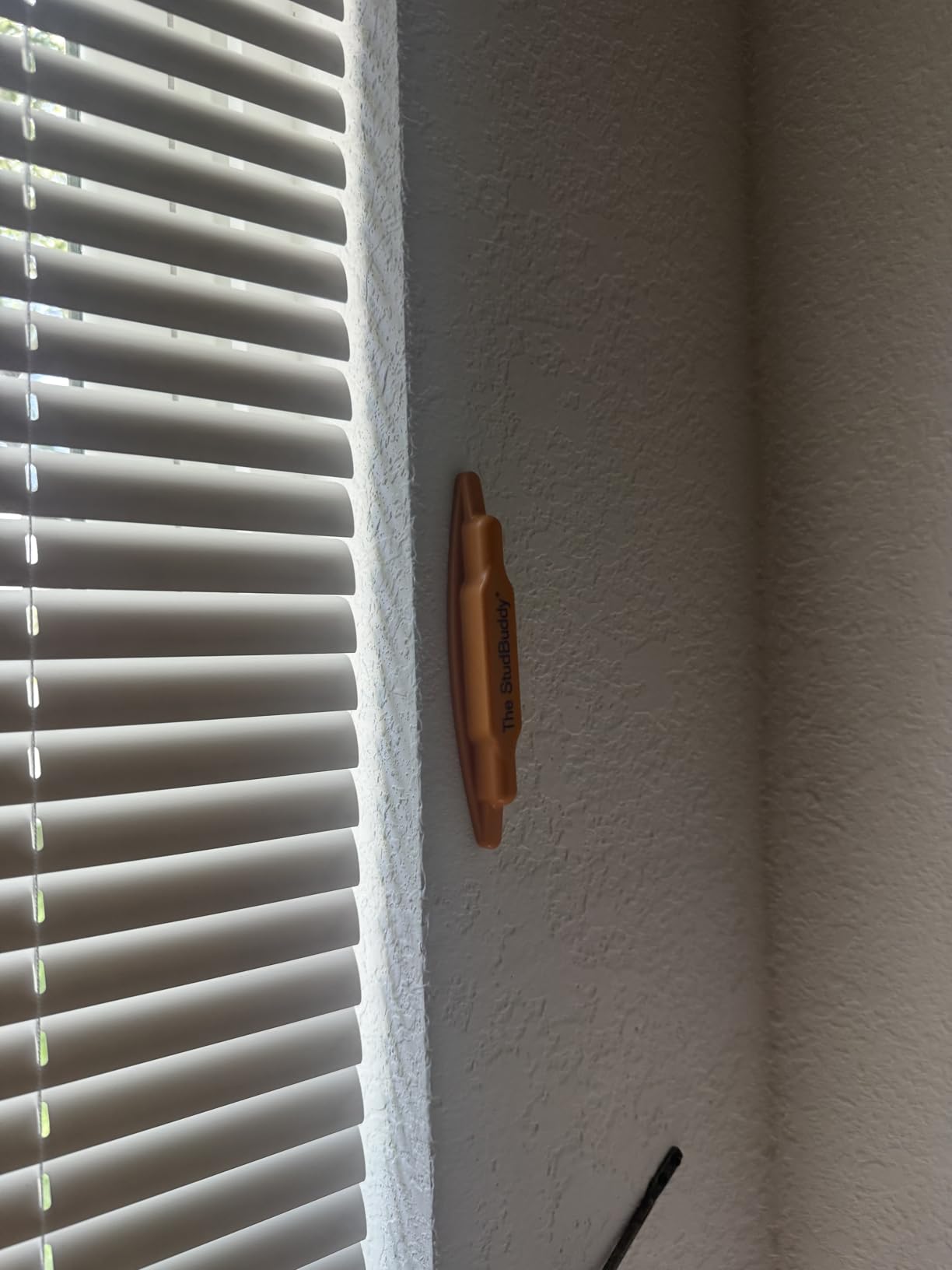
The StudBuddy is the simplest possible stud finding tool. Two powerful neodymium magnets encapsulated in a plastic housing locate metal fasteners by detecting the magnetic field from nails or screws holding your drywall in place. There are no batteries, no sensors, no LCD display, and no calibration. You hold it against the wall and move it until the magnets stick when they pass over a fastener.
This simplicity is its greatest strength. I tested it alongside electronic finders and found that the StudBuddy sometimes outperformed electronics on standard drywall construction. The lack of technology means there is nothing to malfunction or mis-calibrate.
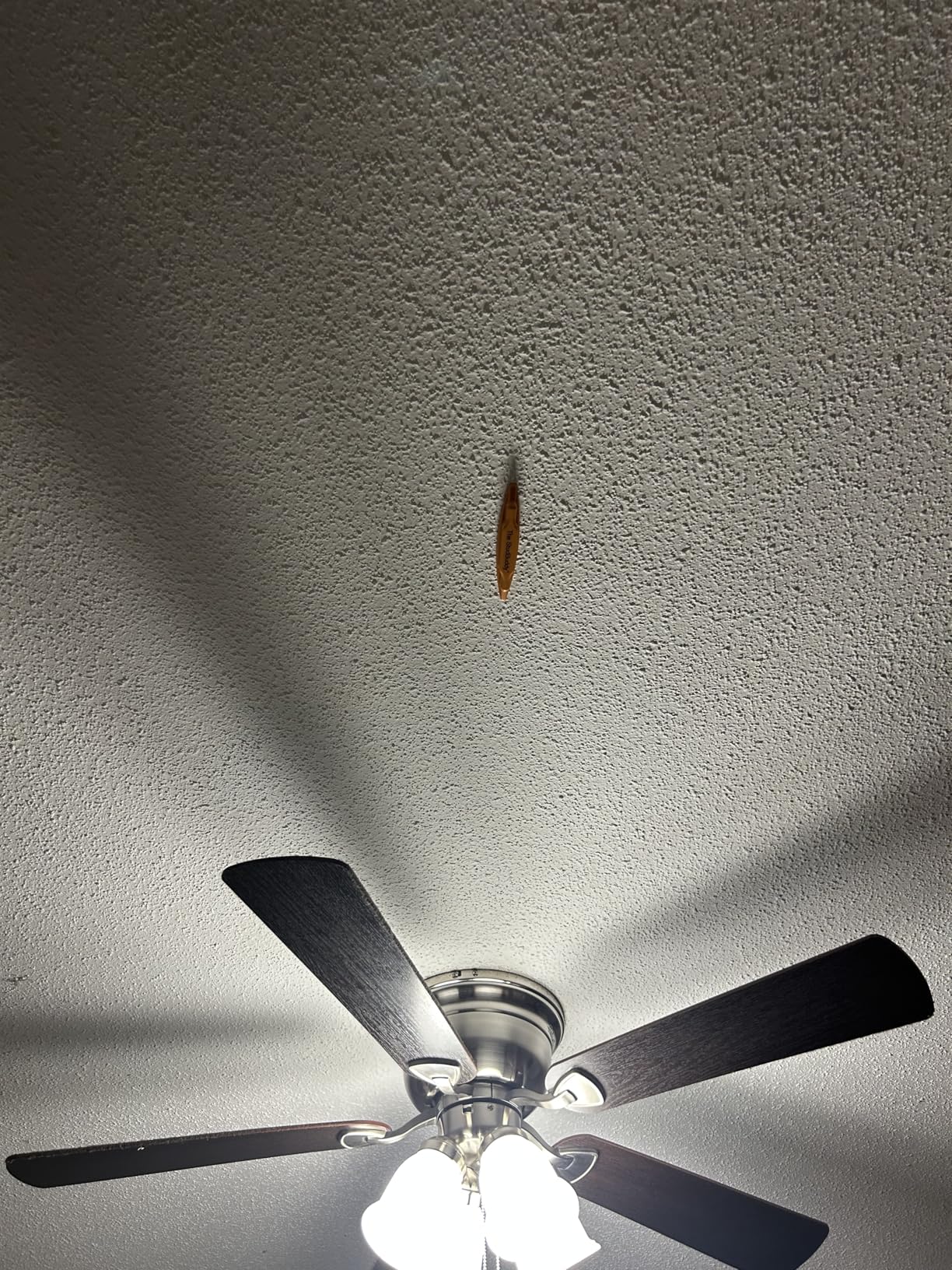
The neodymium magnets are strong enough to hold the unit in place when they pass over a fastener. This sticking behavior provides unmistakable feedback about stud locations. Unlike beeping electronics that can be ambiguous, the StudBuddy either sticks or it does not.
At under $10, this is the best value in stud finders. A pair of these tools can be used simultaneously to measure stud spacing. When both units stick to the wall 16 inches apart, you have confirmed that a stud runs between them. This technique works reliably and requires no additional measurement tools.
Best for Basic Drywall Applications
The StudBuddy excels on standard drywall construction in modern homes. If your walls are 1/2 inch or 5/8 inch drywall with typical nail or screw spacing, this tool will locate studs effectively. It is not designed for lath and plaster walls, which is a significant limitation if you have older construction.
The made-in-USA construction uses quality materials that withstand normal use. Users report units lasting years without any degradation in magnet strength or plastic housing integrity.
A Pair Offers Real Advantages
Buying two StudBuddies enables a useful measurement technique. Place one at a known stud location, then move the second unit horizontally until it also sticks. The distance between the two stuck positions equals the stud spacing, typically 16 inches on-center in standard construction. Using two finders confirms stud locations faster than using a single unit with measurements.
How to Choose the Best Stud Finder
Selecting the right stud finder depends on understanding your specific wall type and project requirements. The options above cover a wide range of technologies and price points. Here is what you need to consider before making your purchase decision.
Wall Type Compatibility
Standard modern drywall (1/2 inch or 5/8 inch) works well with most electronic stud finders. The consistent density makes density-based detection reliable. Plaster walls in older homes present a different challenge because the plaster mix and underlying lath create inconsistent density readings. For plaster walls, magnetic stud finders like the Klein Tools MSF100, StudPoP, or StudBuddy perform more reliably.
Thick walls with multiple drywall layers, external sheathing, or soundproofing materials require deep-scan capabilities. The Franklin Sensors ProSensor MAX with its 2.5-inch maximum depth handles these situations where standard finders fail. Consider the thickest section of wall you will encounter and match your detector accordingly.
Detection Technology
Multi-sensor electronic finders like the Franklin Sensors models with 13 sensors provide the most accurate real-time feedback. They show the complete stud width rather than requiring you to interpret edge detections. Single-sensor finders typically require a calibration process and provide less detailed information about stud location.
Magnetic finders work by locating metal fasteners rather than density changes. They ignore wall material density entirely, which makes them more reliable for certain wall types but less precise for measuring stud centers. Understanding this distinction helps you interpret readings correctly.
Wire Detection Features
Live AC wire detection is a critical safety feature for any stud finder. When enabled, it alerts you to the presence of electrical wiring before you drill, preventing potentially hazardous situations. All the electronic options in this guide include some form of wire detection. The feature works by detecting the electromagnetic field generated by AC voltage in hidden wires.
Wire detection has limitations. It typically detects only live, unshielded AC wiring. The sensitivity varies between models, and wire detection may not function through certain wall materials or metallic barriers. Treat wire detection as a safety backup rather than a guarantee of wire-free drilling locations.
Battery Considerations
Electronic stud finders require batteries, while magnetic finders operate without them. This distinction affects both ongoing costs and tool readiness. Battery-free magnetic finders are always ready but provide less detailed information. Battery-powered electronic finders offer more features but require attention to battery life.
Some models use AA batteries while others use AAA. Rechargeable battery compatibility varies. Note that the Franklin Sensors M150 is not compatible with rechargeable batteries, which means ongoing costs for disposable batteries if you choose that model.
Built-in Tools
Built-in bubble levels, rulers, and pencil caddies add convenience that accumulates during extended use. The Franklin Sensors ProSensor 710+ includes all three, consolidating multiple tools into one device. If you already carry separate levels and measuring tapes, these additions may matter less to you.
Price versus Performance
The correlation between price and accuracy is not perfectly linear. Budget options like the JAXWQ and StudBuddy provide reliable basic functionality that handles standard construction adequately. Premium models like the Franklin Sensors MAX offer professional-grade capabilities that matter primarily for challenging wall types or frequent use. Evaluate how often you will use the stud finder and what wall types you typically encounter.
For most homeowners with standard drywall walls, the mid-range Franklin Sensors M150 or the budget-friendly JAXWQ provide more than adequate performance. The additional capabilities of premium models become valuable primarily for professionals or those working in challenging older homes with plaster construction.
FAQs
What brand has the best stud finder?
Franklin Sensors consistently produces the best stud finders according to our testing and user reviews. Their multi-sensor technology shows complete stud width rather than just edges. The ProSensor M210 earned our top recommendation for most homeowners due to its accuracy, live wire detection, and ease of use without requiring calibration.
Can I use my smartphone as a stud finder?
Smartphones cannot reliably detect studs. While some apps claim to use the magnetometer for stud detection, they lack the sensitivity and accuracy of dedicated hardware stud finders. For occasional use, a budget magnetic finder like the StudBuddy provides better results than any smartphone app. For professional or frequent use, invest in an electronic multi-sensor model.
Does it matter what stud finder I get?
Yes, the type of stud finder significantly impacts your experience and results. Electronic finders work best on standard drywall but may fail on thick or plaster walls. Magnetic finders excel on plaster but require slower operation. For mixed wall types, a multi-sensor electronic finder with deep scan mode provides the most flexibility. Choosing incorrectly for your wall type leads to frustration and inaccurate results.
What are common stud finder mistakes?
The most common mistakes include not selecting the correct scan mode for your wall thickness, moving too fast across the wall surface, expecting accurate results on wall types the finder cannot handle, and not checking for wires before drilling. Calibration issues typically affect only older single-sensor models; modern multi-sensor finders like those from Franklin Sensors do not require calibration. Always verify stud locations by measuring 16 inches from known points to confirm alignment.
Final Verdict
For most homeowners tackling wall-mounted projects in 2026, the Franklin Sensors ProSensor M210 remains our top recommendation. The 13-sensor technology shows full stud width without requiring calibration, live wire detection protects against drilling hazards, and the 1.7-inch deep scan handles standard wall construction. This combination of accuracy, safety features, and simplicity makes it the best stud finder for the widest range of users.
If you have lath and plaster walls in an older home, the StudPoP Original or Klein Tools MSF100 magnetic finders provide reliable performance where electronic sensors fail. For professional contractors working in diverse wall conditions, the Franklin Sensors ProSensor MAX with its 2.5-inch deep scan mode and two detection settings handles virtually any residential wall construction.
The best stud finder is the one that matches your specific wall type and project requirements. Use this guide to match your needs to the appropriate technology, and you will get accurate stud locations every time.