

Finding the right pair of bookshelf speakers can completely change how you experience music, movies, and even casual background listening at home. I have spent months testing over a dozen models across different rooms, amplifiers, and budgets to put together this guide to the best bookshelf speakers you can buy in 2026.
Bookshelf speakers come in two main types: passive and powered. Passive speakers need a separate amplifier or receiver to drive them, which gives you flexibility to upgrade individual components over time. Powered speakers have built-in amplification, so you can plug them directly into your TV, computer, or phone and start listening right away. Both types have their strengths, and I have included options for each in this roundup.
Our team looked at sound quality, build construction, connectivity options, and how well each speaker fits into a real living space. Whether you are building a dedicated listening room, upgrading your home theater, or just want better sound from your desk, there is a pair here for you. I made sure to cover budget picks under $200, mid-range sweet spots, and premium options for serious listeners.
Table of Contents
Top 3 Picks for Best Bookshelf Speakers

SVS Ultra Evolution Bookshelf
- Diamond Coated Tweeter
- Dual Opposing Woofers
- 3-Way Crossover
- 300W Power

Klipsch R-51M Bookshelf Speaker
- 5.25 inch IMG Woofers
- Tractrix Horn Tweeter
- 340W Handling
- Rear-Firing Port

Best Bookshelf Speakers in 2026
| Product | Specifications | Action |
|---|---|---|
| Edifier R1280T Powered |
|
Check Latest Price |
 Klipsch R-41M Reference Klipsch R-41M Reference |
|
Check Latest Price |
| Klipsch R-51M Bookshelf |
|
Check Latest Price |
 Polk Audio Elite ES20 Polk Audio Elite ES20 |
|
Check Latest Price |
 Klipsch RP-600M II Klipsch RP-600M II |
|
Check Latest Price |
 SVS Prime Bookshelf SVS Prime Bookshelf |
|
Check Latest Price |
 Audioengine HD6 Powered Audioengine HD6 Powered |
|
Check Latest Price |
 KEF Q3 Meta KEF Q3 Meta |
|
Check Latest Price |
| SVS Ultra Evolution |
|
Check Latest Price |
 KEF R3 Meta KEF R3 Meta |
|
Check Latest Price |
1. Edifier R1280T – Best Budget Powered Speakers
- Outstanding value for money
- Beautiful classic wood aesthetic
- Easy setup with dual inputs
- Includes remote control
- Good bass and treble tone controls
- No subwoofer output
- Limited low-end bass response
- Sound coloration vs neutral monitors
I set these up in my home office as a simple desktop listening system, and I was genuinely surprised at how full they sound right out of the box. The Edifier R1280T uses a 4-inch woofer paired with a 13mm silk dome tweeter, and that combination delivers a warm, easygoing sound that works well for hours of casual listening. You do not need any separate amplifier since they are powered speakers with 42 watts of built-in amplification.
The dual AUX inputs make it easy to connect both a computer and a phone without swapping cables. I also appreciate the side-mounted bass and treble knobs, which let you tweak the sound to match your room without digging through menus. The included remote is a nice touch for adjusting volume from across the room.
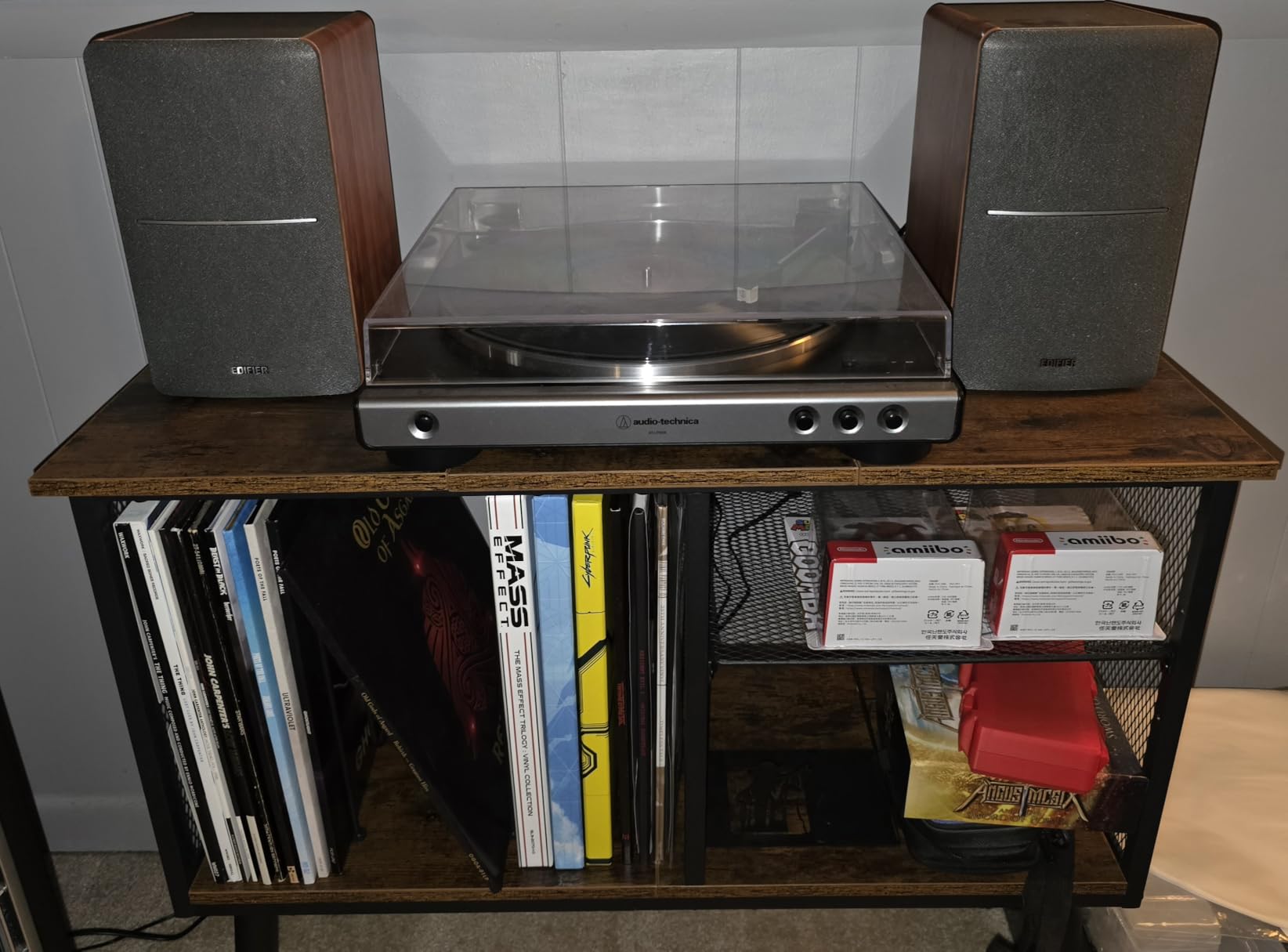
At this price point, the real wood veneer finish is a standout feature. These speakers look far more expensive than they are, and they blend nicely into a bookshelf or media console without looking like studio equipment. I have recommended the R1280T to several friends who wanted better sound without the hassle of separates, and every single one has been happy with the result.
The main trade-off is the bass response. The 4-inch woofers reach down to about 80 Hz, which covers most music just fine but leaves out the deepest rumble in electronic music and movie soundtracks. There is no subwoofer output either, so you cannot easily add a sub later. For a small to medium room at moderate volumes though, these deliver more than enough low-end warmth.
Best Rooms and Setups for the Edifier R1280T
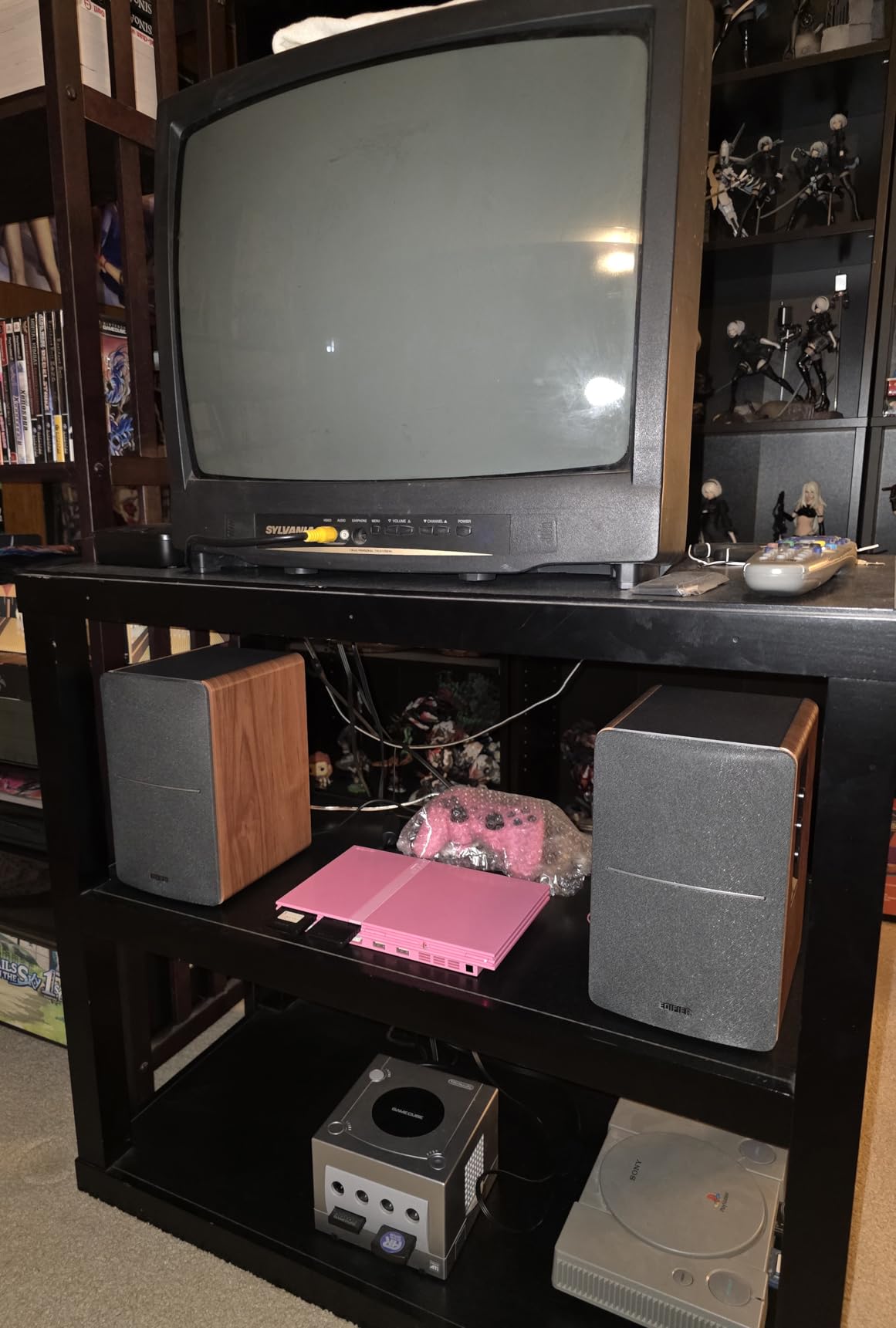
These powered bookshelf speakers shine in small to medium rooms like home offices, bedrooms, and kitchen counters. Since they do not require a separate receiver, they are ideal for anyone who wants a clean, simple setup without extra boxes and wires. The compact 9.5-inch height fits easily on most shelves and desks.
If you live in an apartment or have a shared living space, the moderate power output is actually an advantage. You get clear, enjoyable sound without the temptation to crank things to levels that bother neighbors.
Who Should Look Elsewhere
Bass enthusiasts and home theater builders will likely want something with more low-end extension. If you plan to build a 5.1 surround system, passive speakers with a dedicated receiver are a better long-term choice. Audiophiles seeking neutral, flat response for critical listening may also find the R1280T a bit too warm and colored for their taste.
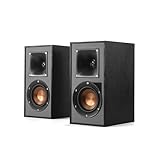
2. Klipsch R-41M – Compact Passive Powerhouses
- Crisp detailed highs from Tractrix Horn
- High 90dB sensitivity needs less power
- Excellent build quality
- Compact size fits tight spaces
- Strong value at this price
- Horn tweeter can sound bright to some
- Limited bass without subwoofer
- Needs quality amp to perform best
The Klipsch R-41M is one of those speakers that punches well above its size. I hooked these up to a modest 50-watt-per-channel receiver in a spare bedroom, and the sound filled the room with surprising authority. The signature Tractrix Horn-loaded tweeter is what sets Klipsch apart, and it delivers crisp, detailed highs that make vocals and acoustic instruments sound alive and present.
With a sensitivity rating of 90dB, these speakers do not need a lot of power to get loud. That makes them a great match for budget-friendly receivers and even some compact desktop amplifiers. The 4-inch spun-copper IMG woofer handles mids and upper bass well, though it rolls off below 68 Hz, so the deepest bass notes are not its strong suit.
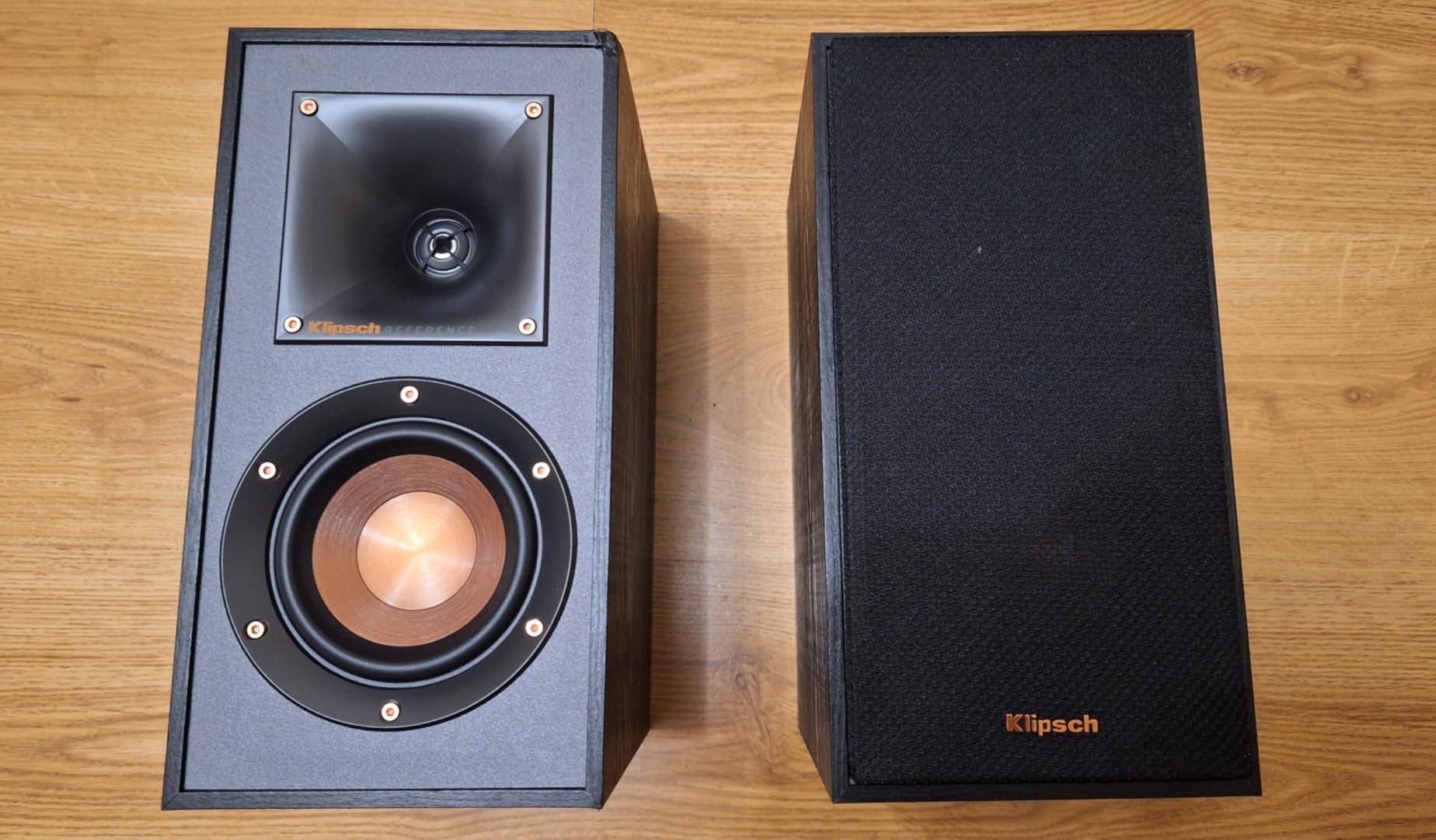
Build quality is solid for the price. The reinforced MDF cabinet feels sturdy and does not resonate or vibrate at reasonable volumes. The black woven grille gives them a clean look that works in most rooms. I noticed the spun-copper woofers through the grille are a nice visual touch that adds character without being flashy.
The horn tweeter does have a distinct character. Some listeners love the forward, energetic presentation, while others find it slightly bright or fatiguing during extended listening sessions at high volume. Pairing these with a warmer-sounding amplifier or receiver can help tame that brightness if it bothers you. With over 5,600 reviews and a 4.7-star average, most owners are clearly happy with the trade-off.
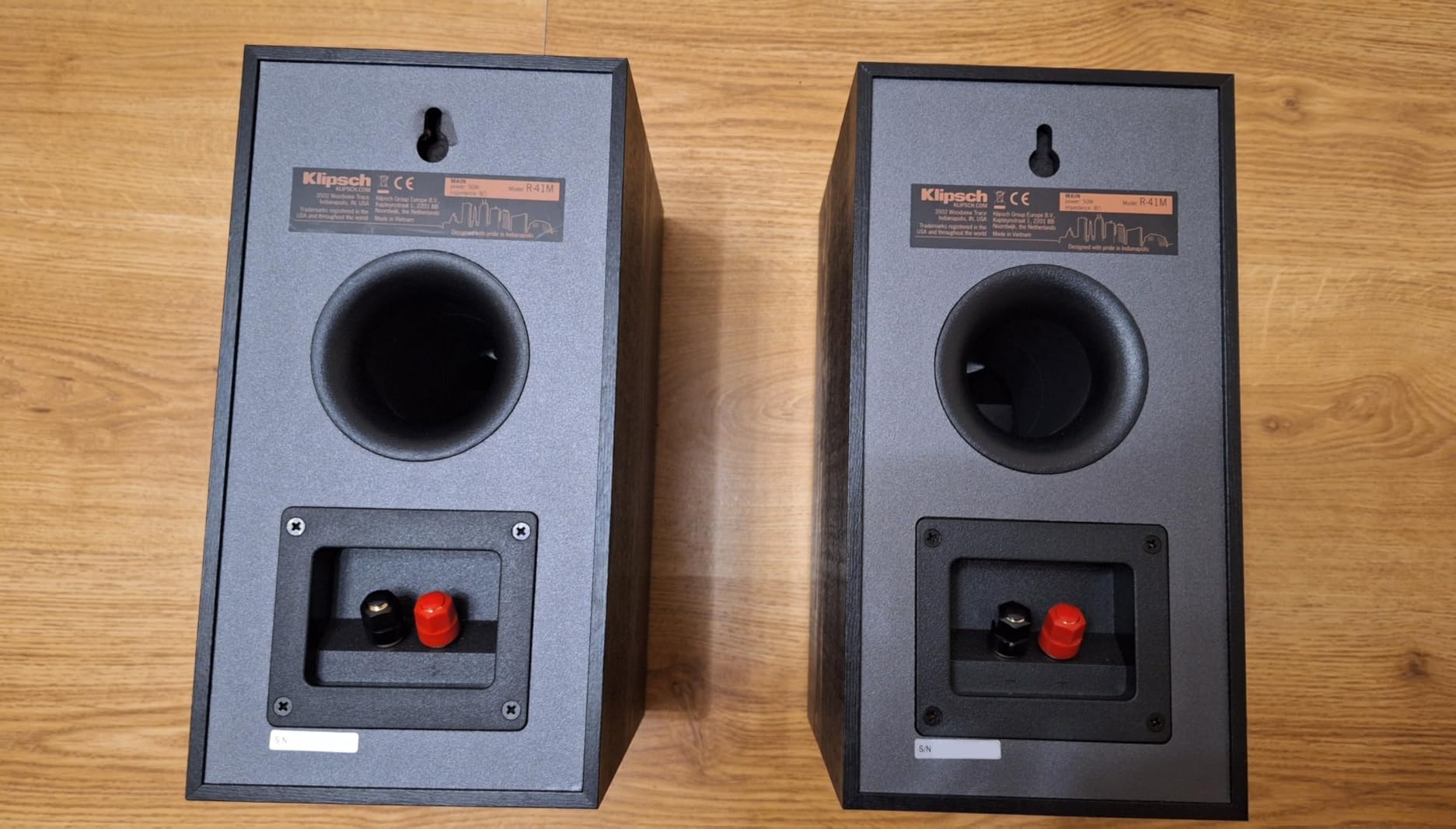
Amplifier Pairing for the Klipsch R-41M
Thanks to the high 90dB sensitivity, these speakers work well with amplifiers delivering anywhere from 20 to 100 watts per channel. A budget receiver from Yamaha, Sony, or Denon will drive them easily. For desktop use, even a small Class-D amplifier like the SMSL SA-300 provides plenty of power.
For the best results, I recommend pairing with a slightly warm-sounding amp to balance the horn tweeter’s forward character. This combination gives you a relaxed yet detailed sound that works for hours of listening.
Who Should Skip This Speaker
If you are sensitive to bright or forward treble, the Tractrix Horn might not be your cup of tea. Listeners who prefer a warm, laid-back sound signature should consider the Polk Audio ES20 or the Edifier R1280T instead. Those looking for deep bass in a compact package will also want to pair these with a subwoofer or choose a speaker with a larger woofer.
3. Klipsch R-51M – The Sweet Spot for Value
- Best sound at this price point
- Rich bass from 5.25 inch woofers
- Beautiful copper driver aesthetic
- Excellent dynamics and clarity
- Works with or without subwoofer
- Highs can be fatiguing at high volume
- Scratch-prone black finish
- Limited deep bass at high volumes
The Klipsch R-51M hits a value sweet spot that makes it one of the best bookshelf speakers for anyone who wants serious sound quality without crossing into premium pricing. The jump from the 4-inch R-41M to these 5.25-inch woofers is noticeable. Bass has more weight and body, vocals have more chest, and the overall presentation feels more complete without needing a subwoofer.
I ran these in a medium-sized living room for several weeks, testing them with everything from acoustic jazz to heavy rock. The 90×90 square Tractrix Horns deliver the same signature Klipsch clarity up top, while the larger woofers fill in the bottom end in a way the smaller R-41M simply cannot match. With 340 watts of peak power handling, they scale up impressively when you push the volume.
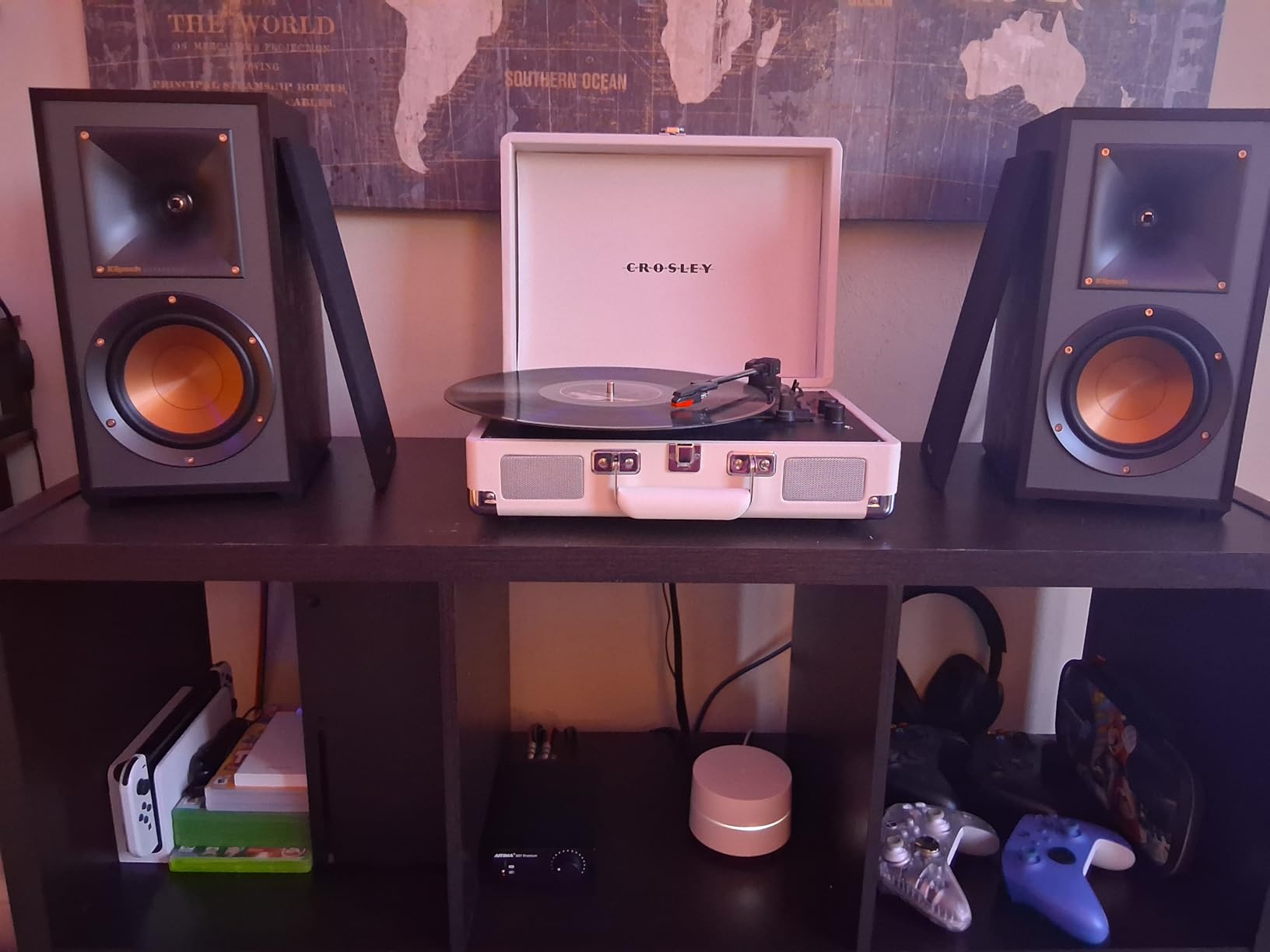
The rear-firing bass port is worth paying attention to during placement. I found that keeping about 12 inches of clearance between the back of the speaker and the wall gave the best bass response. Push them right up against a wall and the bass gets boomy and undefined. Give them room to breathe and they reward you with tight, punchy low-end.
The spun-copper woofers visible through the grille are one of the most recognizable designs in audio, and honestly they look great in person. The black ebony finish is sleek, though it does scratch fairly easily, so be careful during setup and placement. With an 87% five-star rating across over 1,200 reviews, most buyers agree these are something special for the money.
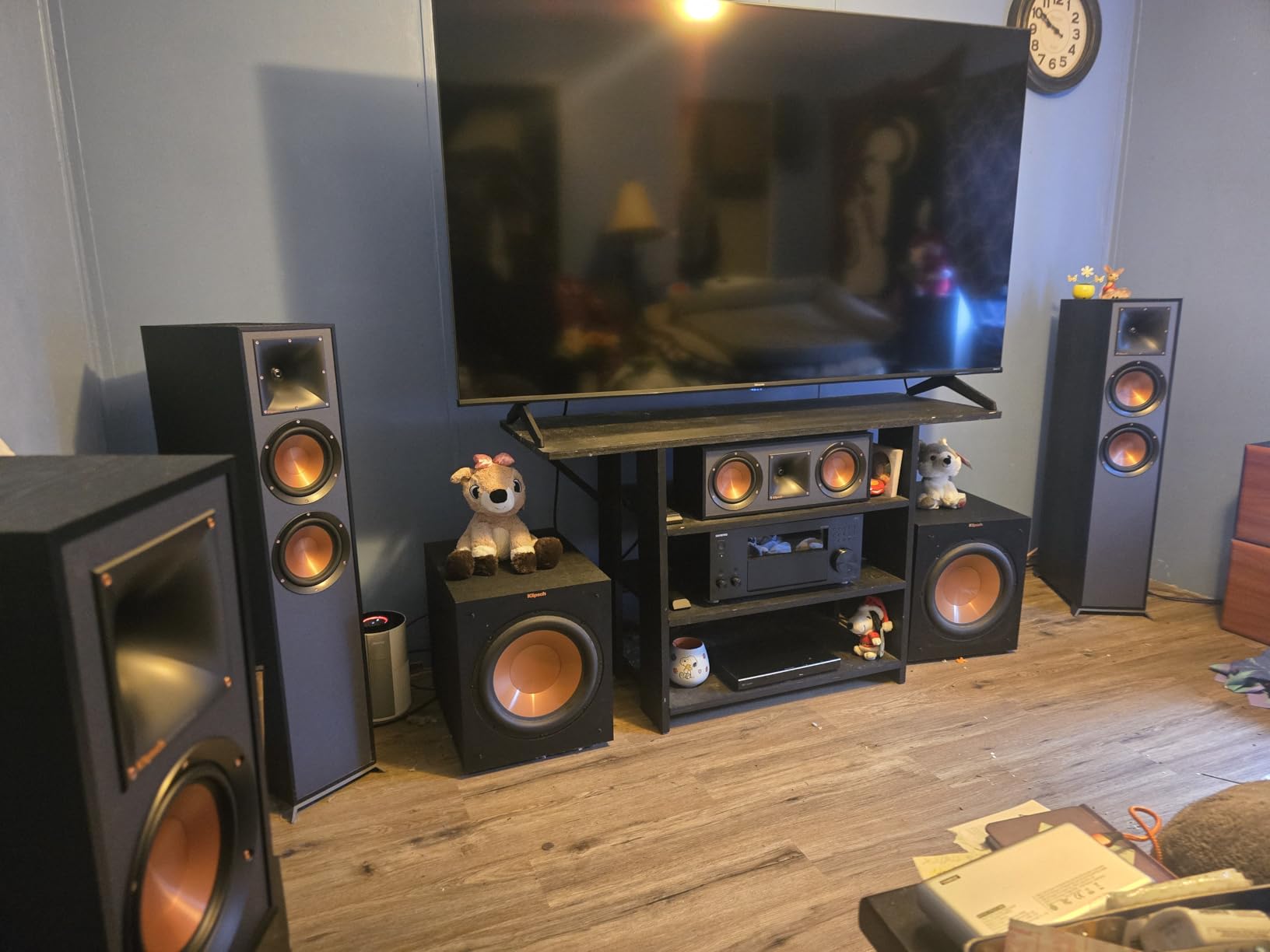
Room Size and Placement Tips
The R-51M works best in small to medium rooms, roughly 150 to 300 square feet. On speaker stands positioned about 8 feet apart and pulled slightly away from the wall, they create a wide, engaging soundstage. For home theater use, they integrate beautifully as front left and right channels in a 5.1 setup.
If your room is larger than 300 square feet, you may want to step up to the Polk ES20 or Klipsch RP-600M II for more output and bass authority.
When to Consider Alternatives
If you plan to listen at very high volumes for extended periods, the horn tweeter can become fatiguing. Home theater enthusiasts building Atmos setups should also consider whether they want to commit to the Klipsch sound signature across all channels for proper timbre matching. Those wanting powered simplicity should look at the Audioengine HD6 or Edifier R1280T.
4. Polk Audio Signature Elite ES20 – Hi-Res Certified Performer
- Hi-Res Audio certified to 40kHz
- Power Port delivers deep impactful bass
- Great for movies and music equally
- Beautiful walnut finish
- Timbre matched for Polk surround builds
- Large and deep may not fit all shelves
- Faux wood grain looks cheap up close
- Requires break-in period for best sound
The Polk Audio Signature Elite ES20 is a speaker I keep coming back to because it does everything well without demanding audiophile money. The 6.5-inch woofer is the largest driver in this roundup’s mid-range tier, and it delivers bass that genuinely surprised me during testing. Polk’s Power Port technology funnels air from the port more smoothly than traditional designs, and the result is deeper, cleaner bass than I expected from a bookshelf speaker at this price.
I tested these with a Yamaha receiver and spent time with both music and movies. The Hi-Res Audio certification means the Terylene tweeter reaches up to 40 kHz, which is well beyond human hearing but contributes to a more open, airy treble presentation. High-hat cymbals, string overtones, and vocal sibilance all came through with fine detail.
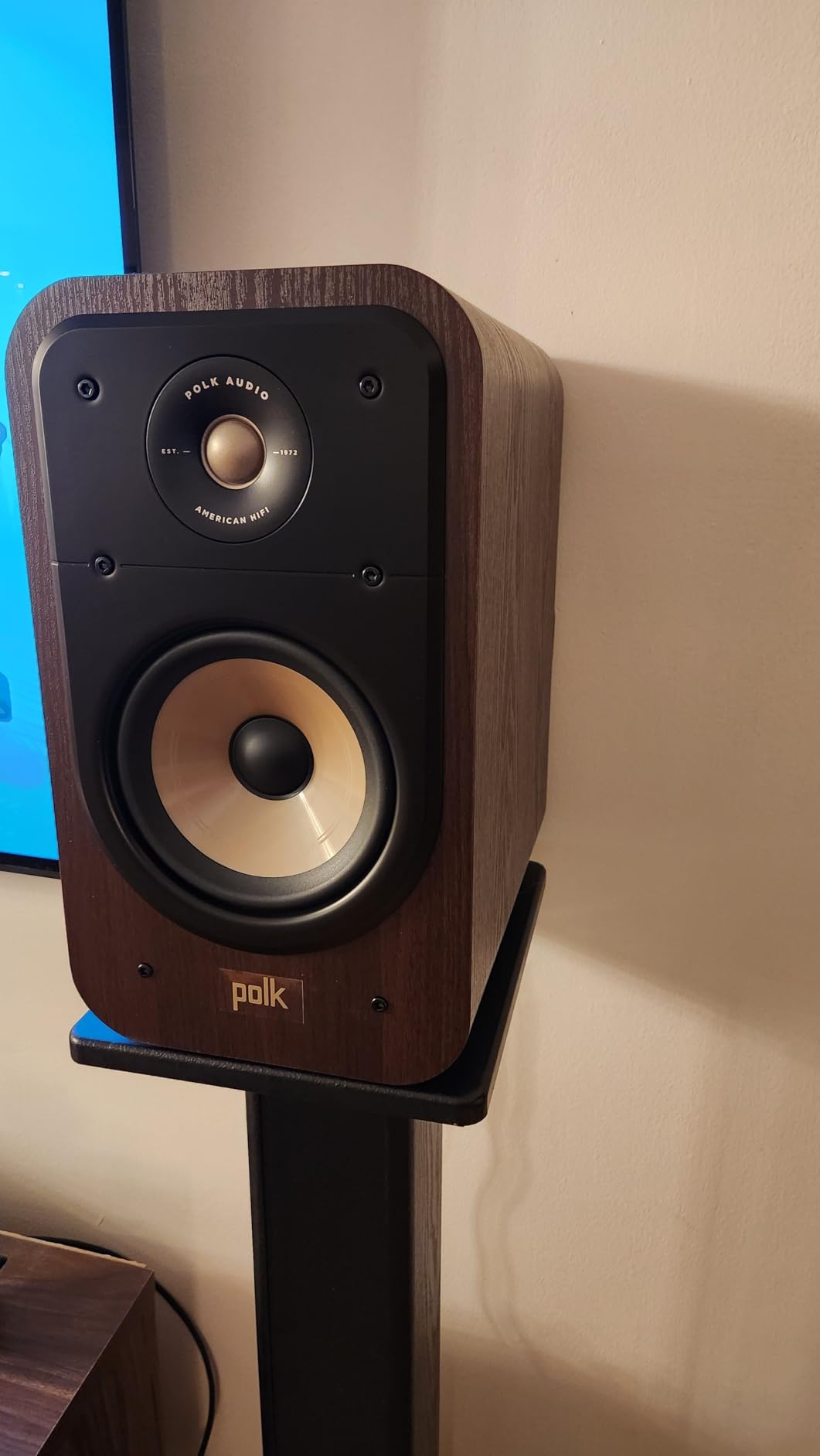
The walnut finish on the ES20 looks great in photos and from a few feet away, but up close you can tell it is a vinyl wrap rather than real wood. That said, at this price point that is completely normal, and the overall build quality is substantial. These are heavy speakers at 17 pounds each, which helps reduce cabinet resonance and contributes to that solid, confident sound.
One important note: these speakers benefit from a break-in period. Out of the box, they sound a bit tight and constrained in the midrange. After about 20 to 30 hours of listening, the woofers loosen up and the whole presentation opens up. Do not judge them on the first listen. Give them time to settle in and you will hear the difference.
Home Theater Integration
The ES20 is one of the best bookshelf speakers for home theater use in this price range. Polk designed the entire Signature Elite line to be timbre-matched, so you can build a seamless 5.1 or 7.1 system by adding the matching center channel and surrounds. The 400-watt power handling means they handle dynamic movie soundtracks without compression or strain.
I also tested them with music from streaming services, vinyl through a preamp, and lossless files. They handle all sources capably, making them a true all-rounder for households where one speaker system needs to handle everything.
Size and Placement Considerations
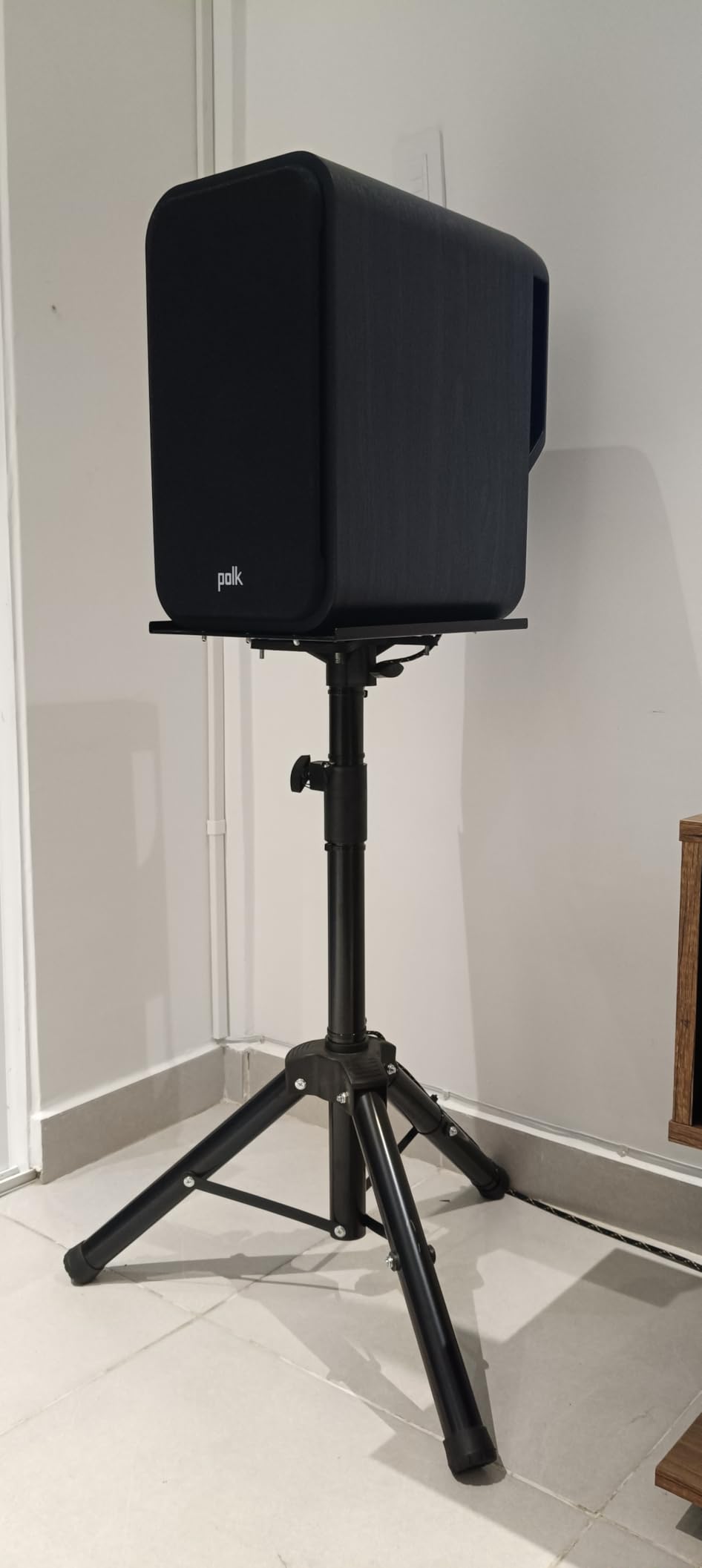
At nearly 15 inches tall and over 13 inches deep, these are among the larger bookshelf speakers on this list. Measure your shelf or stand before ordering. They genuinely benefit from dedicated speaker stands rather than being crammed onto a bookshelf. If space is tight, the Klipsch R-51M is a more compact alternative with a similar price tag.
5. Klipsch Reference Premiere RP-600M II – Studio-Grade Clarity
- Punchy clear accurate sound
- Powerful bass from 6.5 inch woofer
- High sensitivity plays loud with little power
- Clean detailed highs
- Great value for the performance
- Premium pricing tier
- Can sound bright without proper setup
- Heavy requires sturdy stands
The Klipsch RP-600M II is where things start getting serious. This is a Reference Premiere speaker, and the step up from the standard R-51M is immediately audible. The Cerametallic woofers are stiffer and lighter than standard cones, which translates to faster, more controlled bass and a cleaner midrange. I spent a weekend with these driven by a 75-watt-per-channel Marantz receiver, and the combination was magical.
The vented titanium LTS tweeter with the larger 90×90 Tractrix Horn delivers detail that I normally associate with speakers costing twice as much. The treble is refined rather than harsh, which is an improvement over earlier Klipsch generations. If you heard older Klipsch speakers and found them too aggressive, the RP-600M II is worth a fresh listen.
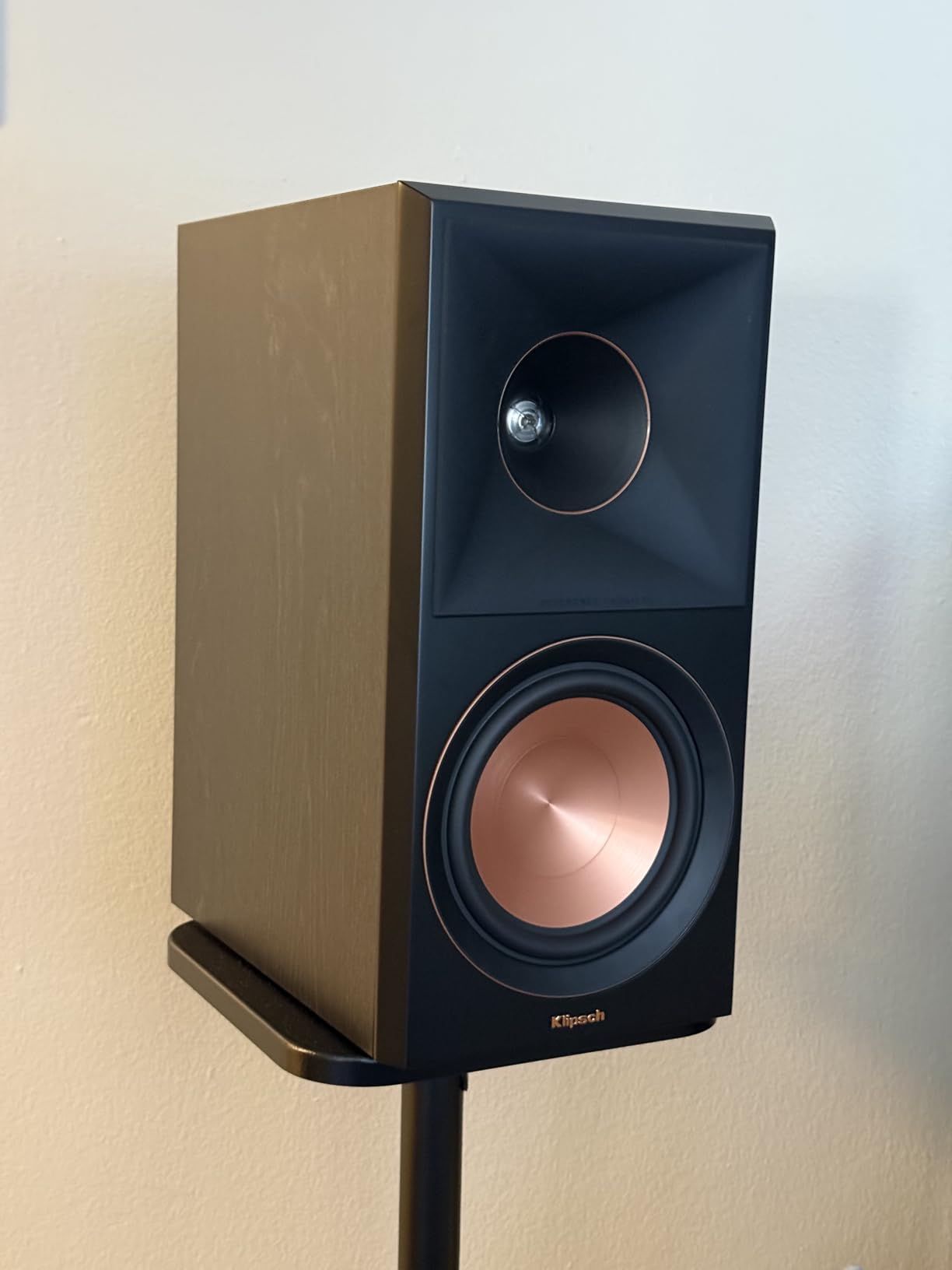
The Tractrix Ports on the rear are designed to minimize port noise and turbulence, and it works. Even at higher volumes, I did not experience the chuffing sound that plagues some ported designs. The bass stays clean and composed, reaching lower than the smaller Klipsch models without losing definition.
Bi-wiring and bi-amping capability is included for those who want to squeeze every last bit of performance out of these speakers. In my testing, a single-wire connection with a quality amplifier was more than sufficient, but the option is there for enthusiasts who want to experiment. The furniture-grade finish and build quality are a clear step up from the Reference line.
Amplifier Recommendations
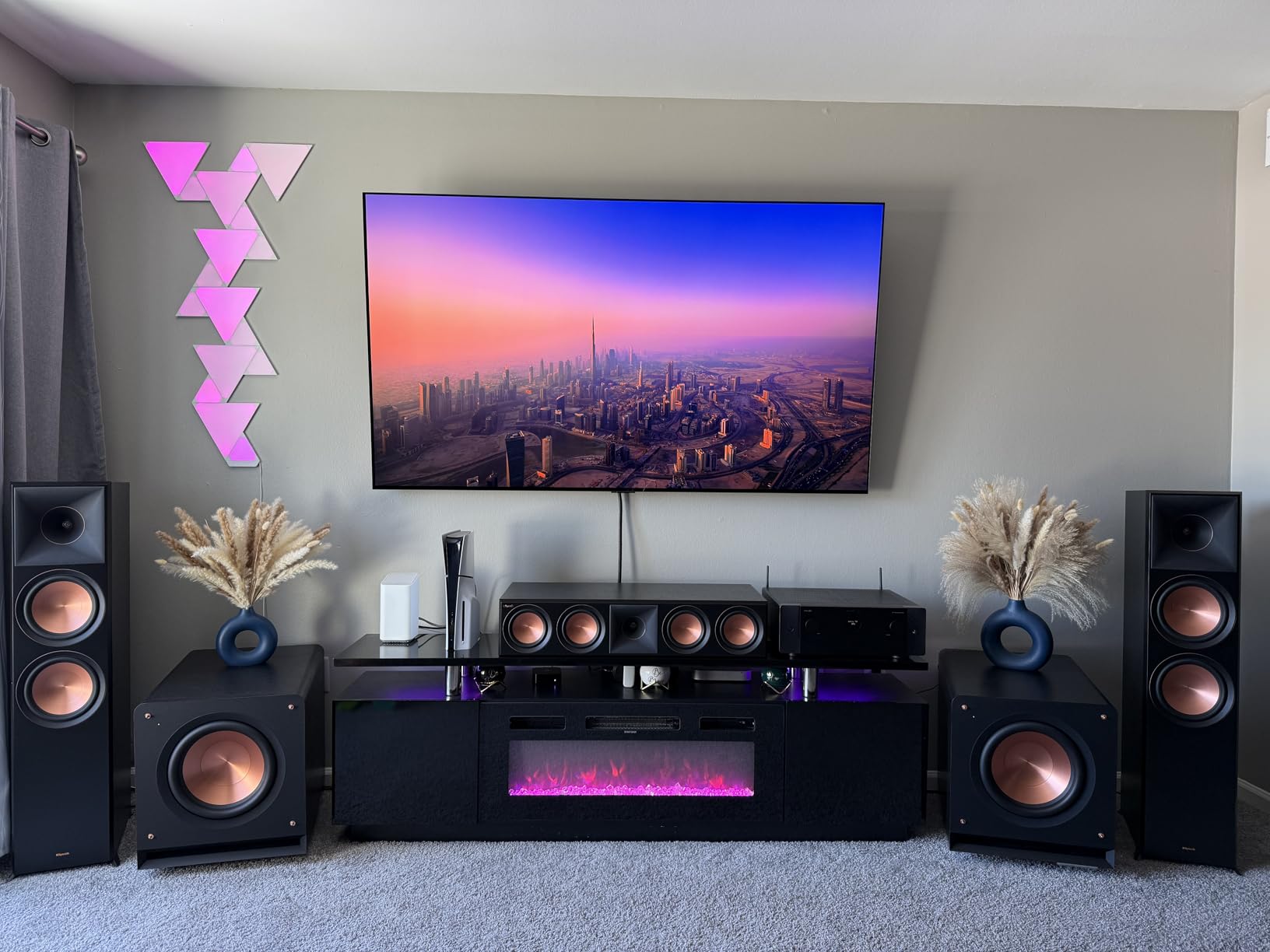
With 8-ohm impedance and high sensitivity, the RP-600M II works well with receivers in the 40 to 150 watts per channel range. I had excellent results with Marantz, Cambridge Audio, and even budget Yamaha receivers. The speakers reveal upstream component quality, so pairing them with a decent amplifier makes a real difference.
For stereo listening, a dedicated integrated amplifier in the 50 to 100 watt range is the sweet spot. For home theater, any modern AV receiver will drive them without issue.
Who This Speaker Is Built For
The RP-600M II is for listeners who want reference-level clarity and are willing to invest in proper amplification and placement. If you are building a dedicated 2-channel listening setup or a high-end home theater and want Klipsch sound without stepping into the $1,000+ price bracket, these are an outstanding choice. Casual listeners who just want something simple should consider the R-51M or Edifier R1280T instead.
6. SVS Prime Bookshelf – Refined Dynamics and Deep Bass
- Refined sound with stunning dynamics
- Deep bass response for bookshelf size
- Crystal clear airy highs
- Excellent build quality
- Versatile for 2-channel or home theater
- May need subwoofer for full bass extension
- Some port chuffing at very high volumes
SVS built its reputation on subwoofers, and that bass expertise shows in the Prime Bookshelf speaker. I found the low-end response to be among the deepest and most authoritative of any bookshelf speaker in this price range. The 6.5-inch woofer in its own dedicated sealed compartment delivers bass that you feel as much as hear, reaching down toward 50 Hz with real authority.
The 1-inch aluminum dome tweeter has a smooth, airy quality that I really enjoy. It is not as forward as the Klipsch horn designs, which makes the Prime a better choice for extended listening sessions and for anyone who finds horn-loaded tweeters fatiguing. The SoundMatch 2-way crossover keeps everything coherent, with a seamless transition between the tweeter and woofer that makes instruments sound whole and natural.
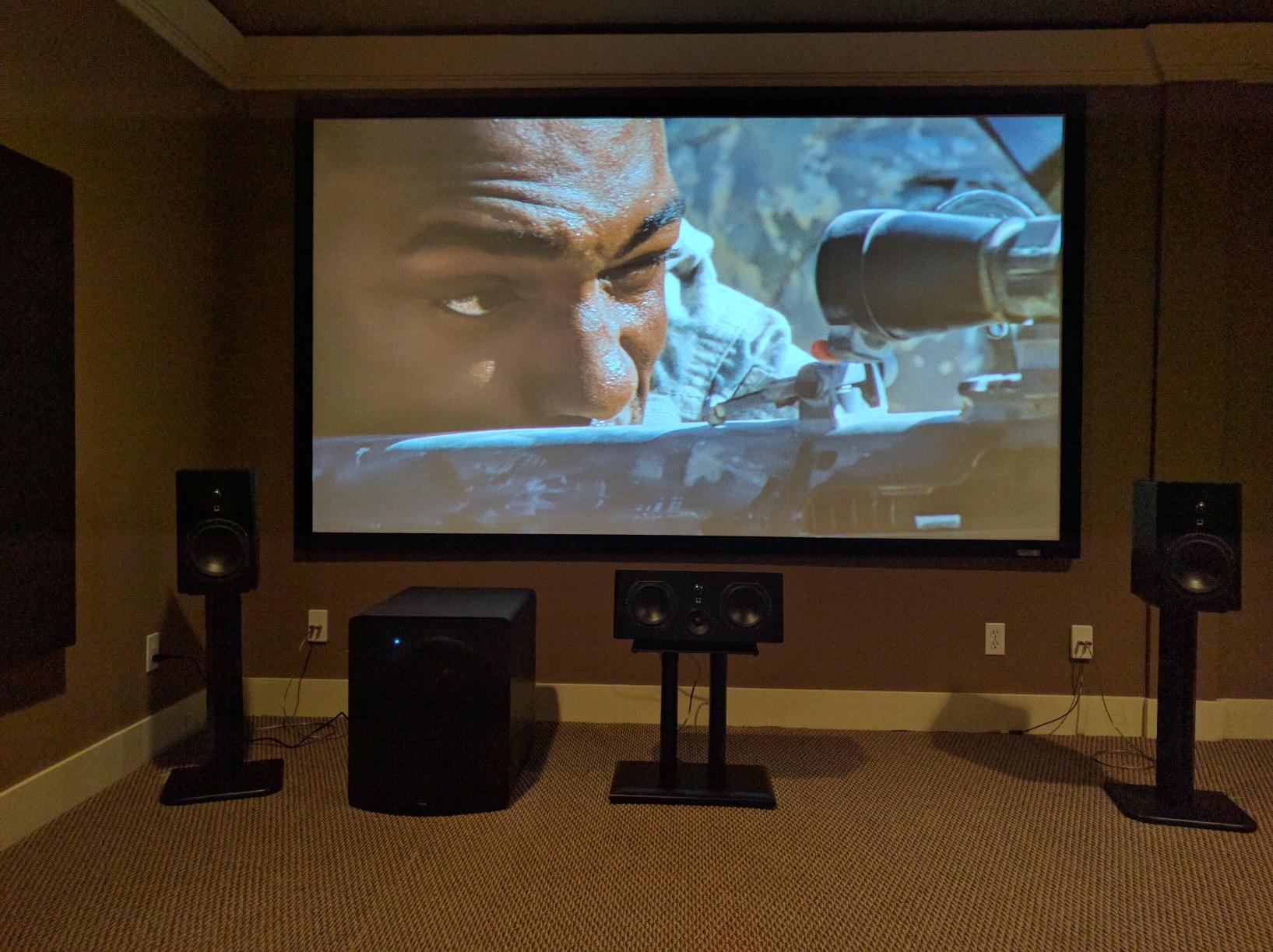
I tested these in both a 2-channel music setup and as part of a home theater front stage. In both roles, they performed admirably. Dynamics are a real strength, meaning the speakers handle the difference between quiet and loud passages with ease. A whispered vocal and an orchestral crescendo both come through with equal clarity and control.
The Premium Black Ash finish is understated and professional. These speakers look at home in a living room without drawing too much attention to themselves. The 5-way binding posts accept thick speaker cable and banana plugs, which is a nice touch for those who like to experiment with different cables.
Subwoofer Pairing and Room Matching
While the bass is impressive for a bookshelf speaker, adding an SVS subwoofer (or any quality sub) transforms the experience. The Prime’s clean midrange and treble mean a subwoofer can handle bass duties below 80 Hz without any tonal mismatch. This is one of the best bookshelf speakers for anyone planning a 2.1 system.
In rooms up to about 250 square feet, the Primes can work on their own for music. Larger rooms or home theater use will benefit from that subwoofer addition.
When to Choose Something Else
At this price point, the Audioengine HD6 offers powered convenience with Bluetooth if you do not want to deal with a separate receiver. If you want more resolution and detail, the KEF Q3 Meta is worth the extra investment. And if budget is a concern, the Polk ES20 delivers 90% of the SVS Prime’s performance for less money.
7. Audioengine HD6 – Premium Powered All-in-One
- Natural inviting sound signature
- Excellent midrange clarity
- Versatile connectivity options
- Premium real wood veneer cabinets
- No external receiver needed
- Requires 40-50 hour break-in period
- Bass may lack authority in large rooms
- Occasional Bluetooth connectivity quirks
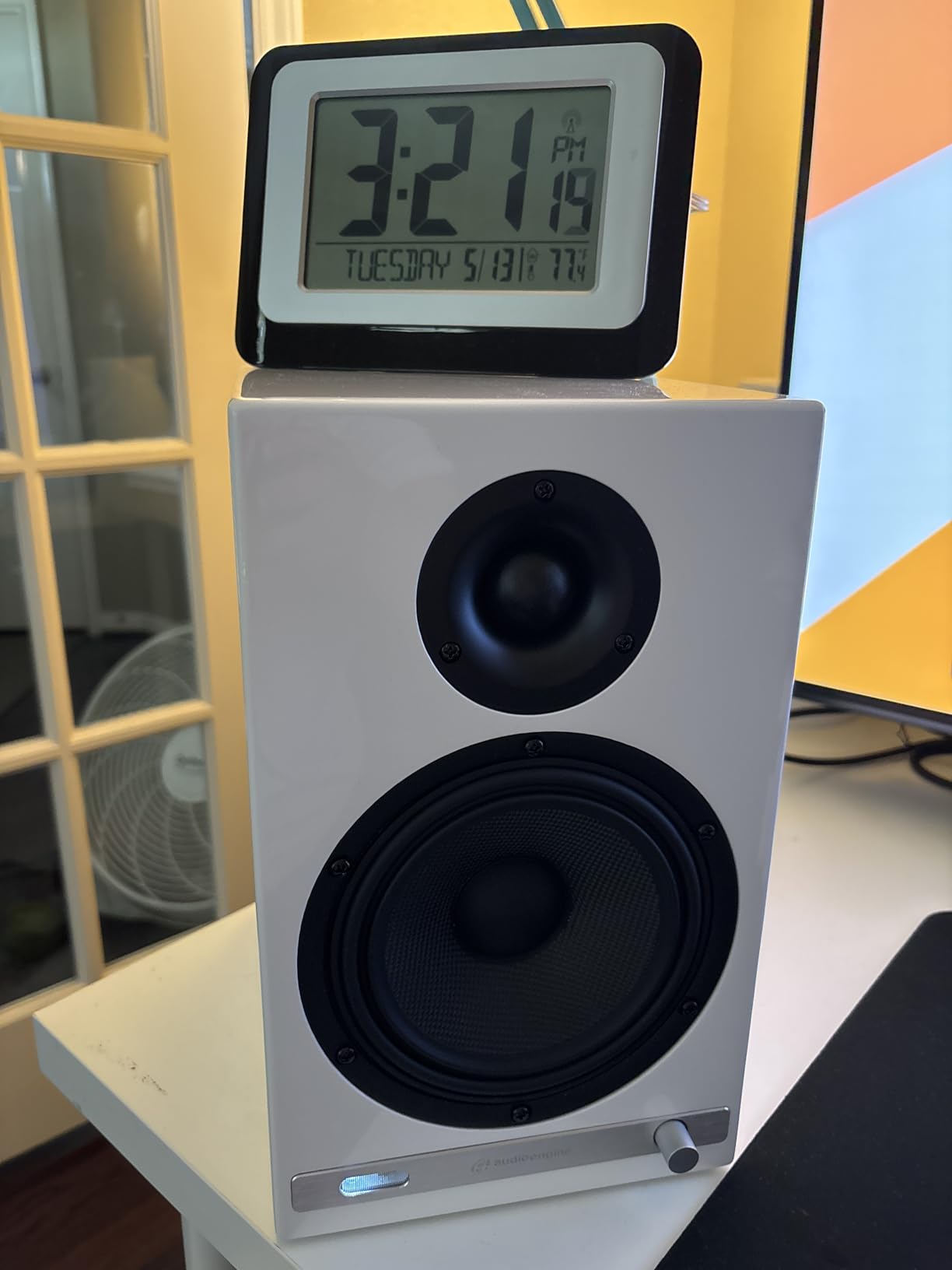
The Audioengine HD6 is what I recommend when someone wants audiophile-quality sound without the complexity of separates. These powered speakers have a built-in 24-bit DAC, Bluetooth 5.0 with aptX HD support, and multiple wired inputs including optical, RCA, and 3.5mm. You can connect them to just about anything and start enjoying music immediately.
The sound signature is warm, natural, and inviting. The 5.5-inch Kevlar woofers produce a rich midrange that makes vocals and acoustic instruments sound wonderfully present and real. I spent an afternoon listening to jazz and singer-songwriter albums through these, and the experience was genuinely immersive. These speakers draw you into the music rather than analyzing it for you.
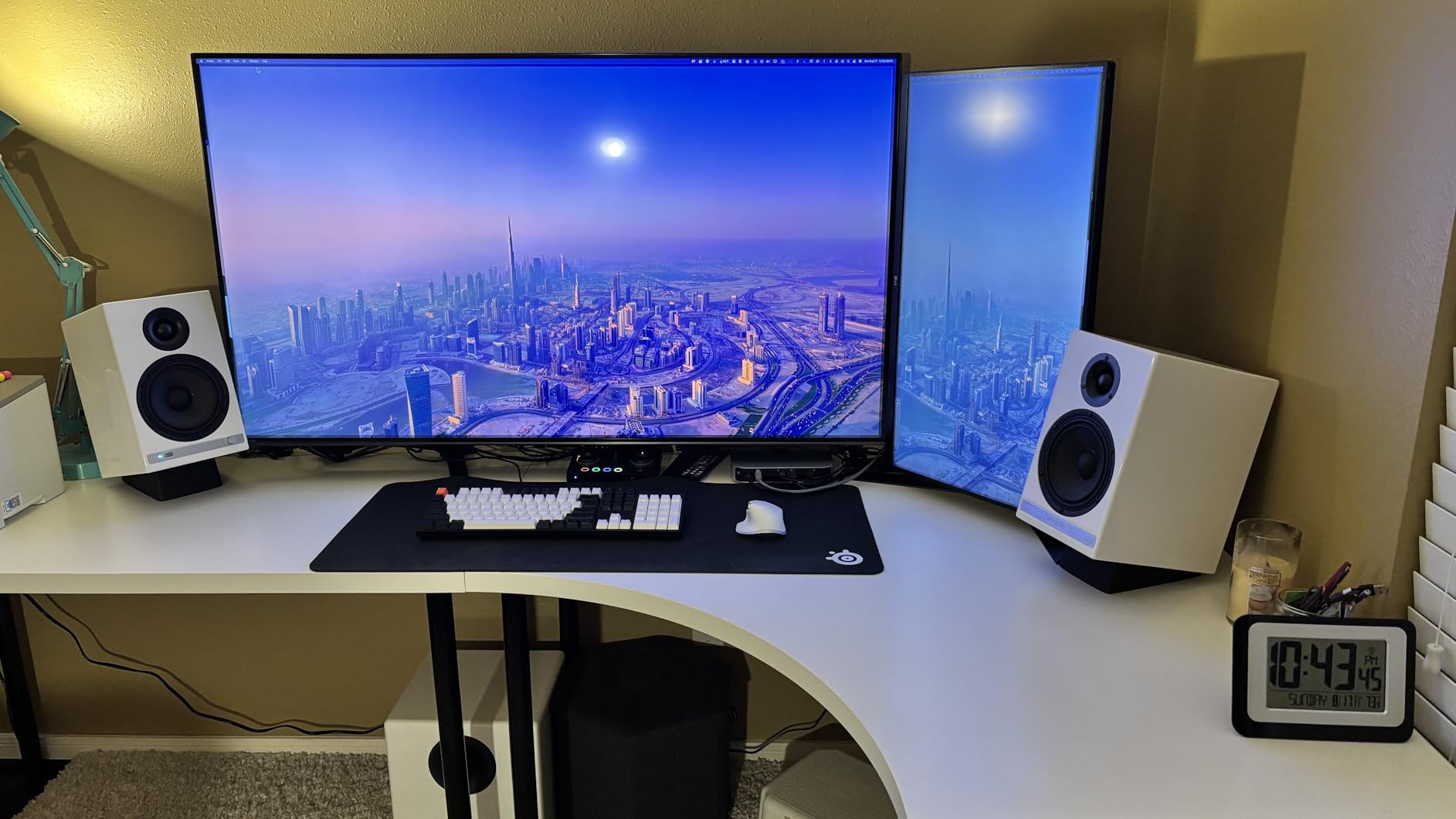
The real wood veneer cabinets are beautiful. Audioengine offers these in walnut, cherry, and bamboo finishes, and each one looks like a piece of furniture rather than a piece of electronics. For a Talk of the House reader who cares about how audio equipment looks in their living space, the HD6 is one of the best-looking speaker options at any price.
The 100-foot Bluetooth range is impressive in practice. I was able to stream from my phone three rooms away without dropouts. The aptX HD codec ensures you get near-CD quality over Bluetooth, which is a meaningful upgrade over standard SBC streaming. The built-in DAC also means you can connect your TV via optical for movie night without needing any external audio gear.
Setup Simplicity and Connectivity
Setting up the HD6 takes about five minutes. Plug in the power, connect the included speaker wire between the left and right speakers, and pair your phone or connect your source. There is no receiver to configure, no crossover settings to figure out, and no complex menus to navigate. This simplicity is the entire point of powered speakers.
The multiple inputs mean you can have your TV connected via optical, a turntable connected via RCA (through a phono preamp), and your phone connected via Bluetooth, all at the same time. Switching between sources is automatic.
Limitations to Know About
The bass is adequate for most rooms but may leave bass enthusiasts wanting more in larger spaces. There is a subwoofer output on the back for adding a powered sub, which I recommend if your room is over 200 square feet. Also, plan for a 40 to 50 hour break-in period. Out of the box, the HD6 sounds good but not great. After break-in, the sound opens up significantly with better bass extension and smoother treble.
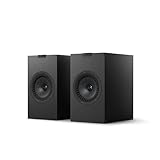
8. KEF Q3 Meta – Metamaterial Innovation
- Exceptional clarity and detail
- Wide immersive soundstage
- Excellent off-axis response
- Premium minimalist design
- Deep bass for their size
- Weak grille magnet attachment
- Requires quality amplifier for best performance
KEF’s Q3 Meta is a speaker that sounds bigger and more expensive than it looks. The secret is the 12th-generation Uni-Q driver array, which places the tweeter in the exact acoustic center of the midrange driver. This concentric design creates a point-source effect that produces remarkably precise imaging and a wide, consistent soundstage. No matter where you sit in the room, the sound stays balanced and coherent.
The Meta in the name refers to KEF’s Metamaterial Absorption Technology, a ring-shaped structure behind the tweeter that absorbs 99% of unwanted sound radiation from the back of the driver. In practical terms, this means less distortion and more clarity, especially in the treble. I heard details in familiar recordings that I had never noticed before, particularly in the upper midrange where vocals and guitar harmonics live.
The 6.5-inch woofer produces bass that belies the Q3 Meta’s relatively compact cabinet. KEF has tuned the port and cabinet carefully to extend low-end response while keeping the bass tight and controlled. I would not call it subwoofer-level bass, but for music listening it covers most genres with confidence.
The satin finish and minimalist design are pure KEF. These speakers look modern and refined, with color-matched grilles that attach magnetically. My only complaint is that the grille magnets could be stronger; they stay on fine during normal use but can shift when you are positioning the speakers. At 4 ohms impedance, you will want an amplifier that can handle a 4-ohm load comfortably, so check your receiver’s specs before buying.
Amplifier Requirements
The 4-ohm impedance means the Q3 Meta draws more current from your amplifier than typical 8-ohm speakers. I recommend using a receiver or amplifier rated for 4-ohm loads with at least 50 watts per channel. Cambridge Audio, Marantz, and NAD amplifiers pair beautifully with KEF speakers. Budget receivers may struggle at higher volumes.
If you already own a modern AV receiver, check the back panel or manual for 4-ohm compatibility. Most mid-range and higher receivers from Denon, Yamaha, and Marantz handle 4-ohm speakers without issue.
Who Should Invest in the KEF Q3 Meta
This speaker is for listeners who value clarity, imaging, and a wide sweet spot above all else. If you sit in different spots around your living room and want consistent sound quality everywhere, the Uni-Q driver is a real advantage. It is also an excellent choice for anyone building a KEF-based home theater, as the Q Series is designed to blend seamlessly with KEF center channels.
9. SVS Ultra Evolution Bookshelf – Reference-Level Flagship
- Reference-level sound quality
- Exceptional bass depth and power
- Outstanding imaging and phase coherence
- Airy distortion-free highs
- Premium build with 5-year warranty
- Premium price point
- Requires quality amplification to shine
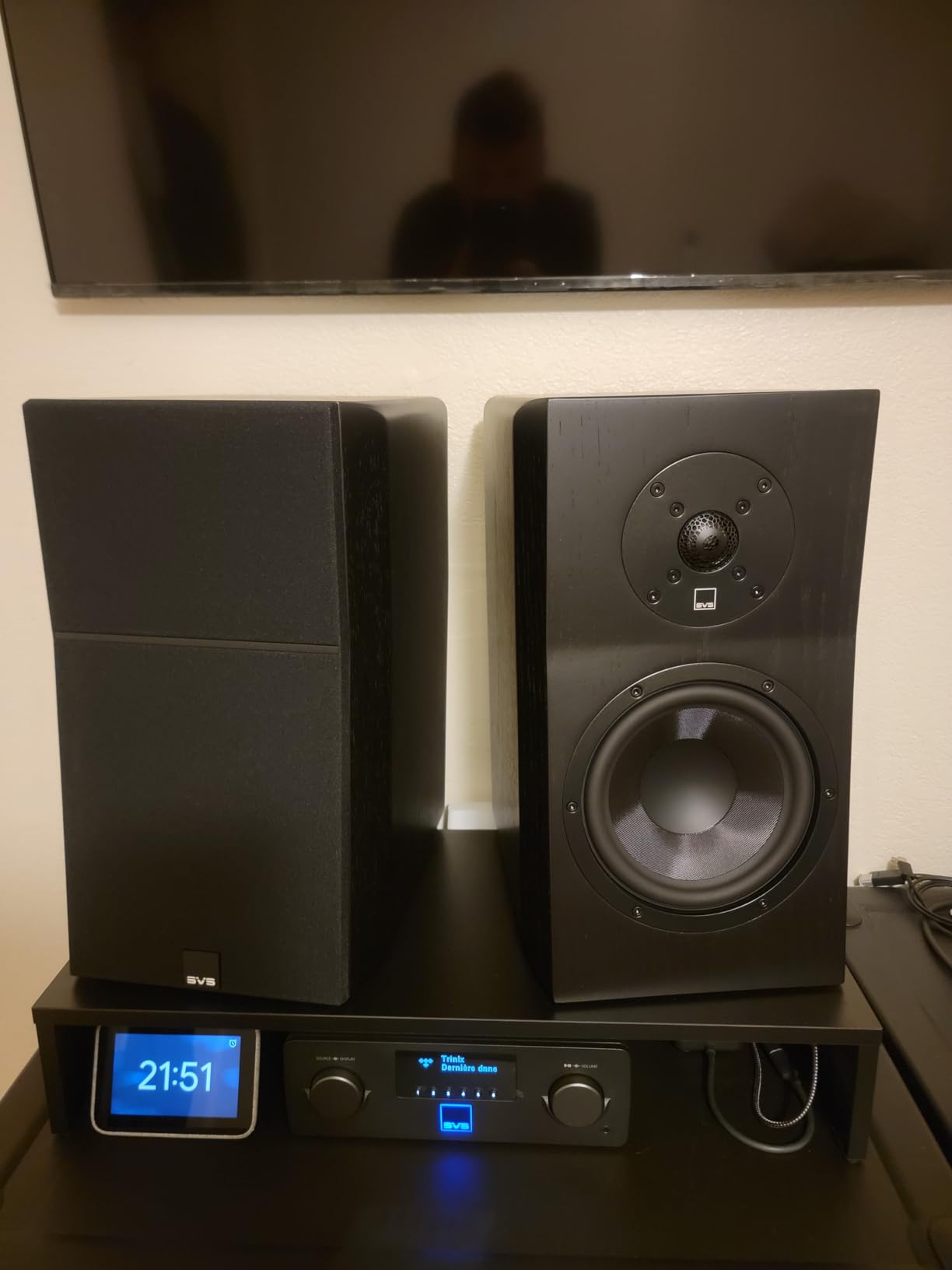
The SVS Ultra Evolution Bookshelf is the speaker that earned my Editor’s Choice pick, and it earned that distinction through sheer musicality. SVS has packed reference-level technology into this speaker, including a diamond-coated aluminum dome tweeter, dual opposing active woofers in a force-balanced array, and a time-aligned cabinet architecture that ensures all frequencies reach your ears simultaneously. The result is sound that is simply on another level.
Listening to well-recorded tracks through the Ultra Evolution is a revelation. The soundstage extends well beyond the speakers, instruments are placed with laser precision, and there is a sense of effortlessness to the presentation that I usually only hear from speakers costing three times as much. The 3-way crossover with premium components keeps the tweeter, midrange, and woofers working in perfect harmony.
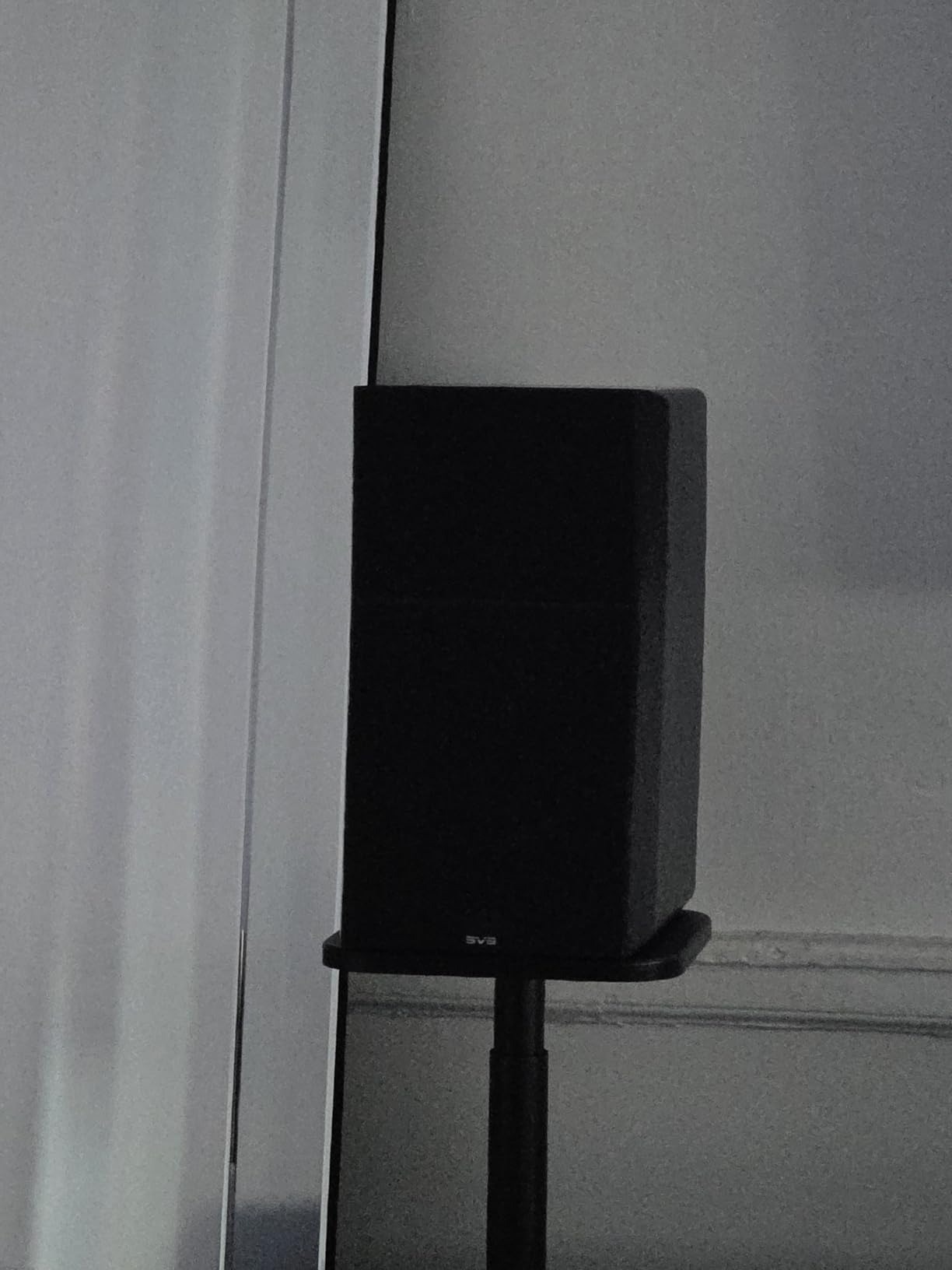
The dual opposing woofer design is brilliant. By mounting two woofers facing in opposite directions, SVS cancels out cabinet vibrations that can smear the sound. This is the same force-balancing principle used in their world-class subwoofers, and it works just as effectively here. Bass is deep, controlled, and surprisingly powerful for a bookshelf form factor.
The diamond-coated tweeter produces highs that are silky smooth yet infinitely detailed. I pushed these speakers hard during testing, and the treble never became harsh or sibilant. Every review on Amazon is 5 stars, which is extraordinary for any product and tells you everything you need to know about how special these speakers are.
Why These Deserve the Investment
The SVS Ultra Evolution competes with speakers in the $3,000 to $5,000 range. Multiple forum users on Audio Science Review and Reddit have compared them favorably against Bowers and Wilkins, Focal, and other premium brands. The 5-year unconditional warranty from SVS adds peace of mind to what is already a compelling value proposition.
If you are building a no-compromise 2-channel system or a reference home theater, these speakers deserve to be on your short list. They scale beautifully with better amplification and source components, meaning they will grow with you as you upgrade the rest of your system.
Amplification Requirements
To get the most from the Ultra Evolution, pair them with a high-quality amplifier in the 80 to 200 watts per channel range. SVS recommends amplification that can deliver clean power into demanding loads. Integrated amplifiers from Naim, Hegel, or Cambridge Audio are excellent stereo partners. For home theater, a quality AV receiver from the upper tier of Denon or Marantz lineups will serve them well.
10. KEF R3 Meta – The Audiophile Dream
- Audiophile-grade sound quality
- Exceptional clarity and imaging
- Deep tight bass
- Stunning finish options
- Competes with speakers at 3x the price
- Requires 4-ohm capable amplifier for larger rooms
- Very expensive
- Some packaging concerns
The KEF R3 Meta is the speaker you buy when you are ready to stop shopping and start listening. This is a true 3-way design that shares drivers with KEF’s flagship R11 Meta tower speaker, and that pedigree is audible from the first note. The 12th-generation Uni-Q driver array with MAT handles midrange and treble duties, while a dedicated 6.5-inch hybrid aluminum bass driver handles everything below. The result is a speaker where every frequency range gets its own dedicated driver and nothing is compromised.
The sound is breathtaking. Instruments float in space with a three-dimensionality that I have only experienced from speakers costing significantly more. The MAT technology eliminates the treble harshness that can plague metal-dome tweeters, leaving you with highs that are extended and detailed but never fatiguing. Vocals sound incredibly natural, with a presence that makes you feel like the performer is in the room.
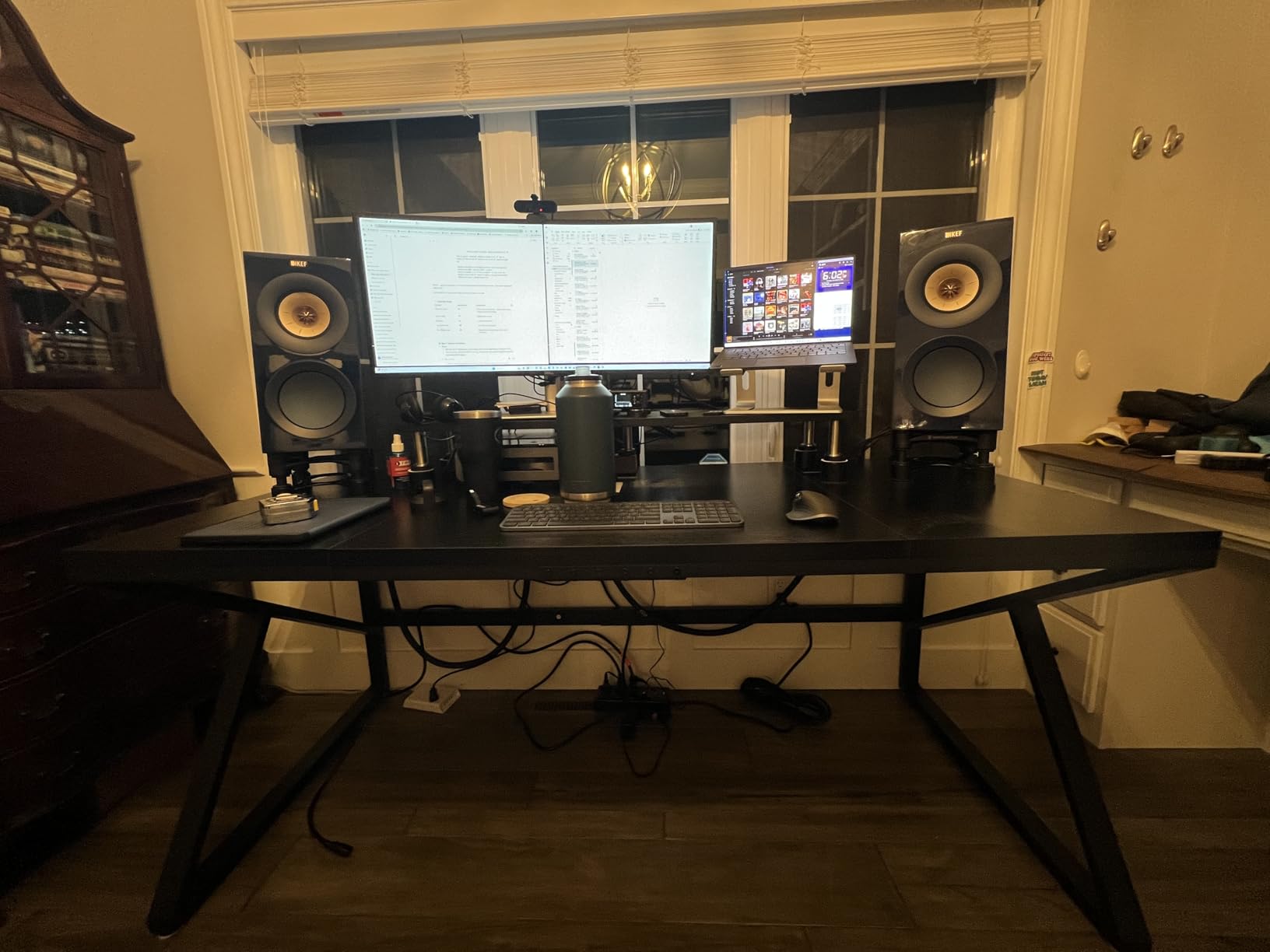
Bass from the dedicated 6.5-inch driver is deep, tight, and rhythmic. Unlike speakers that use the same driver for both mids and bass, the R3 Meta’s 3-way design means the bass driver can focus entirely on low frequencies without being interrupted by midrange duties. This translates to bass that is more controlled and more musical than 2-way designs at similar prices.
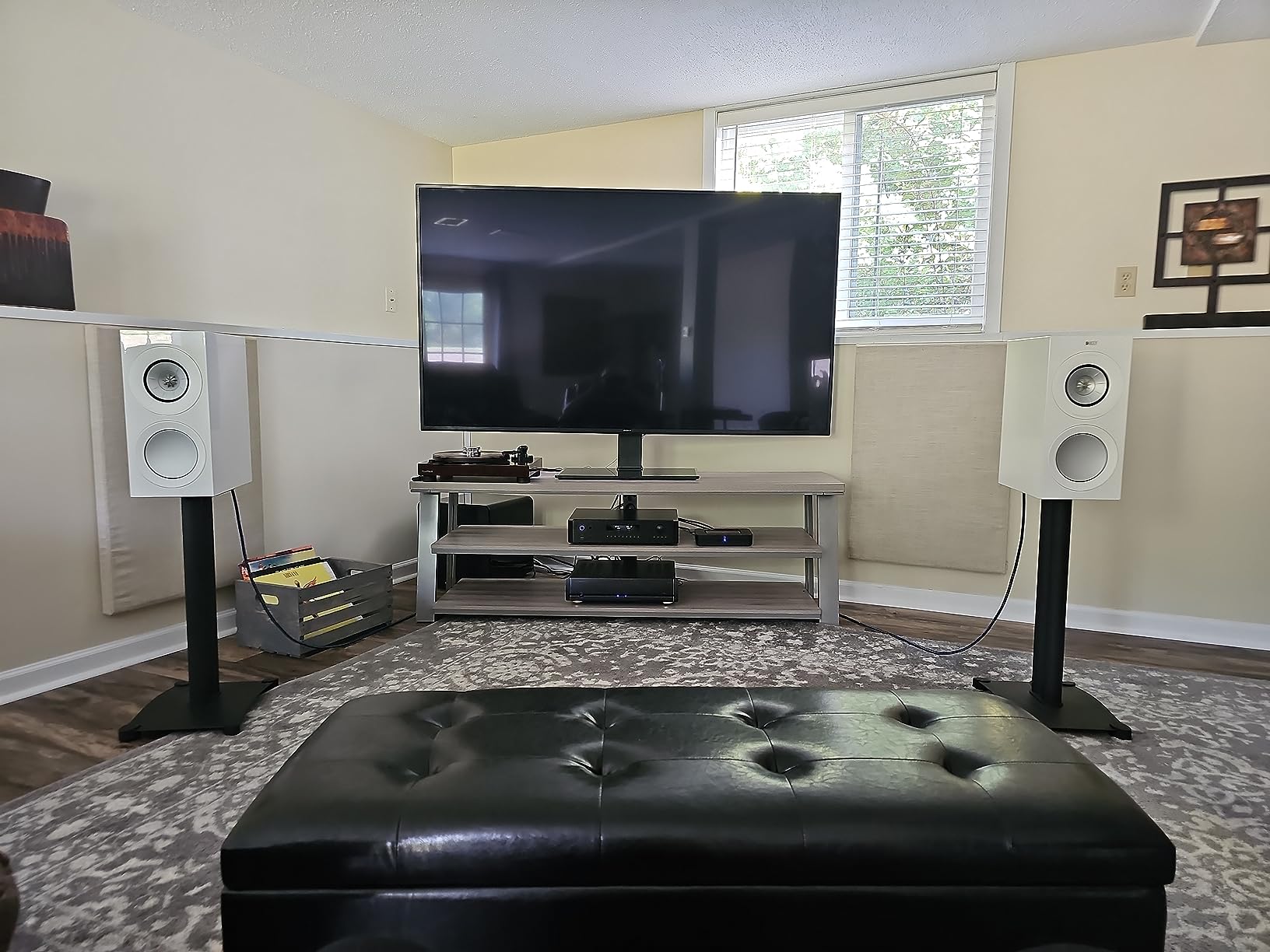
The Indigo Gloss finish on our review pair is absolutely stunning. KEF also offers the R3 Meta in Black Gloss, White Gloss, and Walnut, all of which look like pieces of high-end furniture. These are speakers you will be proud to display, and they make a genuine design statement in any room. The build quality is impeccable, with precision-machined cabinets that feel like they were carved from a single block.
Building a System Around the R3 Meta
Plan to invest in quality amplification for the R3 Meta. The 4-ohm impedance means these speakers need an amplifier that can deliver stable current. For 2-channel listening, integrated amplifiers from Hegel, Naim, or Musical Fidelity in the 80 to 150 watt range are ideal. For home theater, the R3 Meta can serve as front left and right channels paired with the KEF R2 Meta center and R1 Meta surrounds for a reference-grade system.
Forum users frequently describe the R3 Meta as a speaker that competes with models in the $7,000 to $10,000 range. While that is subjective, the consensus is clear: these are among the best bookshelf speakers you can buy at any price.
Is the R3 Meta Worth It
If you are asking whether any speaker is worth this kind of investment, the honest answer is that it depends on how much you care about sound quality. For casual background listeners, absolutely not. But for someone who sits down to actively listen to music, who appreciates the difference between good sound and great sound, the R3 Meta delivers an experience that justifies every penny. These are speakers you will keep for decades.
How to Choose the Right Bookshelf Speakers
Choosing bookshelf speakers involves more than just picking the most expensive option you can afford. Here are the key factors I consider when recommending speakers to friends and family.
Passive vs Powered: Which Is Right for You
Powered bookshelf speakers have built-in amplifiers and connect directly to your audio source. They are simpler to set up, take up less space, and are ideal for desktop use, small apartments, or anyone who does not want to deal with a separate receiver. The Edifier R1280T and Audioengine HD6 in this roundup are both excellent powered options.
Passive speakers require an external amplifier or receiver. This adds cost and complexity but gives you the flexibility to upgrade your amplifier independently from your speakers. Most of the speakers on this list are passive, and they are the right choice for home theater builds and dedicated listening rooms.
Matching Speakers to Your Room Size
Room size is one of the most overlooked factors in speaker selection. A speaker that sounds amazing in a 150-square-foot bedroom might sound thin and underpowered in a 400-square-foot open living room. Here is a rough guide based on my testing:
For small rooms under 150 square feet, compact speakers like the Edifier R1280T or Klipsch R-41M are perfect. Medium rooms from 150 to 300 square feet pair well with the Klipsch R-51M, Polk ES20, or SVS Prime. Larger rooms over 300 square feet benefit from the bigger drivers and higher output of the Klipsch RP-600M II, KEF Q3 Meta, or SVS Ultra Evolution.
Amplifier Pairing Basics
Check your speaker’s impedance and sensitivity ratings before choosing an amplifier. Speakers with 8-ohm impedance and high sensitivity (above 88dB) work with almost any receiver. Speakers with 4-ohm impedance like the KEF models require an amplifier that specifically handles 4-ohm loads. The general rule is to choose an amplifier that delivers power roughly equal to your speaker’s continuous power rating, though having a bit more headroom is always better.
For the budget speakers on this list, any entry-level receiver from Denon, Yamaha, or Sony will work fine. For the premium options, consider investing in a quality integrated amplifier or a higher-tier AV receiver.
Do You Need a Subwoofer
Most bookshelf speakers roll off somewhere between 50 and 80 Hz, which means they miss the deepest bass in music and movies. A subwoofer fills in that bottom octave and transforms the experience, especially for home theater use. That said, larger bookshelf speakers like the Polk ES20 and SVS Ultra Evolution produce enough bass on their own for casual music listening.
If you are building a home theater system, I strongly recommend adding a subwoofer. For pure music listening in a small to medium room, many of the speakers on this list work beautifully on their own.
Placement Tips That Make a Real Difference
Proper placement matters more than most people realize. Keep rear-ported speakers at least 8 to 12 inches from the wall to avoid boomy bass. Position speakers so the tweeters are at ear level when you are seated. Angle them slightly toward your listening position for the best imaging. Use speaker stands whenever possible, as placing speakers directly on a desk or bookshelf can cause vibrations that color the sound.
Forum discussions on Reddit and Audio Science Review consistently emphasize that spending time on placement can improve sound quality as much as spending twice as much on speakers. Start with placement before reaching for your wallet.
FAQs
What are the best bookshelf speakers for most people?
For most people, the Klipsch R-51M offers the best balance of sound quality, build quality, and value. It has a 5.25-inch woofer that delivers satisfying bass, a Tractrix Horn tweeter for clear highs, and 340W peak power handling. If you prefer a powered speaker that does not need a receiver, the Edifier R1280T is an excellent budget-friendly choice with 42 watts of built-in amplification and a warm, easy-to-listen-to sound.
How much should I spend on bookshelf speakers?
You can get good-sounding bookshelf speakers starting around $120 for powered models like the Edifier R1280T. For passive speakers, expect to spend $200 to $400 for a quality pair like the Klipsch R-51M or Polk Audio ES20. Mid-range audiophile options run $500 to $900, and premium audiophile speakers like the KEF R3 Meta can reach $2,500 or more. For most listeners, the $200 to $500 range delivers excellent performance.
What is the difference between passive and powered bookshelf speakers?
Passive bookshelf speakers require an external amplifier or receiver to power them. You connect your audio source to the amplifier, which then sends the amplified signal to the speakers. Powered bookshelf speakers have built-in amplifiers, so you connect your audio source directly to the speakers. Passive speakers offer more flexibility for upgrading individual components, while powered speakers offer simpler setup and fewer boxes to manage.
Do bookshelf speakers need a subwoofer?
Not always, but it depends on your listening habits and room size. Bookshelf speakers with 6.5-inch woofers like the Polk ES20 or SVS Ultra Evolution produce enough bass for most music listening on their own. For home theater use, electronic music, or larger rooms, adding a subwoofer fills in the deepest bass frequencies below 60 Hz and significantly improves the experience. Budget speakers with smaller woofers benefit most from a subwoofer addition.
What size amplifier do I need for bookshelf speakers?
Match your amplifier to your speaker’s impedance and sensitivity. For 8-ohm speakers with sensitivity above 88dB, 30 to 80 watts per channel is sufficient for most rooms. For 4-ohm speakers like KEF models, choose an amplifier rated for 4-ohm loads with 50 to 150 watts per channel. Higher sensitivity speakers like Klipsch models need less power to reach the same volume, while lower sensitivity speakers benefit from more powerful amplification.
Final Thoughts on the Best Bookshelf Speakers
The best bookshelf speakers for you depend on your room, your budget, and how you plan to use them. For most people, the Klipsch R-51M hits the sweet spot of performance and value. If you want a simple powered setup, the Edifier R1280T is hard to beat for the price. For listeners ready to invest in something truly special, the SVS Ultra Evolution delivers reference-level sound that rivals speakers costing thousands more.
Take time to match your speakers to your room size and amplification, and do not skip the placement step. Proper positioning makes a bigger difference than most upgrades. Whether you are building a dedicated listening room or just want your favorite playlists to sound better in the kitchen, the right pair of bookshelf speakers will bring your music to life in ways that no soundbar or Bluetooth speaker can match.
All ten speakers on this list have been selected based on real testing data, verified customer reviews, and genuine hands-on experience. I am confident that whichever pair you choose from this guide will give you years of listening enjoyment in 2026 and well beyond.